Overheating Gear Motors: Causes, Inspection, and Troubleshooting
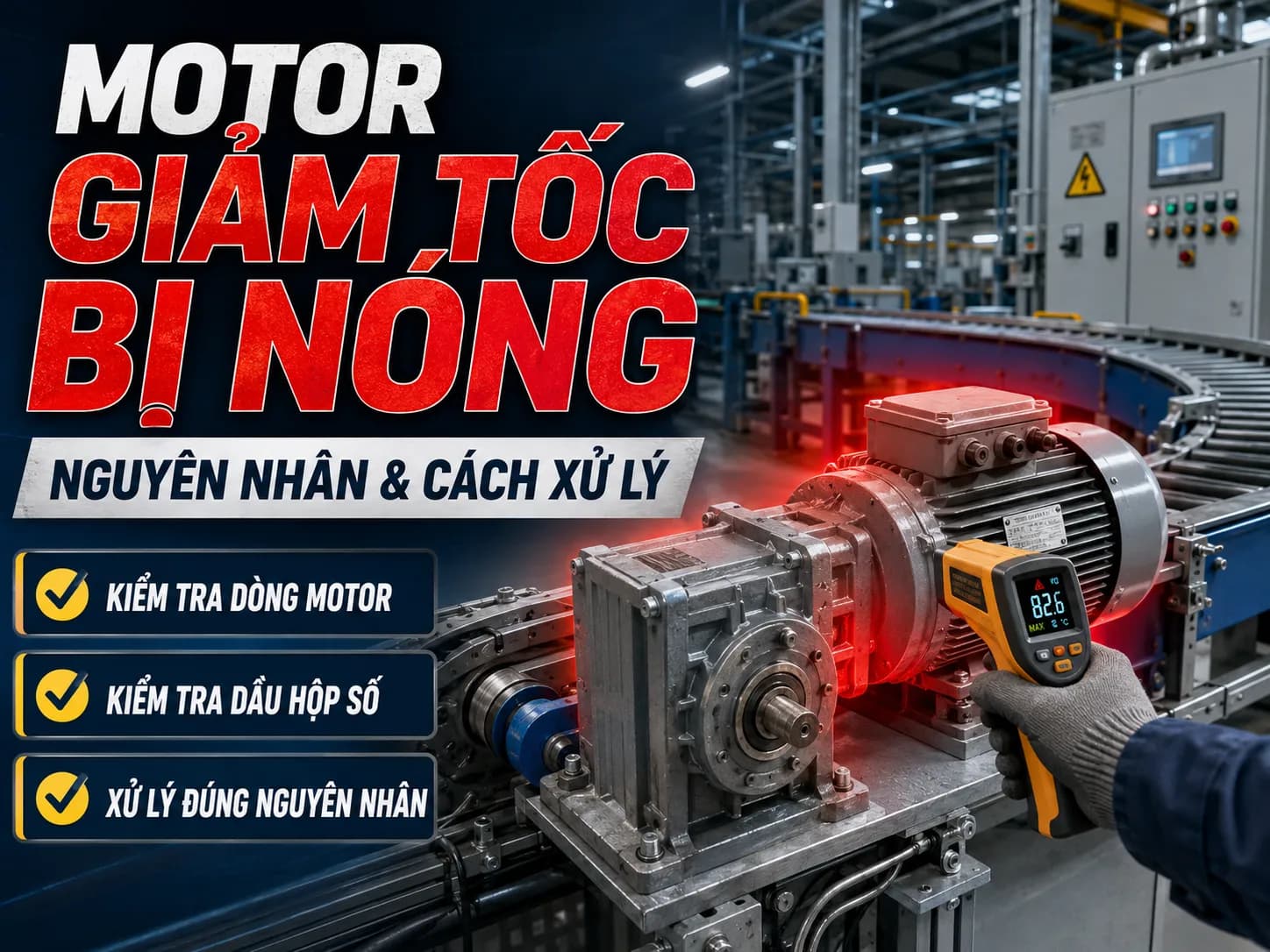
Gear motors overheat due to overloading, lack of lubrication, incorrect gear ratios, shaft misalignment, or improper VFD settings. Learn how to inspect and resolve these issues.
Geared Motor Overheating: Causes, Inspection, and Troubleshooting
Geared motor overheating is a common issue in industrial drive systems such as conveyors, agitators, feeders, packaging machines, screw conveyors, or continuous production lines.
In practice, a geared motor may overheat in the electric motor section, the gearbox section, or both. If the temperature rises slightly during operation, it is not necessarily abnormal. However, if the motor heats up rapidly, stays hot for an extended period, emits a burning smell, produces loud noises, vibrates excessively, or if the gearbox leaks oil, immediate inspection is required.
Addressing the root cause helps prevent motor burnout, bearing failure, gear wear, gearbox oil leakage, and reduces the risk of unplanned downtime.
What Temperature Is Considered Abnormal for a Geared Motor?
Do not judge a geared motor's temperature solely by touch. Each type of motor, gearbox, insulation class, oil type, and operating condition has different thermal limits.
In practical maintenance, it is recommended to check using:
An infrared thermometer.
A thermal imaging camera, if available.
Motor current under load.
Sound and vibration levels of the gearbox.
Oil level and condition inside the gearbox.
If the motor is abnormally hot compared to its previous state, the current exceeds the rated value, the gearbox makes loud noises, or there is a burnt oil smell, the machine should be stopped for inspection rather than continuing operation.
Causes of Geared Motor Overheating

1. Geared Motor Overload
This is the most common cause. When the actual load exceeds the capacity of the geared motor, the motor must pull harder than designed, causing the current and temperature to rise accordingly.
This situation is often encountered in:
Overloaded conveyors.
Agitators handling materials thicker than the original design.
Screw conveyors jammed with material.
Drive mechanisms with high friction.
Systems running continuously with an undersized motor.
If the motor frequently overheats under load, it is necessary to re-evaluate the power, torque, and gear ratio.
2. Incorrect Gear Ratio Selection
The gear ratio directly affects output speed and torque. If an unsuitable gear ratio is selected, the motor may operate in a heavy-load zone, lack sufficient pulling force, or fail to reach the required speed.
For example, if a conveyor requires low speed and high torque but an insufficient gear ratio is chosen, the motor must work harder. Conversely, if the gear ratio is too high but the wrong type of gearbox is selected, efficiency and load-bearing capacity may also be affected.
3. Insufficient Oil or Degraded Gearbox Oil
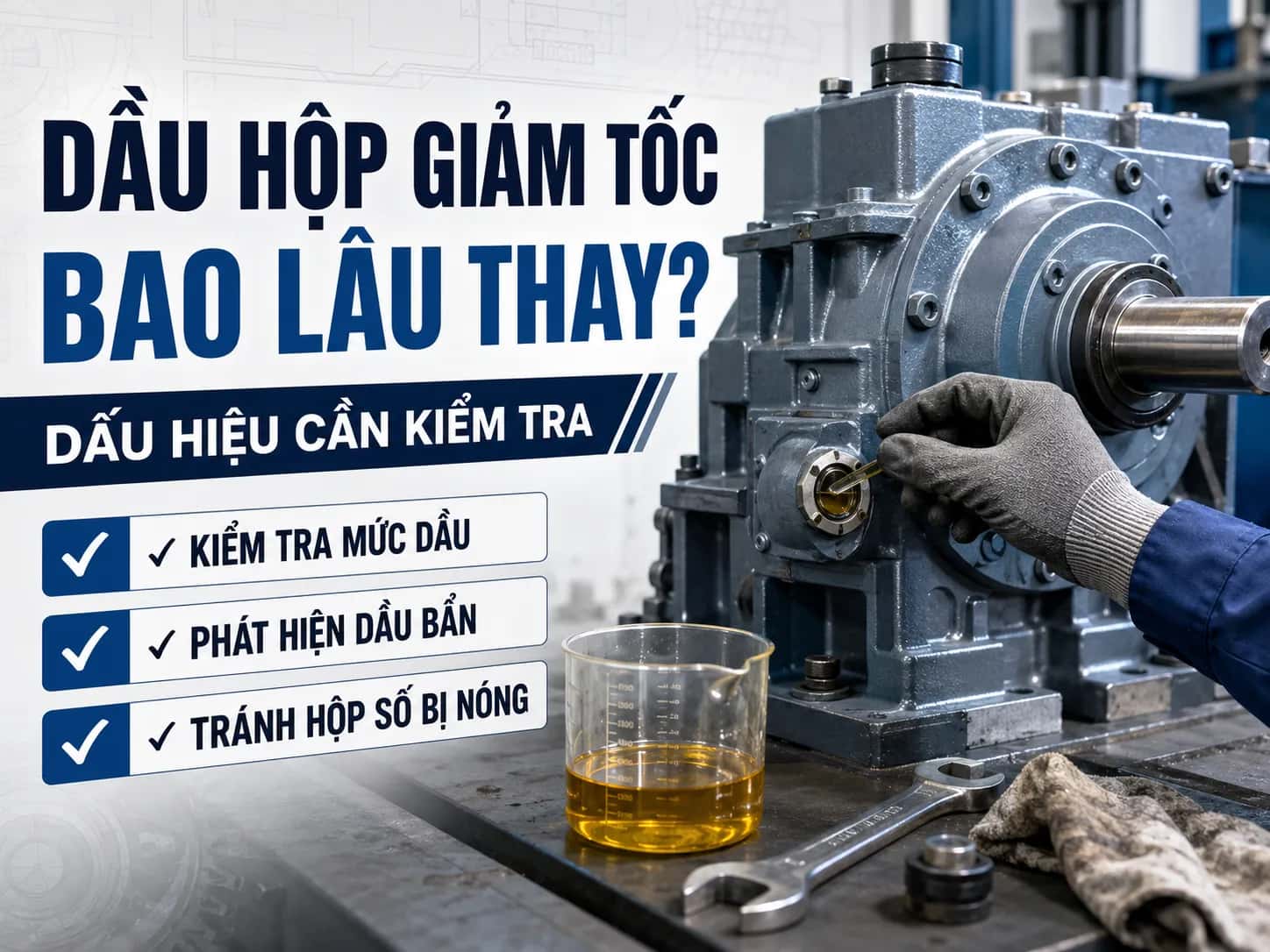
Gearboxes require lubricating oil to reduce friction, dissipate heat, and protect gears and bearings. When oil is insufficient or degraded, the gearbox temperature will rise rapidly.
Common signs:
The gearbox is hotter than normal.
The oil has turned black or dark.
The oil has a burnt smell.
There are metal shavings in the oil.
The gearbox is noisier than before.
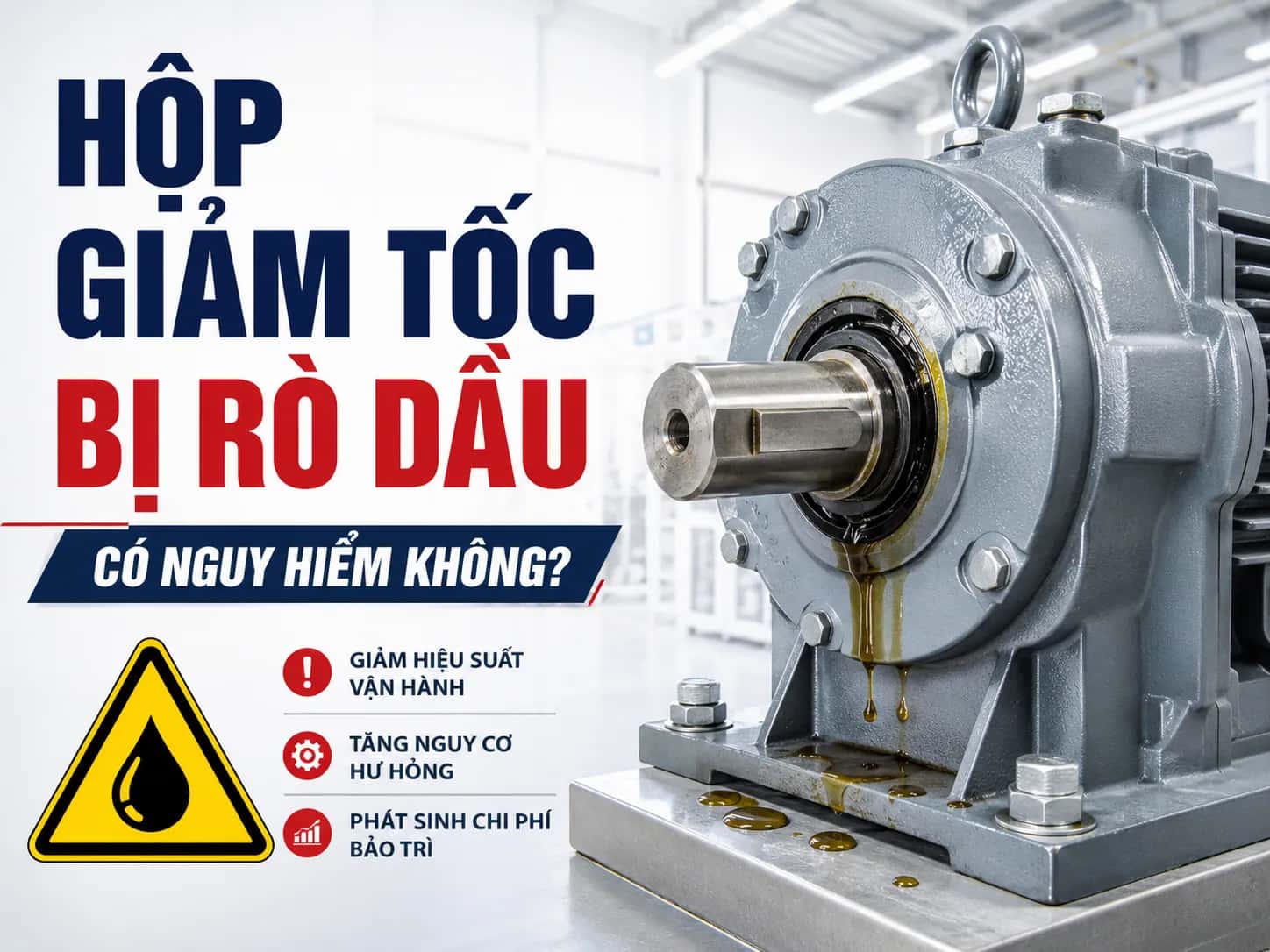
Oil leakage at the seals or mating surfaces.
For gearboxes operating continuously, periodic oil inspection is crucial.
4. Misalignment or Incorrect Coupling Installation
If the geared motor is installed eccentrically with the load shaft, the coupling will be subjected to stress during rotation. This increases the load on bearings, shafts, and gears, causing the motor or gearbox to overheat.
This fault often occurs after:
Replacing the motor without re-alignment.
Replacing the coupling.
Relocating the machine.
Machine foundation vibration or loose bolts.
Slight bending of the load shaft.
If the motor is both hot and vibrating, it is necessary to re-check the shaft alignment and the rigidity of the mounting base.
5. Worn Bearings or Gears
After a long period of operation, bearings, gears, or oil seals may wear out. As friction increases, the temperature rises accordingly.
Signs of wear:
Squealing, grinding, or knocking sounds.
Strong vibration of the gearbox.
Irregular shaft rotation.
Metal shavings in the oil.
Rapid temperature increase despite constant load.
In this case, internal mechanical inspection is required instead of just changing the oil or reducing the load.
6. Running VFD at Low Speed for Too Long
When a geared motor runs via a VFD at low frequency for an extended period, the cooling fan mounted on the motor shaft rotates slowly, reducing cooling capacity. If the load remains heavy, the motor is prone to overheating.
This case is often encountered in:
Low-speed agitators.
Conveyors requiring continuous slow operation.
Feeders requiring speed adjustment.
Motors without forced cooling fans.
If long-term low-speed operation is required, consider using a motor specifically designed for VFDs or installing a forced cooling fan.
7. Hot, Dusty, or Poorly Ventilated Working Environment
Geared motors placed in enclosed areas, dusty environments, near heat sources, or lacking space for heat dissipation are also prone to overheating.
Pay attention to the following cases:
Motor placed close to walls or in enclosed compartments.
Motor fan heavily clogged with dust.
Non-ventilated machine enclosures.
High-temperature environments.
Motor placed near furnaces, dryers, or heat-generating areas.
How to Check an Overheating Geared Motor
When an overheating geared motor is detected, it can be checked according to the following steps:
Step 1: Check Motor Current
Use a clamp meter to measure the current while the motor is running under load. If the actual current is higher than the rated current on the nameplate, it is highly likely that the motor is overloaded or there is an issue with the mechanical system.
Step 2: Check Mechanical Load
It is necessary to inspect conveyors, load shafts, screw conveyors, agitators, external bearings, couplings, and friction points. In many cases, the fault lies in the machine mechanism rather than the motor itself.
Step 3: Check Gearbox Oil
Check the oil level, color, odor, and signs of leakage. If the oil is low, contaminated, or contains metal shavings, immediate action is required.
Step 4: Check Vibration and Noise
A hot geared motor accompanied by strong vibration or loud noise is often related to shaft misalignment, bearing issues, gear problems, or unstable mounting.
Step 5: Check Installation Conditions
Ensure the motor has sufficient space for heat dissipation, the cooling fan is not obstructed, and the machine base is not loose.
How to Troubleshoot an Overheating Geared Motor
Depending on the cause, you can address it as follows:
Cause | Solution |
|---|---|
Overload | Reduce load, check mechanical structure, select a higher power motor if necessary |
Incorrect gear ratio | Recalculate output speed and torque |
Low oil level | Top up with the correct oil type, check for leaks |
Degraded oil | Change oil, clean the gearbox if necessary |
Shaft misalignment | Realign the coupling and mounting base |
Worn bearings | Inspect, replace bearings, or repair the gearbox |
VFD low-speed operation | Install a forced cooling fan or select a VFD-rated motor |
Poor ventilation | Clean the fan, improve heat dissipation space |
Do not simply replace the motor without identifying the root cause. If the fault is due to overload, incorrect gear ratio, or a jammed mechanical structure, a new motor may continue to overheat.
When Should You Replace a Geared Motor?
Consider replacing the geared motor when:
The motor frequently overheats despite load checks.
The motor windings show signs of damage.
The gearbox makes loud noises, vibrates heavily, or has worn gears.
The output shaft is worn, loose, or misaligned.
It is no longer suitable for the current load.
The machine capacity has been upgraded but the old motor cannot keep up.
Repairing is no longer cost-effective.
For continuous duty applications, it is recommended to select a geared motor with an appropriate service factor rather than selecting solely based on kW power rating.
MDriveTech Consulting Support for Geared Motors and Gearboxes
MDriveTech provides consulting support for industrial drive solutions, including geared motors, gearboxes, VFDs, electric motors, and related control equipment.
MDriveTech can assist with:
Troubleshooting the causes of geared motor overheating.
Consulting on geared motor selection based on actual load.
Calculating output speed and gear ratio.
Consulting on suitable gearbox selection.
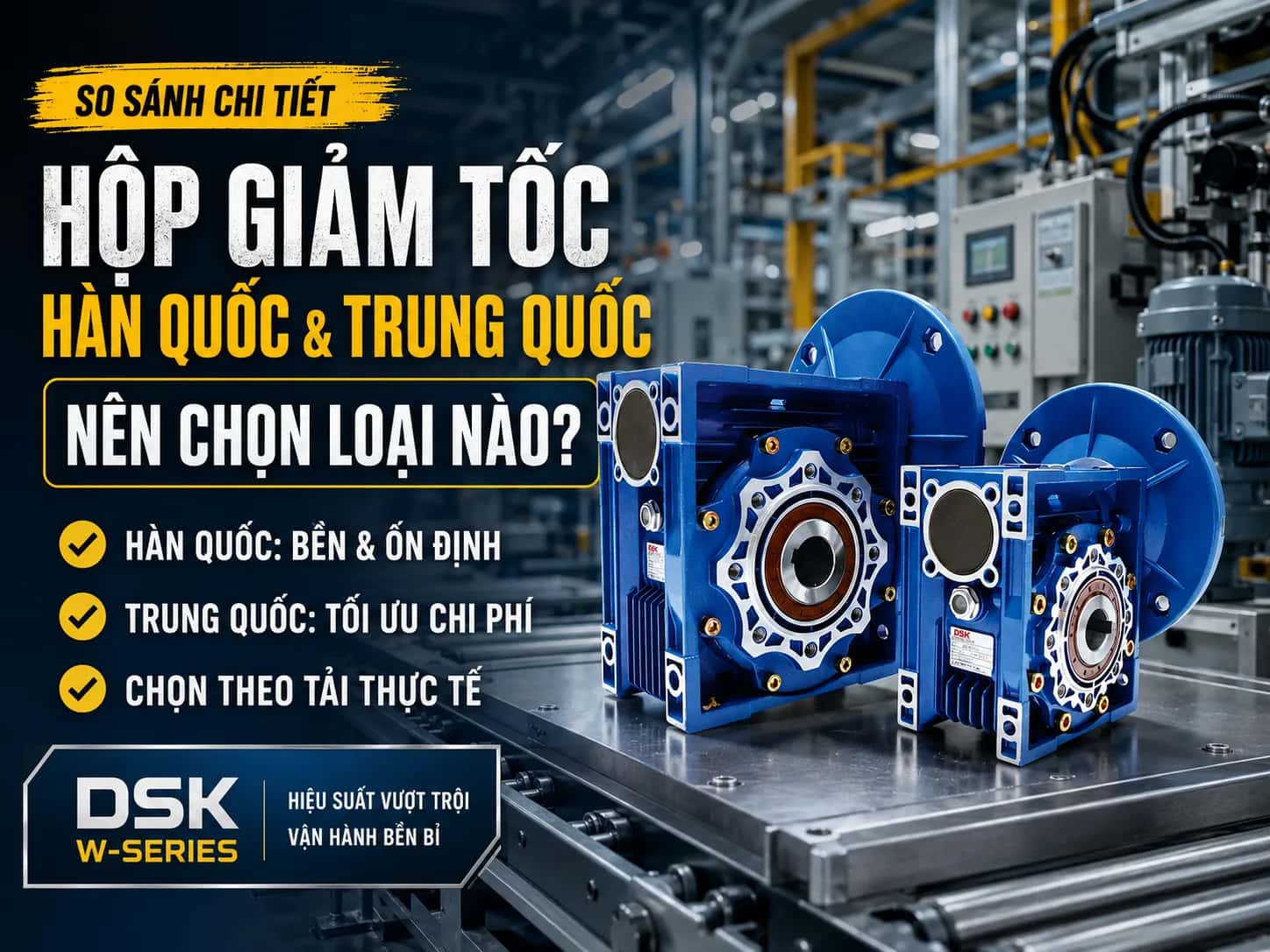
Supporting the selection of DSK geared motors and Korean geared motors.
Consulting on VFD applications for conveyors, agitators, and feeders.
Proposing replacement solutions when existing motors are no longer suitable.
If your system frequently experiences geared motor overheating, it is recommended to inspect the electrical, mechanical, and operating conditions simultaneously before deciding on a replacement.