Comparing Worm, Cycloidal, and Helical Gear Reducers: Which One to Choose?
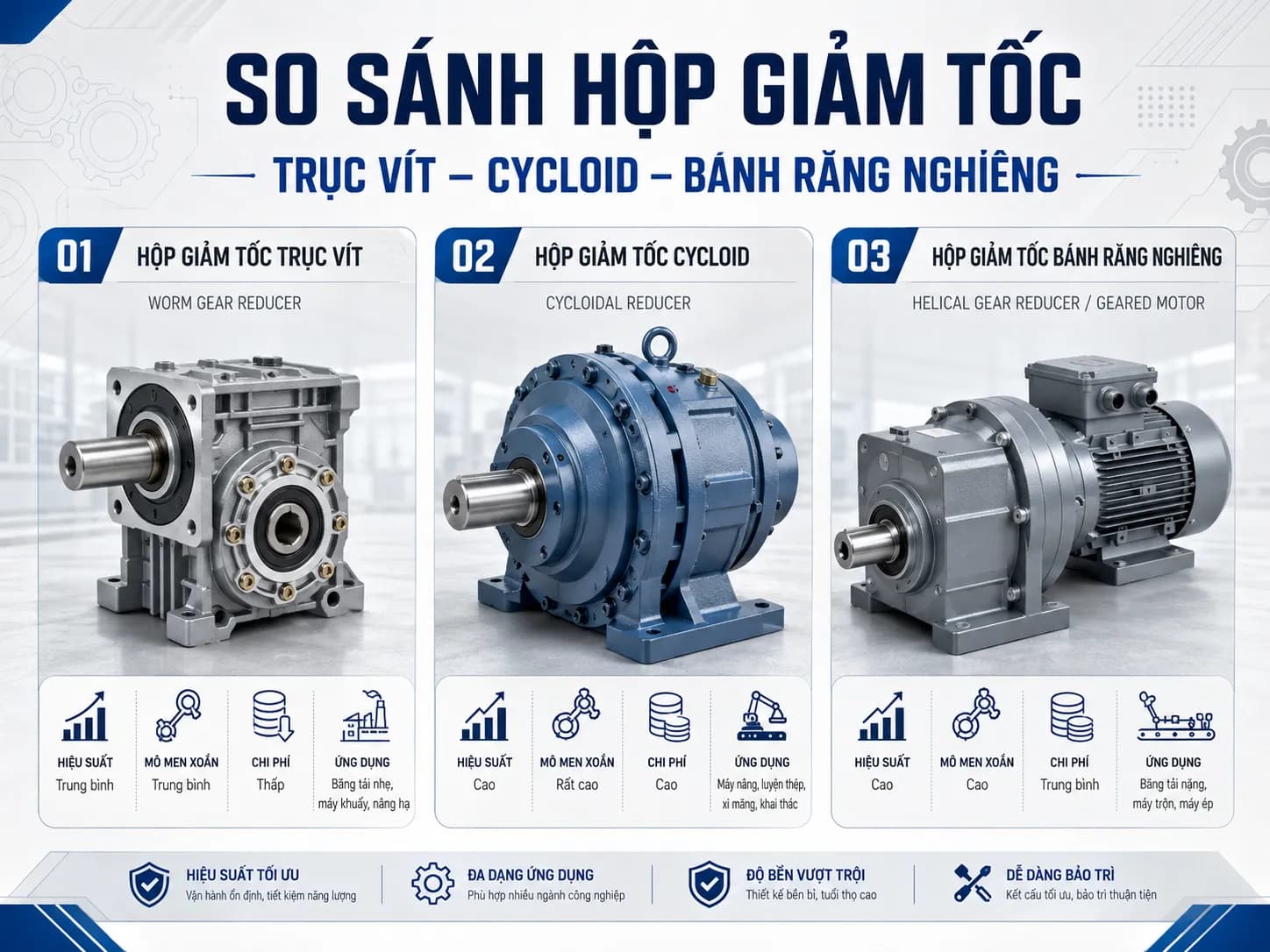
Worm gear reducers are ideal for compact designs, right-angle transmissions, cost-effective solutions, and light-to-medium loads. Cycloidal reducers excel in heavy-duty applications, shock loads, agitators, crushers, and systems requiring high torque. Helical gear reducers are best suited for continuous production lines, high-efficiency requirements, quiet operation, and long-term stability.
Comparing worm, cycloidal, and helical gearboxes: Which one to choose?
What is a gearbox?

Illustration of the industrial gearbox principle, showing the process of reducing rotational speed and increasing output torque for drive systems
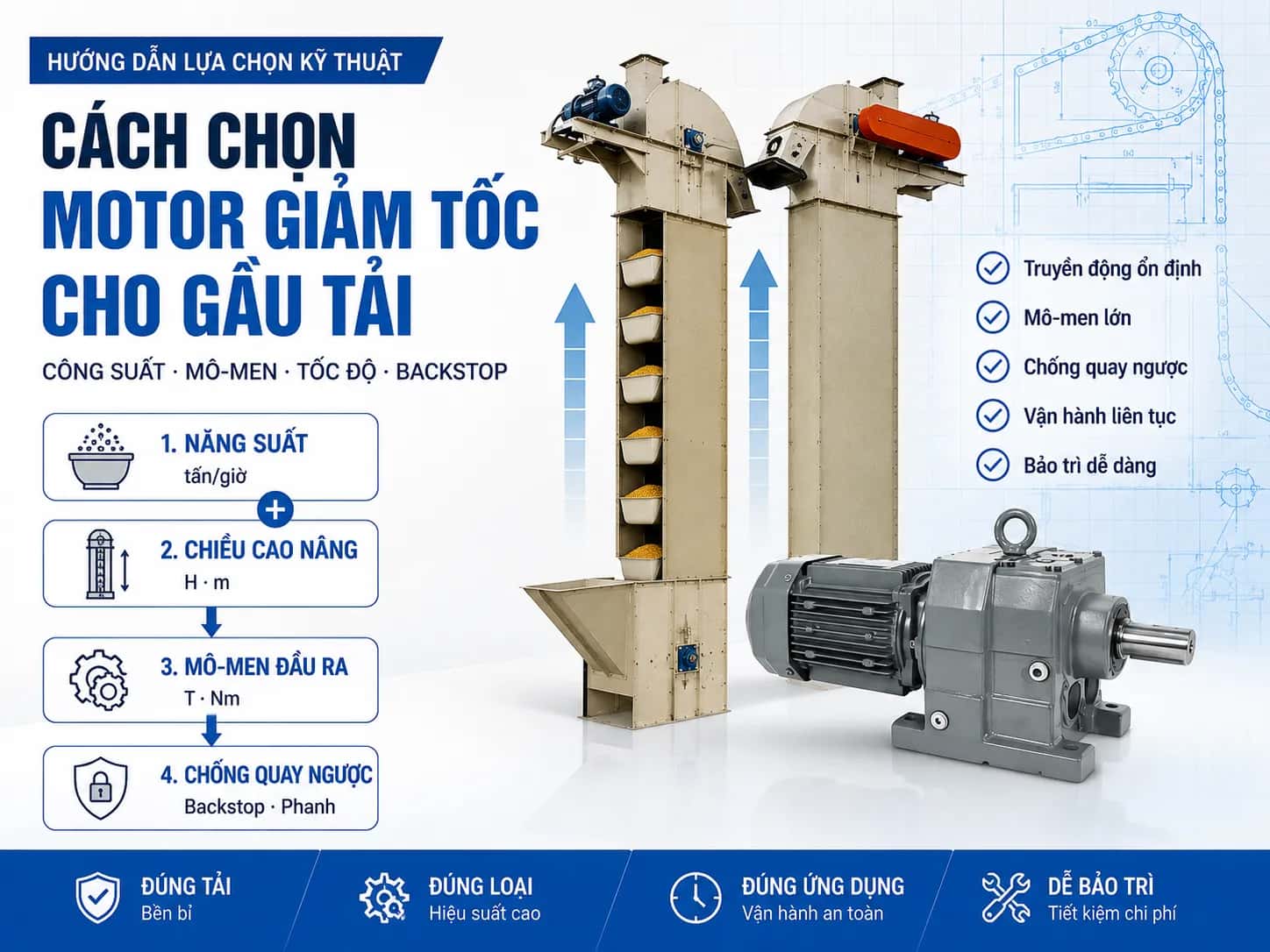
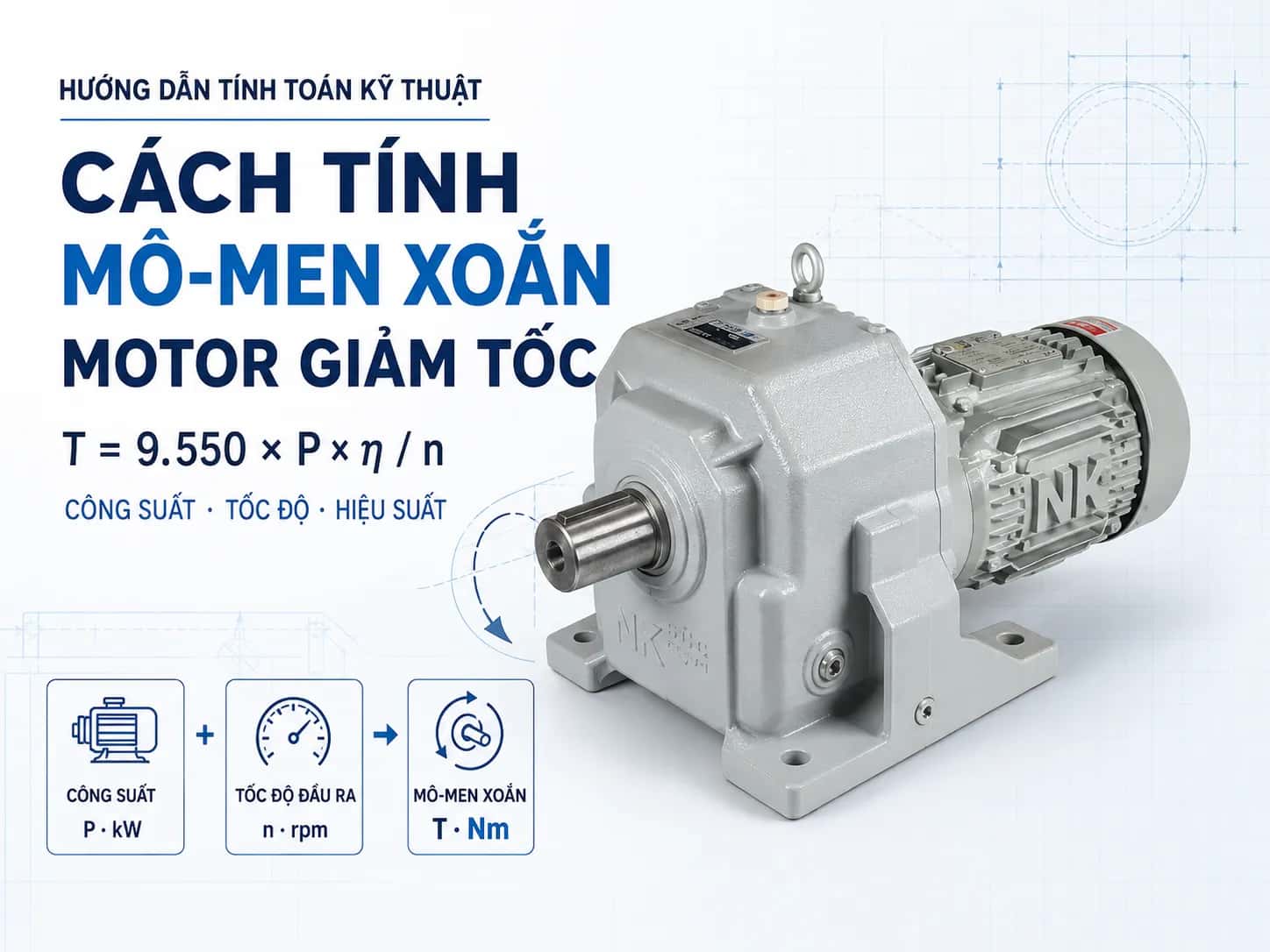
A gearbox is a mechanical device used to reduce the rotational speed from a motor and increase the output torque for machinery. This device is widely used in conveyors, agitators, crushers, packaging machines, mixers, lifting systems, logistics lines, and many other industrial drive systems.
For example, a 4-pole electric motor typically has a speed of approximately 1,450 rpm. If the machine only requires an output speed of 72 rpm, a gearbox with an appropriate gear ratio must be used to reduce the speed and increase the pulling force for the load.
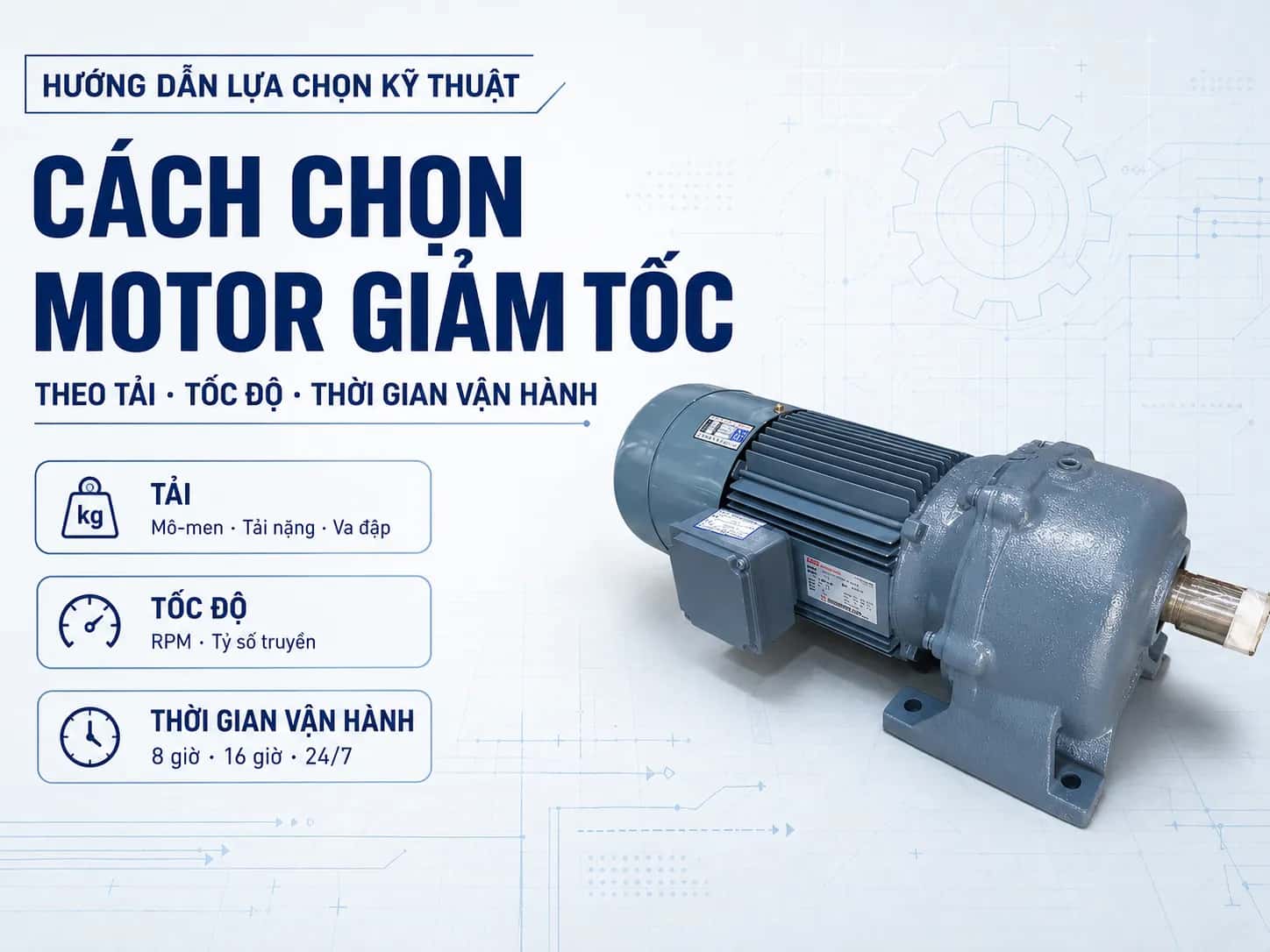
Gearboxes are typically selected based on the following key parameters:
Motor power
Input speed
Desired output speed
Gear ratio
Output torque
Load type
Daily operating hours
Mounting type
Operating environment
What is a worm gearbox?

Image of a worm gearbox used for industrial conveyors, suitable for applications requiring compact design, right-angle transmission, and cost-effectiveness.
A worm gearbox is a type of gearbox that uses a transmission mechanism between a worm and a worm wheel. A recognizable feature of this type is that the input shaft and output shaft are typically perpendicular to each other.
This type of gearbox is very popular in systems that require a compact design, high gear ratios, cost-effectiveness, and limited installation space.
Advantages of worm gearboxes
Worm gearboxes have a compact structure, are easy to install, and are suitable for many common machines. Thanks to the right-angle transmission mechanism, this type is very convenient when it is necessary to change the transmission direction in tight spaces.
Some notable advantages:
Compact design
Easy to install
Reasonable investment cost
Suitable for right-angle transmission
Capable of achieving high gear ratios
Relatively smooth operation under appropriate loads
In some cases, it has the ability to limit back-driving
Disadvantages of worm gearboxes
A point to note for worm gearboxes is that their efficiency is generally lower than that of helical gearboxes. When working with heavy loads or running continuously for long periods, the gearbox may generate higher heat.
Some common disadvantages:
Not optimized for continuous heavy-duty loads
Lower transmission efficiency compared to helical gears
Prone to overheating if the load is incorrectly selected
Requires attention to lubrication
Worm gears can wear out quickly if overloaded
Not suitable for applications requiring long-term high efficiency
Suitable applications
Worm gear reducers are generally suitable for:
Small conveyors
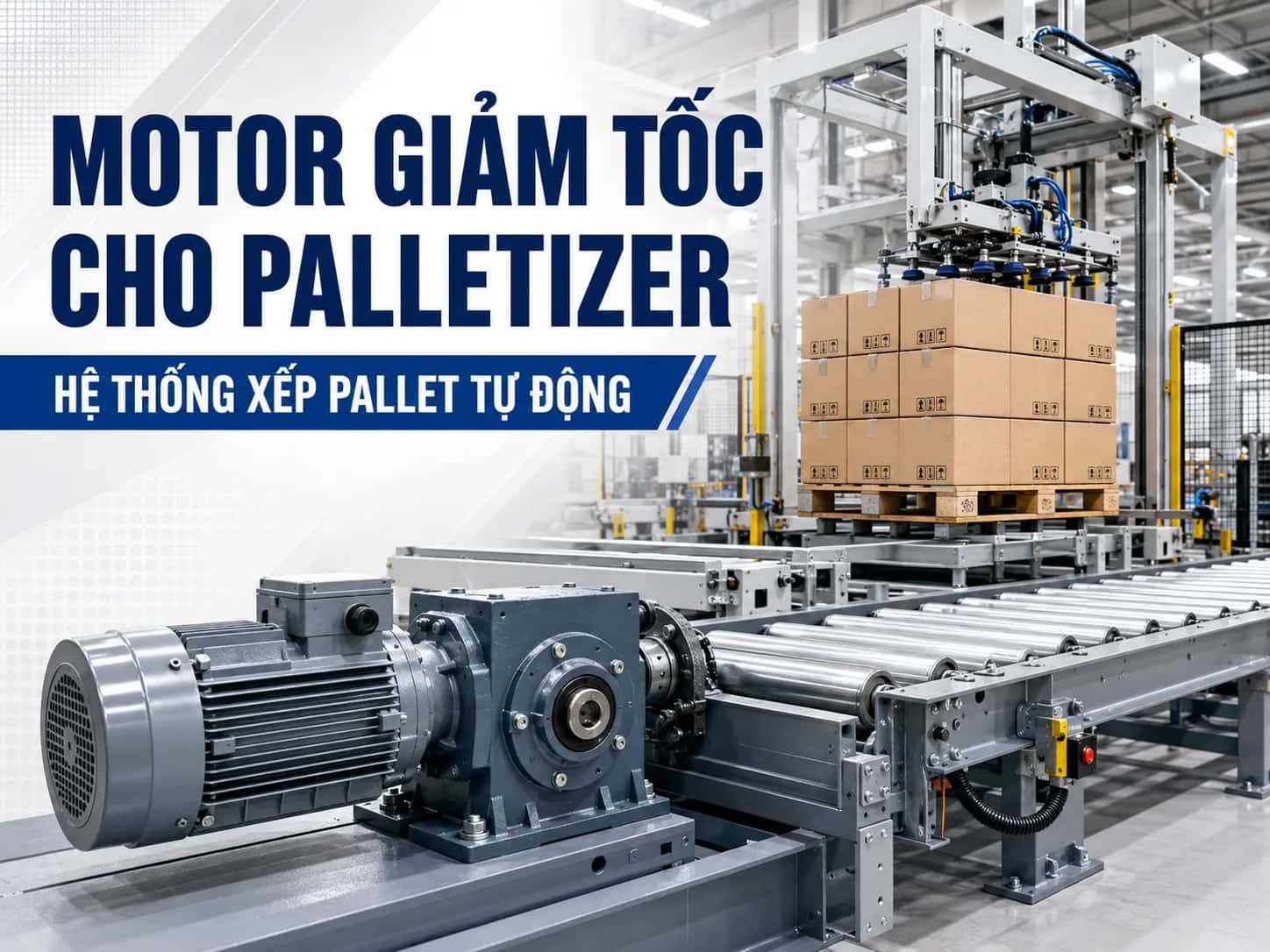
Packaging machines
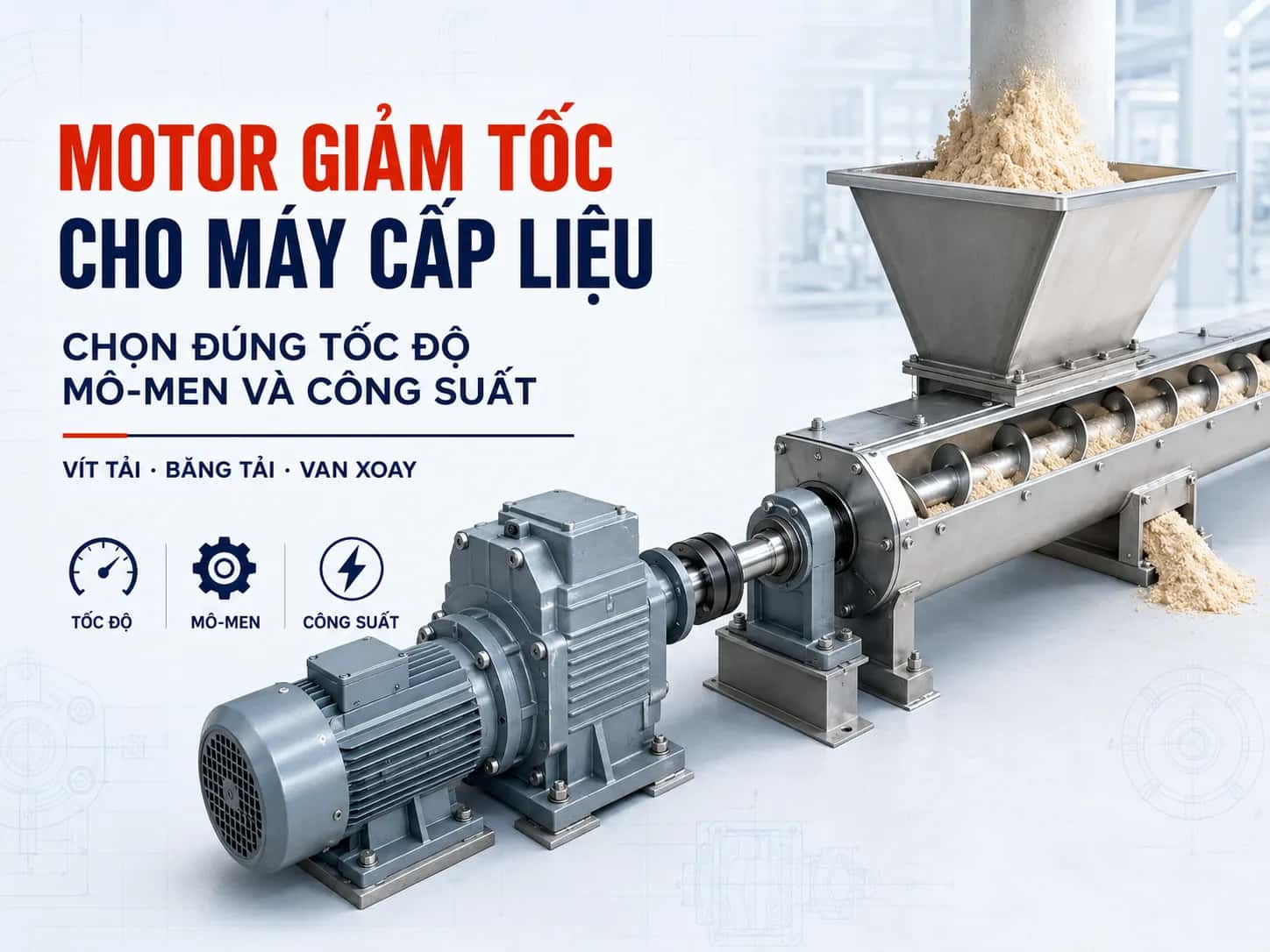
Feeding machines
Lifting tables
Automatic doors
Light-duty agitators
Auxiliary equipment
Systems requiring right-angle transmission
What is a cycloidal reducer?

Image of a cycloidal reducer used for agitators or heavy-duty systems, demonstrating its ability to withstand shock loads and transmit high torque.
A cycloidal reducer is a type of speed reducer that utilizes a cycloidal transmission mechanism. Instead of using conventional gear pairs, the cycloid mechanism uses the eccentric motion of a cycloidal disc to reduce speed and transmit torque.
This type of reducer is commonly used in applications requiring heavy-duty loads, shock loads, high torque, or operation in harsh industrial environments.
Advantages of cycloidal reducers
The greatest advantage of a cycloidal reducer is its excellent ability to withstand shock loads and heavy-duty loads. Because the power transmission mechanism has multiple contact points, cycloidal reducers are typically suitable for applications with variable loads, frequent starts, or high mechanical durability requirements.
Some notable advantages:
Excellent shock load resistance
High output torque
High gear ratios
Robust construction
Good durability in heavy industrial environments
Suitable for variable loads
Performs well in many heavy-duty applications
Disadvantages of cycloidal reducers
Cycloidal reducers generally have a higher cost than standard worm gear reducers. Furthermore, not every application requires the high load-bearing capacity of a cycloid. If used for light loads, the investment cost may not be truly optimized.
Some disadvantages to consider:
Cost is generally higher than worm gear units
Requires correct load factor selection
Dimensions may be larger depending on the series
Not the optimal choice for small, light-duty machines
Mounting style must be carefully checked when replacing
Suitable applications
Cycloidal reducers are generally suitable for:
Heavy-duty agitators
Mixers
Crushers
Presses
Heavy-duty conveyors
Material handling equipment
Production lines with shock loads
Systems requiring high torque
What is a helical gear reducer?

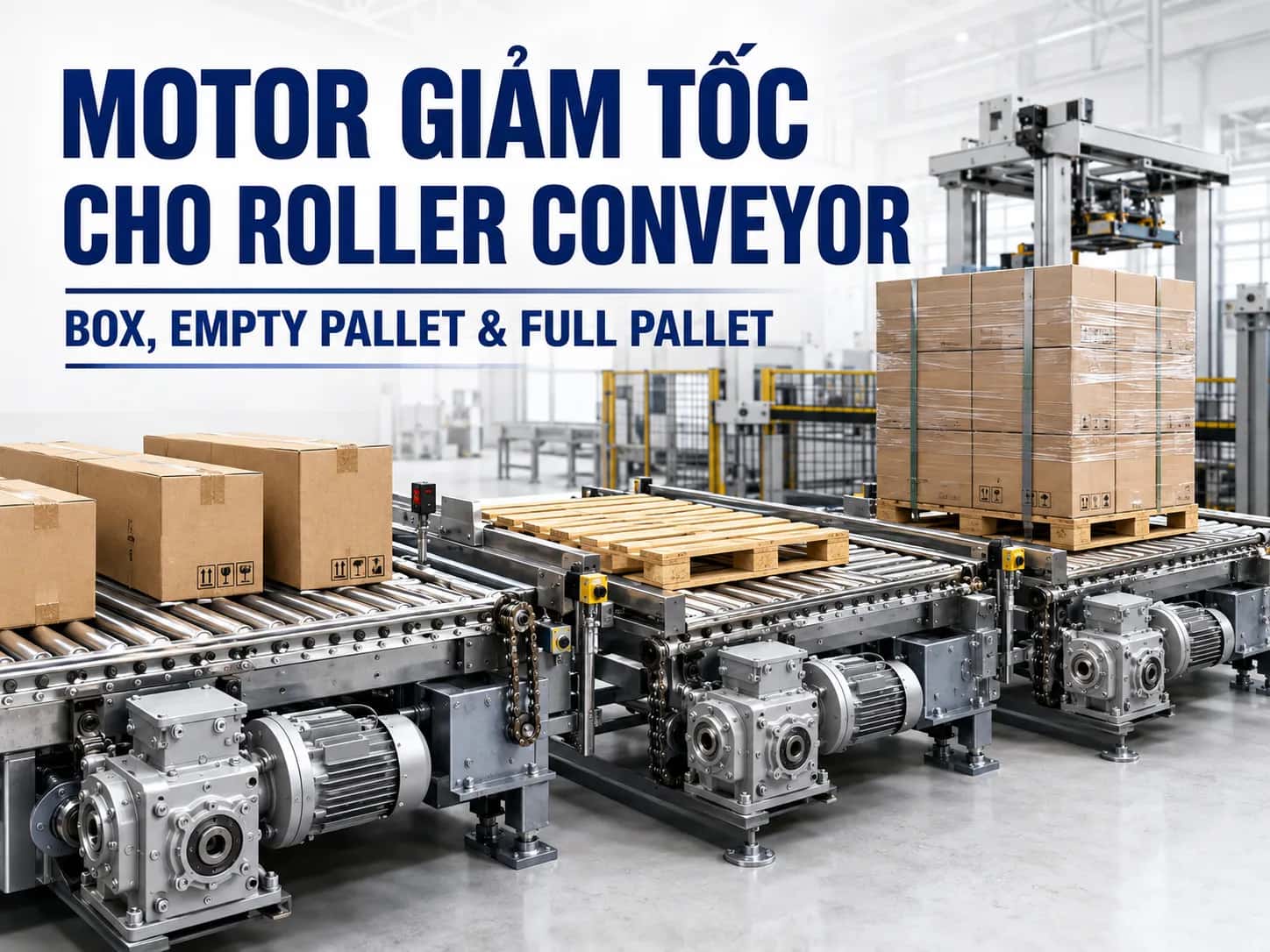
Helical gear reducer installed on an industrial conveyor line, suitable for systems requiring high efficiency, quiet operation, and continuous duty.
A helical gear reducer is a type of gearbox that uses pairs of gears with teeth cut at an angle (helix angle). Due to the gradual engagement process, this type of reducer typically operates more quietly, provides better vibration reduction, and offers high transmission efficiency.
It is a suitable choice for continuous production lines that require high stability, durability, and efficiency.
Advantages of helical gear reducers
Helical gear reducers offer significant advantages in terms of efficiency and stability. Compared to worm gear units, helical gears generally provide more efficient power transmission, lower energy loss, and are better suited for production lines operating for many hours per day.
Some notable advantages:
High transmission efficiency
Quiet operation
Low vibration
Suitable for continuous production lines
Good load-bearing capacity
Long service life when sized correctly for the load
More energy-efficient in long-term operation
Disadvantages of helical gear reducers
Helical gear reducers are typically more expensive than standard worm gear units. Additionally, when very high gear ratios are required, it may be necessary to use multiple stages or select a more appropriate gearbox configuration.
Some disadvantages to note:
Higher initial investment cost
More complex construction than worm gear units
Requires proper installation and alignment
Does not have self-locking capability like some worm gear mechanisms
Requires correct selection of gear ratio and output torque
Suitable applications
Helical gear reducers are generally suitable for:
Industrial conveyors
Continuous production lines
High-speed packaging machines
Food processing machinery
Rolling, drawing, and coiling machines
Logistics systems
Equipment requiring high efficiency
Systems requiring quiet and stable operation
Comparison table of worm, cycloidal, and helical gear reducers
Criteria | Worm gear reducer | Cycloidal reducer | Helical gear reducer |
|---|---|---|---|
Transmission type | Worm – worm wheel | Cycloidal mechanism | Helical gear |
Transmission direction | Usually perpendicular | Depends on design | Parallel or perpendicular depending on series |
Efficiency | Average | Quite good | High |
Load capacity | Light to medium load | Medium to heavy load | Medium to heavy load |
Shock load resistance | Average | Very good | Good |
Noise level | Quiet at suitable loads | Average to good | Quiet and stable |
Gear ratio | High in a single stage | High | Flexible |
Dimensions | Compact | Relatively robust | Depends on power and stages |
Cost | Usually lower | Medium to high | Medium to high |
Main applications | Small conveyors, packaging machines, light loads | Agitators, crushers, shock loads | Conveyors, logistics, continuous lines |
Best suited for | When compactness and cost-saving are needed | When high torque and heavy load capacity are needed | When high efficiency and stable operation are needed |

Infographic comparing worm, cycloidal, and helical gearboxes based on efficiency, load capacity, cost, and practical applications.
Which gearbox should be chosen for each application?
When should a worm gearbox be chosen?
A worm gearbox should be selected when the system requires a compact design, right-angle transmission, and reasonable investment costs. This is a suitable choice for light to medium-duty machinery that does not require extremely high efficiency and does not operate under continuous overload conditions.
Suitable applications:
Small conveyors
Simple packaging machines
Feeding machines
Auxiliary equipment
Lifting tables
Mechanisms requiring self-locking features
When should a cycloidal gearbox be chosen?
A cycloidal gearbox should be selected when the system involves heavy loads, shock loads, or requires high torque. This is a suitable choice for heavy industrial environments where the gearbox must withstand high forces and operate stably over long periods.
Suitable applications:
High-viscosity agitators
Mixers
Crushers
Presses
Heavy-duty conveyors
Material handling equipment
When should a helical gearbox be chosen?
A helical gearbox should be selected when the system requires high efficiency, quiet operation, and continuous running. This is a good choice for production lines that require high stability and lower long-term operating costs.
Suitable applications:
Industrial conveyors
Logistics lines
High-speed packaging machines
Food processing lines
Rolling, drawing, and coiling machines
Continuous production systems

Illustration on how to select gearboxes based on practical applications: worm for light loads, cycloidal for heavy loads, and helical for continuous production lines.
Common mistakes when selecting a gearbox
Selecting solely based on motor power
Many people only look at motor power such as 0.75 kW, 1.5 kW, 2.2 kW, or 3.7 kW to select a gearbox. This selection method is not sufficiently accurate. It is necessary to further check the output speed, gear ratio, torque, and load type.
Selecting solely based on low price
Low-cost gearboxes may be suitable for light loads, but if used for heavy loads or critical production lines, the risk of failure is higher. The cost of downtime is sometimes much greater than the initial cost savings.
Failure to check the service factor
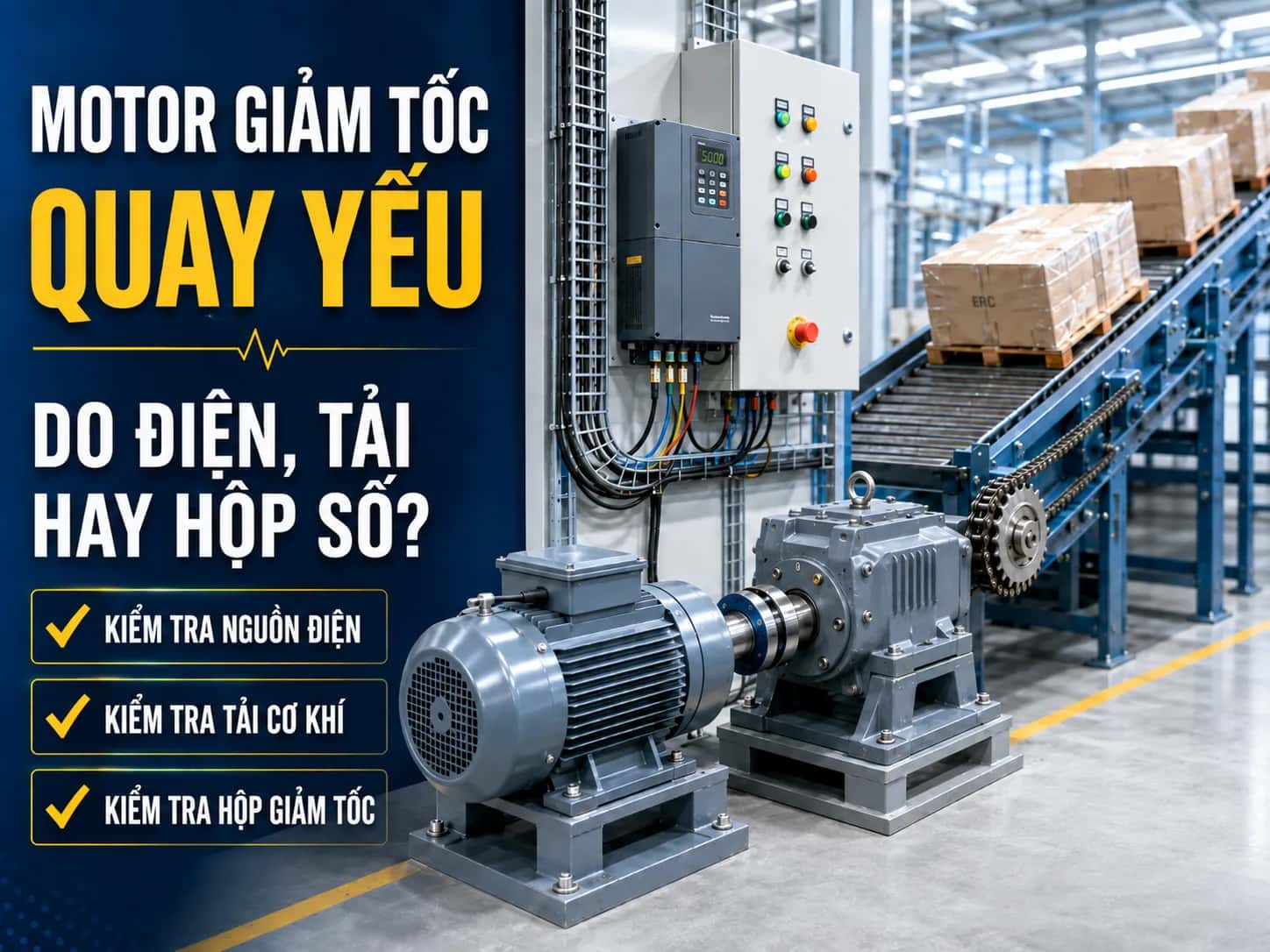
The service factor is critical for applications involving shock loads, reversing, frequent starts, or long daily operating hours. If a gearbox is selected without an adequate service factor, the equipment may overheat, vibrate, become noisy, experience gear wear, or suffer bearing failure.
Failure to check the mounting type
Before purchasing or replacing a gearbox, it is necessary to carefully check:
Foot mounting type
Flange mounting type
Hollow shaft or solid shaft
Shaft diameter
Bolt hole spacing
Motor position
Actual installation space
Gearbox selection checklist before purchasing
Before selecting a gearbox, you should prepare the following information:
Motor power in use
Input motor speed
Desired output speed
Required gear ratio
Required torque
Load type: light, medium, heavy, shock
Daily operating hours
Mounting type: foot, flange, hollow shaft, solid shaft
Shaft diameter
Installation space
Operating environment
Noise level requirements
Efficiency requirements
Investment budget
Lead time and warranty policy
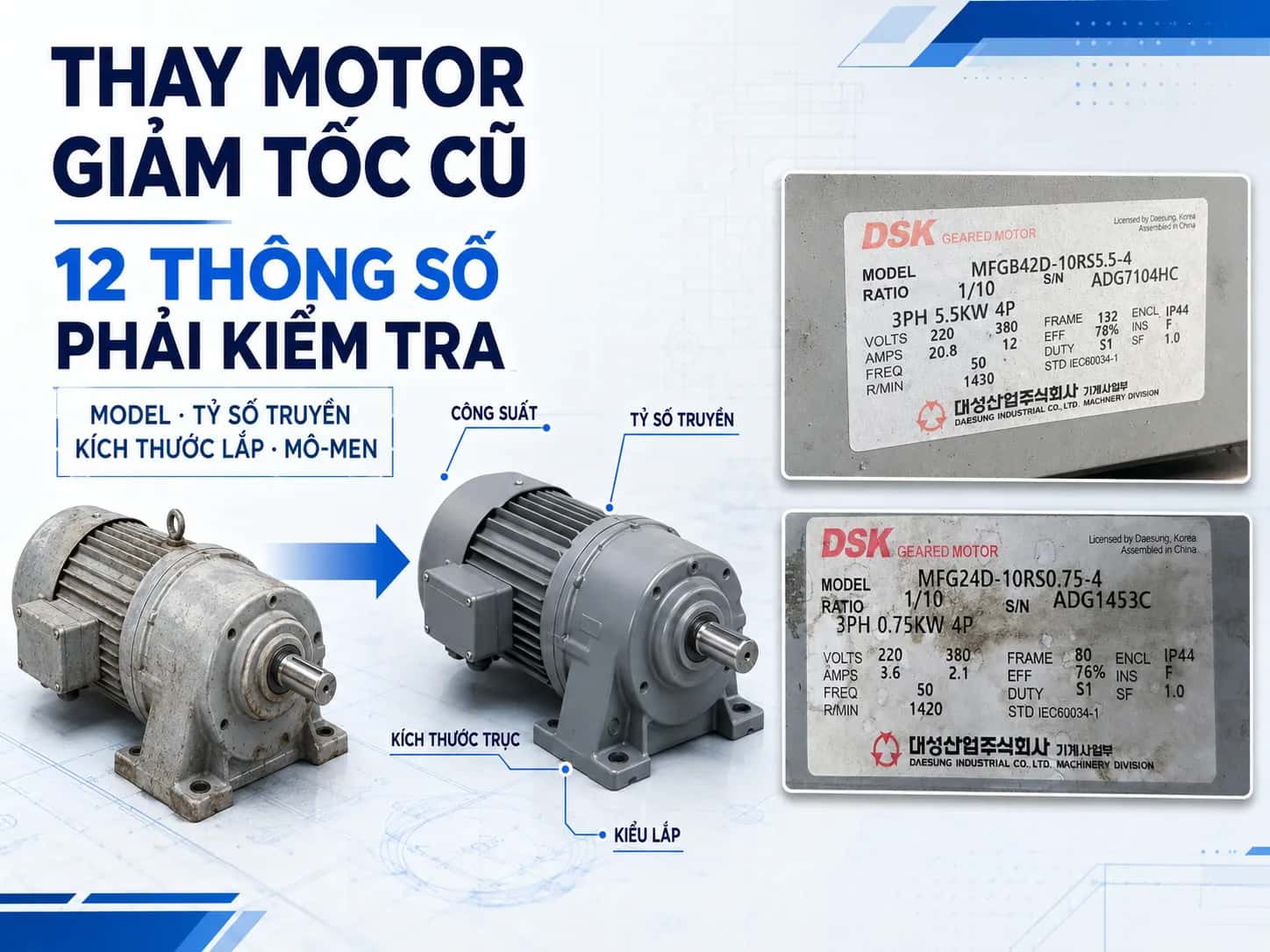
If you have not fully determined the parameters, you should provide images of the old equipment, the motor nameplate, the desired speed, and a description of the working load for more accurate consultation.
Conclusion
Worm, cycloidal, and helical gearboxes each have their own advantages. Worm gearboxes are suitable for applications requiring compact design, reasonable cost, and light to medium loads. Cycloidal gearboxes are suitable for heavy loads, shock loads, and machines requiring high torque. Helical gearboxes are suitable for continuous production lines, requiring high efficiency, quiet operation, and long-term stability.
If you need to optimize initial costs, a worm gearbox is an accessible choice. If you need durability for heavy loads, consider a cycloidal gearbox. If you need efficiency and stability for production lines, helical gearboxes are often a better long-term choice.
Contact for consultation & quotation
MDRIVETECH is a distributor and technical support provider for DSK Daesung geared motors in Vietnam. We are ready to advise on selecting the appropriate model based on the customer's power, gear ratio, and actual application.
📞 Hotline: 0868 789 647
📧 Email: [email protected]
Contact us now to receive technical advice, product catalogues, and the latest quotations.
Frequently Asked Questions
Are worm gearboxes durable?
Worm gearboxes can operate durably if selected with the correct load, correct gear ratio, and properly lubricated. However, this type should not be used for excessively heavy loads or continuous overloading without carefully checking the torque and service factor.
What are cycloidal gearboxes used for?
Cycloidal gearboxes are commonly used for agitators, mixers, crushers, presses, heavy-duty conveyors, and systems subject to shock loads or requiring high torque.
What are the advantages of helical gearboxes?
Helical gearboxes offer high efficiency, quiet operation, low vibration, and are suitable for continuous production lines. They are an excellent choice for industrial conveyors, logistics, food processing, packaging, and systems requiring long-term stability.
Which gearbox should be chosen for a conveyor?
For small and light-duty conveyors, a worm gearbox can be used. For heavy-duty or continuous-duty conveyors, cycloidal or helical gearboxes should be considered depending on torque and efficiency requirements.
Which gearbox is more energy-efficient?
Generally, helical gearboxes have higher transmission efficiency than worm gearboxes, making them more suitable for systems requiring energy savings in long-term operation.