Gear Motor Vibration: Causes, Inspection Methods, and Practical Solutions
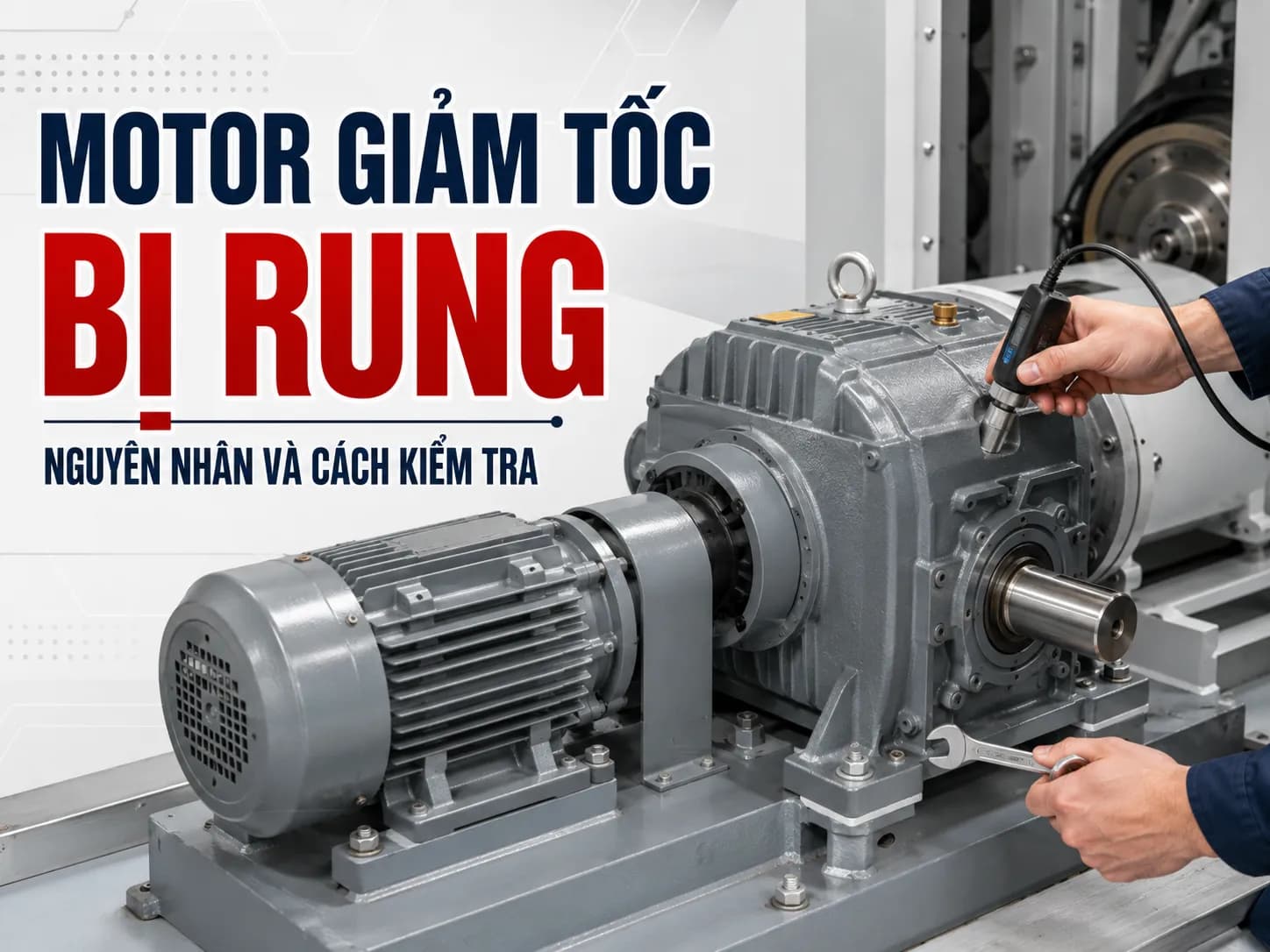
Gear motor vibration can be caused by misalignment, bearing failure, loose mounting, lack of lubrication, or unstable loads. Learn the causes, inspection procedures, and practical solutions.
Geared Motor Vibration: Causes, Inspection Methods, and Practical Solutions
Geared motor vibration is a common issue during factory operations, particularly in conveyor systems, agitators, screw conveyors, packaging machines, and various continuous-duty drive assemblies. In many cases, the vibration is initially mild, but if not inspected early, it can lead to a series of other problems such as motor overheating, excessive noise, bearing wear, gearbox oil leakage, loose mounting feet, or damage to the load mechanism.
In practice, when observing geared motor vibration, many people immediately assume the motor or gearbox is faulty. However, the cause does not always lie within the equipment itself. Many vibration cases originate from couplings, pulleys, sprockets, machine bases, unstable loads, or misalignment. Therefore, effective troubleshooting requires checking the right areas in the correct order.
What does geared motor vibration indicate?
Vibration is a sign that the drive assembly is operating unstably. The level of vibration can vary depending on the case. Some systems vibrate slightly at a specific speed range, others vibrate strongly upon startup, and some only vibrate when the load is applied.
Common symptoms include:
The motor housing or gearbox vibrates more noticeably than usual
Accompanied by unusual noises
Mounting feet or flanges vibrate, producing rattling sounds
The output shaft wobbles slightly or vibrates cyclically
The machine runs jerkily, not as smoothly as before
The temperature of the geared motor assembly rises faster than normal
If vibration persists, mechanical components will degrade faster. Bearings wear out easily, oil seals become damaged, couplings develop play, bolts loosen, and the entire drive system loses stability.
Causes of geared motor vibration
1. Misalignment
This is one of the most common causes. When the geared motor shaft and the load shaft are not concentric, the coupling operates in a misaligned state. Initially, the vibration may be mild, but over time, it will gradually increase, accompanied by noise and overheating at the bearing or coupling locations.
Misalignment often occurs when:
The machine base is not level
The coupling is not installed with proper alignment
The load shaft is misaligned
The motor assembly is pulled out of its original position during bolt tightening
The machine frame structure deforms after a period of operation
If the cause is misalignment, simply replacing the motor will not resolve the vibration.
2. Loose mounting bolts or flange bolts
In many cases, a geared motor vibrates strongly due to a very simple cause: loose mounting bolts. When the mounting feet are not securely fixed or the machine base lacks rigidity, the drive assembly will oscillate noticeably under load.
This is commonly encountered in:
Systems that have been running for a long time without checking or retightening bolts
Weak support frames, leading to resonant vibration
Machine bases showing signs of cracking or slight bending
Flanges installed unevenly or with uneven torque
If left unaddressed, vibrations caused by loose mounting feet can wear out bolt holes, damage the base surface, and make the system increasingly difficult to align.
3. Worn motor or gearbox bearings
Bearings are highly susceptible to causing vibration once they begin to deteriorate. When bearings are worn, lack lubrication, have excessive clearance, or are damaged, the rotating shaft will no longer be as stable as it was initially. In addition to vibration, this phenomenon is often accompanied by grinding, rattling, or growling noises that increase with speed.
Some easily recognizable signs:
Abnormally hot motor
Rough rotation when turned by hand
Noise that increases over time
Shaft play
Vibration increases as speed increases
If not addressed early, a failed bearing can lead to damage to the shaft, seals, or internal components of the gearbox.
4. Bent or run-out output shaft
If the gearbox output shaft is bent, has run-out, or is subjected to excessive force, it will also cause significant vibration. Causes can include mechanical impact, overloading, improper installation of sprockets or pulleys, or excessive belt tension over a long period.
When the shaft has run-out, vibration is usually cyclical and easily noticeable at the output. Upon close inspection, one may observe uneven pulley rotation or rhythmic chain jerking.
5. Issues with couplings, pulleys, sprockets, or belts
There are many cases where the geared motor is completely normal, but the external transmission system is the cause of the vibration. Worn couplings, unbalanced pulleys, misaligned sprockets, or over-tensioned belts can all transmit vibration back to the geared motor assembly.
This is why, when checking for vibration, one should not focus solely on the motor or gearbox, but rather examine the entire transmission system.
6. Unstable load or mechanical jamming
If the end load changes constantly, is misaligned, jammed, or experiences increased friction, the geared motor may vibrate accordingly. For example:
Conveyor belt misalignment or product jamming
Screw conveyor material buildup
Agitator encountering overly viscous material
Transmission mechanism binding or increased friction
Damaged load-side bearings, rollers, or pillow blocks
In these cases, the geared motor vibration is merely an external symptom. The root cause may actually lie within the machine mechanism.
7. Insufficient or degraded gearbox oil
Lubricating oil plays a crucial role in gearboxes. If the oil level is too low, the wrong type of oil is used, or the oil is contaminated, internal friction will increase, leading to overheating, noise, and vibration.
When checking the oil, pay attention to:
Whether the oil level is sufficient
Whether the oil has turned dark or black
Whether there is a burnt odor
Whether there are metal shavings in the oil
Whether there are signs of oil leakage at seals or mating surfaces
A gearbox lacking oil not only causes vibration but also significantly reduces the service life of internal gears and bearings.
8. Incorrect power or gear ratio selection
If the geared motor is undersized for the actual load, or if the gear ratio is unsuitable, the system may run weakly, jerk, vibrate, and overheat. This is commonly encountered when:
Actual load is greater than the original design
The system's operating method has changed, but the drive unit has not
Motor selection based solely on power without checking torque
Running via VFD at low speed without sufficient load torque
Safety factor not considered when selecting a geared motor
In practice, many motors are not faulty but still vibrate because they are operating outside their optimal range.
How to check a vibrating geared motor

When vibration occurs, it is recommended to follow a step-by-step inspection process rather than immediately dismantling the machine or replacing equipment.
Step 1: Determine when the vibration occurs
First, careful observation is required:
Does it vibrate immediately upon startup or only under load?
Does it vibrate at low speed, high speed, or across the entire range?
Is the vibration continuous or periodic?
Where is the vibration most noticeable: the motor, the gearbox, or the load mechanism?
This information is crucial as it helps narrow down the root cause more quickly.
Step 2: Check the base, flange, and machine foundation
This is a simple but essential step to perform first. Check all mounting bolts, the stability of the foundation, surface flatness, and the condition of the support frame. If loose bolts or a weak frame are detected, address these issues before proceeding with further inspection.
Step 3: Check the alignment between the gearbox shaft and the load shaft
If the system uses a coupling, check for alignment and angular deviation. In many cases, minor initial errors may not cause obvious issues, but vibration begins to appear after a period of continuous operation.
Step 4: Check couplings, pulleys, sprockets, and belts
If possible, decouple the load to run the geared motor independently. If it runs smoothly without load but vibrates when the load is attached, the cause is likely in the external drive system or the load mechanism.
Step 5: Check bearings and shafts
Listen for unusual noises, check the temperature, feel for shaft play, and try rotating it by hand if conditions permit. If the shaft does not rotate smoothly, has play, or makes strange noises, a deeper inspection of the bearings is required.
Step 6: Check the gearbox oil
Observe the oil level, color, and signs of leakage. If the oil smells burnt, is excessively dirty, or contains metal shavings, stop the machine to inspect the internal condition of the gearbox.
Step 7: Re-evaluate load and motor selection parameters
If the system load has increased, the application has changed, or the operating mode has been modified, review the power, output speed, torque, and gear ratio. Do not simply replace it with the same old model if the original cause was an unsuitable equipment selection.
When to stop the machine for immediate inspection?
Not all vibrations are immediately critical, but if the following signs appear, the machine should be stopped promptly for inspection:
Abnormally strong vibration
Vibration accompanied by loud noise
Motor or gearbox overheating rapidly
Burning smell
Visible oil leakage
Significant output shaft runout
Erratic or unstable machine operation
Abnormally high current draw
If you continue to operate under these conditions, damage will typically spread, and repair costs will be significantly higher.
How to minimize gear motor vibration
To reduce the risk of vibration during operation, pay attention to the following points:
Ensure proper alignment from the initial installation
Tighten and periodically inspect base and flange bolts
Select the correct power, torque, and gear ratio
Do not exceed the design load
Perform periodic bearing maintenance
Check gearbox oil according to actual operating conditions
Do not over-tension belts or chains
Periodically inspect couplings, pulleys, and sprockets
If the system is VFD-driven, verify the speed range and motor cooling conditions
Conclusion
Gear motor vibration is a sign that should not be ignored, as it may be related to mechanical installation, operating load, or the motor/gearbox itself. In practice, to address it correctly, a step-by-step inspection is required: from the base, alignment, and couplings to the mechanical load, bearings, gearbox oil, and motor selection parameters.
If the root cause is identified early, the resolution will be faster, and unnecessary equipment replacement can be avoided.
MDriveTech provides consulting for selecting gear motors, gearboxes, VFDs, and industrial drive solutions tailored to specific applications. For cases where gear motors vibrate, overheat, underperform under load, or produce abnormal noise, identifying the correct cause is a crucial step before replacement.
If you need assistance, MDriveTech can help re-evaluate the load, output speed, mounting type, and operating conditions to propose a more suitable solution for your system.
📞 Hotline: 0868 789 647
📧 Email: [email protected]
FAQ
Is gear motor vibration dangerous?
Yes. If vibration persists, the gear motor may experience premature bearing wear, coupling failure, oil leakage, and damage to the entire drive system.
Is gear motor vibration caused by the motor or the gearbox?
It can be caused by the motor, the gearbox, or external drive components such as couplings, pulleys, sprockets, mechanical loads, and the machine base.
Can low gearbox oil cause vibration?
Yes. When oil is insufficient or degraded, internal friction increases, leading to overheating, noise, and vibration.
What should be checked first if the geared motor vibrates under load?
You should check the mechanical load, couplings, pulleys, sprockets, alignment, and the overload status of the system.
Should the motor be replaced immediately when vibration occurs?
No. It is necessary to identify the cause first, as in many cases, vibration does not originate from the motor itself but from installation issues or the load.