What Are the Differences Between Hollow Shaft and Solid Shaft Gear Motors?
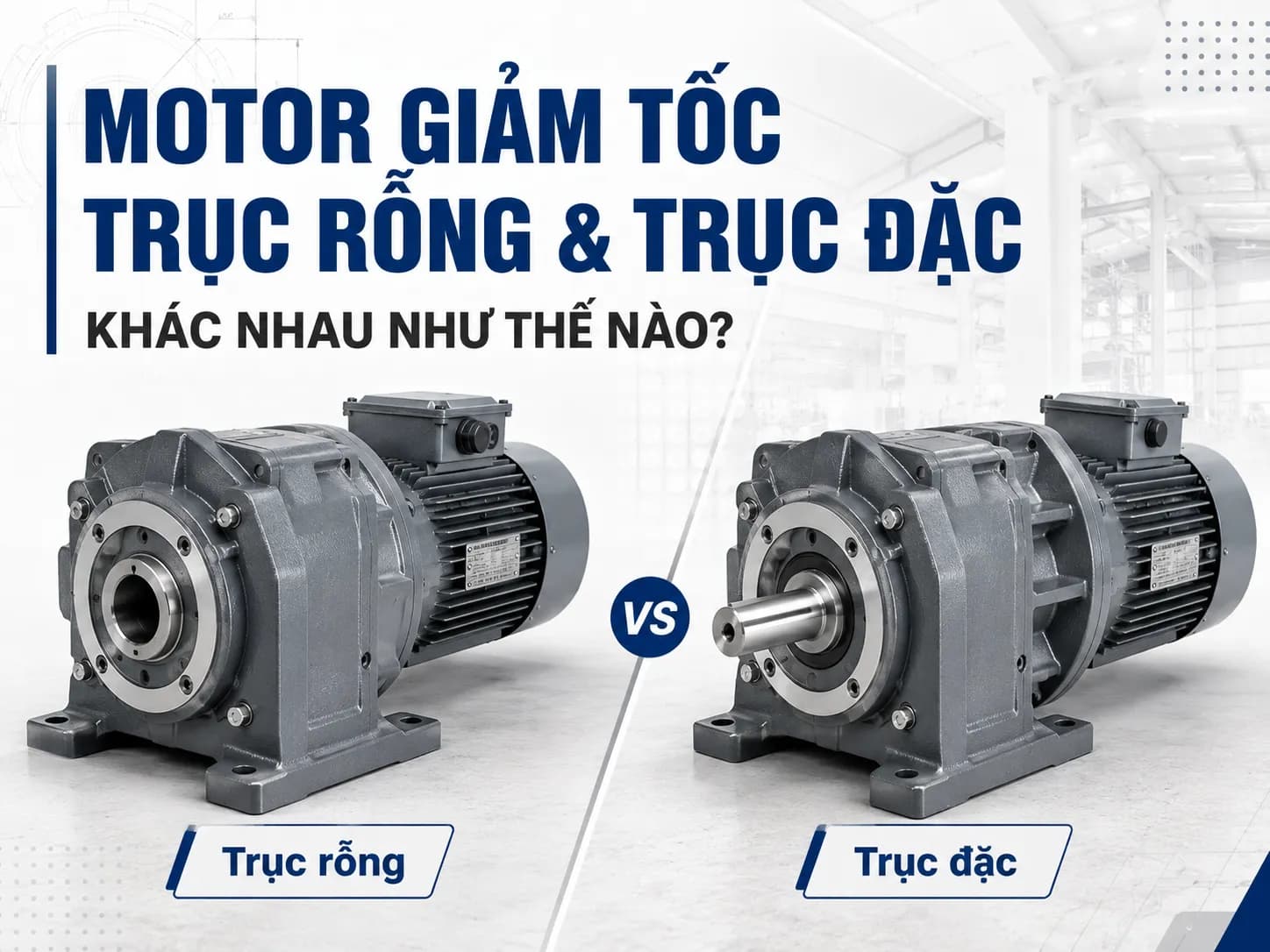
Hollow shaft and solid shaft gear motors differ in installation methods, transmission types, space requirements, and practical applications. Learn how to choose the right type for your needs.
What Is the Difference Between Hollow Shaft and Solid Shaft Gear Motors?
When selecting a gear motor for conveyors, agitators, screw conveyors, packaging machines, or industrial drive systems, in addition to power, output speed, and gear ratio, the output shaft type is also a critical factor. Among these, the two most common types are hollow shaft gear motors and solid shaft gear motors.
In many cases, choosing the correct power but the wrong shaft type still causes installation difficulties, requiring additional machining of couplings, structural modifications to the machine, or increased assembly costs. Therefore, it is essential to understand the differences between hollow and solid shafts to make the right choice from the beginning.
What is a hollow shaft gear motor?
A hollow shaft gear motor is a type of gear motor with a hollow output bore. Instead of extending a solid shaft outward, the gearbox is designed so that the machine shaft or load shaft can be inserted directly into the hollow shaft of the gearbox.
This design type is commonly referred to as a hollow shaft gear motor. Hollow shafts are typically used in systems that require compact installation, direct drive, and a reduction in the number of intermediate components.
In practice, hollow shaft gear motors are commonly found in:
Industrial conveyors
Packaging machines
Feeding machines
Small and medium-sized agitators
Drive systems mounted directly onto the machine shaft
Machine assemblies requiring space-saving installation
The strength of the hollow shaft is its ability to be mounted directly onto the load shaft, making the system more compact and reducing components such as couplings, pulleys, or sprockets in certain cases.
What is a solid shaft gear motor?
A solid shaft gear motor is a type of gear motor with a solid shaft protruding from the gearbox. This is a very common type in industrial drive systems.
This type is commonly referred to as a solid shaft gear motor. When using a solid shaft, users can connect the gear motor to the load via couplings, sprockets, pulleys, gears, or other intermediate transmission mechanisms.
Solid shaft gear motors are typically used in:
Conveyors
Agitators
Screw conveyors
Crushers
Mixers
Winding machines
Drive systems using couplings
Systems requiring secondary gear ratio changes via sprockets or pulleys
The advantage of the solid shaft is its flexibility, ease of connection to various types of mechanisms, and suitability for many machine designs.
Differences between hollow shaft and solid shaft gear motors

The biggest difference lies in the installation method and the way power is transmitted to the load.
With a hollow shaft, the gear motor is usually mounted directly onto the machine's shaft. This design makes the drive assembly more compact, reduces installation length, and limits the need for certain intermediate components.
With a solid shaft, the gear motor transmits force externally through an output shaft. From this shaft, the user can connect to the load using couplings, sprockets, pulleys, or other transmission components.
Simply put:
Hollow shaft: mounts directly onto the machine shaft, compact, and space-saving.
Solid shaft: extends the shaft externally, easy to connect with various transmission mechanisms.
Advantages of hollow shaft gear motors
Hollow shaft gear motors offer many advantages in systems requiring compact designs.
Firstly, the hollow shaft configuration helps reduce the overall length of the drive assembly. Since the gearbox can be mounted directly onto the load shaft, the system does not require additional long couplings or auxiliary transmissions if the design permits.
Secondly, the hollow shaft helps reduce the number of intermediate components. With fewer parts, the system can be more compact, requires fewer alignment points, and reduces the risk of misalignment during installation.
Thirdly, hollow shaft gear motors are suitable for machines with limited space. This is why this shaft type is commonly used in conveyors, packaging machines, feeding machines, or automated machinery assemblies.
However, hollow shafts still require precise technical installation. If the machine shaft is not the correct size, is not concentric, or is not securely installed, the system may still experience vibration, keyway wear, shaft backlash, or difficulty during maintenance disassembly.
Advantages of solid shaft gear motors
The major advantage of a solid shaft gear motor is its versatility. With a solid output shaft, users can easily connect to various types of transmission systems.
For example, a solid shaft can be connected to:
Flexible couplings
Rigid couplings
Sprockets
Belt pulleys
Gears
Intermediate shafts
The solid shaft type is suitable when the distance between the gear motor and the load does not allow for direct mounting. It is also suitable for systems that require changing the auxiliary transmission ratio using sprockets or pulleys.
In terms of maintenance, the solid shaft is also quite easy to inspect because the shaft, coupling, or external transmission can be observed directly. If the system requires disassembly, structural changes, or machine retrofitting, the solid shaft is generally more flexible than the hollow shaft.
When should you choose a hollow shaft gear motor?
You should consider choosing a hollow shaft gear motor when the system requires a compact installation and has a machine shaft suitable for direct mounting.
Some suitable cases include:
Conveyors requiring compact drive assemblies
Packaging machines with limited installation space
Feeding machines requiring direct drive
Machine assemblies where additional couplings or sprockets are not desired
Machine designs already featuring a shaft compatible with the hollow shaft diameter
Need to reduce the overall length of the transmission system
However, before selecting a hollow shaft, it is necessary to carefully check the machine shaft diameter, keyway, installation length, mounting orientation, radial load, and ease of disassembly for maintenance. Do not choose a hollow shaft simply because it looks more compact if the machine structure is not suitable.
When should you choose a solid shaft gear motor?
A solid shaft gear motor should be selected when the system requires flexible connection to the load or the use of an intermediate transmission unit.
Some suitable scenarios include:
Transmission via couplings
Transmission via sprockets and chains
Transmission via pulleys and belts
Systems requiring a specific distance between the motor and the load
Machines that may require speed adjustments via auxiliary transmissions
Load mechanisms unsuitable for direct hollow shaft mounting
Requirements for easy disassembly, alignment, and maintenance
If the system involves heavy loads, shock loads, or requires frequent maintenance, a solid shaft is generally easier to handle. However, when using a solid shaft, attention must be paid to coupling alignment, chain tension, belt tension, and concentricity to prevent vibration, noise, or bearing wear.
Comparison table of hollow shaft and solid shaft gear motors
Criteria | Hollow shaft | Solid shaft |
|---|---|---|
Output type | Hollow bore for direct mounting onto the machine shaft | Solid shaft protruding outward |
Installation method | Compact, typically direct mounting | Flexible, using couplings or transmission units |
Installation space | Space-saving | Requires additional space for couplings, pulleys, or sprockets |
Flexibility | Depends on the machine shaft dimensions | Easy to connect to various load types |
Maintenance | Requires attention to shaft disassembly | Easier to observe and handle |
Common applications | Conveyors, packaging machines, feeders | Conveyors, agitators, screw conveyors, mixers, crushers |
Key considerations | Check shaft dimensions, keyways, concentricity | Check couplings, pulleys, chains, alignment |
Common errors when selecting the wrong shaft type
Some practical errors often encountered when selecting hollow shaft or solid shaft gear motors include:
Selecting a hollow shaft but the machine shaft is incompatible.
If the shaft diameter, keyway, or installation length is incorrect, installation will be difficult, requiring additional machining or making direct installation impossible.
Selecting a solid shaft but lacking space for coupling installation.
Some machines have limited space; choosing a solid shaft may result in insufficient room to install couplings, pulleys, or sprockets.
Failure to check for concentricity.
Whether using a hollow or solid shaft, misalignment can cause vibration, noise, bearing wear, and reduced equipment lifespan.
Excessive tensioning of chains or belts.
With solid shaft gear motors, if using sprockets or pulleys, excessive tension can increase the radial load on the shaft and bearings.
Selecting based solely on power while ignoring the mounting type.
Motors with the same power but different shaft types may not fit the machine. Therefore, when replacing, it is necessary to check the dimension drawings, shaft type, mounting type, and output position.
What information should be provided when selecting a gear motor?
To correctly select a hollow or solid shaft gear motor, the following information should be prepared:
Motor power
Required output speed
Gear ratio (if available)
Desired shaft type: hollow shaft or solid shaft
Output shaft diameter
Keyway dimensions
Mounting type: foot-mounted, flange-mounted, hollow shaft, solid shaft
Application: conveyor, agitator, screw conveyor, packaging machine
Heavy-duty or light-duty load
Daily operating hours
Whether a VFD is used
Drawings or photos of the old gear motor if it is a replacement
For cases involving the replacement of old gear motors, photos of the nameplate and installation drawings are very important. Do not rely solely on motor power, as dimensions, gear ratios, and mounting types can vary even for the same power rating.
What shaft types do DSK gear motors have?
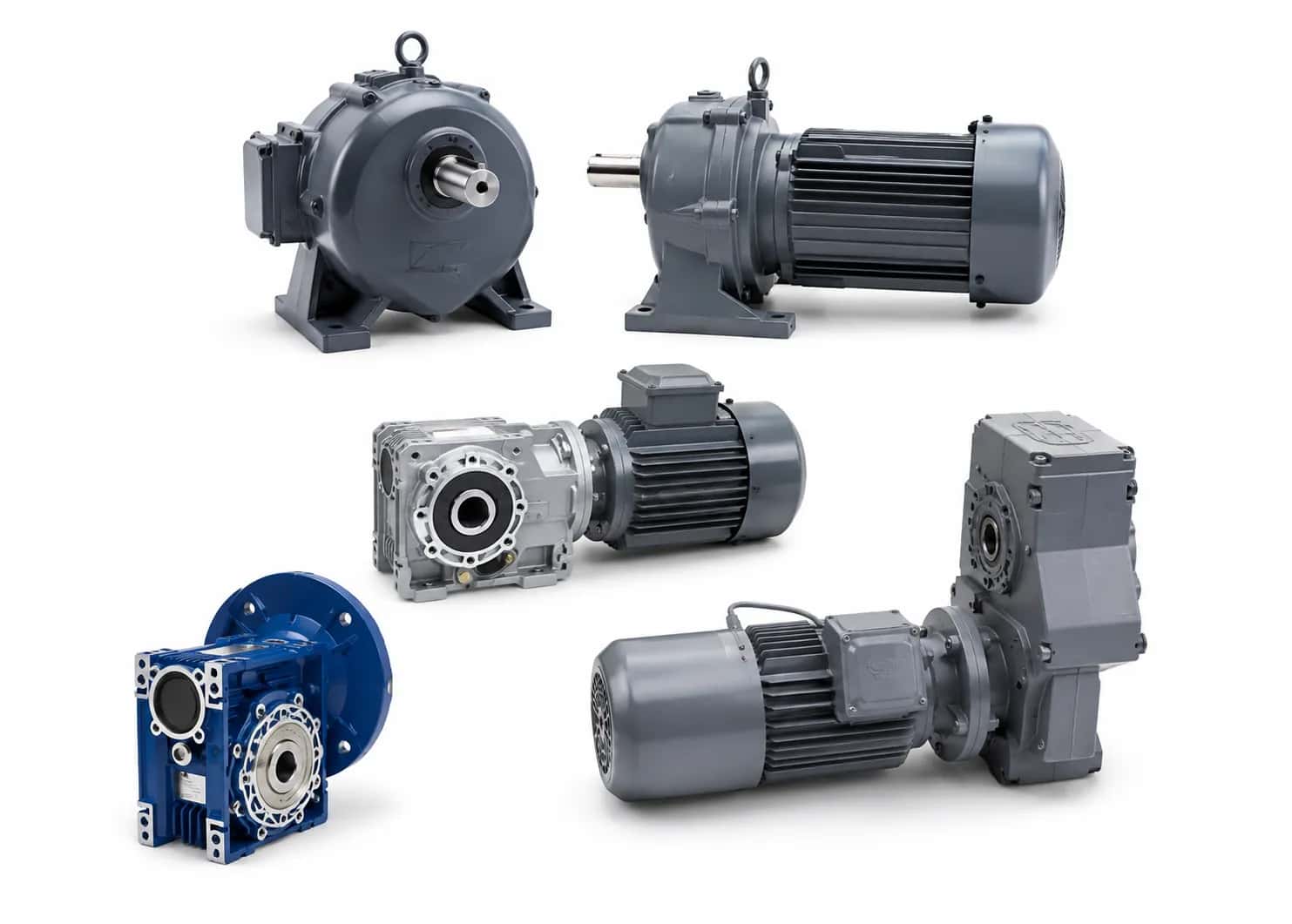
DSK gear motor series from South Korea offer various configurations depending on the series, power, gear ratio, and mounting type. Depending on the application, users can consider types such as solid shaft, hollow shaft, foot-mounted, flange-mounted, or right-angle mounting.
For example:
Helical gear series are suitable for many inline drive systems.
Spiral bevel gear series are suitable for applications requiring right-angle transmission.
Parallel shaft or heavy-duty series are suitable for systems requiring higher torque.
Worm or helical worm series can be used for applications requiring compact design and high gear ratios.
When selecting a DSK Gear Motor, it is necessary to verify the technical specifications and drawings for each specific model. Do not rely solely on external appearance to conclude whether it is suitable for replacement.
Conclusion
Both hollow shaft and solid shaft gear motors are widely used in industry, but each type is suitable for different installation and transmission requirements.
If the system requires a compact installation, direct drive to the machine shaft, and has limited space, a hollow shaft gear motor is an option to consider. Conversely, if the system requires flexible connection via couplings, sprockets, pulleys, or needs easy structural modifications, a solid shaft gear motor is usually more suitable.
It is important not to select a gear motor based solely on power. It is necessary to simultaneously check the output speed, gear ratio, load torque, mounting type, shaft diameter, keyway dimensions, and actual operating conditions.
MDriveTech provides consultation for selecting gear motors, gearboxes, VFDs, and industrial drive solutions tailored to specific applications. For new selection or replacement needs for DSK gear motors, it is essential to verify all parameters and drawings to ensure proper installation for the system.
📞 Hotline: 0868 789 647
📧 Email: [email protected]
FAQ
What is a hollow shaft gear motor?
A hollow shaft gear motor is a type of gear motor with a hollow output, allowing for direct mounting onto the machine shaft or load mechanism.
What is a solid shaft gear motor?
A solid shaft gear motor is a type with an output shaft protruding outward, typically connected to the load via couplings, sprockets, pulleys, or intermediate transmission components.
Should I choose a hollow shaft or solid shaft for a conveyor?
If the conveyor requires a compact drive assembly and has a suitable shaft for direct mounting, a hollow shaft can be considered. If connection via couplings, sprockets, or pulleys is required, a solid shaft will be more flexible.
Is a hollow shaft better than a solid shaft?
It cannot be said that a hollow shaft is better than a solid shaft in all cases. Each shaft type is suitable for a different machine design. Selection should be based on the installation method, load, space, and maintenance requirements.
What should be checked when replacing an old gear motor?
It is necessary to check the power, output speed, gear ratio, shaft type, shaft diameter, keyway, mounting type, flange or foot dimensions, and installation drawings.