What is a VFD? Structure, Working Principle
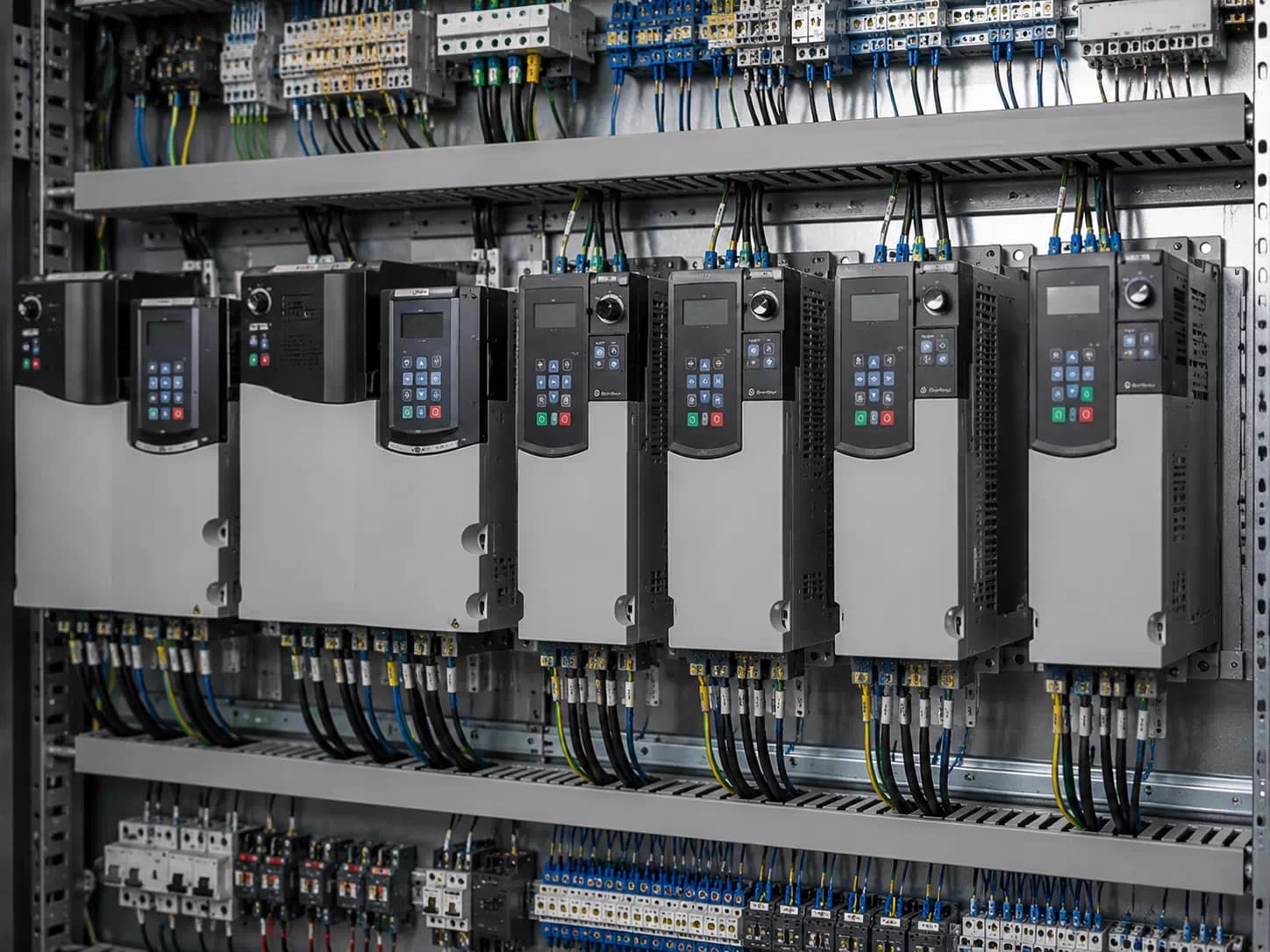
Learn in detail what a VFD is, its structure, working principle, applications, and how to select the most accurate one.
What is a VFD? A Comprehensive Guide to Structure, Working Principle, and Industrial Applications
In the Industry 4.0 era, automation and energy optimization are vital for every manufacturing business. If your machinery system is consuming excessive power, motors are frequently failing due to shock starts, or your technological processes require precise speed control, then understanding and applying VFD technology is mandatory.
So, what exactly is a VFD (Variable Frequency Drive)? What technical problems does it solve in a factory? In this article, as a drive engineer with over 15 years of field experience, I will deeply analyze the concept, physical structure, working principle, and the most optimal selection methods, helping engineers, procurement staff, and business owners gain a comprehensive view to make accurate investment decisions.

What is a VFD?
A VFD (also known as an Inverter or Variable Frequency Drive) is a device that converts alternating current (AC) at one frequency into AC at another adjustable frequency. The core function of a VFD is to change the frequency of the current supplied to the motor windings, thereby controlling the motor's speed and torque steplessly without the need for complex mechanical gearboxes.
According to basic electromagnetic principles, the speed of an asynchronous AC motor is calculated based on the formula:
n = 60f / p
Where:
n: Synchronous speed of the motor (RPM).
f: AC frequency (Hz).
p: Number of magnetic pole pairs of the motor.
Based on the formula above, since the number of pole pairs p is fixed for each motor, the only and most effective way to change the speed n is to change the frequency f. This is the task that a VFD performs.
Structure and working principle
Detailed structure of a VFD
A standard industrial VFD is composed of 4 main parts:
Rectifier: Typically uses a Diode bridge (uncontrolled rectifier) or SCR. Its function is to convert AC power from the grid (can be 1-phase or 3-phase) into direct current (DC).
DC Link / Filter: Consists of a large capacitor system and an inductor. The task of the DC Link is to smooth and filter out the ripple of the DC current after passing through the rectifier, creating a flat and stable DC source to store energy.
Inverter / IGBT: This is the "heart" of the VFD. It uses high-power semiconductor components, most typically IGBTs (Insulated Gate Bipolar Transistors). IGBTs act as electronic switches, turning on/off extremely fast (thousands of times per second) to convert DC current back into AC current.
Control Unit: A microprocessor board that receives signals from the user, sensors, or PLC, then calculates and emits control pulses (usually using PWM technique) to switch the IGBTs in the inverter circuit.

Working principle
The energy processing process takes place in 3 stages:
Stage 1 (AC to DC): Grid power (e.g., 3-phase 380V, 50Hz) is fed into the rectifier. The Diode system will convert this AC current into DC current.
Stage 2 (DC Filtering): This DC current is rippled, so it will pass through the capacitor filter at the DC Link. The DC voltage is then smoothed and stored, typically having a value of about 540V DC for a 380V AC grid.
Stage 3 (DC to adjustable AC): The microprocessor uses PWM (Pulse Width Modulation). By changing the on/off time of the IGBT valves, the device "chops" the DC voltage into square pulses. When entering the windings of an electric motor, these pulses will create a simulated sine wave current, with the frequency and voltage changing exactly according to the programmer's wishes.
Outstanding advantages
Investing in a VFD brings superior benefits, explaining why it has become the standard in automation engineering:
Maximum energy saving: In variable load applications like pumps and fans, reducing motor speed according to actual demand (instead of running at 100% and using a throttle valve) can save 20% to 50% of power consumption.
Mechanical and drive system protection: Thanks to the Soft Start capability, the starting current is controlled, causing no grid voltage sag. At the same time, mechanical shock during startup is eliminated, helping to protect belts, bearings, and reducing wear for gearboxes and piping systems.
Increased productivity and quality: The ability to adjust speed steplessly and accurately helps optimize technological cycles (e.g., packaging machines, textile machines), reducing waste.
Comprehensive motor protection: Integrated electronic protection functions such as: overcurrent, overvoltage, undervoltage, phase loss, phase imbalance, overheating.
Flexible connectivity: Easily integrated into PLC/SCADA systems via industrial communication protocols (Modbus RTU, Profibus, Profinet, Ethernet/IP).
Disadvantages to note
Although it is a "powerful weapon," engineers also need to be aware of the risks when using it to have intervention measures:
Initial investment cost: Higher compared to traditional starting methods (magnetic starters, star/delta).
Harmonics issues: The switching process of semiconductor devices generates high-order harmonics, which can cause interference to sensitive electronic equipment or overheat transformers. It is often necessary to install additional Chokes or harmonic filters to fix this.
Environmental requirements: Electronic boards are sensitive to dust, moisture, and chemicals. A high IP-rated protective electrical cabinet is required.
Expertise required: Parameter setting requires maintenance personnel to have certain knowledge of automation drives.
Common classifications today
Based on our experience in distributing and installing VFDs, we classify this device according to 3 main market criteria:
1. Classification by power supply
1-phase 220V input to 3-phase 220V output VFD: Often used for residential or small workshops that only have 1-phase power but want to run a 3-phase motor (220V delta connection).
3-phase 220V VFD: Common in machinery imported from Japan, USA.
3-phase 380V (or 400V/415V/480V) VFD: The most common type in industry.
2. Classification by operating voltage
Low Voltage: Used for 110V, 220V, 380V, 690V voltage levels. (Accounts for > 90% of the market).
Medium Voltage: Used for extremely large power motors at 3.3kV, 6.6kV, 11kV voltage levels (often seen in cement, mining, water plants).
3. Classification by load characteristics
Variable Torque / Normal Duty: Designed for water pumps, exhaust fans. Low overload capacity (usually 120% for 60s).
Constant Torque / Heavy Duty: Designed for cranes, presses, air compressors, conveyors. High overload capacity (usually 150% - 200% for 60s).
Industrial applications
The presence of this device is the heart of every industrial drive solution.
HVAC, Pump and Fan systems: Automatically adjust water/air flow according to actual pressure or temperature via PID loops, saving massive amounts of energy.
Conveyors: Allows adjusting conveyor speed in sync with the production process, avoiding product breakage during start/stop.
Crane and lifting systems: When combined with geared motors and integrated with braking resistors (to dissipate regenerative energy when lowering loads), the system helps lifting take place extremely smoothly, precisely positioning, and ensuring occupational safety.
Air compressors: Keeps the compressed air pressure in the factory network stable at a set level, even if usage demand changes continuously.
Plastic injection and extrusion machines: Stabilizes pressing force, improves finished product quality.
Selection guide
To buy the right product, avoid waste or equipment burnout, technical and procurement departments need to survey the following 5 factors:
Motor parameters: Check the motor nameplate for Voltage (V), Rated Current (A), Speed (RPM), and Power (kW). Always choose a VFD with a rated current greater than or equal to the motor's rated current.
Load characteristics: Answer the question: what does this machine do? If it is a heavy load (crane, crusher), you must choose a Heavy Duty VFD. Do not use a light-duty pump/fan VFD for a crusher.
Power supply: Clearly identify whether the factory is using 1-phase 220V, 3-phase 220V, or 3-phase 380V power.
Installation environment: If the area has a lot of metal dust, moisture (textile dyeing, chemicals), you need to choose a type with high Conformal Coating or IP54, IP66 protection class.
Control requirements: Does the system run by external switches, potentiometers, or control via HMI/PLC screen? Is a Profinet communication card or encoder (Closed-loop) needed?
Common errors and troubleshooting
Below is a summary table of common error codes that maintenance engineers often encounter and quick handling directions:
Common Error Code | Error Name | Main Cause | Handling / Troubleshooting |
OC (Overcurrent) | Overcurrent | Motor housing short circuit, mechanical jam, acceleration time too short. | Check motor insulation, check mechanical jam, increase Accel time. |
OV (Overvoltage) | Overvoltage | Grid voltage higher than allowed, large inertia load braking too fast. | Check source voltage. Install braking resistor if caused by inertia load generating reverse voltage. |
UV (Undervoltage) | Undervoltage | Input phase loss, grid voltage sag, faulty power contactor. | Measure 3-phase input voltage, check power cable and contactor. |
OL (Overload) | Overload | VFD power smaller than load, motor jammed, dry bearings. | Measure actual current, check mechanical part, consider upgrading device power. |
OH (Overheat) | Overheat | Cooling fan broken, cabinet dust filter clogged, ambient temperature too high. | Clean heat sink, replace cooling fan, install additional ventilation fan for cabinet. |
Quotation and factors affecting price
The current market is very diverse with a wide price range. Price is influenced by 4 groups of factors:
Brand origin:
Premium segment (Europe, USA, Japan): Siemens, ABB, Yaskawa, Mitsubishi, Allen-Bradley. Extremely high durability, complex features, high price.
Mid-range & budget segment (Taiwan, China): Delta, INVT, LS, Elektrim, Inovance. Stable performance, easy to set up, low investment cost, fast ROI.
Power (kW/HP): Directly proportional to price. The higher the power, the more expensive the IGBT and Capacitor components.
Load type (Heavy Duty vs Normal Duty): Heavy-duty designs are always more expensive than light-duty ones at the same kW level due to the need for larger power components.
Extended features: Integrated PLC, industrial communication cards, IP66 water resistance will significantly increase costs.
Note: For the most accurate price list according to each specific time and project, businesses need to contact the distributor directly to receive project pricing.
Where to buy reliable VFDs?
Buying automation equipment is not like buying a consumer good. You are buying stability for an entire production line worth billions of VND. Therefore, MDRIVE TECH is proud to be a pioneer, reliable unit in providing industrial drive solutions.
Why choose MDRIVE TECH?
Expertise: Team of engineers with >15 years of field experience, understanding every corner of electromechanical systems. We don't just sell equipment, we provide technical solutions.
Genuine quality: 100% of products have full CO, CQ documents from the manufacturer. Absolutely say no to fake, counterfeit, or refurbished goods.
Lifetime support: Professional after-sales service, support for parameter setting, on-site connection at the factory, and 24/7 troubleshooting.
FAQ - Frequently Asked Questions
1. What is a 1-phase to 3-phase VFD? Can it be used to power a factory system?
This is a VFD type that receives 1-phase 220V input and outputs 3-phase 220V. It only runs directly for 1 3-phase electric motor (already switched to 220V delta connection). It cannot be used as a power converter to supply 3-phase power for household appliances or the entire factory.
2. Does using a VFD really save electricity?
Yes, but it depends on the load type. For centrifugal loads like water pumps and fans, according to Affinity Laws, when speed is reduced by 20%, power consumption decreases by nearly 50%. However, for lifting loads (cranes) or constant load conveyors, this device does not produce significant electricity savings; the main purpose here is mechanical protection and process control.
3. How to reset a VFD when it reports an error?
When the screen reports an error, first look up the error code (in the manual) to thoroughly fix the cause. After processing, you can reset by pressing the "RESET" / "STOP" button on the keypad, or disconnect the power for 5-10 minutes to let the system discharge all power in the DC Link capacitor, then reconnect the power.
4. What is the maximum distance from the VFD to the electric motor?
The safe distance is usually under 50 meters. If the cable is too long (e.g., >100m), parasitic capacitance on the cable will increase, causing voltage reflection that damages the motor's insulation. In cases where long cable runs are mandatory, an Output Choke or dV/dt filter (Sine filter) must be installed.
MDRIVE TECH specializes in providing genuine industrial drive and automation solutions. Contact us now for technical advice and a quote suitable for your actual needs.
Contact MDRIVETECH now for technical advice, product catalogs, and quotes.
Hotline: 0868 789 647
Email: [email protected]