What Is the Difference Between Foot-Mounted and Flange-Mounted Geared Motors?
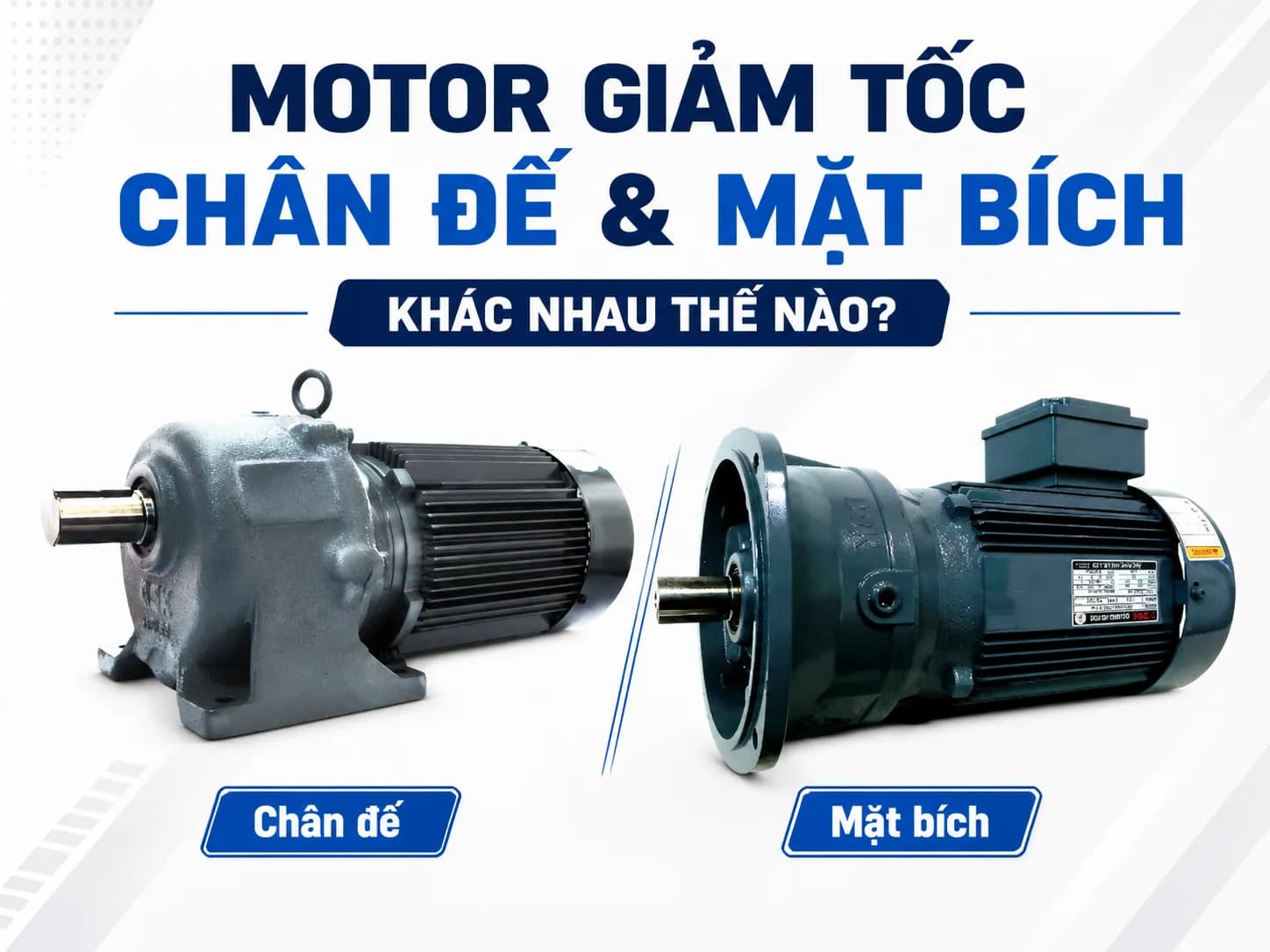
When selecting a geared motor, beyond power, gear ratio, and output speed, users must correctly identify the mounting type: foot-mounted or flange-mounted.
What Is the Difference Between Foot-Mounted and Flange-Mounted Geared Motors?
When selecting a geared motor, in addition to power, gear ratio, and output speed, users must correctly identify the foot-mounted or flange-mounted configuration.
Two geared motors with the same power and gear ratio are not necessarily interchangeable if their foot dimensions, flange sizes, output shafts, or bolt hole positions differ.
What is a foot-mounted geared motor?
A foot-mounted geared motor features mounting feet designed at the bottom of the gearbox housing. The device is secured directly to a machine base or steel frame using bolts.
This is a common mounting style in:
Conveyors.
Screw conveyors.
Mixers.
Agitators.
Bucket elevators.
Packaging machines.
Chain and sprocket drive systems.
Foot-mounted motors are typically chosen when the machine has an existing base and requires convenient installation, alignment, or maintenance.
Advantages
Easy to install on machine frames.
Convenient for disassembly and maintenance.
Position can be adjusted for chain or belt tensioning.
Suitable for many common drive systems.
Easy to modify the machine base when replacing with a different brand.
Disadvantages
Foot-mounted motors require a sufficiently rigid and flat machine base. If the base is warped, misaligned, or vibrates, the output shaft may lose concentricity, increasing the load on bearings and couplings.
The foot-mounted style also typically requires more installation space than the flange-mounted style.
What is a flange-mounted geared motor?
A flange-mounted geared motor has a round or square mounting face at the output side of the gearbox. The flange is bolted directly to the machine wall, vertical frame, or drive assembly.
This mounting style is commonly used in:
Packaging machines.
Food processing machinery.
Vertical agitators.
Winding machines.
Turntables.
Automation equipment.
Machines with limited installation space.
Advantages
Compact design.
No need for a bottom support base.
Excellent shaft centering capability.
Suitable for vertical mounting designs.
Easy to integrate directly into the machine body.
Disadvantages
Flange-mounted motors require precise installation dimensions. When replacing with a different brand or series, it is necessary to carefully check the flange diameter, pilot register, bolt hole circle, and shaft dimensions.
If any of these dimensions do not match, the new motor may not fit even if the power and gear ratio are identical to the old motor.
Comparison of foot-mounted and flange-mounted geared motors
Criteria | Foot-Mounted | Flange-Mounted |
|---|---|---|
Mounting Method | Bolted to machine base | Bolted directly to machine wall |
Space | Requires space underneath | More compact |
Alignment | Easy to adjust on the base | Centered by the flange |
Maintenance | Usually more convenient | Depends on machine space |
Replacing Brands | Easier to modify the base | Must verify exact dimensions |
Common Applications | Conveyors, screw conveyors, mixers | Packaging machines, vertical agitators |
Mounting Orientation | Usually horizontal | Can be horizontal or vertical |
When should you choose a foot-mounted gear motor?
You should choose a foot-mounted gear motor when:
The machine already has a motor mounting base.
Transmission is via sprockets and chains, belts, or couplings.
Transmission distance adjustment is required.
Frequent disassembly and maintenance are required.
There is sufficient space below the motor.
The existing motor uses a foot-mounted configuration.
For conveyors, foot-mounted motors are a popular choice because they are easy to position on the frame and convenient for adjusting chain tension.
When should you choose a flange-mounted gear motor?
You should choose a flange-mounted gear motor when:
The motor needs to be mounted directly onto the machine housing.
There is insufficient space for a mounting base.
Precise centering of the output shaft is required.
The equipment requires vertical installation.
The motor drives the machine shaft directly.
The machine has been pre-machined for flange mounting.
Flange-mounted motors are typically suitable for packaging machines, food processing machines, mixers, and automation systems with compact designs.
Can a foot-mounted motor be converted to flange-mounted?
It is possible, but usually not a direct replacement.
When converting from foot-mounted to flange-mounted, you must check:
Rigidity of the machine housing.
Shaft center position.
Flange diameter.
Pilot/spigot diameter.
Bolt hole circle diameter.
Shaft diameter and length.
Mounting orientation.
Gearbox lubrication requirements.
Conversely, when converting from flange-mounted to foot-mounted, it is necessary to fabricate an additional mounting base and realign the transmission center.
If the machine is operating stably, the safest approach is to maintain the original mounting configuration.
Are there models with both foot and flange mounts?
Yes. Some motors and gearboxes feature both foot and flange mounts to increase installation versatility.
For electric motors, B35 is the designation for the combination of foot and flange mounting. However, for gear motors, the designation may vary depending on the manufacturer.
Do not rely solely on the name. Users should check the dimension drawings of the specific model before ordering.
What is the difference between DSK MFG and MFGV?
For the DSK MFG Series gear motor line:
DSK MFG: foot-mounted configuration.
DSK MFGV: flange-mounted configuration.
These two lines may share the same power and gear ratio but differ in mounting structure. Therefore, when selecting, it is necessary to check the foot, flange, output shaft drawings, and the actual mounting orientation.
Do not select MFG or MFGV based solely on motor power.
Which is better at handling loads: foot-mounted or flange-mounted?
It cannot be concluded that either the foot-mounted or flange-mounted configuration is always better at handling loads.
Load capacity depends on:
Gearbox size.
Output torque.
Shaft diameter.
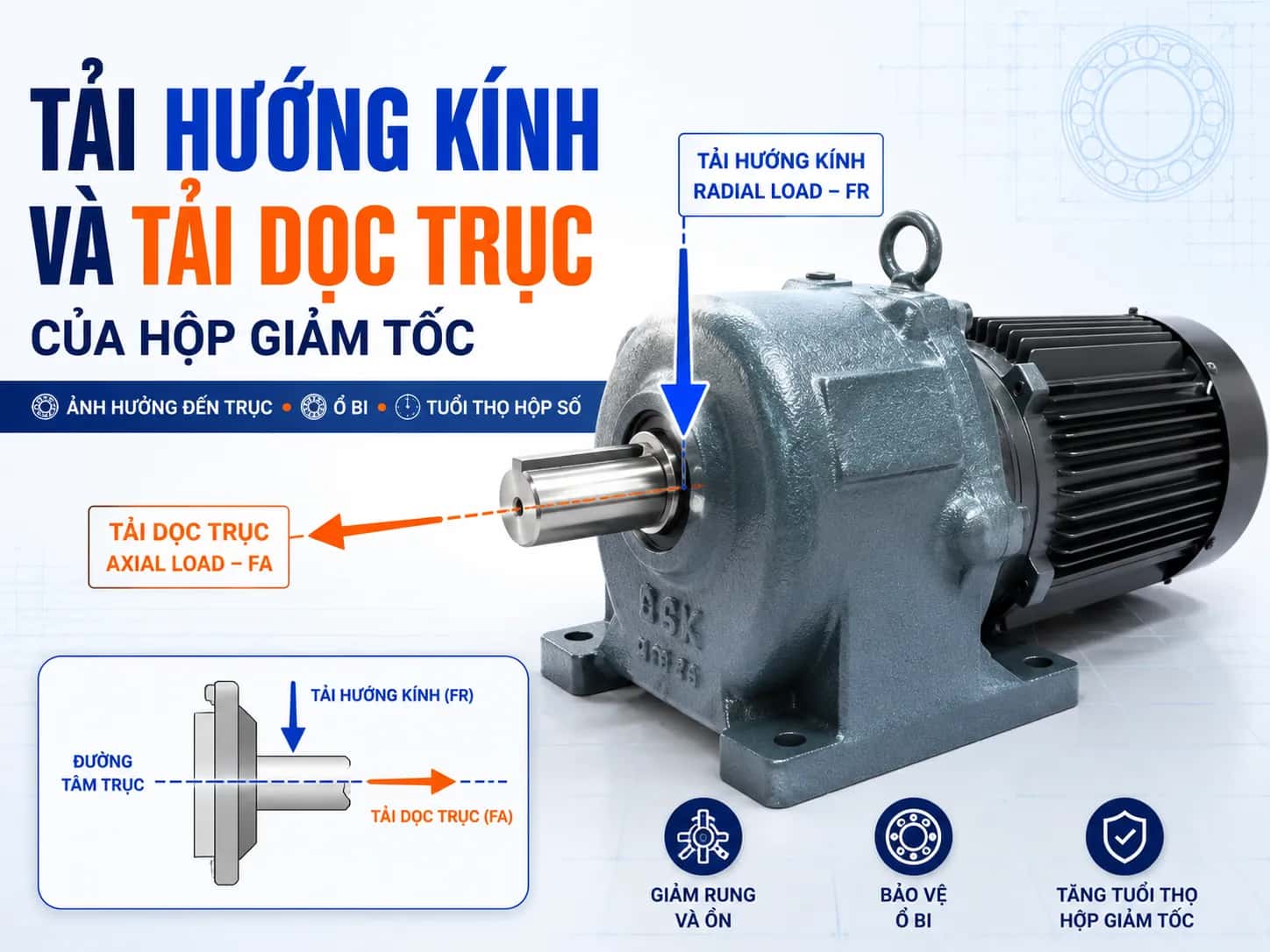
Radial load.
Axial load.
Bearing structure.
Distance from the load to the shaft shoulder.
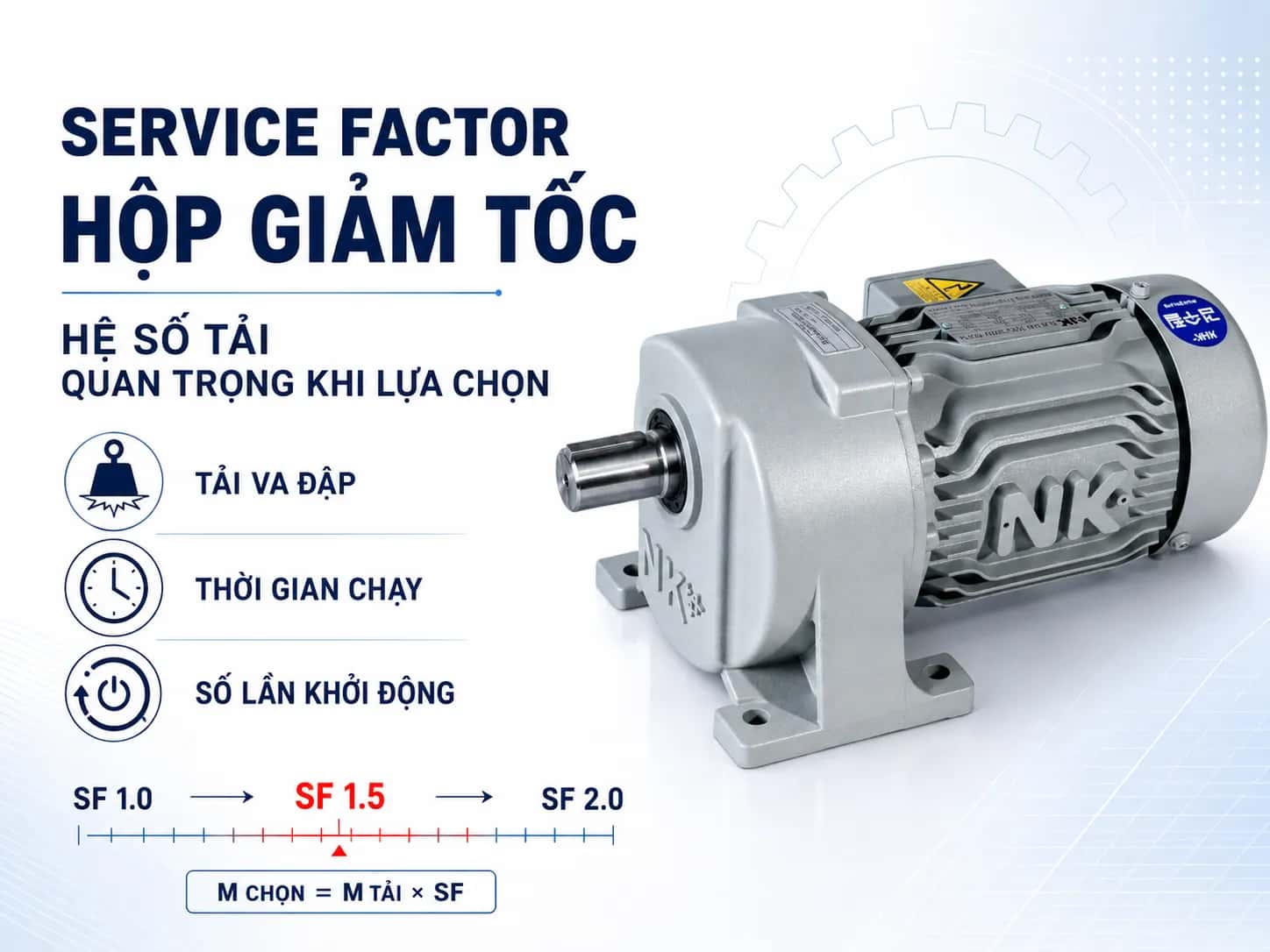
Service factor.
Operating time.
The base and flange primarily determine the mounting method, not directly the power or torque of the gear reducer.
Dimensions to verify when replacing
For foot-mounted motors
Bolt hole center distance.
Base length and width.
Shaft center height.
Shaft diameter.
Shaft length.
Keyway dimensions.
For flange-mounted motors
Flange outer diameter.
Pilot diameter.
Bolt circle diameter.
Number of bolt holes.
Hole diameter.
Shaft diameter and length.
Keyway dimensions.
Additionally, it is necessary to verify the power, gear ratio, output speed, torque, and rotation direction.
Information required when selecting a geared motor
To select the correct model, customers should provide:
Motor power.
Required output speed.
Gear ratio.
Load torque.
Actual application.
Operating time.
Foot-mounted or flange-mounted type.
Output shaft orientation.
Horizontal or vertical mounting position.
Whether a VFD is used.
Whether an electromagnetic brake is required.
If replacing an old motor, it is recommended to send photos of the nameplate, the entire equipment, the mounting position, and actual dimensions.
Conclusion
Foot-mounted and flange-mounted geared motors differ mainly in their method of connection to the machine.
Foot-mounted motors are suitable for conveyors, screw conveyors, mixers, and systems with a machine base.
Flange-mounted motors are suitable for compact designs, direct mounting to machine walls, or vertical mounting.
When replacing, it is necessary to fully cross-reference mounting dimensions, output shaft, gear ratio, and load torque.
MDriveTech provides consultation for selecting foot-mounted geared motors, flange-mounted geared motors, and DSK geared motor series suitable for each application.
Customers can send nameplate photos, drawings, or dimensions of the motor currently in use to have the suitable model checked.
📞 Hotline: 0868 789 647
📧 Email: [email protected]
Frequently Asked Questions
Are foot-mounted gear motors better than flange-mounted ones?
No. Each mounting style is suitable for a different machine structure. Foot-mounted motors are easier to maintain, while flange-mounted motors are more compact and offer better centering.
Can motors of the same power be directly interchangeable?
Not necessarily. It is necessary to check the gear ratio, torque, shaft dimensions, foot/flange configuration, and bolt hole positions.
Can flange-mounted motors be installed vertically?
Yes, but the mounting position and lubrication system must be confirmed according to the manufacturer's documentation.
Which series should I choose between DSK MFG and MFGV?
Choose the MFG series for foot-mounted applications and the MFGV series when direct flange mounting is required.