What is a Backstop? How to Select a Backstop for Gearboxes
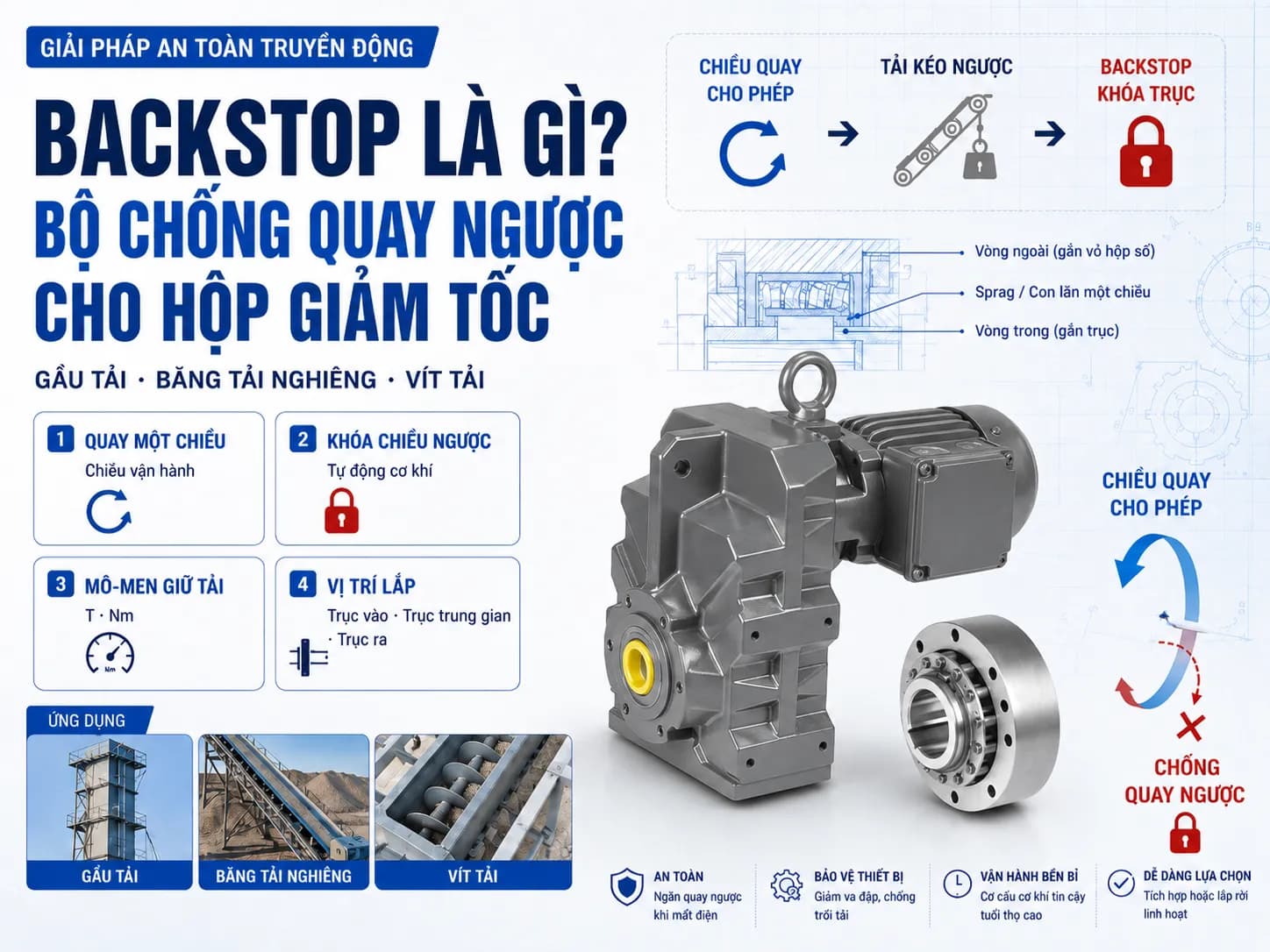
What is a backstop? Learn about the operating principles, applications, differences from brakes, and how to select backstop devices for bucket elevators and inclined conveyors.
What is a Backstop? How to Select a Backstop for Gearboxes
A backstop is an anti-reverse mechanism that ensures the motor shaft or gearbox rotates only in the permitted direction. When the load tends to pull the system in reverse during machine shutdown or power loss, the backstop automatically locks the shaft to prevent load drift and protect the equipment.
Backstops are commonly used for bucket elevators, inclined conveyors, vertical screw conveyors, and unidirectional material handling systems. The device must be selected based on holding torque, shaft speed, direction of rotation, and mounting position; it should not be selected based solely on motor power.
What is a backstop?
A backstop is also known as:
Anti-reverse device.
Reverse rotation prevention mechanism.
Holdback.
Anti-reverse device.
One-way clutch in some common terminology.
A backstop allows the shaft to rotate freely in the operating direction and locks it when the shaft rotates in the opposite direction. The device is typically integrated into the gearbox or mounted externally on a suitable shaft position.
Operating principle of a backstop
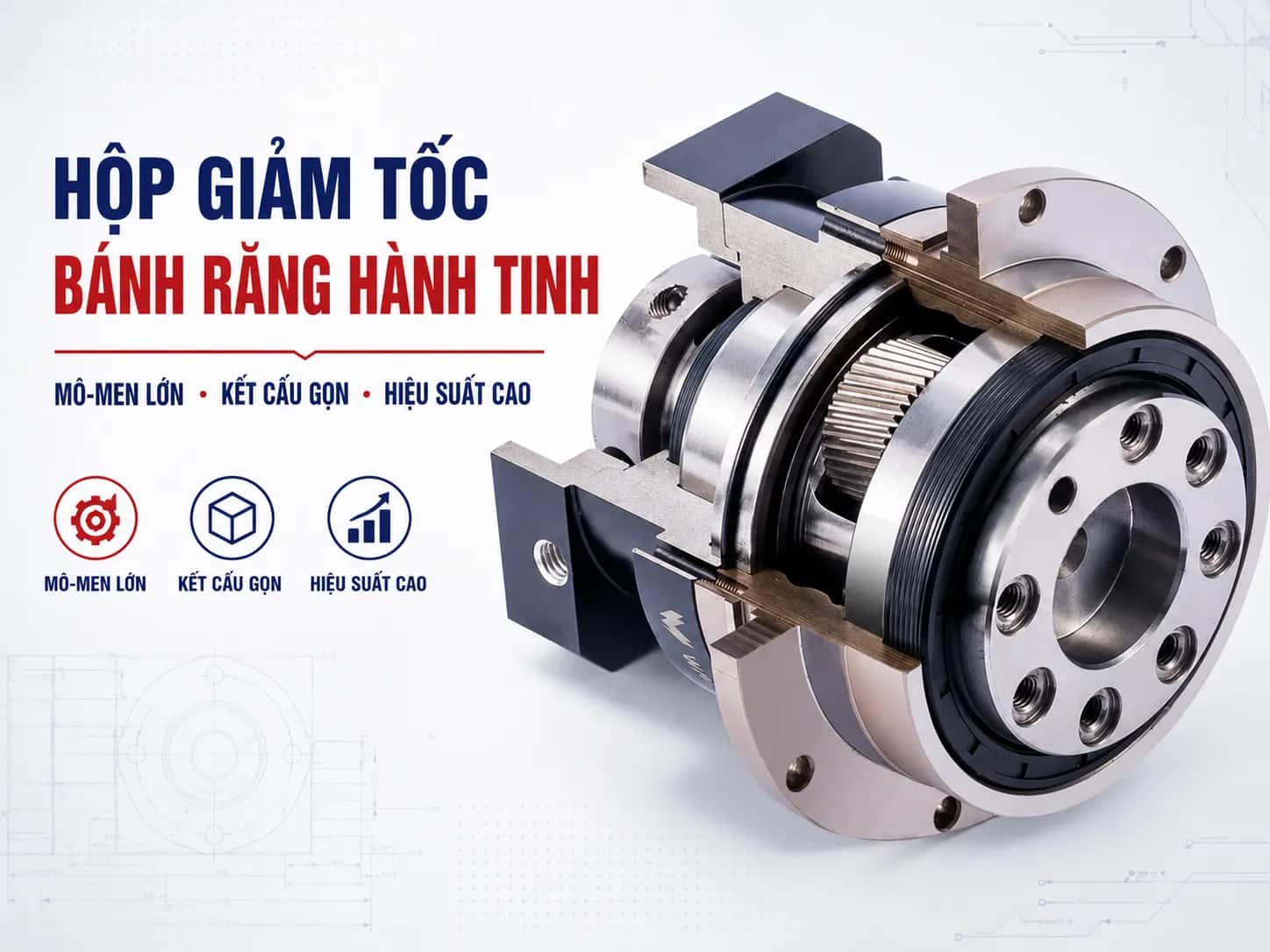
Backstops typically use a sprag or one-way roller mechanism.
When the shaft rotates in the correct direction, the locking elements remain in a free state, allowing the shaft to rotate normally. When the load pulls the shaft in the opposite direction, the sprags or rollers become wedged between the inner and outer races, creating a locking force and preventing the system from rotating backward.
The backstop operates automatically via mechanical means, so it can maintain the direction of rotation even when the system loses power. However, the device does not control stopping time and is not a substitute for an operational brake.
Applications requiring a backstop
Bucket elevators
Bucket elevators lift materials vertically. When the motor stops, the weight of the material can pull the belt or chain in reverse.
A backstop helps prevent:
Material from sliding back to the elevator boot.
Buckets and chains from colliding.
Material from piling up or spilling.
Reverse loading on the shaft and gearbox.
Hazards during operation and maintenance.
See more: How to select a geared motor for bucket elevators
Inclined conveyors
Inclined conveyors can be pulled backward by the load when stopped, especially when goods are still on the belt.
A backstop helps maintain the drive direction and prevents goods from sliding backward. If the application requires controlled stopping or precise positioning, the system may require an additional electromagnetic brake.
Vertical or inclined screw conveyors
Material in the screw can exert reverse torque on the shaft when the machine is stopped. The need for a backstop depends on the angle of inclination, type of material, screw length, and fill level.
Unidirectional drive systems
Backstops can also be used for:
Inclined chain conveyors.
Elevating feeders.
Bulk material handling equipment.
Certain rotating mechanisms that operate in only one direction.
For personnel lifting equipment or systems with special safety requirements, a backstop should not be considered the sole safety solution.
Where is a backstop installed?
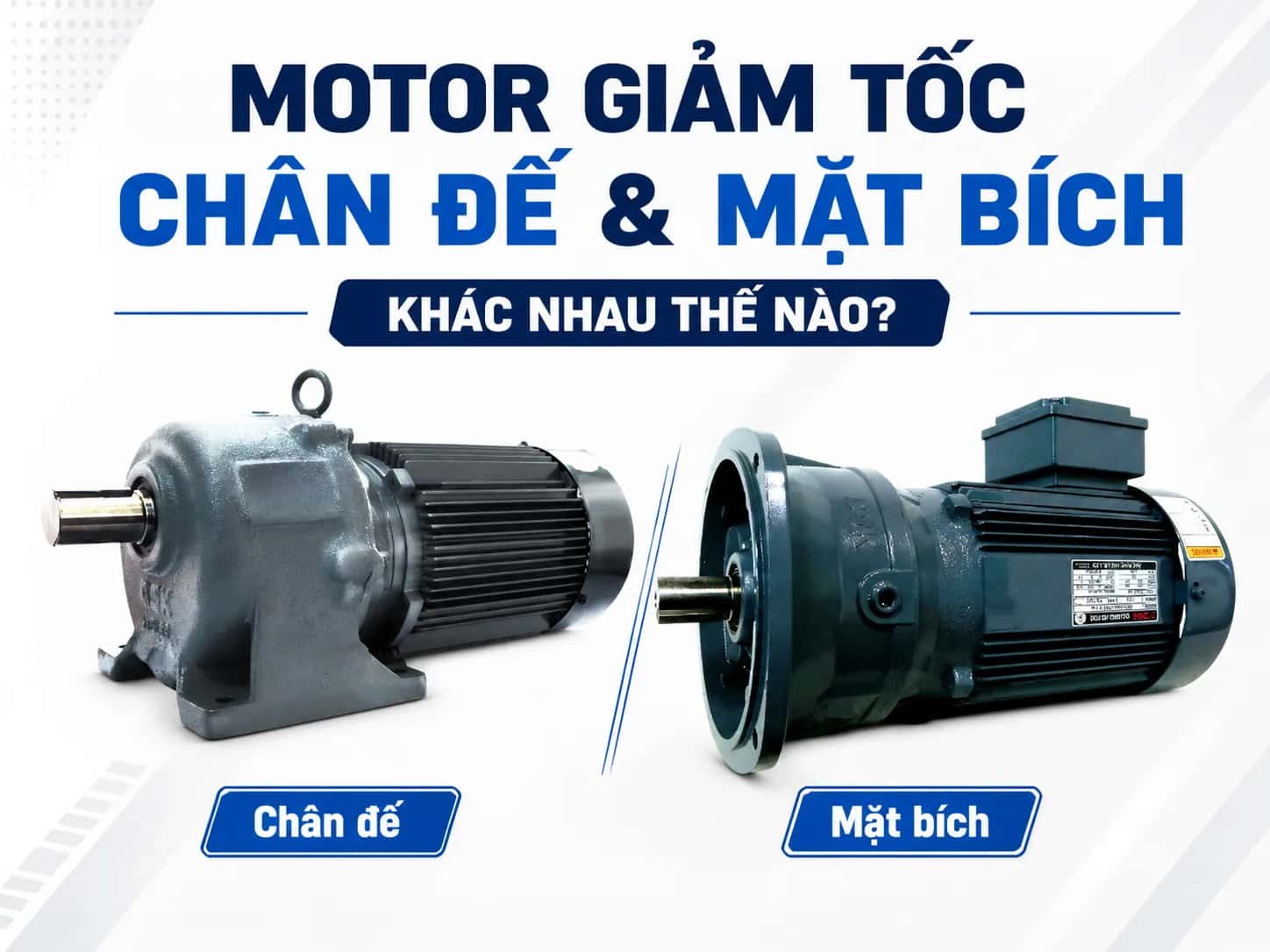
Integrated backstop in gearboxes
The backstop is installed by the manufacturer on the input shaft, intermediate shaft, or a suitable position inside the gearbox.
Advantages:
Compact design.
Synchronized with the gearbox.
Calculated based on the equipment's speed and torque.
Can share the same lubrication system.
Minimizes installation errors.
This is generally the preferred option when ordering a new gearbox.
External backstop
The backstop is installed outside the gearbox or on a separate drive shaft.
This configuration is suitable when:
The existing gearbox does not have an integrated option.
High back-torque capacity is required.
The machine structure has a dedicated mounting position.
Independent installation and maintenance are required.
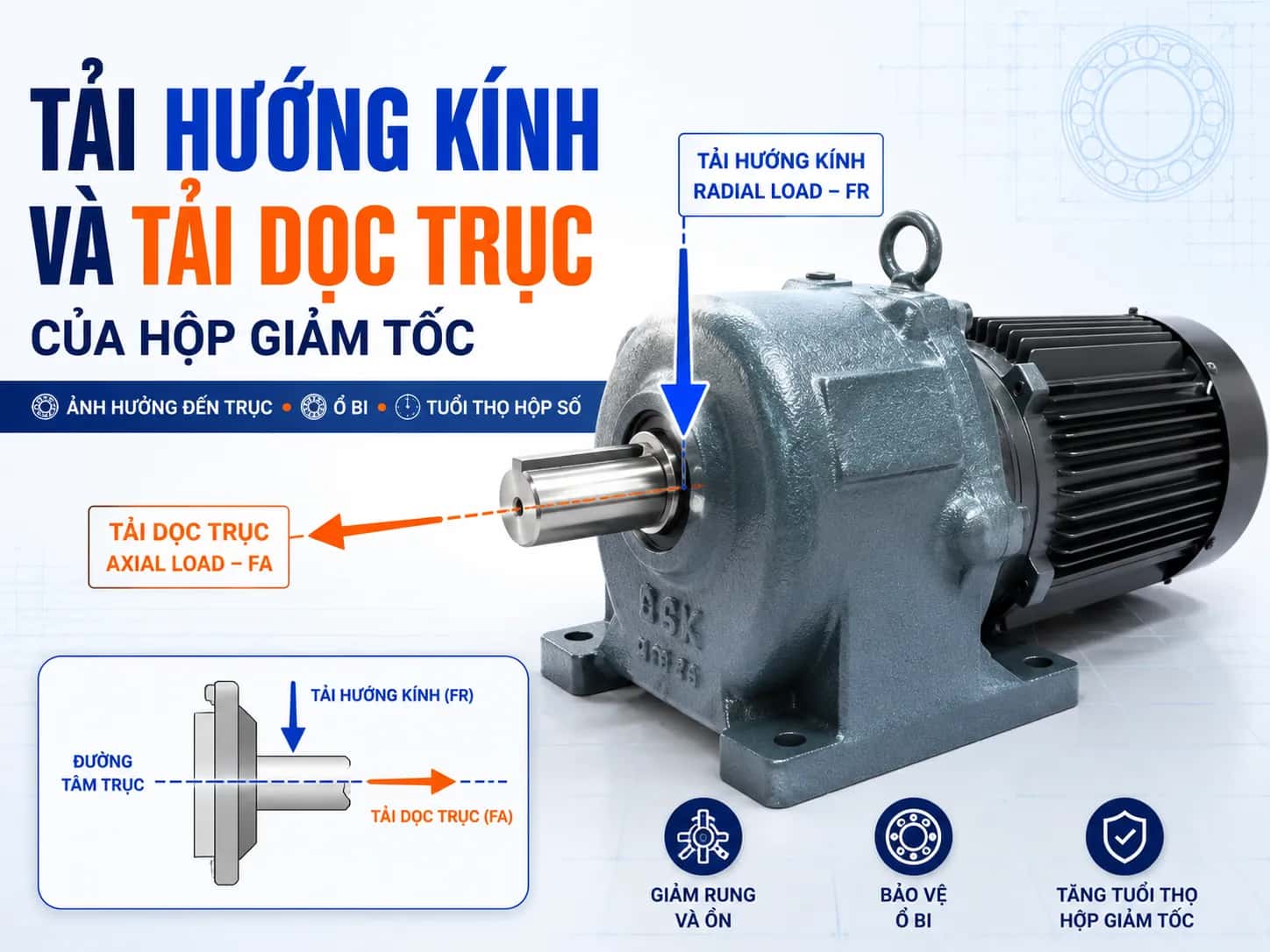
When installing externally, it is necessary to check the durability of the shaft, key, bearings, and the structure receiving the reaction torque.
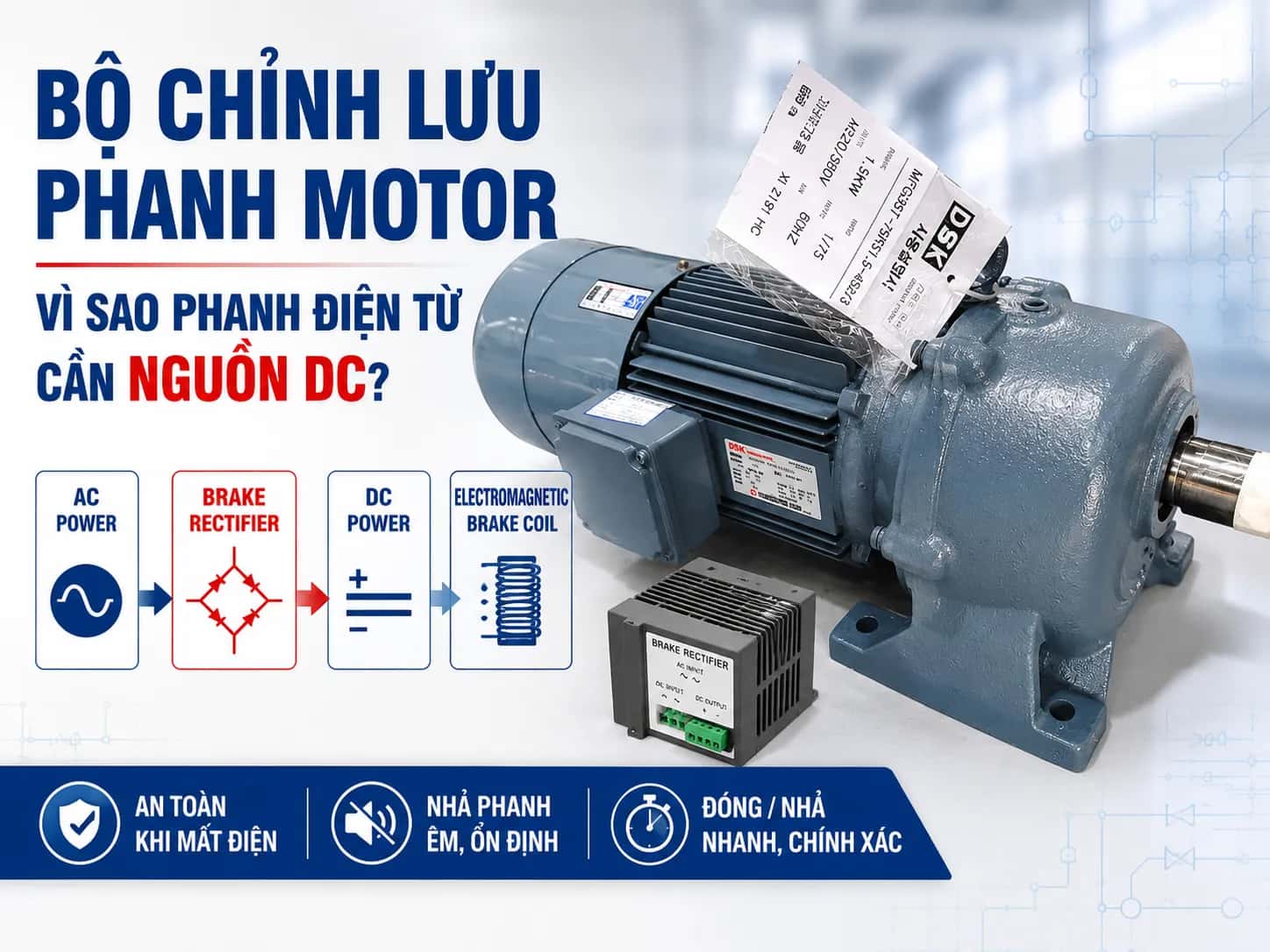
What is the difference between a backstop and a brake?
Criteria | Backstop | Brake |
|---|---|---|
Main function | Prevent reverse rotation | Stop or hold the shaft |
Direction of operation | Free in one direction, locked in the other | Can act in both directions |
Method of actuation | Automatic mechanical | Electromagnetic, mechanical, hydraulic, or pneumatic |
Stopping time control | No | Yes |
Operation during power loss | Can lock mechanically | Depends on brake type |
Applications | Bucket elevators, inclined conveyors | Lifting, positioning, machine stopping |
A system can simultaneously use:
A backstop to prevent reverse rotation.
A brake to stop and hold the load.
A VFD to control acceleration and deceleration.
A backstop should not be used as a frequent stop-start brake.
Are backstops and overrunning clutches the same?
Both backstops and overrunning clutches can utilize a one-way mechanism, but they differ in installation function.
A backstop is typically installed between a rotating shaft and a stationary housing to prevent the shaft from rotating in reverse.
An overrunning clutch typically connects two shafts. It transmits torque in one direction and automatically disengages when the other shaft rotates faster.
In a conveyor drive system with an auxiliary motor:
The backstop prevents the gearbox from rotating in reverse.
The overrunning clutch connects the auxiliary motor to the main gearbox.
When the main motor runs, the one-way clutch disengages the auxiliary motor from the system.
How to select a backstop for a gearbox
1. Determine the backstop torque
The backstop must withstand the torque generated by the load when the system stops.
Considerations include:
Load weight.
Gravitational torque.
Gear ratio.
Shock load during locking.
Number of drives.
Start and stop modes.
Manufacturer's service factor.
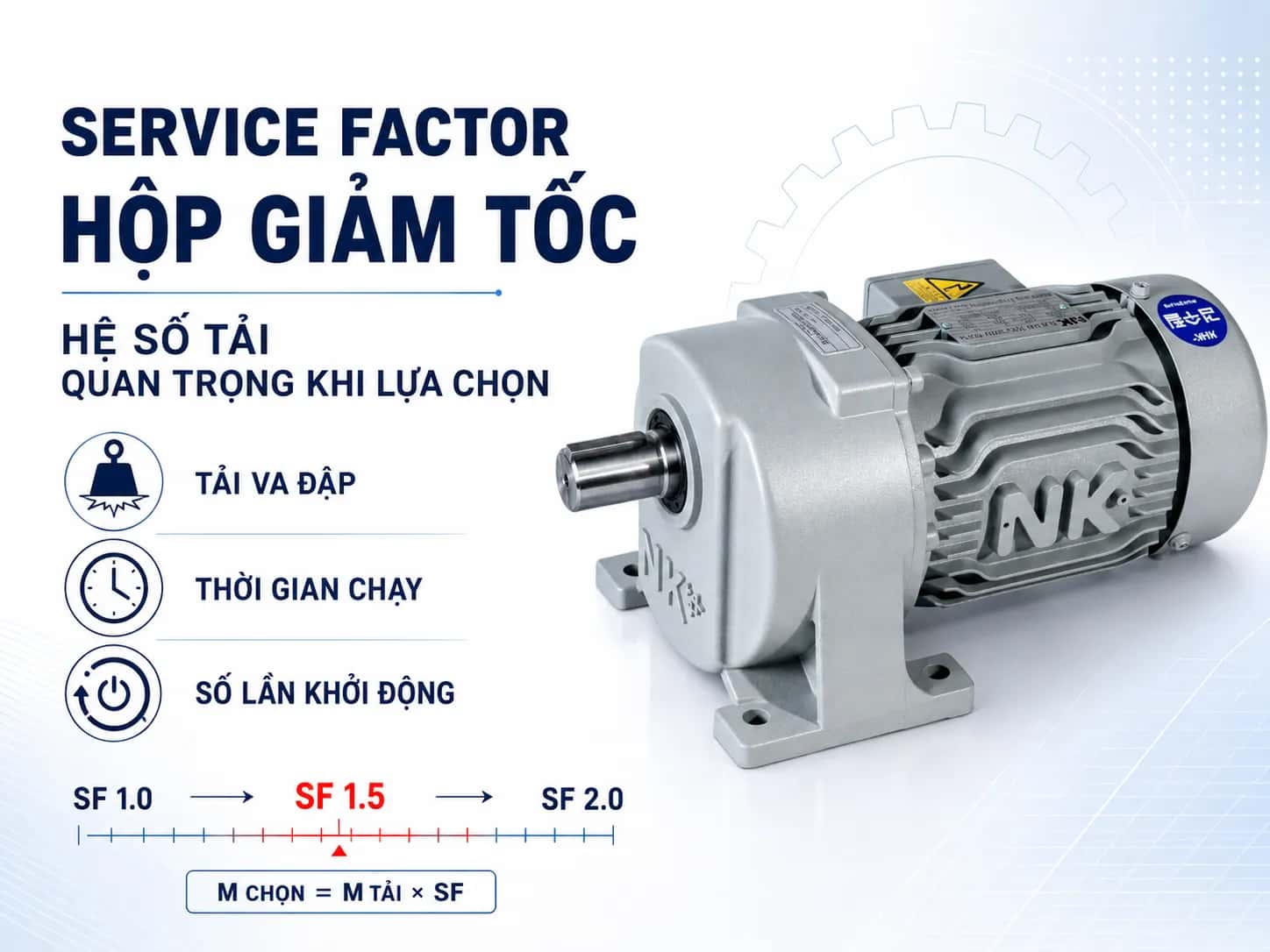
Do not select a backstop based solely on motor power, as the same power can result in different gear ratios and output torques.
2. Determine the speed at the installation position
A backstop can be installed on the high-speed shaft, intermediate shaft, or output shaft.
The installation position affects:
Rotational speed.
Locking torque.
Backstop size.
Lubrication conditions.
Service life of the locking elements.
The speed at the specific installation position must be used; do not default to using the motor speed or output speed.
3. Determine the correct direction of rotation
The free rotation direction of the backstop is mandatory information when ordering.
Clearly specify:
CW or CCW direction.
Observer's position.
Viewed from the output shaft side or the motor side.
Actual operating direction of the machine.
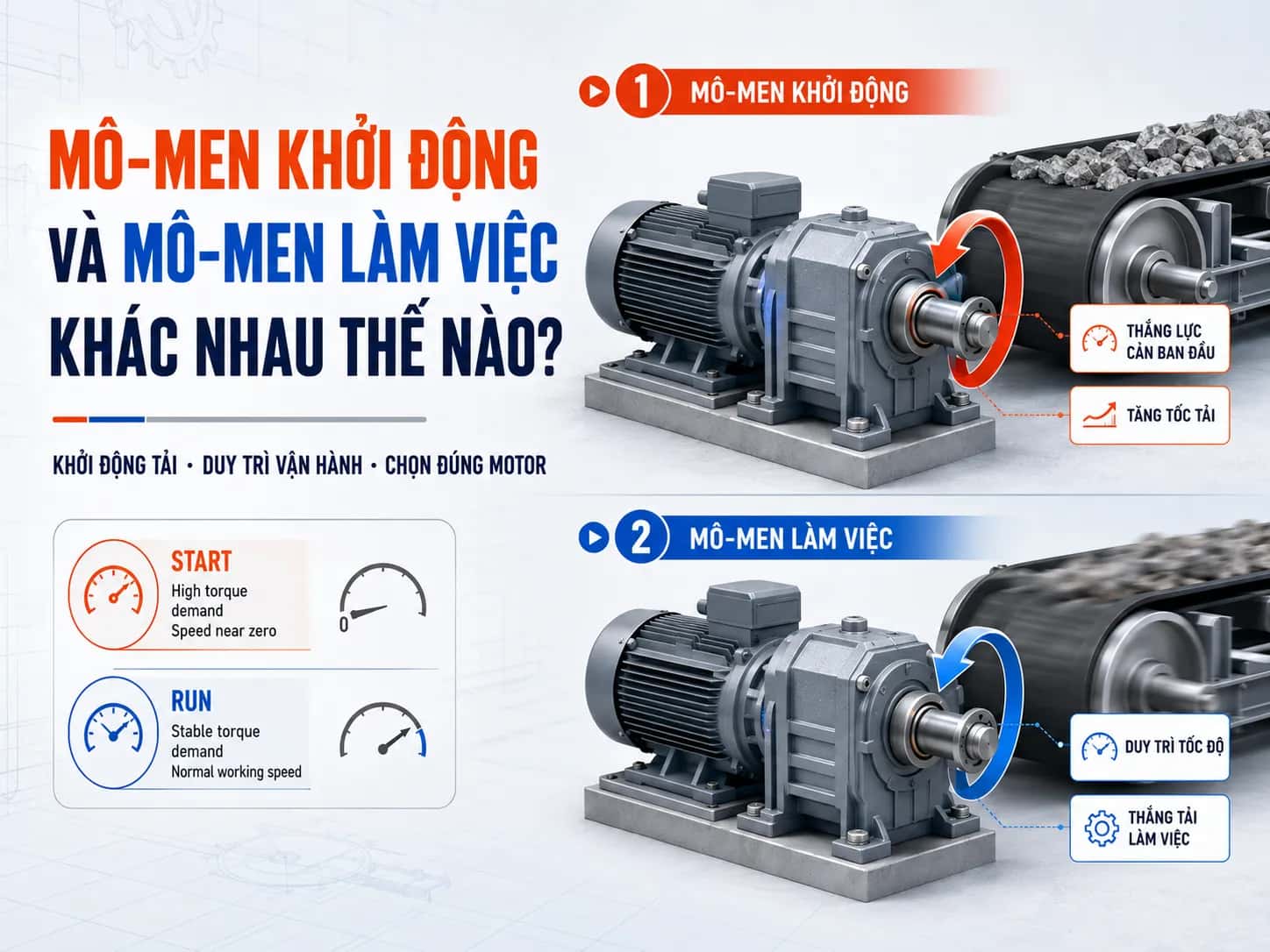
If the motor runs in the locking direction, the system cannot start normally, posing a risk of damage to the motor, coupling, or backstop.
Do not reverse two motor phases without verifying the backstop's locking direction.
4. Check the locking frequency
A backstop typically only engages when:
The machine stops.
Power is lost.
The load tends to drift backward.
A fault occurs.
If the device must lock frequently during each cycle, notify the supplier. Standard backstops may not be suitable for frequent stop-start operation.
5. Check environmental conditions
Determine the following:
Operating temperature.
Dust and humidity.
Indoor or outdoor location.
Corrosive environment.
Hazardous areas with explosion risks.
Mounting orientation of the gearbox.
Environmental conditions affect seals, lubricating oil, materials, and maintenance cycles.
Should you choose an integrated or external backstop?
Condition | Recommended solution |
|---|---|
Purchasing a new gearbox | OEM integrated backstop |
Compact design requirements | Integrated backstop |
Need for shared lubrication | Integrated backstop |
Legacy gearbox without options | External backstop |
High backstop torque | External backstop or industrial gearbox |
Need for independent replacement during maintenance | External backstop |
Critical bucket elevator or conveyor | Factory-engineered configuration |
Whenever possible, prioritize gearboxes with backstops pre-selected by the manufacturer based on the specific model, gear ratio, and rotation direction.
Considerations when using a backstop with a VFD
A VFD cannot replace a backstop.
When the system includes a VFD, you should:
Disable the reverse run function if the machine only operates in one direction.
Verify the rotation direction before coupling the load.
Set an appropriate acceleration time.
Do not allow the motor to generate reverse torque against the backstop.
Check the brake control sequence if applicable.
Avoid rapid stops that could cause the load to impact the locking mechanism.
The backstop provides mechanical protection against reverse load, while the VFD only controls the motor when the electrical and control systems are operational.
Backstop maintenance
Depending on the design and manufacturer's instructions, it is necessary to check:
Oil level and condition of the lubricating oil.
Oil leaks.
Abnormal noise or vibration.
Temperature at the backstop location.
Proper free rotation in the correct direction.
Locking capability in the reverse direction.
Bolts and torque arm structure.
Condition of the sprags or rollers.
Do not disassemble, reverse the inner race, or alter the backstop configuration without technical instructions for the specific model.
Common errors
Selecting a backstop based on motor power.
Failing to calculate the backstop torque.
Incorrectly determining the direction of rotation.
Failing to specify the viewing side.
Reversing the motor direction without checking the backstop.
Using a backstop as a brake.
Failing to check the speed at the mounting position.
Installing a backstop without checking the shaft and key.
Using the wrong lubricant.
Failing to lock the reverse run command on the VFD.
Changing the gearbox mounting position without checking the oil level.
Information required for backstop selection
Information | Content to be specified |
|---|---|
Application | Bucket elevator, inclined conveyor, screw conveyor, etc. |
Gearbox type | Coaxial, parallel shaft, helical bevel, etc. |
Motor power | kW |
Motor speed | rpm |
Output speed | rpm |
Gear ratio | i |
Load torque | Nm |
Direction of rotation | CW or CCW and viewing side |
Mounting position | Input shaft, intermediate shaft, or output shaft |
Backstop type | Integrated or externally mounted |
Operating time | Hours/day |
Environment | Dust, humidity, outdoor, temperature |
Current equipment | Model, nameplate photo, and drawings |
Conclusion
A backstop is a critical anti-reverse mechanism for bucket elevators, inclined conveyors, and unidirectional drive systems. The device helps maintain the correct rotation direction when the motor stops or when the load pulls in reverse.
To select the appropriate backstop, it is necessary to determine the reverse torque, shaft speed, rotation direction, mounting position, and operating conditions. Do not use a backstop as a substitute for a brake, and do not change the rotation direction without verifying the gearbox configuration.
MDriveTech provides support for selecting geared motors, gearboxes with backstops, and anti-reverse solutions tailored to specific applications. Customers can send photos of the nameplate, drawings, power ratings, speed, and required rotation direction to receive a suitable configuration check.
📞 Hotline: 0868 789 647
📧 Email: [email protected]
Frequently Asked Questions
Is a backstop a brake?
No. A backstop prevents the shaft from rotating in reverse but does not control the stopping process. Brakes are used to stop or hold a load based on control commands.
Can the motor direction be reversed if a backstop is installed?
You should not attempt to reverse the direction by swapping two phases. You must verify and change the backstop key orientation according to the manufacturer's instructions.
Do worm gearboxes require a backstop?
It depends on the application. You should not rely entirely on the self-locking capability of a worm gearbox, as the ability to prevent reverse rotation depends on efficiency, wear, vibration, and load conditions.
Can a VFD replace a backstop?
No. A VFD controls the motor when powered, whereas a backstop is a mechanical device that maintains the rotation direction when the load pulls in reverse or the system loses power.
Does a backstop require maintenance?
Yes. Inspection and maintenance must be performed according to the construction, lubrication, speed, and manufacturer's instructions.