Used vs. New Gear Motors: Making the Right Choice
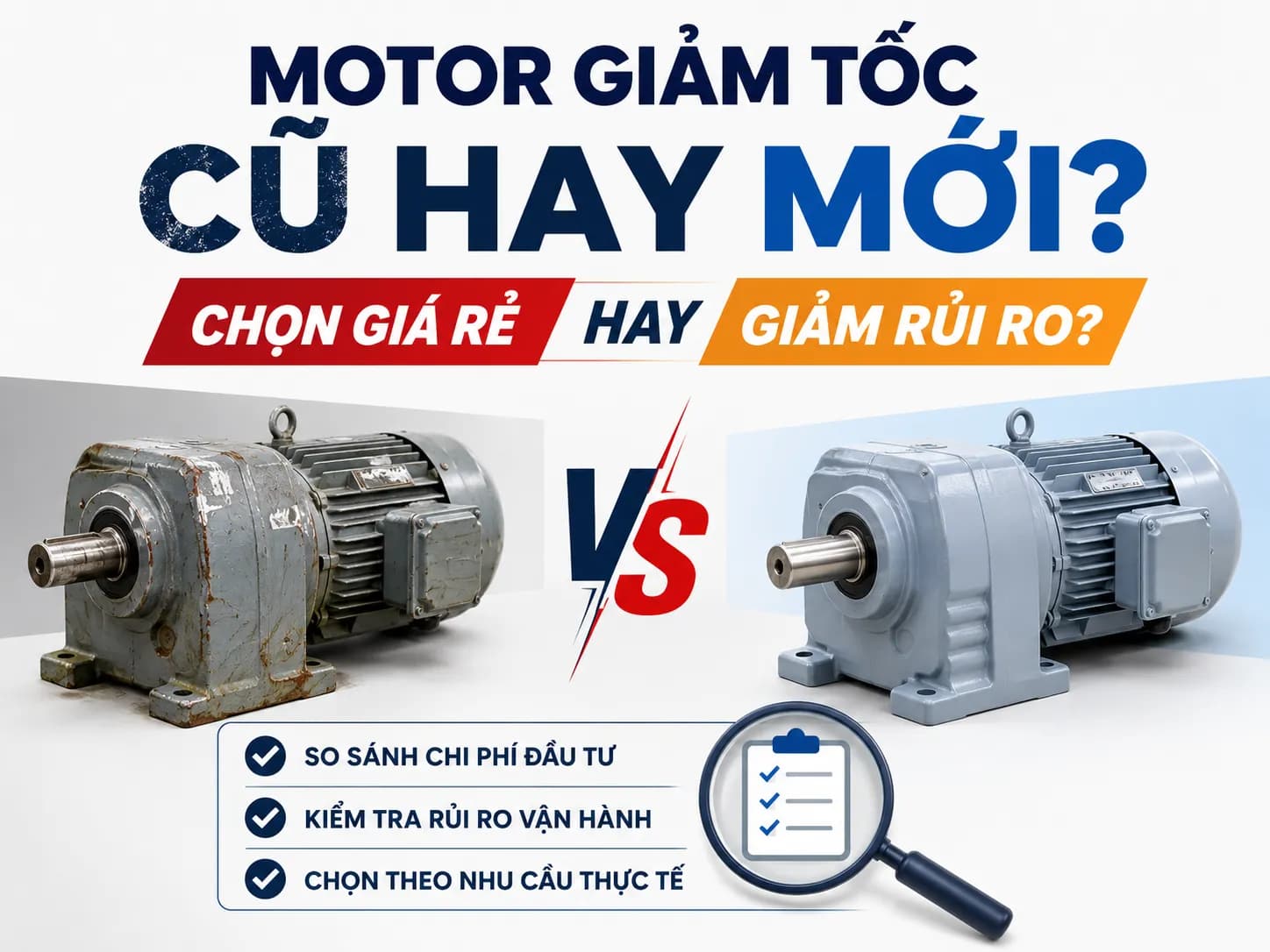
This article compares used and new gear motors, examining their price, durability, risks, warranty, and operational efficiency to help you make an informed decision.
Should You Choose Used/Second-hand or New Geared Motors?
When replacing or installing new drive systems, many businesses often struggle to decide between used/second-hand geared motors and new geared motors. The price difference between the two options can be significant, but the initial investment cost is not the only factor to consider.
The right choice also depends on the actual load, operating frequency, criticality of the machinery, and requirements for long-term stability. By looking beyond the purchase price, businesses can more accurately evaluate which option is truly effective.
What is a used/second-hand geared motor?
A used/second-hand geared motor is an electric motor combined with a gearbox that has been previously used, often salvaged from machinery, production lines, or imported as scrap. The biggest advantage of this product group is the lower price compared to new items.
However, the actual quality of each used geared motor is inconsistent. Some products may still function well, while in other cases, the exterior may look good while the bearings, oil seals, windings, or gears have already degraded.
Advantages of used geared motors
The most obvious point is the low initial investment cost. For auxiliary applications, machines that do not run continuously, or systems with limited budgets, used geared motors can be a viable option to consider.
Additionally, second-hand stock sometimes includes older models that are no longer common in the new market. This is useful when a business needs to quickly replace an old drive unit to keep the machine running temporarily.
Disadvantages of used geared motors
The biggest risk with used geared motors is the difficulty in accurately assessing internal conditions by visual inspection alone. The gearbox may have worn gears, shaft play, oil leaks, or weakened bearings that are not immediately apparent during a quick check.
Furthermore, used motors often have unverifiable usage history, making it difficult to guarantee the correct voltage, frequency, insulation class, or remaining load capacity. If failures occur after installation, the costs of repair, replacement, and downtime can make the actual total cost higher than expected.
Advantages of new geared motors
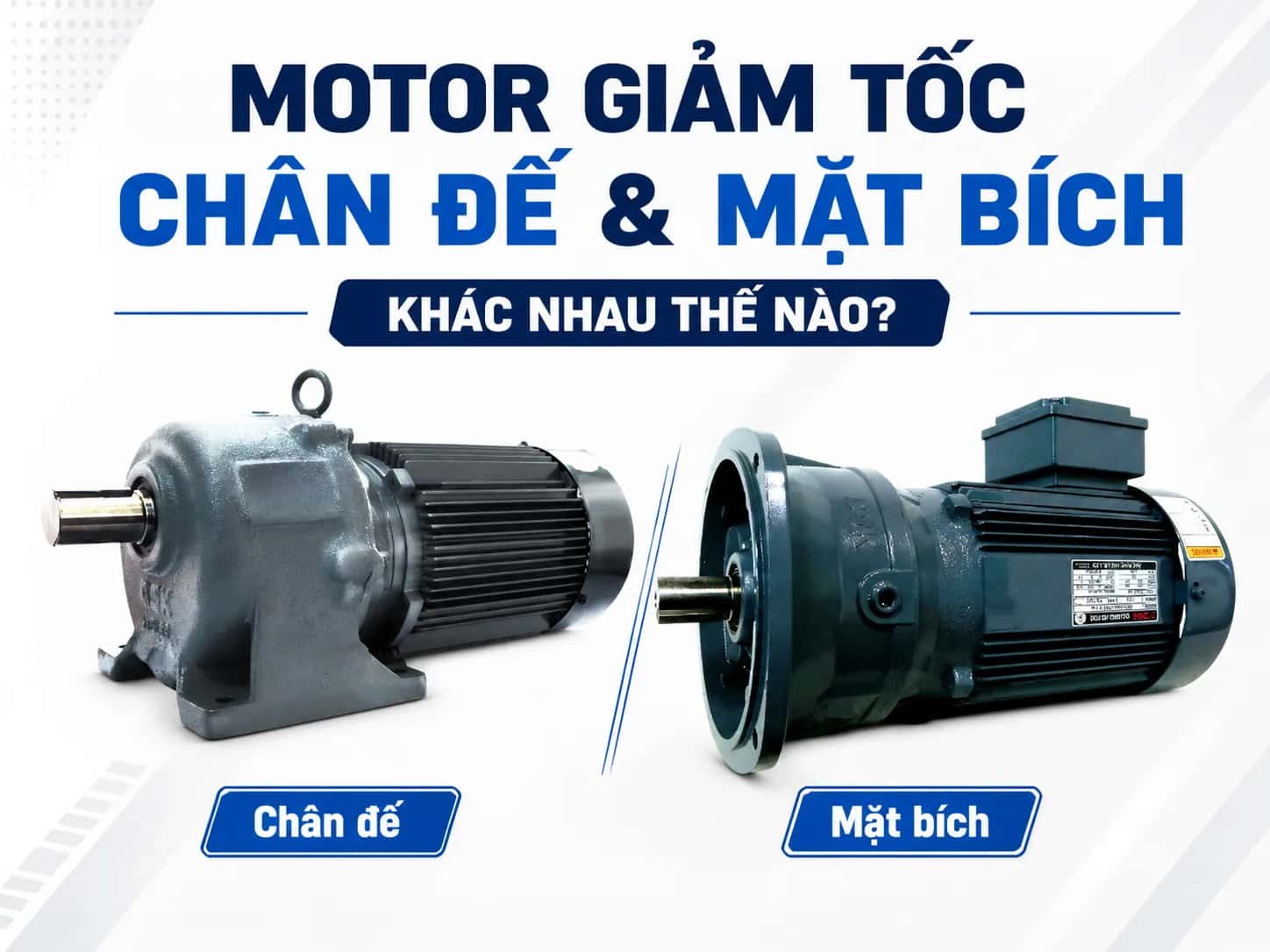
New geared motors are suitable when businesses require clear specifications, high stability, and long-term operation. New products come with clear drawings, catalogs, technical specifications, and options for ratios, power, and mounting styles.
Another advantage is warranty and technical support. When needing to replace or expand a system, it is also easier for businesses to synchronize models, compare dimensions, and select more suitable configurations compared to second-hand items.
Disadvantages of new geared motors
The biggest limitation is the higher initial investment cost. For non-critical applications, short-term operation, or temporary machinery, investing in new geared motors can sometimes unnecessarily increase the budget.
Additionally, some specialized models may require lead time for ordering. Therefore, when a machine needs an urgent replacement, businesses should still consider the schedule factor.
Comparison between used and new gear motors
Criteria | Used gear motor | New gear motor |
|---|---|---|
Initial investment cost | Lower | Higher |
Quality consistency | Inconsistent | More stable |
Operational reliability | Depends on actual condition | Higher |
Warranty | Often limited or none | Clear warranty provided |
Technical specifications | May be missing or incomplete | Clear, easy to verify |
Remaining service life | Difficult to determine | Easier to monitor |
Downtime risk | Higher | Lower |
Long-term replacement availability | Unstable | Better |
Suitable for | Auxiliary machines, light loads, low budget | Main production lines, heavy loads, continuous operation |
When to consider a used gear motor?
Used gear motors are more suitable when:
The machine runs intermittently.
The application is not critical.
Investment budget is limited.
A temporary solution is needed to maintain production.
The company has a technical team capable of inspecting and handling post-purchase risks.
In these cases, if the condition of the motor, gearbox, noise level, vibration, oil leakage, and actual load are thoroughly inspected, used equipment can still provide economic efficiency.
When to prioritize a new gear motor?
New gear motors should be prioritized when:
The machine runs continuously for many hours each day.
The production line is high-value or downtime costs are significant.
Heavy loads, shock loads, or high stability requirements are involved.
Full drawings, catalogs, and long-term replacement availability are required.
Integration with VFDs, brakes, or specific technical requirements is needed.
The company wants to reduce the risk of unscheduled maintenance.
For systems that directly impact production output or delivery schedules, choosing a new gear motor is generally safer and more cost-effective in the long run.
Risks to check when buying a used gear motor
If a business is considering second-hand equipment, at least the following points should be inspected:
Condition of the motor housing and gearbox.
Output shaft backlash.
Signs of oil leakage at seals and mating surfaces.
Noise and vibration levels during test runs.
Abnormal operating temperature.
Condition of bearings.
Voltage, frequency, and number of phases on the nameplate.
Actual output speed and gear ratio.
Condition of windings and insulation resistance, if measurement is possible.
Signs of wear on keys, shafts, or mounting flanges.
If these basic items cannot be verified, the risk of purchasing a poor-quality used gear motor is quite high.
Look at total cost, not just purchase price
A used gear motor may be significantly cheaper at the time of purchase, but it is not necessarily cheaper throughout its service life. If you have to replace bearings, rewind the motor, address oil leaks, or face unexpected downtime, the actual total cost may far exceed the initial budget.
Conversely, a new gear motor has a higher initial investment cost, but in return, businesses can more easily control parameters, achieve more stable operation, and reduce risks after installation.
Conclusion: should you choose a used or new gear motor?
There is no fixed answer for every case. For secondary applications, light loads, intermittent operation, and limited budgets, second-hand used gear motors can still be an acceptable choice if thoroughly inspected before purchase.
If the machine runs continuously, handles critical loads, or the business requires long-term stability, a new gear motor is the preferred option. The most important thing is to accurately assess usage requirements, acceptable risk levels, and total operating costs, rather than just comparing the initial purchase price.
MDRIVETECH provides gear motor selection consulting
MDRIVETECH provides consulting for selecting gear motors based on power, output speed, gear ratio, mounting style, and actual operating conditions. In cases where a used gear motor needs replacement, MDRIVETECH can assist with model cross-referencing, parameter verification, and proposing more suitable solutions.
Customers needing consultation can contact:
Website: https://mdrivetech.vn/
Email: [email protected]
Hotline: 0868 789 647
FAQ
Should you buy a used gear motor?
It can be purchased if the application is not critical and the product is thoroughly inspected before installation. However, you must accept higher risks compared to new equipment.
What are the advantages of a new geared motor?
New geared motors feature clear specifications, higher stability, easier maintenance, and are suitable for systems requiring long-term operation.
When should you avoid using a used geared motor?
Used equipment should not be prioritized for main production lines, heavy-duty loads, continuous operation machinery, or systems with high downtime costs.
What should be checked when inspecting a used geared motor?
It is necessary to check for noise, vibration, oil leakage, shaft backlash, the nameplate, voltage, bearing condition, and the ability to perform a practical test run.
Is a lower price always beneficial?
No. A low purchase price does not necessarily mean a low total cost if it leads to subsequent repairs, replacements, or unplanned downtime.