What Is a Planetary Gearbox? Construction, Working Principle, and Applications
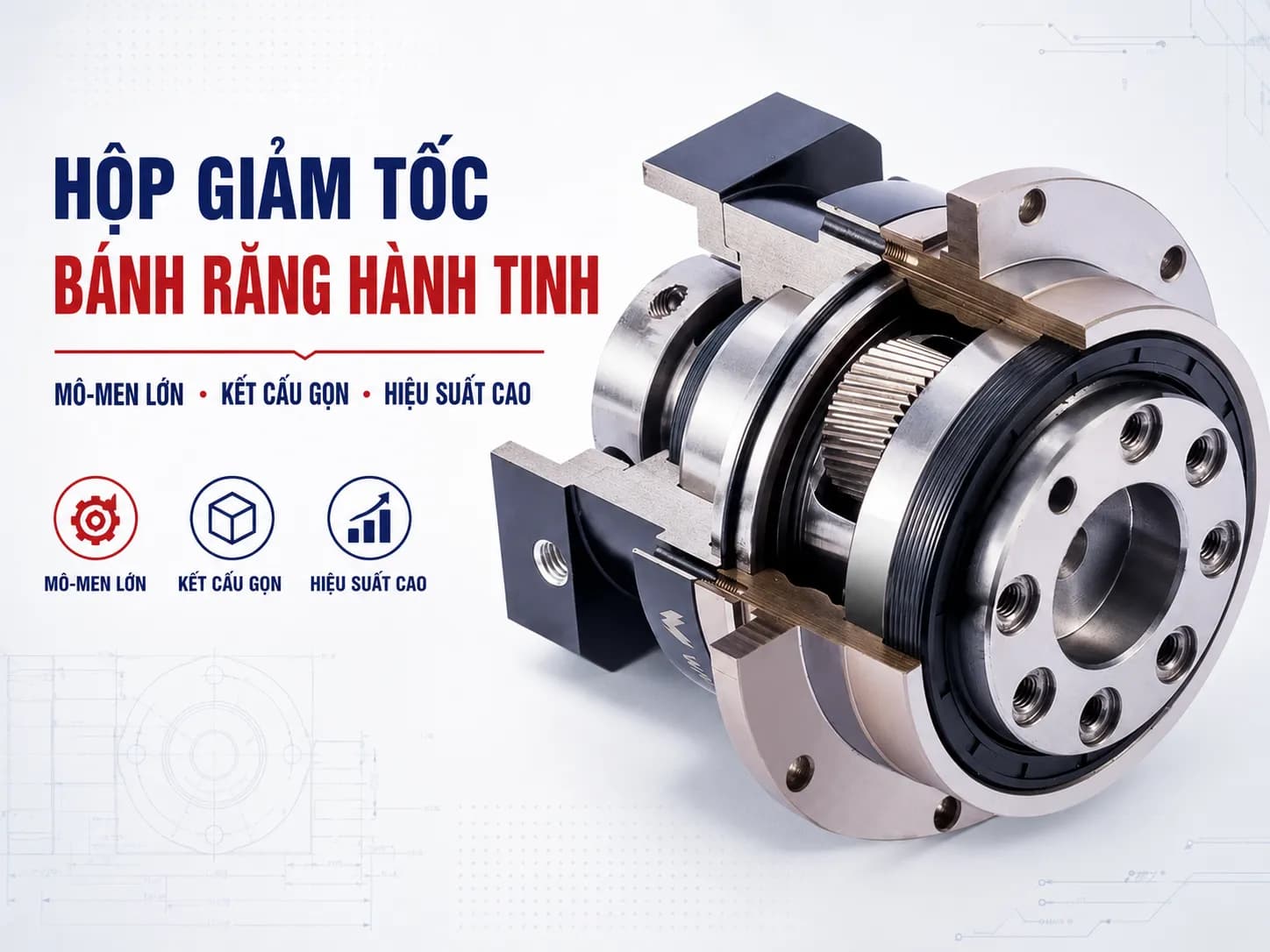
A planetary gearbox, also known as a planetary gear reducer, is a transmission system designed to reduce speed and increase torque within a compact structure.
What Is a Planetary Gearbox? Construction, Working Principle, and Applications
A planetary gearbox, also known as a planetary gearbox or planetary gear reducer, is a type of transmission capable of reducing speed and increasing torque within a compact design. Thanks to multiple planetary gears engaged in power transmission, this type of gearbox is suitable for applications requiring high torque, high power density, or high precision.
Planetary gearboxes are used in heavy industrial machinery, lifting equipment, mixers, crushers, conveyors, robots, CNC machines, packaging machines, and servo systems.
What is a planetary gearbox?
A planetary gearbox is a transmission mechanism consisting of a central sun gear, multiple gears revolving around it, and an outer ring gear. In a common reduction configuration, the input shaft drives the sun gear, the ring gear is held stationary, and the planet carrier becomes the output shaft.
This mechanism converts high-speed, low-torque input into lower-speed, higher-torque output. The input and output shafts are typically coaxial, which helps save installation space.
Planetary gearbox construction
A basic planetary gear set consists of four main components:
Component | Function |
|---|---|
Sun gear | Located at the center, typically receives motion from the motor |
Planetary gears | Mesh with the sun gear and the ring gear |
Ring gear | Encloses the planetary assembly, with teeth on the inner surface |
Planet carrier | Holds the planetary gears and is usually connected to the output shaft |
In addition, the gearbox includes a housing, bearings, shafts, oil seals, flanges, lubrication systems, and motor adapter plates. The actual structure may vary depending on the input type, output type, number of reduction stages, and load requirements.
Working principle
In a common reduction configuration:
The motor rotates the sun gear.
The sun gear transmits force to the planetary gears.
The planetary gears rotate on their own axes while revolving around the sun gear.
The planet carrier rotates at a slower speed and transmits torque to the load.
Multiple planetary gears share the load, allowing for high torque transmission in a small size.
With a fixed ring gear configuration, the sun gear as the input, and the planet carrier as the output, the theoretical gear ratio of a single stage is determined by:
i = 1 + Zr/Zs
Where:
i: gear ratio.
Zr: number of teeth on the ring gear.
Zs: number of teeth on the sun gear.
Output speed and torque can be estimated as:
n₂ = n₁/i
T₂ ≈ T₁ × i × η
Where η is the overall efficiency of the gearbox. For multi-stage gearboxes, the total gear ratio is the product of the gear ratios of each individual stage.
The above formulas apply only to the corresponding drive configuration. If the fixed component, input, or output is changed, the speed relationship will also change.
Advantages of planetary gearboxes
High torque in a compact size
The load is distributed across multiple planetary gears and multiple contact points. As a result, planetary gearboxes have a high torque density and are suitable for space-constrained applications.
Coaxial input and output shafts
The coaxial design allows for a more compact drive system layout, which is particularly advantageous for direct connection to motors, servo motors, pulleys, drums, or machine shafts.
Capable of achieving high gear ratios
A single planetary stage typically provides a moderate gear ratio. When deeper reduction is required, manufacturers can combine two or more stages. Some industrial planetary gearboxes are also coupled with helical or bevel gearboxes to achieve very high gear ratios and change the direction of power transmission.
Suitable for both heavy-duty loads and precision drives
Industrial planetary gearboxes are designed for heavy loads, high torque, and harsh operating environments. Meanwhile, precision planetary gearboxes can achieve low backlash, high torsional rigidity, and are suitable for servos, robotics, or positioning systems.
Disadvantages to consider
Planetary gearboxes have a more complex structure than conventional gearboxes. Manufacturing, assembly, and alignment require high precision, so the investment cost is generally higher.
During repair, the planetary gear assembly also requires appropriate techniques and tools. The gearbox must be lubricated with the correct type and amount of lubricant, and temperature must be well-controlled, especially under continuous load, high speed, or high gear ratios.
Additionally, not all planetary gearboxes have low backlash. Backlash depends on the precision grade, gear design, bearings, manufacturing quality, and service life.
Common types of planetary gearboxes
Industrial planetary gearboxes
This type focuses on high torque, durability, and load-bearing capacity. The gearbox can utilize solid shafts, hollow shafts, keys, splines, flanges, or torque arms.
Common applications:
Industrial mixers and agitators.
Crushers and shredders.
Heavy-duty conveyors.
Drums and winches.
Mining equipment.
Presses and extruders.
Cement, paper, wood, and recycling equipment.
Precision planetary gearboxes
This type is commonly combined with servo motors or stepper motors. Key parameters include backlash, torsional stiffness, acceleration torque, input speed, and radial and axial load capacity.
Common applications:
Industrial robots.
CNC machines.
Packaging machines.
Printing and cutting machines.
Rotary tables and positioning mechanisms.
Automated assembly lines.
Pick-and-place systems.
Coaxial and right-angle planetary gearboxes
Coaxial type: input and output shafts are aligned, featuring a compact design and easy motor connection.
Right-angle type: incorporates a bevel gear stage or redirection mechanism, suitable when longitudinal installation space is limited.
Spur and helical planetary gearboxes
Spur gears have a simple structure and do not generate significant axial forces. Helical gears mesh gradually, allowing for smoother operation, reduced vibration, and lower noise, but they generate axial forces and require appropriate bearing systems.
Applications of planetary gearboxes
Planetary gearboxes are typically selected when the machine requires one or more of the following:
High output torque.
Small installation space.
Coaxial input and output shafts.
Shock loads or variable loads.
High gear ratios.
High torsional stiffness.
Low backlash for position control.
Compatibility with electric, servo, or hydraulic motors.
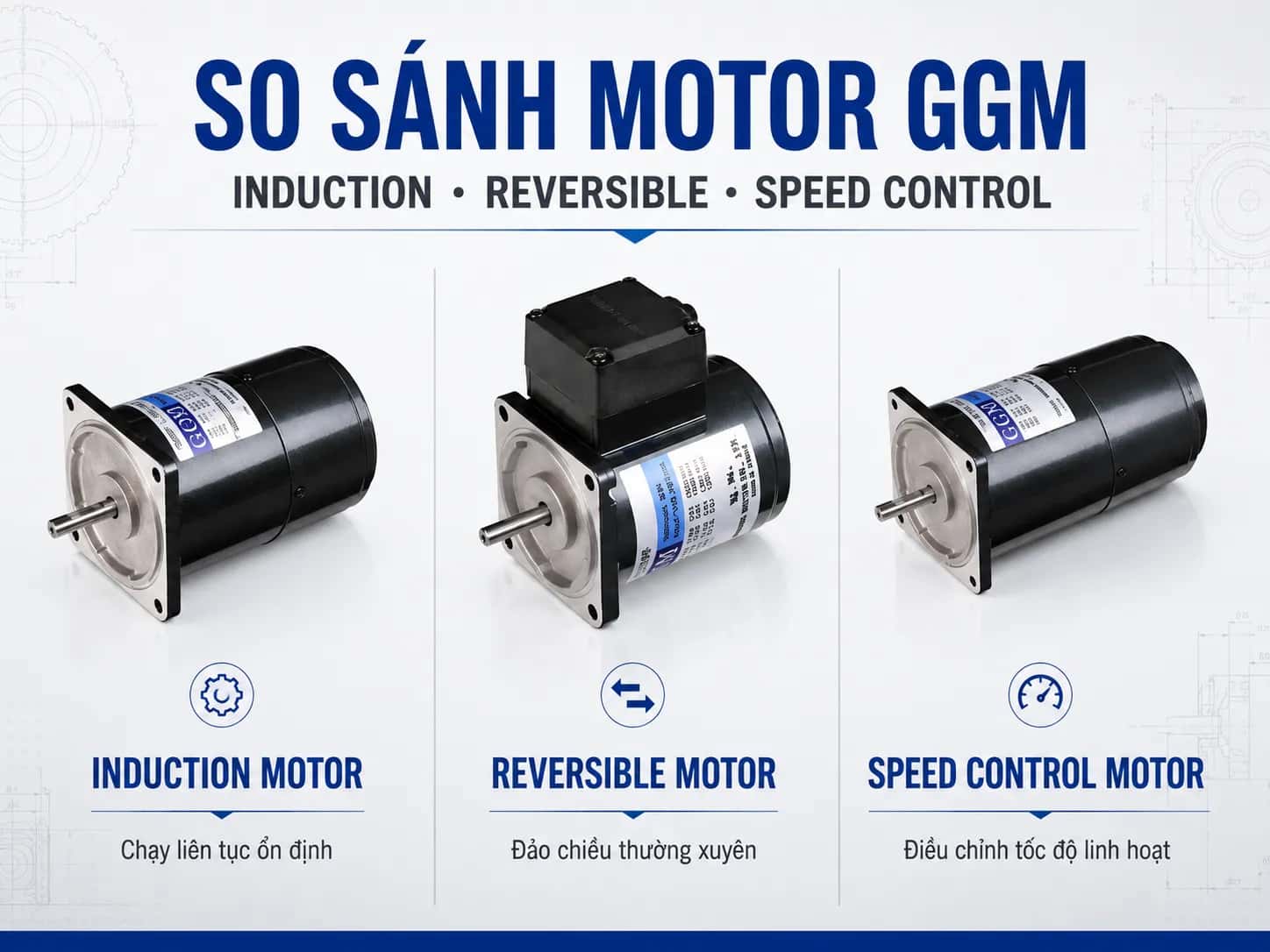
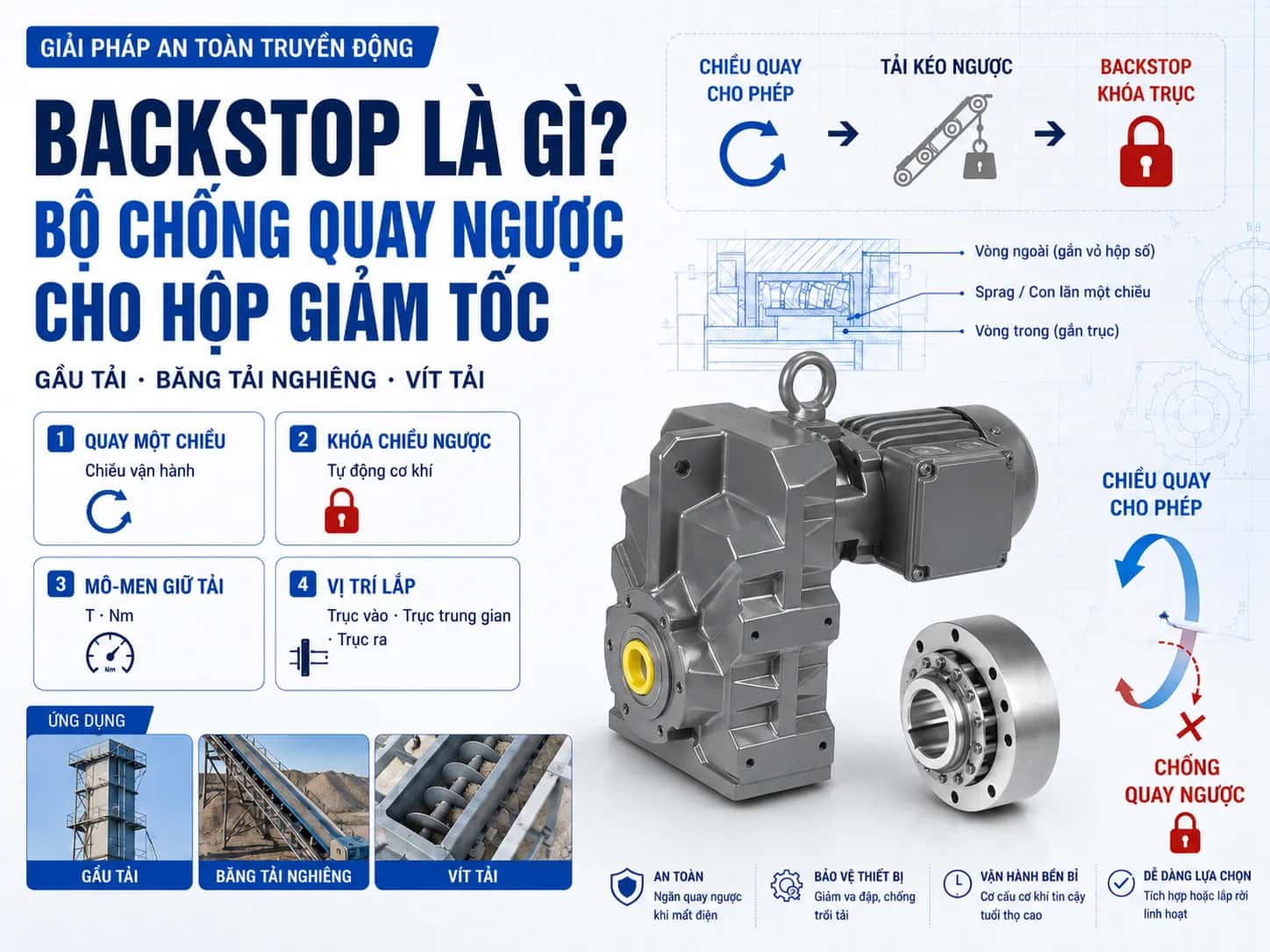
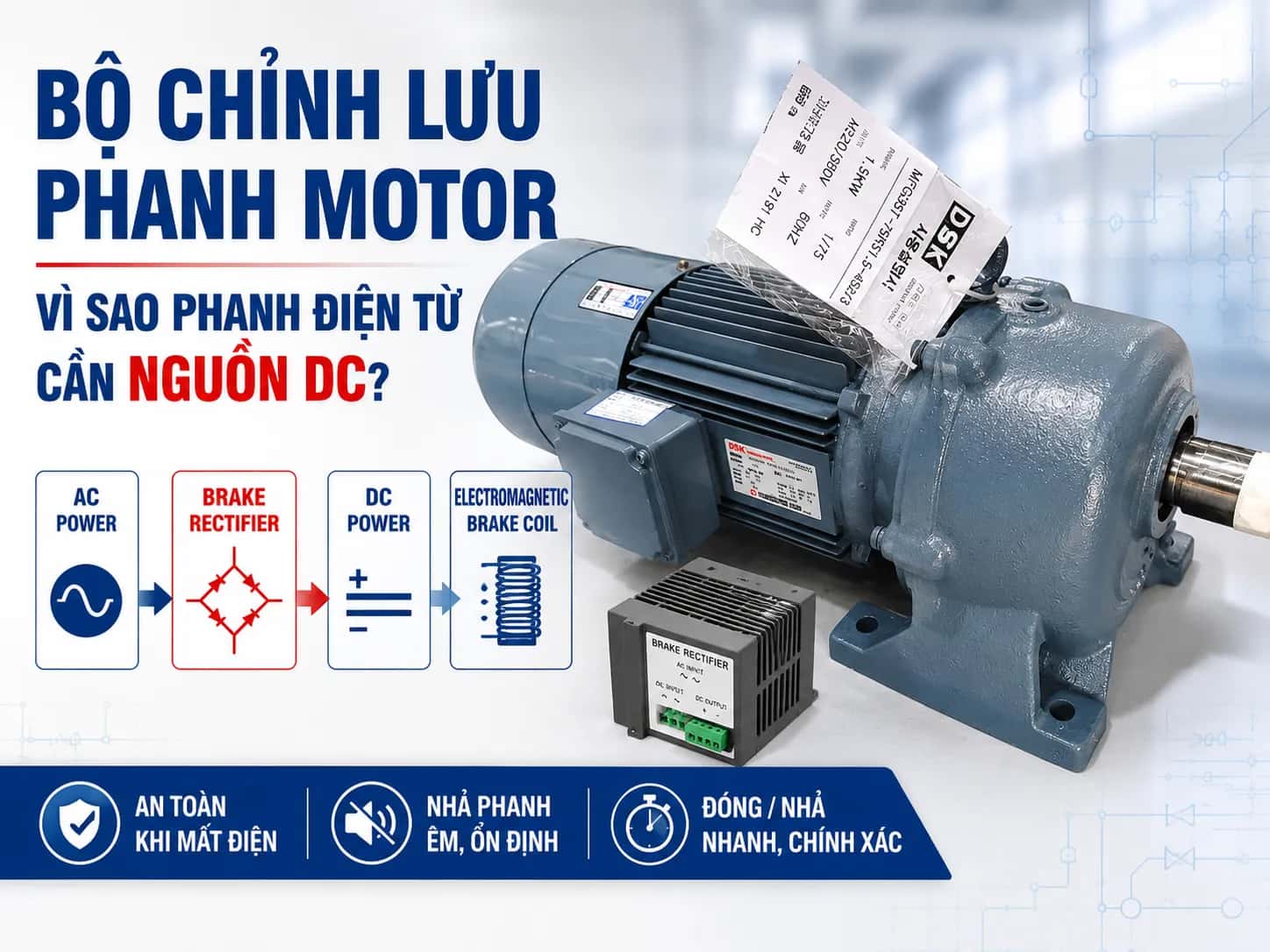
In heavy industrial systems, planetary gearboxes can be combined with AC motors, brake motors, or hydraulic motors. In precision automation, they are often coupled with servo motors via adapter flanges.
How to select a planetary gearbox
Determine the gear ratio
The gear ratio is calculated based on the motor speed and the load shaft speed:
i = n₁/n₂
For example, if the motor runs at 1,450 rpm and the load requires approximately 145 rpm, the theoretical gear ratio is:
i = 1,450/145 = 10
Select the closest standard gear ratio and verify the actual output speed.
Calculate output torque
If the power and output speed are known:
T = 9550 × P/n
Where:
T: torque, in Nm.
P: power, in kW.
n: speed, in rpm.
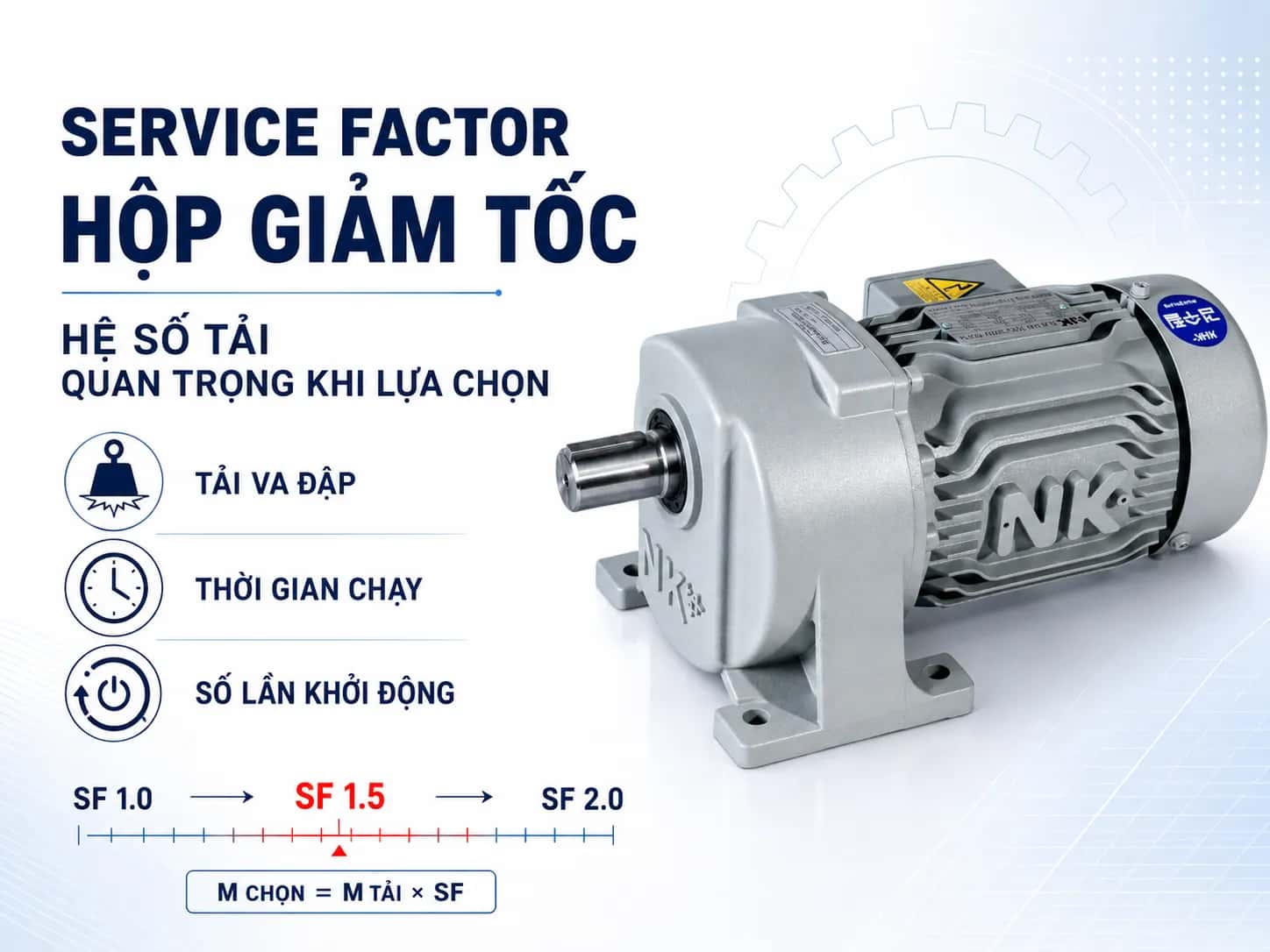
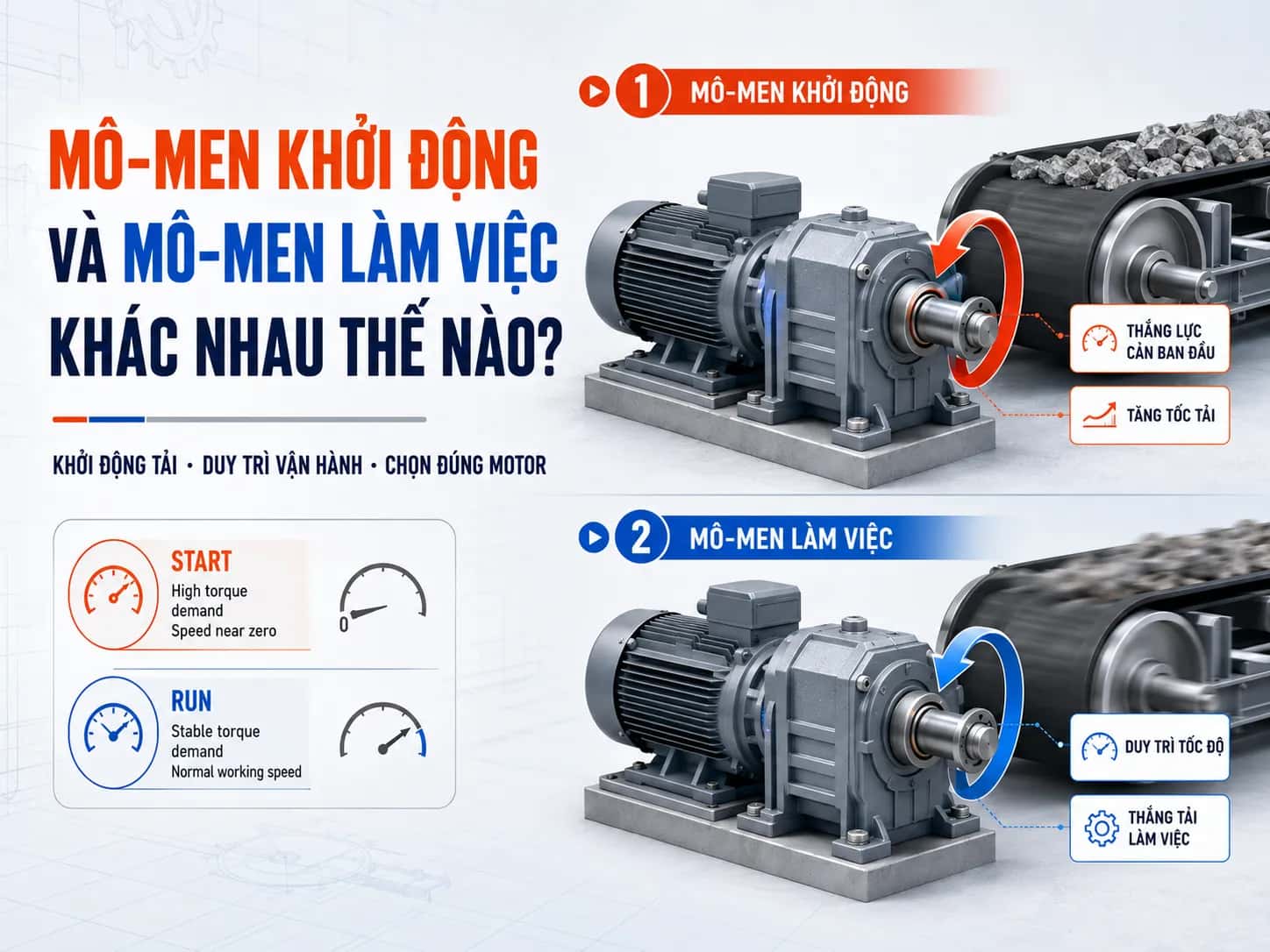
Do not select a gearbox based solely on average operating torque. It is necessary to check starting torque, peak torque, shock loads, and the service factor.
Check operating conditions
Information that needs to be confirmed includes:
Parameter | Content to check |
|---|---|
Motor power | kW or HP |
Input speed | rpm |
Output speed | rpm |
Load torque | Continuous and peak |
Operating mode | Continuous or intermittent |
Shock load | Light, medium, or heavy |
Backlash | Important for servo and positioning |
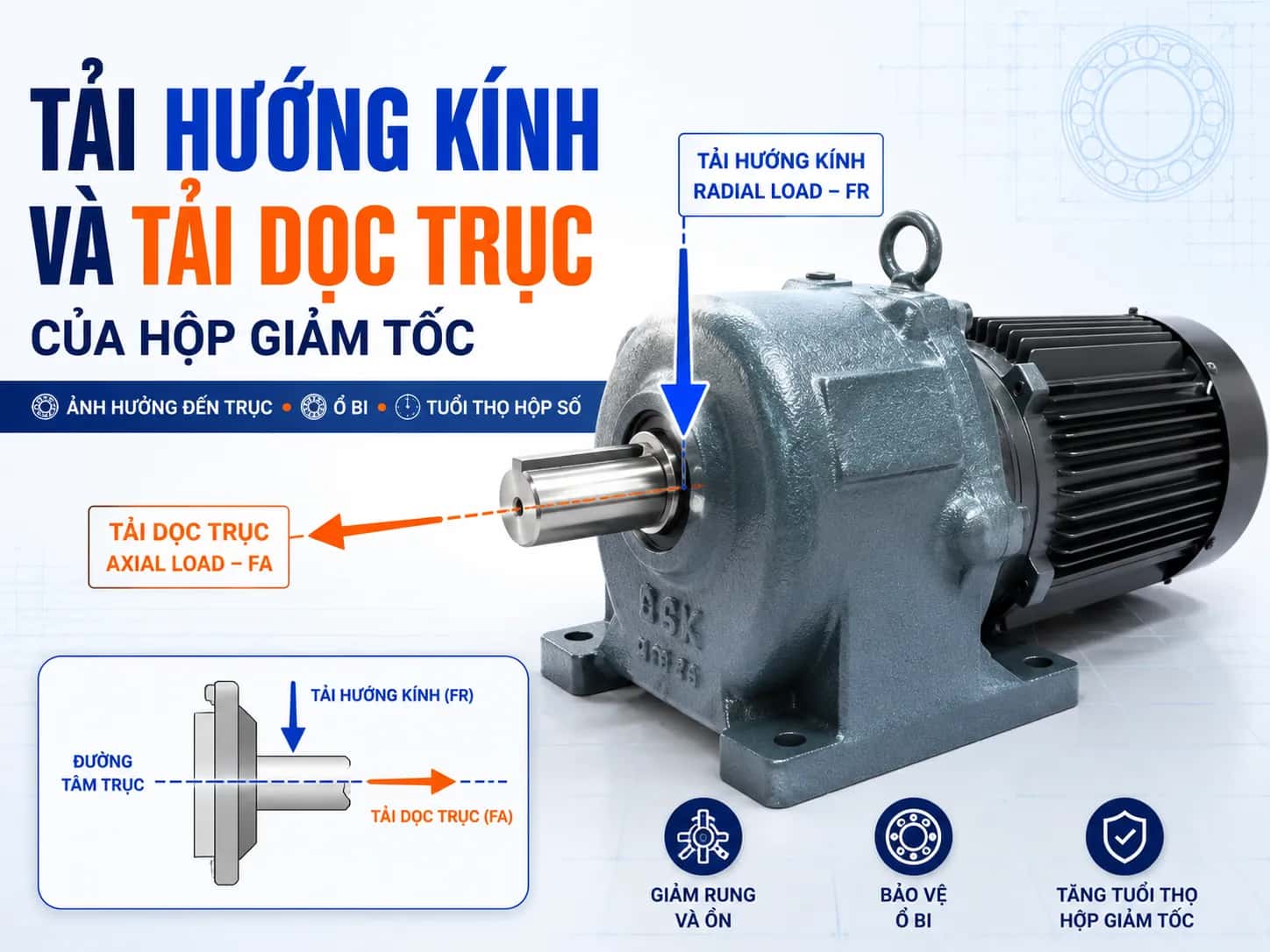
Radial, axial load | At the output shaft |
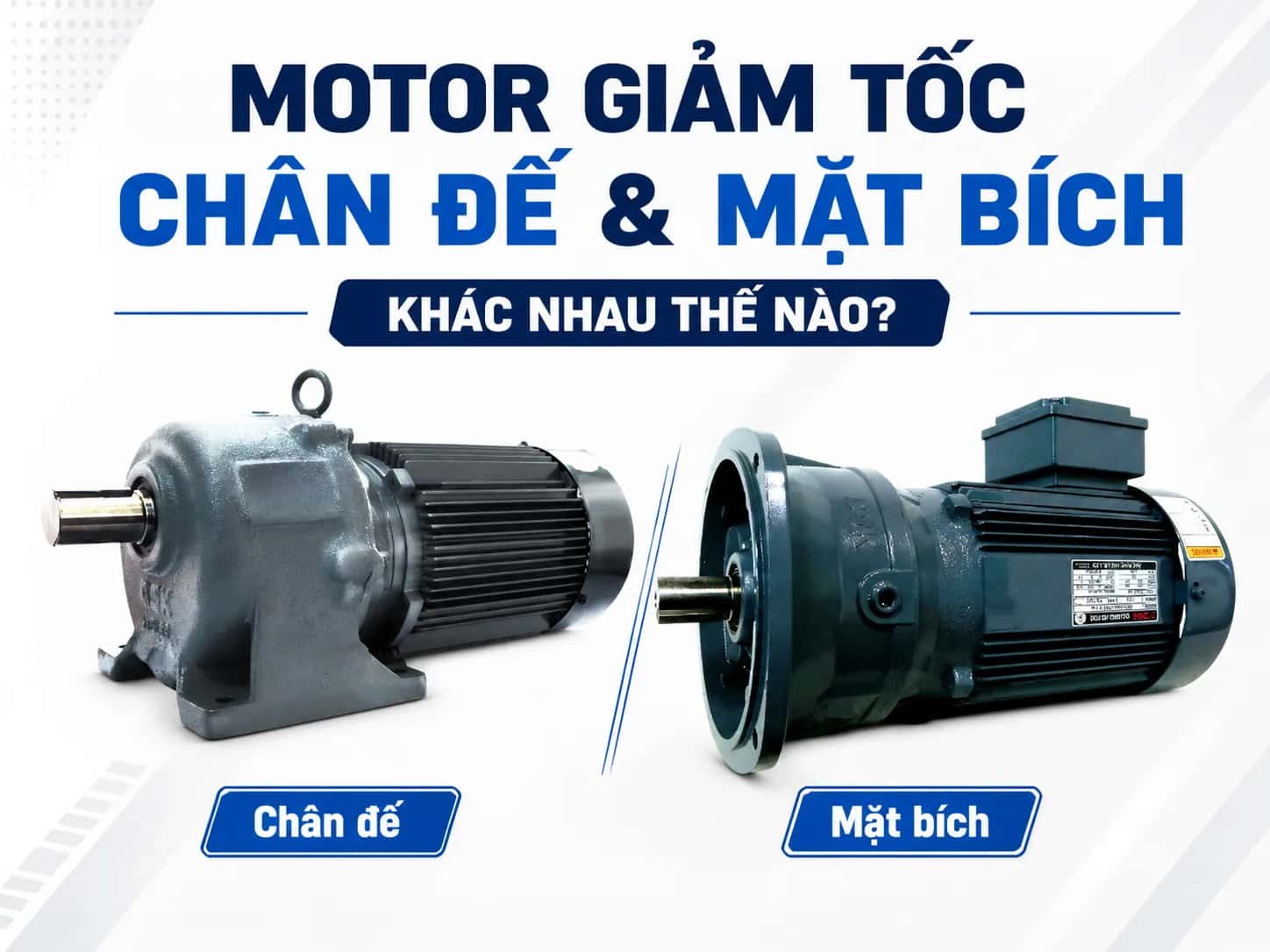
Mounting type | Foot, flange, hollow shaft |
Environment | Dust, humidity, temperature, corrosion |
Lubrication | Oil or grease per manufacturer instructions |
For servo applications, it is necessary to additionally check load inertia, acceleration torque, number of reversals, torsional rigidity, and positioning accuracy.
When should you choose a planetary gearbox?
Planetary gearboxes should be prioritized when high torque is required in a compact installation space, when the load is transmitted along a coaxial axis, or when the system requires high rigidity and precision.
For conveyors and general machinery with ample space, helical gearboxes may be more economical and easier to maintain. For applications requiring a 90° change in transmission direction, bevel gearboxes or right-angle planetary gearboxes should be considered.
Selection must be based on the actual load rather than just comparing motor power or gear ratios.
Frequently Asked Questions
Do planetary gearboxes have high efficiency?
Planetary gearboxes generally offer good transmission efficiency, but the actual value depends on the number of stages, gear design, speed, load, lubrication, and temperature. A fixed efficiency value should not be applied to every model.
Do planetary gearboxes have low backlash?
Precision planetary series can achieve very low backlash. However, standard industrial planetary gearboxes are not inherently precision gearboxes. It is essential to check the backlash specifications in the catalog.
Can a planetary gearbox be mounted with a servo motor?
Yes. Precision planetary gearboxes are typically designed to connect to various types of servo motors using appropriate adapters and couplings.
Can planetary gearboxes be used for heavy-duty loads?
Yes. Industrial planetary series are widely used for mixers, crushers, winches, mining equipment, and applications requiring very high torque. However, the correct service factor, peak torque, and heat dissipation capacity must be selected.
Do planetary gearboxes require oil changes?
It depends on the design. Some precision gearboxes are lubricated for life with grease, while industrial planetary gearboxes use oil and require inspection or oil changes according to the manufacturer's instructions.
Conclusion
Planetary gearboxes stand out for their high torque transmission capability, coaxial structure, and compact size. This type of gearbox is suitable for everything from heavy-duty industrial machinery to robotics, CNC machines, and precision servo systems.
For stable gearbox operation, selection must be based on gear ratio, continuous torque, peak torque, input speed, backlash, radial load, duty cycle, and environmental conditions.
MDriveTech planetary gearbox consulting
MDriveTech provides support for selecting planetary gearboxes for industrial machinery, servo systems, and high-torque applications.
📞 Hotline: 0868 789 647
📧 Email: [email protected]