How to Select Gear Motors for Automatic Palletizer Systems
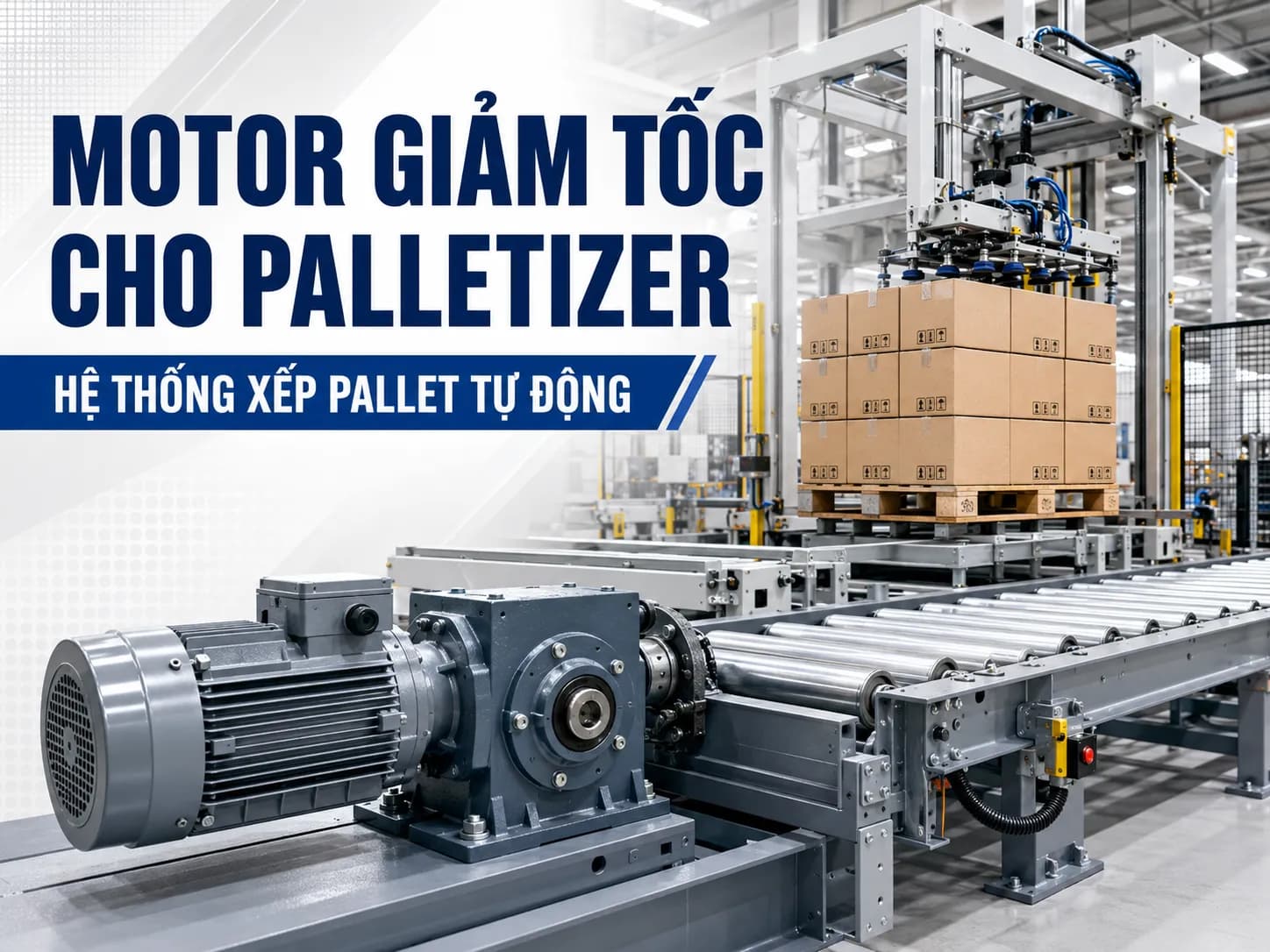
A guide to selecting gear motors for automatic palletizer systems, including pallet conveyors, roller conveyors, turntables, lifting tables, and end-of-line packaging lines.
How to Select a Geared Motor for an Automatic Palletizing System
Geared motors for automatic palletizing systems, also known as Palletizers or Automatic Palletizers, must be selected based on their specific position in the line, such as product infeed conveyors, roller conveyors, pallet chain conveyors, turntables, lifting tables, and stretch wrappers. When selecting, it is necessary to check the load, speed, starting torque, gear ratio, mounting type, duty cycle, VFD compatibility, and operating environment. Do not select a geared motor based solely on power rating, as motors with the same power can have significantly different gear ratios, output torques, and mounting configurations.
What is an Automatic Palletizer system?
An automatic palletizing system, commonly referred to as a Palletizer, Automatic Palletizer, or Palletizing Line, is a system used to automatically stack cartons, bags, packages, or packed products onto pallets. This system is typically located at the end of the production line, following packaging, weighing, labeling, or inspection processes.
In a Palletizing Line, products are fed into the palletizing area via conveyors. The system then accumulates, positions, and layers the goods, moves the pallet, and may pass it through a stretch wrapper to complete the packaging process before storage or shipment.
A geared motor is one of the critical drive components in this system, as most assemblies such as conveyors, rollers, chains, turntables, and lifting tables require stable movement, sufficient pulling force, and precise speed control.
Why do Palletizers require geared motors?
Standard electric motors operate at high speeds, whereas the mechanisms in a palletizing system require lower speeds and higher torque. A gearbox reduces the output speed while increasing the pulling torque to ensure stable system operation.
In a Palletizing Line, geared motors help to:
Drive product conveyors stably.
Move empty or full pallets.
Increase pulling force for chain and roller conveyors.
Reduce vibration during startup or shutdown.
Support cyclic start/stop operations controlled by a PLC.
Integrate with a VFD for speed adjustment.
Reduce the risk of overload, motor overheating, or mechanical failure.
If the wrong geared motor is selected, the system may encounter issues such as uneven pallet movement, jerky conveyors, noisy chain drives, rapid motor overheating, gearbox vibration, VFD overcurrent alarms, or inaccurate positioning.
Common positions for geared motors in a Palletizer system
1. Product Infeed Conveyor
The product infeed conveyor is responsible for transporting cartons, bags, or packages into the palletizing area. This assembly typically requires a stable speed, smooth operation, and the ability to adjust according to line throughput.
When selecting a geared motor for the product infeed conveyor, consider the following:
Weight of each product.
Conveyor length.
Conveyor speed.
Start/stop frequency.
Whether the product is prone to tipping, sliding, or deformation.
Whether a VFD is required for speed control.
For lightweight items such as small cartons, small to medium-power gear motors are generally sufficient. For heavy bags, large cartons, or continuous accumulation loads, it is necessary to verify the pulling torque and safety factor.
2. Accumulation conveyor
Accumulation conveyors are used to group products before palletizing. This section often requires frequent start-stop operations triggered by sensors or control signals.
A critical requirement is smooth movement without abrupt jerks to prevent product misalignment. If the products are soft bags, lightweight cartons, or items prone to tipping, selecting incorrect acceleration and deceleration times can cause the products to shift before reaching the palletizing area.
3. Roller conveyor
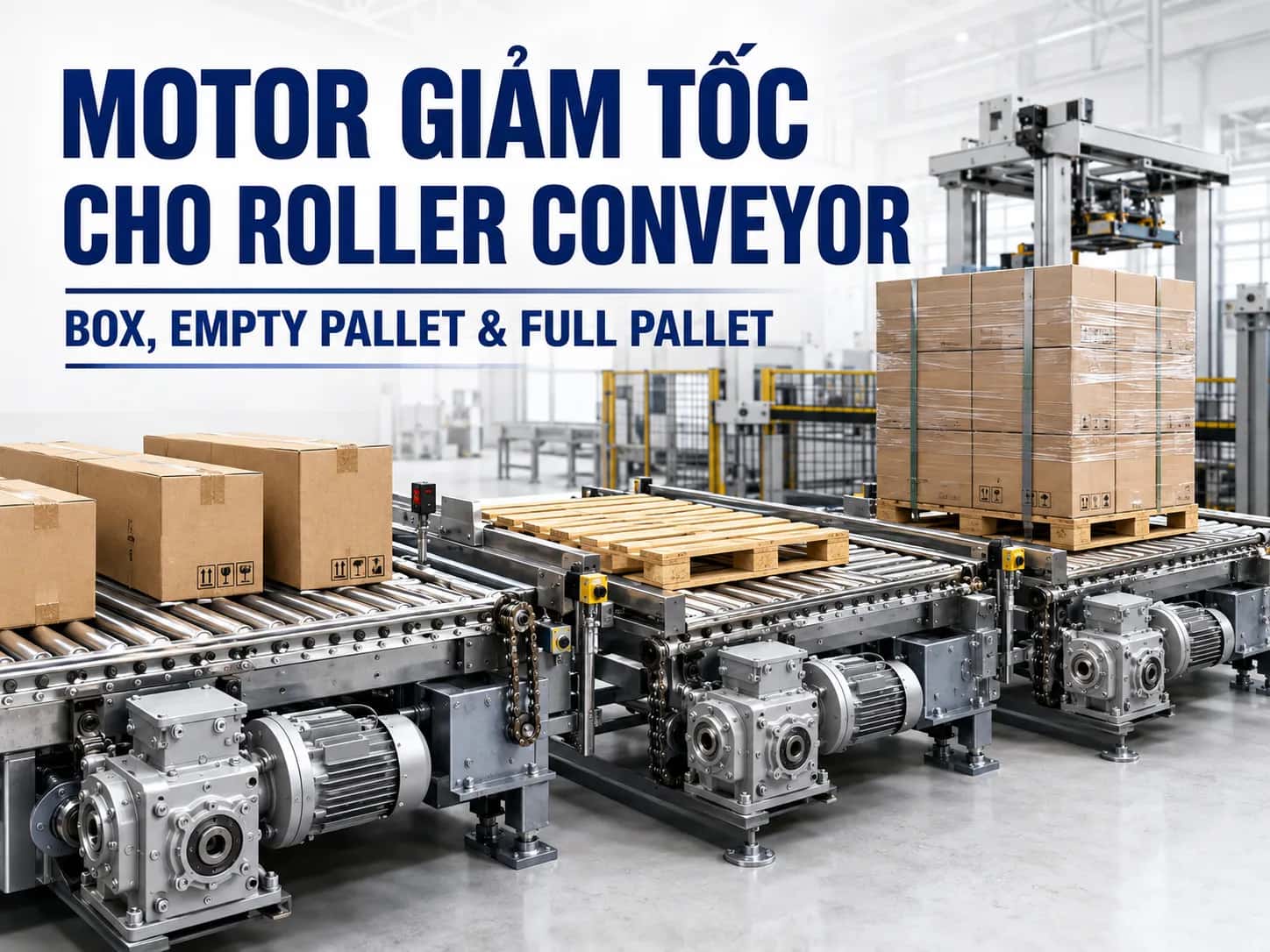
Roller conveyors are typically used for transporting cartons, empty pallets, or loaded pallets. The gear motor can drive the system via chains, belts, or intermediate shafts.
When selecting a gear motor for a roller conveyor, it is necessary to check:
Total load on the conveyor.
Number of driven rollers.
Roller friction.
Whether the load is already on the conveyor during startup.
Start-stop frequency.
Whether sensors or a PLC are used for zone control.
If the roller conveyor is used for heavy pallets, priority should be given to starting torque and the load-bearing capacity of the gearbox.
4. Pallet chain conveyor
Pallet chain conveyors are commonly used to transport empty or loaded pallets. This is one of the heaviest load assemblies in a palletizing system.
This application requires a gear motor with high torque, a robust gearbox, and stable load-bearing capacity. If the torque is insufficient, the system may experience weak startup, chain jerking, motor overheating, or VFD overcurrent faults.
When selecting a gear motor for a pallet chain conveyor, it is necessary to know:
Weight of the empty pallet.
Weight of the loaded pallet.
Number of pallets on the conveyor simultaneously.
Pallet transport speed.
Chain type and sprocket diameter.
Conveyor length.
Continuous or cyclic operation mode.
5. Pallet turntable
Pallet turntables are used to change the orientation of pallets or alter the direction of movement within the line. This assembly requires smooth movement, sufficient torque, and stable stopping.
If the turntable carries a heavy load, it is necessary to check the starting torque, load inertia, acceleration/deceleration time, and positioning accuracy. In some cases, it may be necessary to incorporate a VFD, position sensors, or a motor with an electromagnetic brake.
6. Lifting mechanism
Some palletizing systems feature lifting tables or lifting mechanisms to adjust the pallet height during the layering process. This is a critical area that requires careful verification due to the lifting load and the ability to hold the load when stopped.
When selecting a gear motor for lifting applications, it is necessary to consider:
Maximum lifting weight.
Lifting speed.
Lifting stroke.
Operating frequency.
Whether load holding is required when stopped.
Whether a gear motor with an electromagnetic brake is required.
For lifting mechanisms, it is recommended to consider a motor with an electromagnetic brake to prevent load drift and increase safety during stops.
7. Pallet wrapping machine
After products are placed on a pallet, many production lines convey the pallet through a wrapping machine. Gear motors can be used for the turntable, film carriage, or film roll lifting mechanism.
This application requires stable speed to ensure the film is wrapped evenly, neither too loose nor too tight. If the turntable speed is inconsistent, the wrapping quality may be affected.
How to select a gear motor for an automated palletizing system
1. Identify the correct application point
Do not select a single type of gear motor for the entire Palletizer system. Each position has different load and speed requirements. The motor for an infeed conveyor is not the same as the motor for a pallet chain conveyor, turntable, or lifting mechanism.
Before selecting, it is necessary to identify which assembly the motor is used for and what function that assembly performs in the line.
2. Calculate the actual load
Load is the most critical parameter. It is necessary to determine the product weight, pallet weight, total maximum load, and the number of products or pallets present on the conveyor at any given time.
For pallet conveyors, do not calculate based on empty pallet weight alone. You must account for fully loaded pallets, as this typically represents the system's maximum load.
3. Determine the required speed
The speed of each assembly must match the line throughput. If the speed is too slow, the system will not meet production targets. If the speed is too fast, products may easily shift, tip over, or cause impacts during transfers between assemblies.
It is necessary to determine:
Conveyor speed.
Roller speed.
Pallet chain speed.
Turntable rotation speed.
Lifting/lowering speed.
Cycle time.
4. Select the appropriate gear ratio
The gear ratio directly affects the output speed and torque. For example, if a 4-pole motor has a speed of approximately 1450 rpm:
A 1/10 gear ratio provides an output speed of approximately 145 rpm.
A 1/20 gear ratio provides an output speed of approximately 72 rpm.
A 1/30 gear ratio provides an output speed of approximately 48 rpm.
A 1/50 gear ratio provides an output speed of approximately 29 rpm.
However, this is only an estimation of output speed. When making an actual selection, it is necessary to further check torque, gearbox efficiency, starting load, and operating conditions.
5. Check starting torque
Palletizing systems often operate with frequent starts and stops. Many assemblies must start while the load is already resting on the conveyor. This is why starting torque is critical.
If the torque is insufficient, the system may encounter issues such as:
Weak conveyor startup.
Pallet jerking during movement.
Chain tension spikes.
Rapid motor overheating.
VFD overcurrent trips.
Abnormal noise from the gearbox.
6. Select shaft and mounting configuration
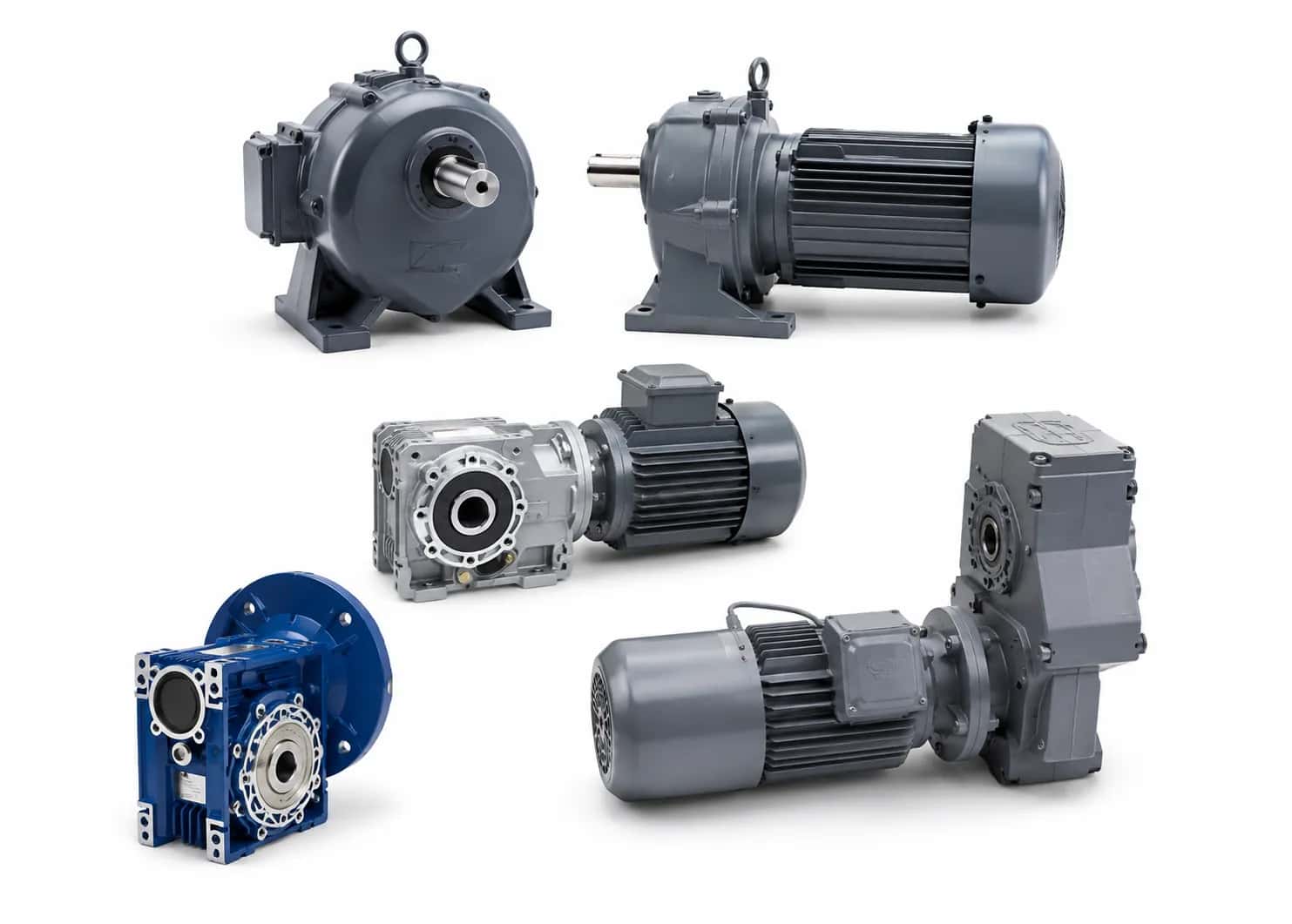
Gear motors for Palletizers can utilize various mounting configurations:
Foot mount.
Flange mount.
Solid shaft.
Hollow shaft.
Inline shaft.
Right-angle shaft.
Solid shafts are suitable for transmission via couplings, sprockets, or pulleys. Hollow shafts are suitable for direct mounting onto machine shafts. Right-angle shafts are suitable for tight installation spaces or when a change in transmission direction is required.
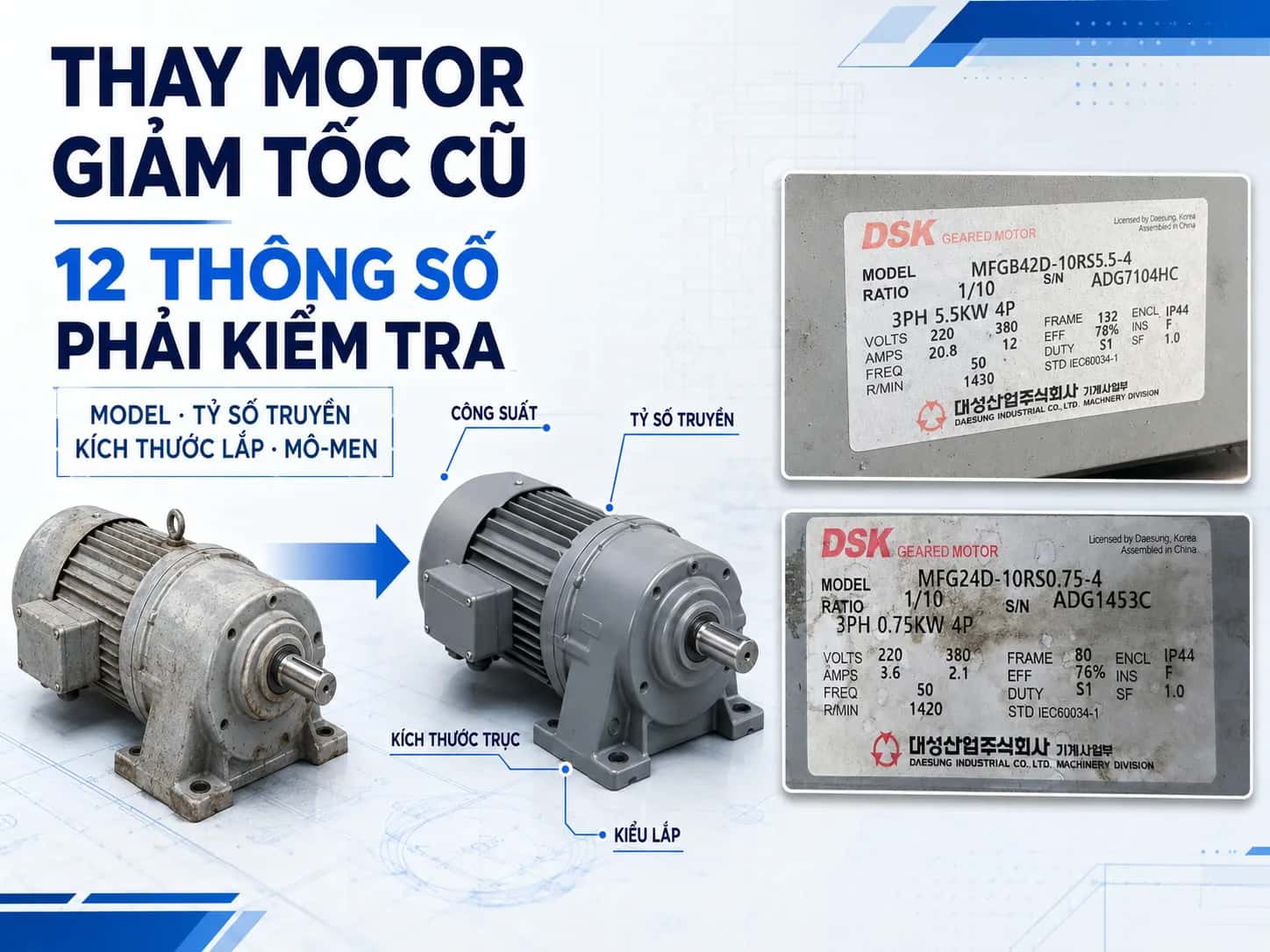
When replacing an old motor, it is necessary to check the dimension drawings, shaft diameter, keyway, flange, foot mount, and mounting orientation.
7. VFD and control mode inspection
VFDs are commonly used in Palletizer systems to adjust speed, provide soft start/stop, and synchronize with the PLC. However, if configured incorrectly, the VFD can cause overcurrent, overvoltage faults, or motor overheating.
When using a VFD for a gear motor, it is necessary to check:
Motor voltage.
Motor rated current.
Motor power.
Rated frequency.
Minimum and maximum frequency.
Acceleration time.
Deceleration time.
V/F or vector control mode.
Whether a braking resistor is required for quick stops.
For heavy loads or loads with high inertia, do not set the deceleration time too short without verifying the VFD's energy dissipation capacity.
8. Operating environment inspection
The working environment significantly affects the service life of the motor and gearbox. Palletizing lines may operate in food processing, packaging, cement, fertilizer, chemical, warehouse, or dusty environments.
It is necessary to check for:
Dust, moisture, or washdown water.
Ambient temperature.
Chemical vapors or corrosive agents.
Daily operating hours.
Impact loads.
Periodic cleaning requirements.
Depending on the environment, it is necessary to select the appropriate motor protection class, paint type, oil seals, gearbox oil, and shielding measures.
Quick selection table by position in the Palletizer
Application position | Main requirements | Considerations for gear motor selection |
|---|---|---|
Product infeed conveyor | Smooth operation, stable speed | Check load, speed, and VFD adjustability |
Accumulation conveyor | Frequent start/stop | Requires soft acceleration/deceleration to prevent product misalignment |
Roller conveyor | Moving boxes or pallets | Check starting load and number of driven rollers |
Pallet chain conveyor | Heavy load, high torque | Calculate full pallet weight and starting load |
Pallet turntable | Stable rotation, precise positioning | Check load inertia, VFD, sensors, or electromagnetic brake |
Lifting mechanism | Lifting and holding load | Consider a motor with an electromagnetic brake |
Stretch wrapper | Uniform speed | Requires smooth operation and easy speed adjustment |
Common mistakes when selecting the wrong gear motor for a Palletizer
Some common mistakes include:
Insufficient torque selection for the pallet conveyor.
Failure to calculate starting load.
Incorrect gear ratio selection causing the system to run too fast or too slow.
Failure to check shaft type, flange, or foot mounting.
VFD acceleration/deceleration settings are too aggressive.
Failure to calculate the inertia of the turntable.
Not using a brake motor for mechanisms requiring load holding.
Failure to check sprockets, pulleys, rollers, or couplings.
Using a motor unsuitable for frequent start-stop cycles.
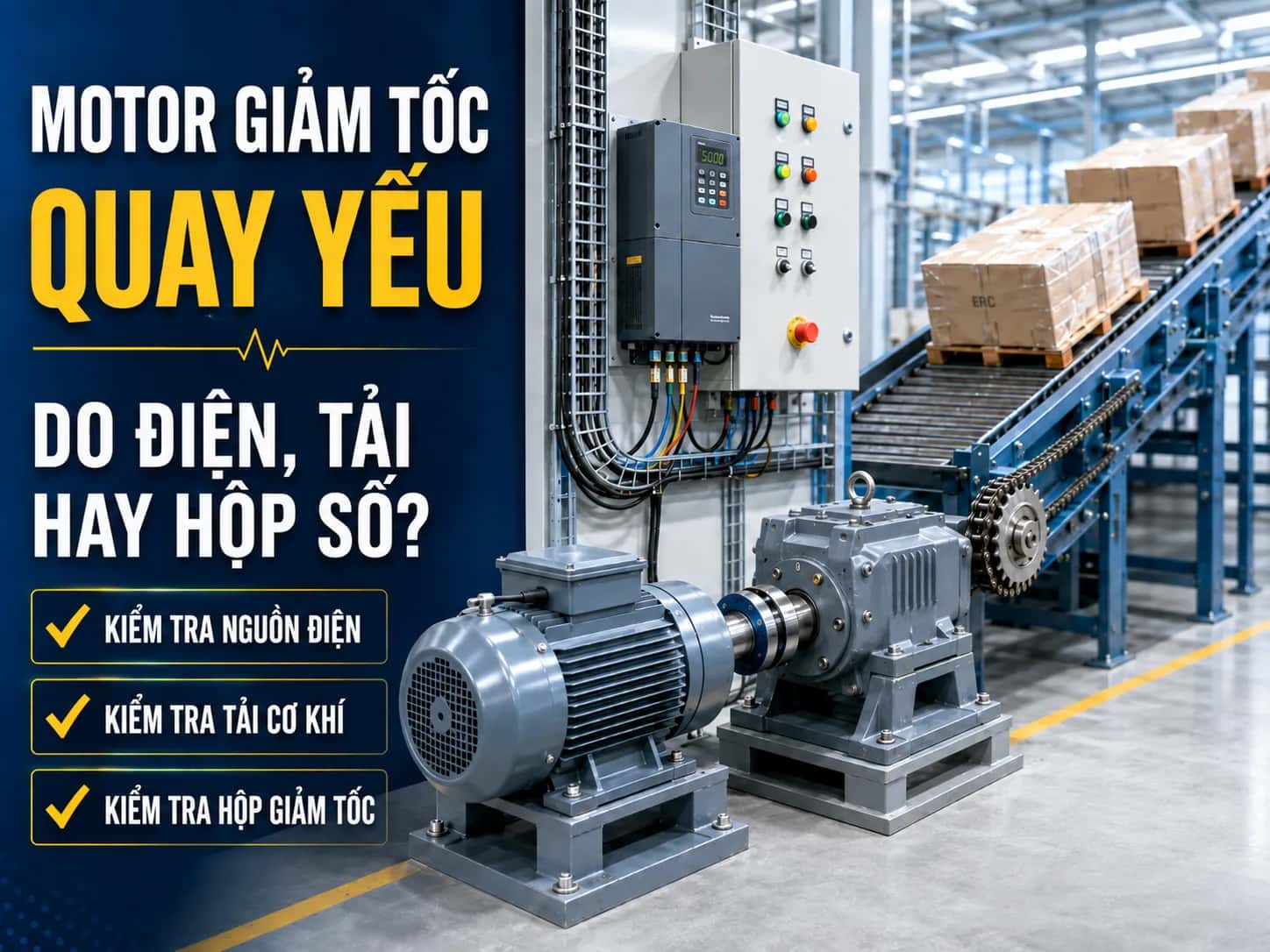
When experiencing motor overheating, chain jerking, uneven pallet movement, gearbox vibration, loud conveyor noise, or VFD overcurrent alarms, do not rush to replace the motor with one of the same power rating. It is necessary to re-evaluate the load, gear ratio, transmission type, duty cycle, and VFD settings.
Suggestions for selecting DSK gear motors for palletizing systems
Korean DSK Gear Motors offer a wide range of gear motors that can be considered for automated palletizing systems, depending on the application position and load requirements.
Some selection guidelines:
Helical gear series are suitable for product infeed conveyors and straight-line conveyors.
Bevel helical gear series are suitable for right-angle transmissions or space-saving requirements.
Hollow shaft series are suitable for assemblies that mount directly onto the machine shaft.
Heavy-duty series are more suitable for pallet chain conveyors, heavy-duty roller conveyors, or assemblies requiring high torque.
Brake motors can be considered for lifting tables, turntables, or positions requiring load holding during stops.
When selecting a DSK gear motor for a Palletizer, it is essential to fully verify the power, gear ratio, output speed, mounting type, shaft dimensions, load torque, and technical drawings. Do not select based solely on images or motor power.
Information required for more accurate gear motor selection
For MDriveTech to assist in selecting the appropriate gear motor for your automated palletizing system, please provide the following information:
The position where the motor is used in the line.
Type of load: carton, bag, empty pallet, or full pallet.
Maximum load weight.
Required speed.
Duty cycle (start-stop cycle).
Frequency of starts per hour.
Transmission type: chain, pulley, coupling, roller, or direct drive.
Diameter of the sprocket, pulley, roller, or drive shaft.
Desired mounting type.
Whether a VFD is used.
Whether a brake is required.
Operating environment.
Daily operating hours.
Images or model of the old motor if it is a replacement.
Mechanical drawings if available.
The more complete the information, the more accurate the gear motor selection will be, minimizing risks such as incorrect speed, insufficient torque, or installation incompatibility.
Conclusion
Geared motors are critical components in automatic palletizing systems. These devices ensure that conveyors, rollers, chains, turntables, and lifting mechanisms operate stably with sufficient torque and are well-suited to the production line's duty cycle.
To select the correct geared motor for a Palletizing Line, it is necessary to evaluate the load, speed, starting torque, gear ratio, mounting type, drive type, VFD, start-stop frequency, and operating environment. Do not select a motor based solely on power rating, as motors with the same power can have significantly different gear ratios and output torques.
MDriveTech provides consulting services for selecting geared motors, gearboxes, VFDs, and industrial drive solutions for automatic palletizing systems, conveyors, mixers, screw conveyors, packaging machines, and production lines. For each specific application, verifying the correct parameters from the start will help the system operate more stably, reduce errors, and minimize failures during operation.
📞 Hotline: 0868 789 647
📧 Email: [email protected]
FAQ
What is an automatic palletizing system called in English?
An automatic palletizing system is commonly referred to as a Palletizer, Automatic Palletizer, Palletizing Line, or Palletizing System, depending on the context.
Where are geared motors used in a Palletizer system?
Geared motors are typically used in product feed conveyors, accumulation conveyors, roller conveyors, pallet chain conveyors, turntables, lifting tables, pallet dispensers, and pallet wrapping machines.
What should be considered for geared motors used in pallet conveyors?
It is necessary to check the weight of the fully loaded pallet, the number of pallets on the conveyor, travel speed, chain type, sprocket diameter, start-stop cycle, and starting torque.
Should a VFD be used for a Palletizer geared motor?
A VFD can be used to adjust speed, provide soft start/stop, and synchronize with the PLC. However, it is essential to set the correct motor parameters, define appropriate frequency limits, and verify torque at low speeds.
When is a geared motor with a brake required?
A geared motor with a brake should be considered for lifting mechanisms, turntables, or positions where the load must be held during a stop to prevent load drift and increase safety.
Why do geared motors in a Palletizer overheat?
Motors may overheat due to overloading, insufficient torque selection, unsuitable gear ratios, frequent start-stop cycles, incorrect VFD settings, jammed loads, or lack of lubrication in the gearbox.