How to Select Gear Motors for Palletizer Roller Conveyors: Boxes, Empty Pallets, and Full Pallets
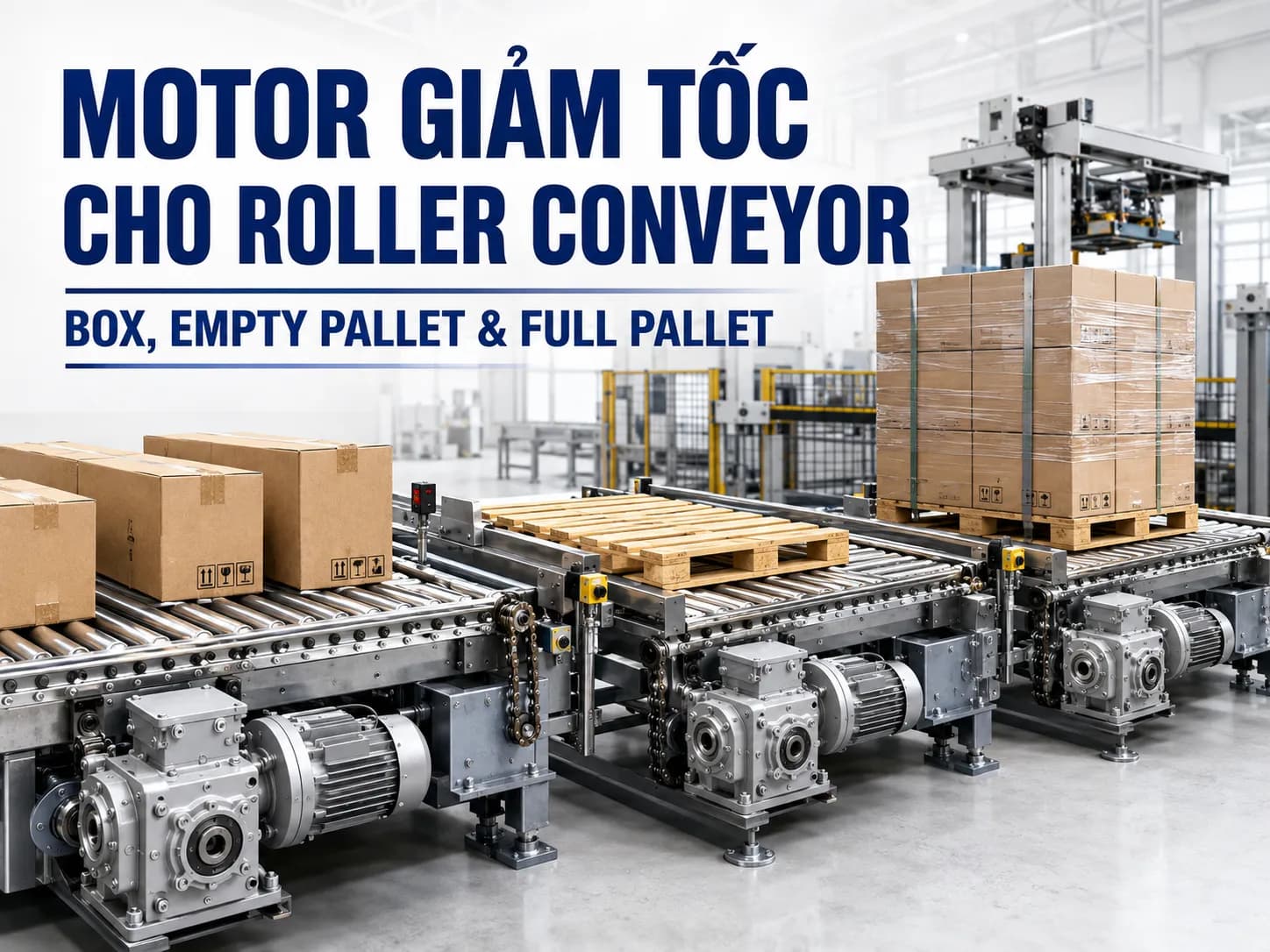
A comparison of gear motor selection criteria for Box Roller Conveyors, Empty Pallet Roller Conveyors, and Full Pallet Roller Conveyors within palletizing systems.
How to Select a Geared Motor for Palletizer Roller Conveyors: Boxes, Empty Pallets, and Full Pallets
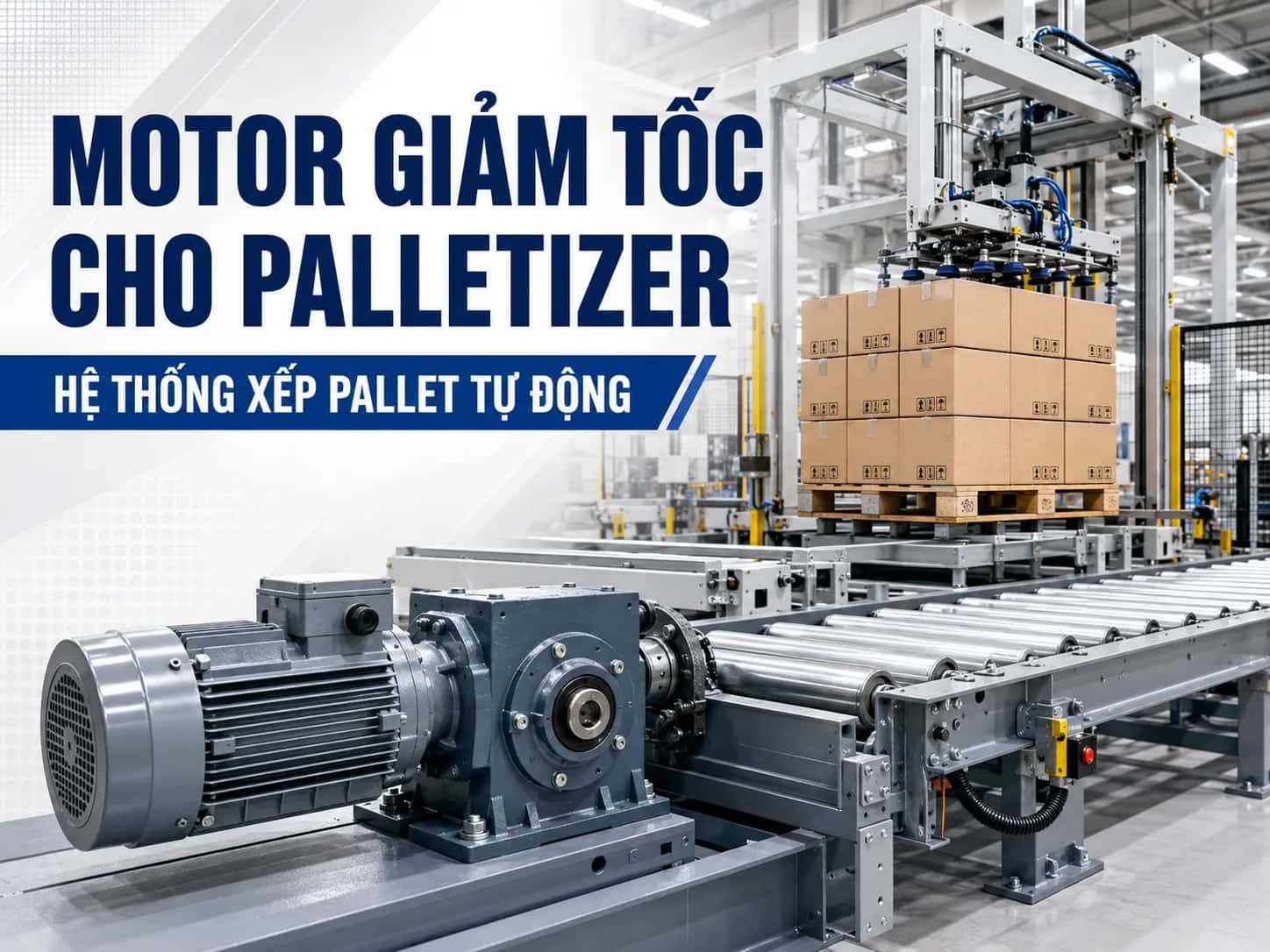
In a Palletizer system, Roller Conveyors can be used to transport cartons, empty pallets, or fully loaded pallets. These three assemblies look similar, but their load capacities and geared motor selection requirements differ significantly. Box Roller Conveyors require smooth operation and speed synchronization. Empty Pallet Roller Conveyors need to position empty pallets accurately. Full Pallet Roller Conveyors require higher torque due to heavy loads and are typically harder to start.
Therefore, you should not select the same type of geared motor for all roller conveyors in a Palletizer. It is necessary to evaluate the actual load, speed, starting torque, gear ratio, drive type, and control mode.
Why should you not select the same motor for every Roller Conveyor?
In a Palletizer line, roller conveyors are often used in various positions. Some sections transport cartons, some transport empty pallets, and others move fully loaded pallets after stacking.
At first glance, these assemblies are all Roller Conveyors. However, the actual loads differ significantly. A geared motor that works well for a Box Roller Conveyor may not be suitable for a Full Pallet Roller Conveyor. Conversely, using an oversized motor for a light-load application can lead to unnecessary costs.
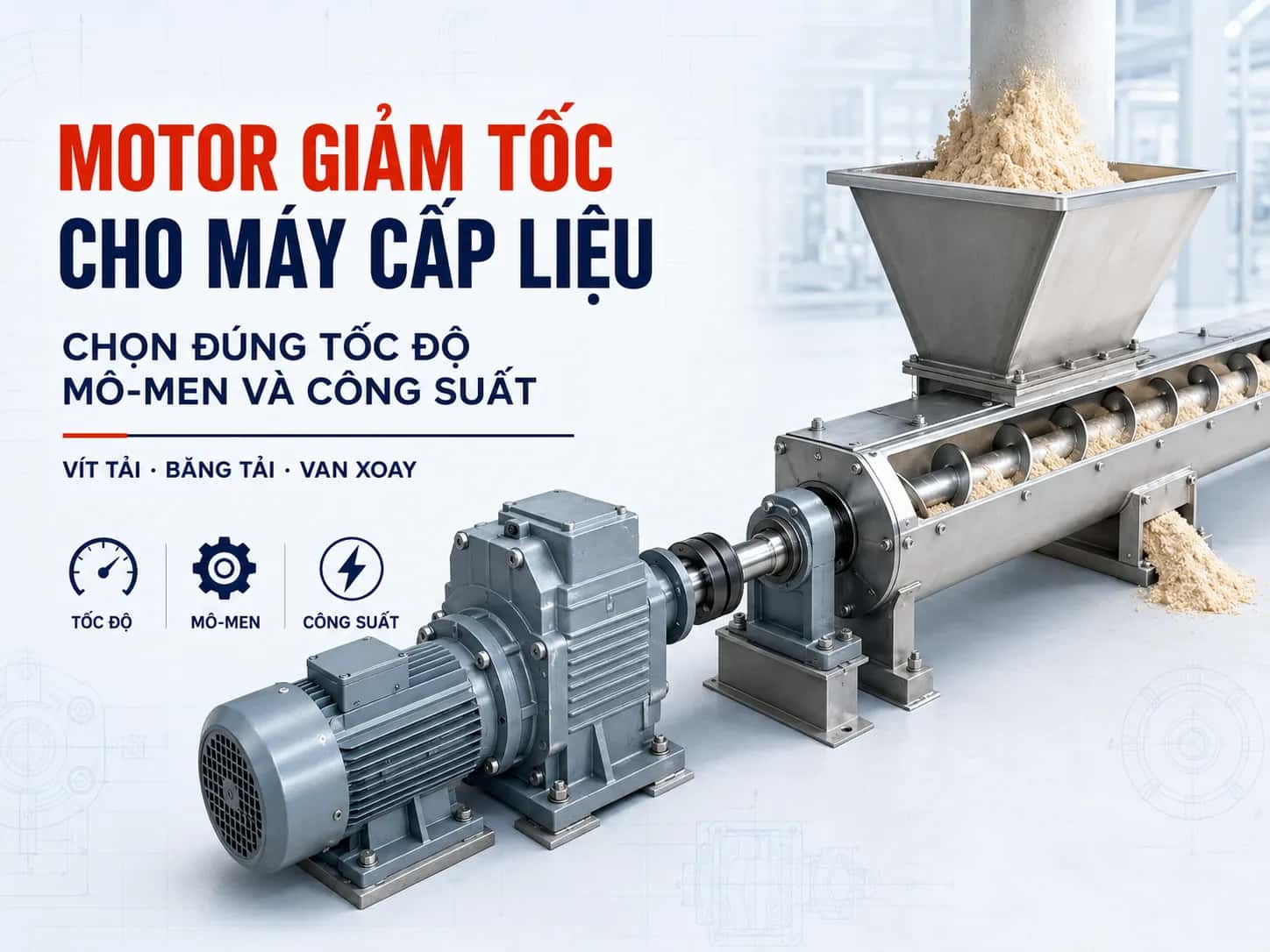
The key factors when selecting a geared motor for a Roller Conveyor are not just power, but also output torque, output speed, starting load, and duty cycle.
Box Roller Conveyor – light load but requires smooth operation
Box Roller Conveyors are roller conveyors used to transport cartons, packages, or pre-packaged products before they reach the palletizing area.
The characteristic of a Box Roller Conveyor is that the load is usually not very heavy, but the movement must be smooth. If the conveyor jerks, accelerates too quickly, or stops too abruptly, the cartons may become misaligned, tip over, or enter the wrong position.
When selecting a geared motor for a Box Roller Conveyor, pay attention to:
Weight of each carton.
Number of cartons on the conveyor at the same time.
Feeding speed into the Palletizer area.
Length of the roller conveyor.
Number of driven rollers.
Whether sensor-based start/stop is required.
Whether a VFD is used for speed synchronization.
For this application, the geared motor does not necessarily need to be very large. The important thing is to select the correct gear ratio, ensure sufficient torque, and configure appropriate acceleration/deceleration ramps if using a VFD.
Empty Pallet Roller Conveyor – empty pallets but requires stable positioning
Empty Pallet Roller Conveyors are roller conveyors used to transport empty pallets within a Palletizer system. Empty pallets are lighter than full pallets but are large in size and prone to misalignment if the rollers do not run evenly.
This application is usually located near the pallet dispenser or the pallet feeding area. If the empty pallet does not reach the correct position, the subsequent stacking process may fail.
When selecting a gear motor for an Empty Pallet Roller Conveyor, the following must be checked:
Empty pallet weight.
Pallet dimensions.
Number of pallets on the conveyor simultaneously.
Pallet feeding speed.
Position of the pallet stop sensor.
Drive mechanism (chain, belt, or intermediate shaft).
Start-stop frequency per cycle.
For empty pallets, excessively high speeds should not be prioritized. It is recommended to select a gear motor that ensures stable conveyor operation, smooth stopping, and accurate pallet positioning.
Full Pallet Roller Conveyor – heavy load, high torque required
Full Pallet Roller Conveyor is a roller conveyor used to transport fully loaded pallets. This is the most critical assembly to evaluate when selecting a gear motor, as the load is significantly higher than that of Box Roller Conveyors and Empty Pallet Roller Conveyors.
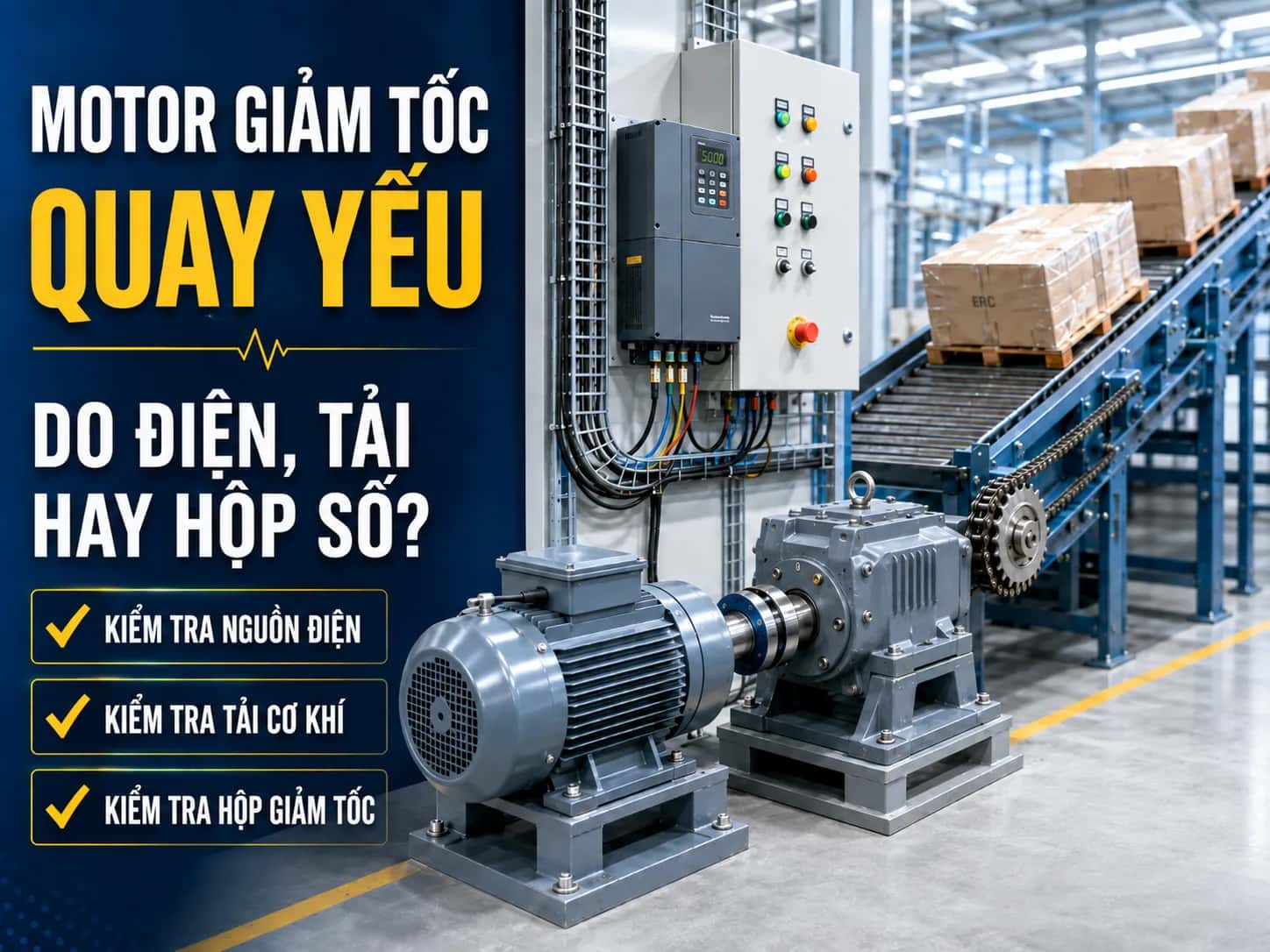
Loaded pallets can generate high loads, especially when the conveyor must start while the pallet is already resting on the rollers. If the gear motor lacks sufficient torque, the system may struggle to start, run jerkily, overheat quickly, or trigger a VFD overcurrent fault.
When selecting a gear motor for a Full Pallet Roller Conveyor, the following must be checked:
Weight of the pallet when fully loaded.
Number of pallets on the conveyor simultaneously.
Pallet transport speed.
Roller conveyor length.
Number of driven rollers.
Whether the load is already on the conveyor during startup.
Start-stop frequency.
Whether a VFD is used.
Whether precise or rapid stopping is required.
For this application, special attention must be paid to the starting torque. In many cases, the motor can pull the load once the conveyor is already running, but it lacks the strength to start under load. This is a common cause of motor overheating, gearbox vibration, chain jerking, or VFD faults.
Comparison table of Box Roller, Empty Pallet, and Full Pallet Roller Conveyors
Criteria | Box Roller Conveyor | Empty Pallet Roller Conveyor | Full Pallet Roller Conveyor |
|---|---|---|---|
Load type | Cartons, packages | Empty pallets | Loaded pallets |
Load level | Light to medium | Medium | Heavy |
Torque requirement | Moderate | Medium | High |
Main priority | Smooth operation, no box misalignment | Stable pallet positioning | Sufficient pulling force, high load capacity |
Risks of incorrect selection | Box misalignment, uneven movement | Incorrect pallet positioning | Motor overheating, overload, chain jerking |
VFD | Recommended if speed synchronization is needed | Optional | Recommended in many cases |
Important note | Soft start/stop | Precise positioning | High starting torque |
How to select a gear motor for different types of Roller Conveyors

For Box Roller Conveyors
It is recommended to select a gear motor based on the box transport speed and smooth operation requirements. If the line needs to be synchronized with sensors, case packers, or palletizing robots, a VFD should be integrated for more flexible speed control.
Avoid selecting a gear ratio that is too low, which would cause the conveyor to run too fast. Excessive speed can cause boxes to shift or enter the wrong position.
For Empty Pallet Roller Conveyors
It is recommended to select a gear motor with sufficient starting torque and stable operation. Empty pallets are not very heavy but have large dimensions, so precise stopping position control is required.
If this section is linked to a pallet dispenser, check the pallet dispensing cycle and the timing of the pallet entering the waiting area.
For Full Pallet Roller Conveyors
Priority should be given to checking the maximum load and starting torque. This is a position where the motor should not be selected based on intuition or solely on previous power ratings.
Consider the scenario where the conveyor starts with a fully loaded pallet resting on the rollers. If the load is heavy and the system undergoes frequent start-stop cycles, select a gear motor with an appropriate service factor and configure the VFD properly to reduce load shock.
How to select the gear ratio?
The gear ratio directly affects the output speed and torque of the gear motor. 4P motors typically have a speed of approximately 1400–1500 rpm. After passing through the gearbox, the output speed is reduced according to the gear ratio.
Reference example for a 1450 rpm motor:
Gear ratio 1/10: output speed approximately 145 rpm.
Gear ratio 1/20: output speed approximately 72 rpm.
Gear ratio 1/30: output speed approximately 48 rpm.
Gear ratio 1/50: output speed approximately 29 rpm.
However, do not select the gear ratio based solely on the desired speed. For Roller Conveyors in a Palletizer, it is necessary to further verify the actual load, roller diameter, drive type, starting torque, and duty cycle.
Should a VFD be used for Palletizer Roller Conveyors?
VFDs are commonly used for Roller Conveyors in Palletizers to adjust speed, provide soft starting, reduce load shock, and synchronize with PLCs or sensors.
For Box Roller Conveyors, a VFD helps boxes move more smoothly.
For Empty Pallet Roller Conveyors, a VFD helps pallets reach the correct position more stably.
For Full Pallet Roller Conveyors, a VFD helps reduce load shock during startup and limits mechanical impact.
When using a VFD, ensure the following are correctly configured:
Motor voltage.
Motor rated current.
Rated frequency.
Maximum and minimum frequency.
Acceleration time.
Deceleration time.
V/F or vector control mode.
Overload protection.
If the load is heavy but the acceleration time is too short, the VFD may trip on overcurrent. If the deceleration is too fast with a high-inertia load, the VFD may trip on overvoltage, and a braking resistor may be required.
Common errors when incorrectly selecting geared motors for Roller Conveyors
Some common practical errors include:
Selecting the same motor for both Box Roller and Full Pallet Roller conveyors.
Selecting a motor based on power without checking the torque.
Failing to calculate the starting load.
Selecting a gear ratio that is too low, resulting in high conveyor speed but insufficient pulling force.
Selecting a gear ratio that is too high, causing the system to run slowly and fail to meet throughput requirements.
Failing to check the roller diameter.
Failing to check the drive type (chain, belt, or intermediate shaft).
Setting the VFD acceleration/deceleration times too aggressively.
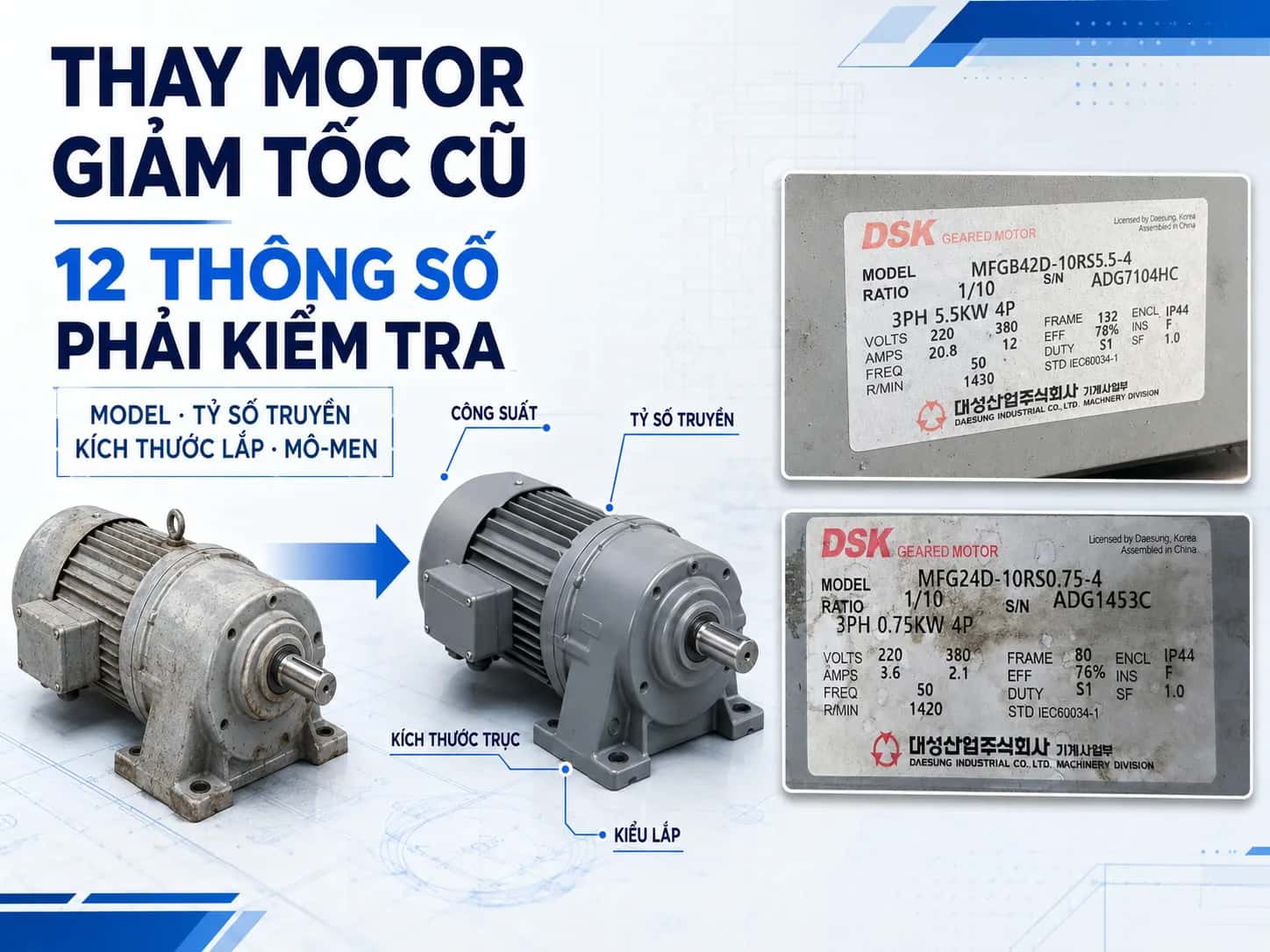
Failing to cross-reference drawings when replacing old geared motors.
In a Palletizer system, a minor error in the roller conveyor can affect the entire palletizing cycle. Therefore, it is essential to select the correct geared motor for each type of load.
Selection guide for DSK geared motors for Palletizer Roller Conveyors
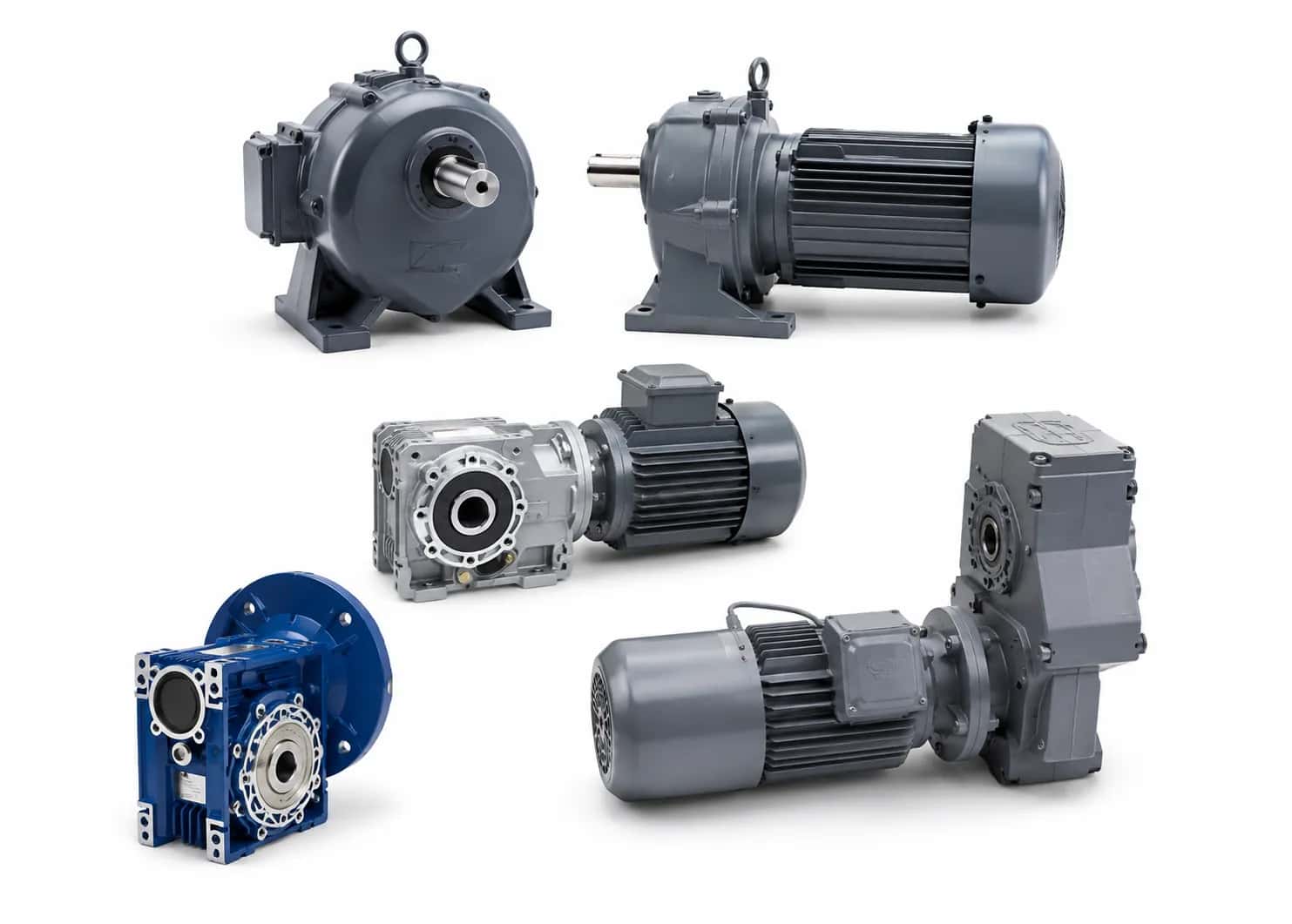
DSK Geared Motors from Korea offer various geared motor series suitable for Roller Conveyor applications in Palletizer systems. Depending on the load, speed, mounting type, and installation space, an appropriate configuration can be selected.
Some selection guidelines for reference:
Box Roller Conveyor: prioritize geared motors with smooth operation, stable speed, and easy VFD integration.
Empty Pallet Roller Conveyor: requires a motor with sufficient starting torque and stable operation to ensure pallets reach the correct position.
Full Pallet Roller Conveyor: requires careful checking of the full pallet load, output torque, and safety factor.
Chain or pulley-driven conveyors: requires checking radial load, chain tension, and shaft dimensions.
Conveyors requiring compact installation: consider hollow shaft or right-angle geared motors depending on the design.
When replacing geared motors from other brands with DSK, it is necessary to compare both technical specifications and installation drawings. Do not select based solely on power or gear ratio.
What information is needed to select a geared motor?
To select a geared motor for a Palletizer Roller Conveyor, the following information should be prepared:
Conveyor type: Box Roller, Empty Pallet Roller, or Full Pallet Roller.
Maximum load weight.
Number of boxes or pallets on the conveyor at the same time.
Required speed.
Roller diameter.
Number of driven rollers.
Drive type: chain, belt, coupling, or intermediate shaft.
Start/stop frequency.
Whether a VFD is used.
Whether an electromagnetic brake is required.
Desired mounting type.
Images or model of the old geared motor if it is a replacement.
Mechanical drawings if available.
The more complete the information, the more accurate the gear motor selection will be, minimizing the risks of choosing the wrong speed, insufficient torque, or incompatibility with the system.
Conclusion
Box Roller Conveyors, Empty Pallet Roller Conveyors, and Full Pallet Roller Conveyors are all roller conveyors used in Palletizer systems, but they have different requirements for gear motor selection.
Box Roller Conveyors require smooth operation and speed synchronization. Empty Pallet Roller Conveyors need to position empty pallets accurately. Full Pallet Roller Conveyors require higher torque to transport fully loaded pallets.
When selecting a gear motor for a Palletizer Roller Conveyor, it is essential to consider the load, speed, starting torque, gear ratio, transmission type, mounting style, and actual operating conditions. Do not select a motor based solely on power rating, as motors with the same power can have significantly different output torques and speeds.
MDriveTech provides consulting services for selecting DSK gear motors, gearboxes, VFDs, and industrial drive solutions for Palletizer systems, roller conveyors, pallet conveyors, and automated packaging lines.
📞 Hotline: 0868 789 647
📧 Email: [email protected]
FAQ
What is a Roller Conveyor in a Palletizer?
A Roller Conveyor in a Palletizer is a conveyor system used to transport cartons, empty pallets, or fully loaded pallets within an automated palletizing system.
How does a Box Roller Conveyor differ from a Full Pallet Roller Conveyor?
Box Roller Conveyors typically transport cartons, handle lighter loads, and require smooth operation. Full Pallet Roller Conveyors transport fully loaded pallets, handle heavier loads, and require higher starting torque.
What should be considered when selecting a gear motor for an Empty Pallet Roller Conveyor?
It is necessary to check the weight of the empty pallet, pallet dimensions, pallet feeding speed, stopping position, and operational stability to ensure the pallet is positioned correctly.
Can a Full Pallet Roller Conveyor use the same motor as a Box Roller Conveyor?
It is not recommended to use the same motor if the loads and duty cycles differ. Full Pallet Roller Conveyors generally require higher torque and a higher safety factor.
Should a VFD be used for a Palletizer Roller Conveyor?
Yes, a VFD can be used to adjust speed, provide soft starting, reduce mechanical shock, and synchronize with the PLC or sensors in the Palletizer system.