Noisy Gearbox: Causes, Inspection, and Troubleshooting

A noisy gearbox can be caused by low oil levels, worn bearings, damaged gears, misalignment, overloading, or improper installation. Learn the common causes and practical inspection methods.
Gearbox Making Loud Noise: Causes, Inspection, and Troubleshooting
A gearbox making a loud noise is one of the signs that requires early inspection during operation. The noise may originate from the gear motor, gearbox, coupling, bearings, gears, or the downstream load mechanism. If the root cause is not correctly identified, replacing the motor or the gearbox may not resolve the issue.
In industrial plant practice, a noisy gearbox is often accompanied by other phenomena such as vibration, overheating, oil leakage, poor load performance, or abnormal knocking sounds. Therefore, it is necessary to perform a step-by-step inspection to determine whether the noise originates from the gearbox or related components such as the motor, coupling, pulley, sprocket, conveyor, agitator, or screw conveyor.
What does a loud gearbox noise indicate?
A gearbox always produces a certain level of sound during operation due to the rotation of gears, bearings, and the motor. However, if the noise is louder than normal, changes suddenly, or if strange sounds appear, it must be inspected immediately.
Some common types of noise include:
Loud whining sound at high speeds.
Rumbling sound in the bearing area.
Cyclic clicking or knocking sound.
Grinding sound under load.
Noise that increases progressively over time.
Noise accompanied by vibration or overheating of the gearbox.
Each type of noise may be related to a different group of causes. Therefore, when inspecting, do not simply listen to the sound and conclude immediately that the gearbox is faulty.
Causes of loud gearbox noise
1. Insufficient gearbox oil
Insufficient oil is a very common cause of loud noise in gearboxes. Oil is responsible for lubricating gears and bearings and reducing internal friction within the gearbox. When oil is insufficient, metal components operate under higher friction conditions, leading to overheating, noise, and rapid wear.
Common signs of insufficient oil:
Gearbox noise is louder than normal.
Gearbox temperature rises rapidly.
Noise becomes more pronounced after prolonged operation.
Oil may leak at seals or mating surfaces.
When opening the inspection plug, the oil level is below the requirement.
If operation continues in an oil-deficient state, internal gears and bearings may suffer severe damage.
2. Degraded gearbox oil or incorrect oil type
Not only insufficient oil, but also degraded oil can cause a gearbox to make noise. After a period of operation, oil may become contaminated, change color, lose viscosity, have a burnt smell, or contain metal shavings.
Oil that no longer ensures lubrication capability will cause gears and bearings to work harder, thereby generating noise.
Need to check:
Has the oil turned dark or black?
Does the oil have a burnt smell?
Are there metal shavings in the oil?
Is the oil too thin or too thick?
Is the correct oil type being used according to the manufacturer's recommendations?
Using the wrong type of oil can also cause noise, especially for gearboxes operating under heavy loads, high speeds, or in high-temperature environments.
3. Worn or damaged gearbox bearings
Bearings are among the components most prone to noise when they deteriorate. When bearings are worn, loose, lack grease, have cracked balls, or have damaged inner/outer races, the gearbox may emit a rumbling, rattling, or grinding noise corresponding to the rotational speed.
Signs of bearing issues:
Gradually increasing rumbling noise.
Gearbox overheating at the bearing housing.
Play in the output shaft.
Rough feeling when rotated by hand.
Increased vibration as speed increases.
If a damaged bearing continues to operate, the shaft, oil seals, and internal gears may be affected accordingly.
4. Worn, chipped, or poorly meshed gears
Gears are the primary components of a gearbox. When gears are worn, chipped, broken, or poorly meshed, the noise is usually louder and more distinct, especially under load.
Causes of gear damage may include:
Gearbox overloading.
Lack of oil or poor lubrication quality.
Continuous shock loading.
Misalignment.
Excessive operational lifespan of the gearbox.
Presence of metal shavings or impurities in the oil.
Gear-related noise is typically periodic and may be more audible when the load changes or when the gearbox operates within a specific speed range.
5. Misalignment between the gearbox and the load
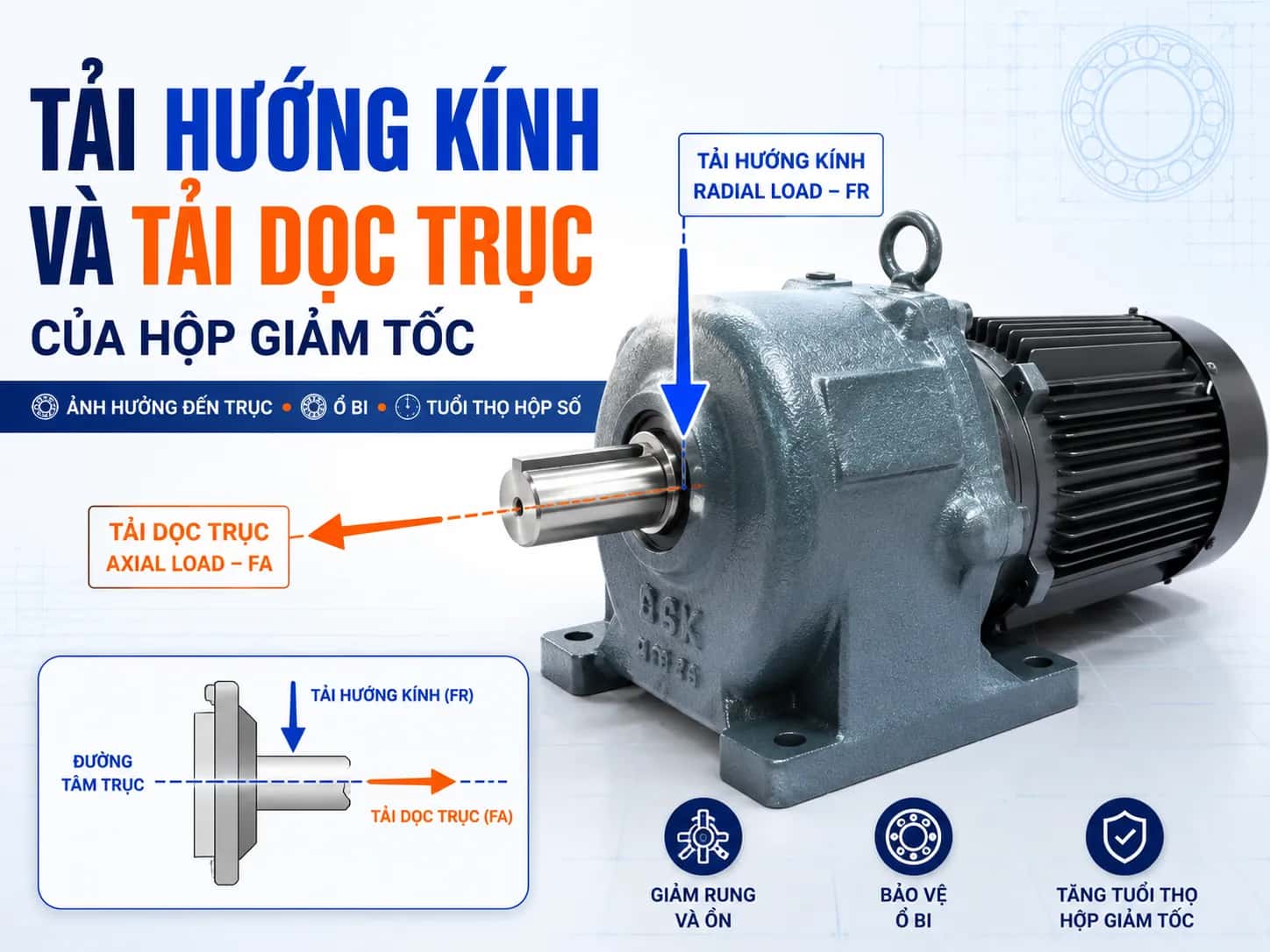
Misalignment is a frequently overlooked cause. When the gearbox output shaft and the load shaft are not aligned, the coupling is subjected to eccentric forces. These forces are transmitted back to the gearbox bearings and shaft, causing noise, vibration, and overheating.
Misalignment conditions are often found in:
Gearboxes connected to conveyors via couplings.
Drive systems using pulleys or sprockets.
Agitators, screw conveyors, or mixers with long load shafts.
Uneven or deformed machine bases.
Geared motors pulled out of alignment during bolt tightening.
If the cause is misalignment, replacing the gearbox with a new one without re-alignment may lead to a recurrence of the failure.
6. Loose mounting bolts or flange bolts
Loose bolts can cause the gearbox to vibrate and produce a clattering noise during operation. This situation often occurs after a long period of operation, especially in systems with shock loads, frequent start-stop cycles, or insufficient base rigidity.
Check the following:
Motor foot bolts.
Gearbox flange bolts.
Coupling bolts.
Support frame bolts.
Presence of cracks or deformation at the mounting base.
If the noise is accompanied by strong vibration, check the installation before disassembling the gearbox.
7. Overloading or incorrect power selection
Excessive gearbox noise can also be caused by overloading. When the actual load exceeds the gearbox's load capacity, the gears and bearings are subjected to forces greater than their design limits. This causes overheating, noise, and reduced equipment lifespan.
Overloading often occurs in the following cases:
Conveyors carrying loads heavier than designed.
Agitators encountering materials thicker than initially specified.
Screw conveyors jammed with material.
Mixers or crushers performing heavier-than-expected work.
Selecting a geared motor with insufficient torque.
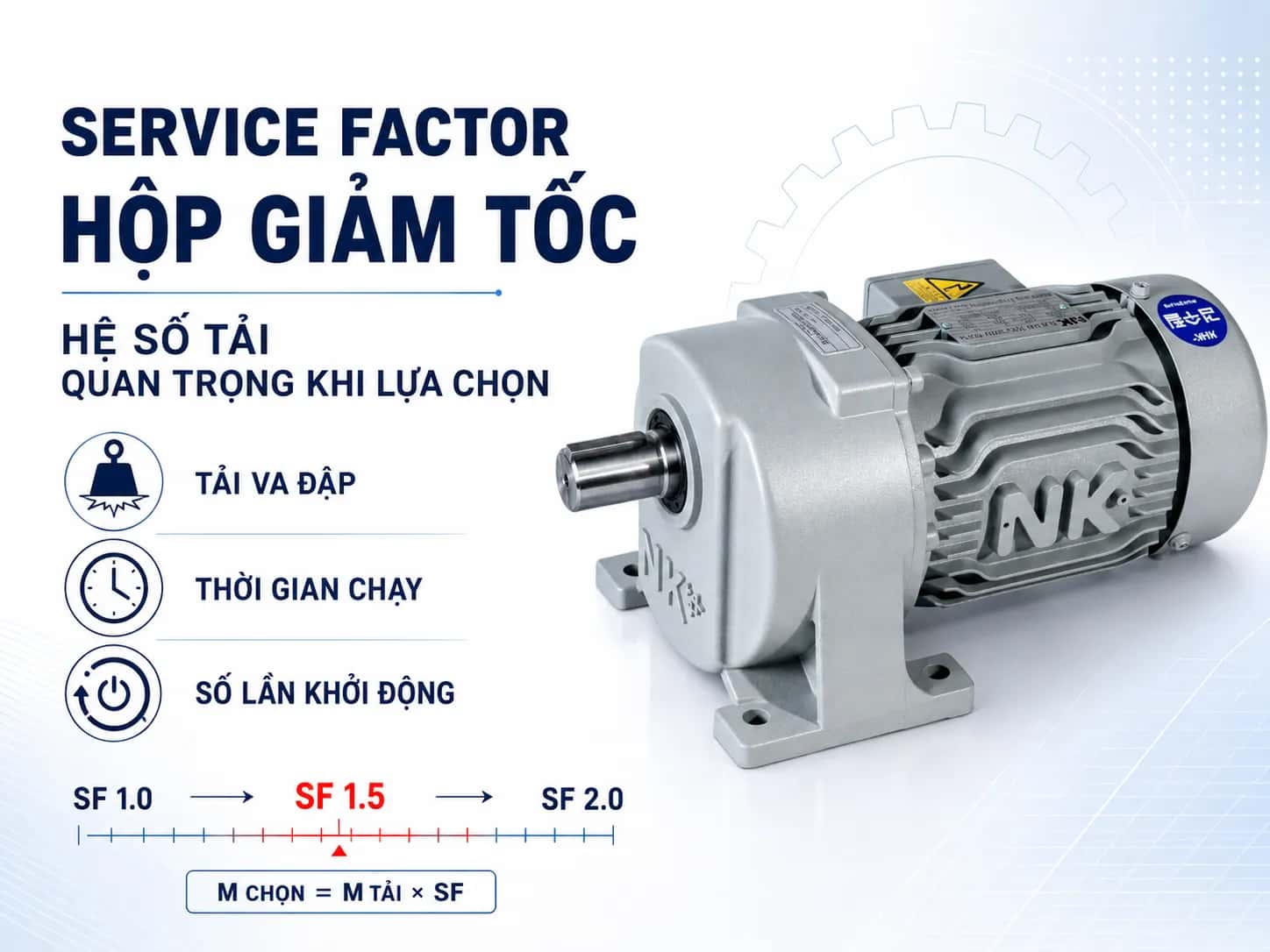
Failure to account for the safety factor when selecting the gearbox.
If the gearbox only makes a loud noise under load, but runs relatively quietly at no-load, it is necessary to re-check the actual load and output torque.
8. Sprockets, pulleys, or couplings causing noise
Not all noises originate from inside the gearbox. In many cases, the noise comes from sprockets, belts, pulleys, couplings, or the load mechanism.
For example:
Chain is too tight or too loose.
Worn sprockets.
Misaligned or unbalanced pulleys.
Loose couplings.
Slipping or worn belts.
Jammed conveyor rollers.
Damaged load-side bearings.
Therefore, when inspecting, it is necessary to isolate the gearbox noise from the noise of the external transmission system.
9. Gearbox operating with a VFD at an unsuitable speed range
When a geared motor operates with a VFD, if the speed range is unsuitable or the settings are incorrect, the system may generate noise, vibration, or overheating.
Some common cases:
Running at low speed for too long causes the motor to overheat.
Running at high frequencies exceeding the mechanical limits.
Acceleration/deceleration times set too abruptly.
Heavy load but using an unsuitable control mode.
System resonance at a specific speed range.
If the noise only occurs at a specific frequency, it is necessary to re-check the operating frequency range, VFD settings, and the mechanical condition of the system.
How to inspect a noisy gearbox
Step 1: Determine when the noise occurs
First, observe and record the noise conditions:
Does it make noise immediately upon startup or after running for a while?
Does it make noise at no-load or only under load?
Does it make noise at low speed or high speed?
Is the noise continuous or periodic?
Is the noise coming from the motor, the gearbox, or the load mechanism?
Is the noise accompanied by vibration, overheating, or oil leakage?
This information helps to narrow down the cause more quickly.
Step 2: Check oil level and oil condition
This is a step that should be done early. Check the oil level according to the oil dipstick/sight glass position or the manufacturer's instructions. If the oil is low, find the cause of the leak before topping it up.
In addition to the oil level, check the oil color, smell, and presence of metal particles. If the oil has a burnt smell or contains many particles, stop the machine for a deeper inspection.
Step 3: Check gearbox temperature
A noisy gearbox accompanied by abnormal heating is often related to friction, lack of oil, overload, or damaged bearings. Temperature should be checked at positions such as the gearbox housing, bearing areas, flanges, and near oil seals.
If the temperature rises faster than normal after running under load, check the load and lubrication oil.
Step 4: Check vibration and shaft play
Noise accompanied by vibration is often related to misalignment, bearings, gears, couplings, or the machine base. It is necessary to check the output shaft play, pulley or sprocket runout, and the condition of the coupling.
If there is noticeable shaft play, do not continue operation for long as it may damage the seals, bearings, and gears.
Step 5: Inspect couplings, sprockets, pulleys, and belts
If the drive system uses couplings, sprockets, or pulleys, these components must be inspected before concluding that the gearbox is faulty.
Check for the following:
Whether the chain is too tight or too loose.
Whether the sprockets are worn or misaligned.
Whether the pulleys are wobbling.
Whether the belts are slipping.
Whether the couplings are loose or misaligned.
Whether there is noise from the bearings or rollers on the load side.
Step 6: Perform a no-load test if possible
If conditions permit, disconnect the load and test the gear motor separately. If it runs quietly without load but becomes noisy when the load is reconnected, the cause may be the load, couplings, chains, pulleys, or overloading.
If it still makes loud noises during a no-load test, further inspection of the bearings, gears, oil, or the interior of the gearbox is required.
Step 7: Check motor current and operating load
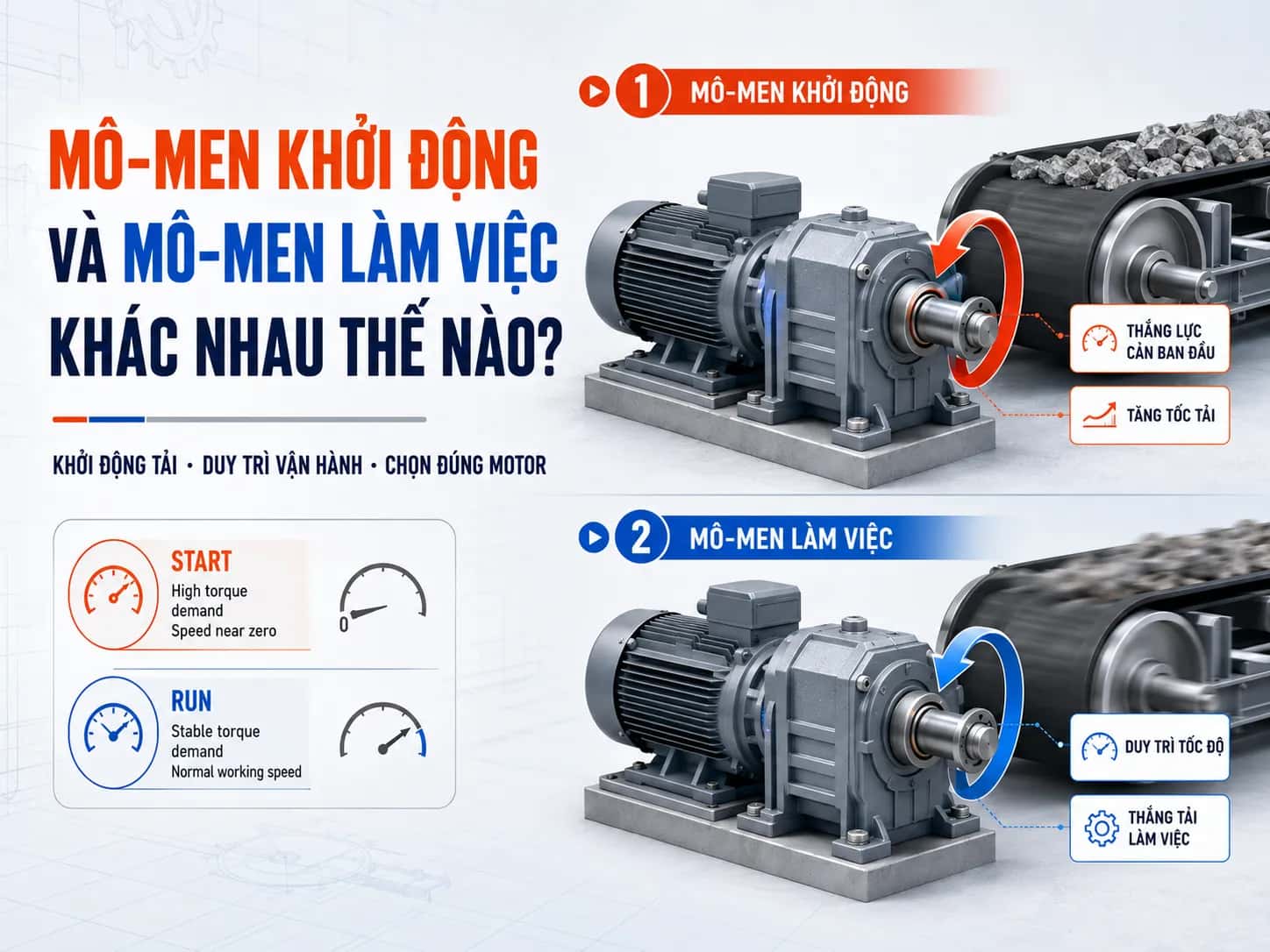
An abnormally high motor current may indicate that the system is overloaded, mechanically jammed, or that the gear motor was improperly selected. If the gearbox makes loud noises while the motor current increases, re-evaluate the actual load, torque, and gear ratio.
When should the machine be stopped for immediate inspection?
The machine should be stopped and inspected promptly if any of the following signs appear:
The gearbox makes abnormally loud noises.
The noise level increases rapidly over time.
The noise is accompanied by strong vibrations.
The gearbox heats up quickly.
There is a burning smell.
There is significant oil leakage.
The output shaft is loose or wobbling.
There are metal shavings in the oil.
The motor is drawing overcurrent or the VFD reports an error.
If operation continues when the gearbox shows signs of severe damage, repair costs may increase significantly due to secondary damage to bearings, shafts, seals, or gears.
How to minimize gearbox noise
To reduce noise and extend the service life of the gearbox, pay attention to the following:
Check the gearbox oil periodically.
Use the correct oil type as recommended.
Do not operate the gearbox with insufficient oil.
Do not exceed the load capacity.
Ensure proper alignment when installing couplings.
Do not overtighten chains or belts.
Tighten base and flange bolts.
Inspect bearings, seals, and couplings periodically.
Configure the VFD appropriately for the load.
Select the correct power, gear ratio, and torque from the beginning.
Should the gearbox be replaced when it becomes noisy?
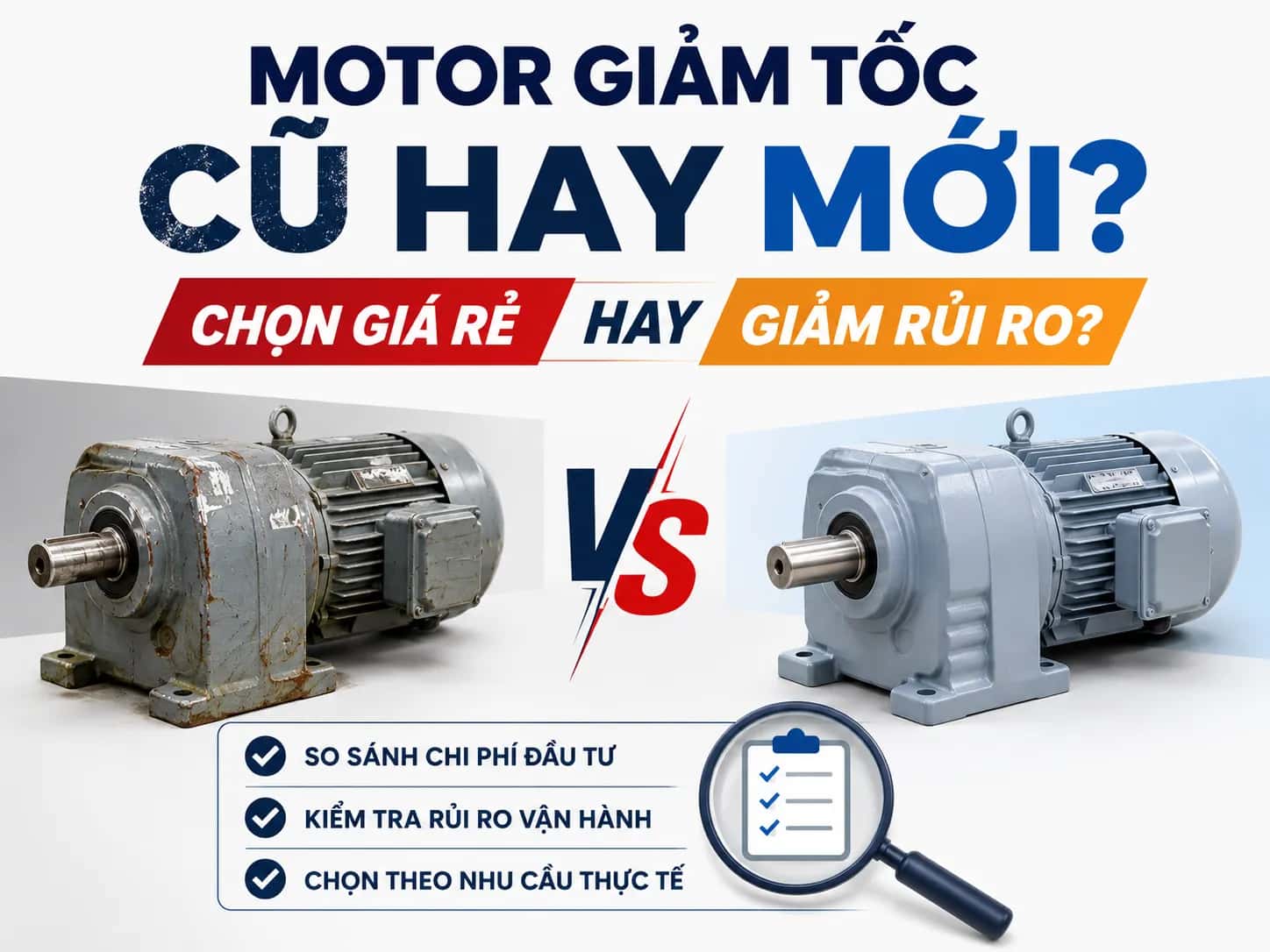
Do not replace it immediately without identifying the cause. Noise may originate from the oil, bearings, couplings, machine base, sprockets, pulleys, or external loads. If the cause lies in the installation or the load, a new gearbox may still exhibit the same noise issues.
Before replacing, check the following:
Actual load.
Gearbox oil.
Shaft play.
Bearing condition.
Alignment/concentricity.
Condition of couplings, chains, and pulleys.
Current power and gear ratio.
Installation drawings if a model replacement is required.
MDriveTech provides consulting services for industrial gearboxes and geared motors
MDriveTech provides consulting services for selecting geared motors, gearboxes, VFDs, and industrial drive solutions for conveyor systems, agitators, screw conveyors, packaging machines, palletizers, and production lines.
In cases where a gearbox is noisy, vibrating, overheating, leaking oil, or underperforming under load, it is necessary to simultaneously inspect the gearbox, motor, mechanical load, mounting configuration, and operating conditions. Identifying the root cause helps avoid incorrect equipment replacement and prevents recurring faults after repairs.
MDriveTech can provide consulting on selecting DSK geared motors, industrial gearboxes, and suitable drive solutions based on power, gear ratio, output speed, mounting type, and actual load.
FAQ
Is a noisy gearbox dangerous?
Yes. If there is an unusually loud and persistent noise, the gearbox may be experiencing issues with lubrication, bearings, gears, misalignment, or overloading. It should be inspected promptly to prevent further severe damage.
Is it true that a gearbox makes noise due to a lack of oil?
Possibly. Lack of oil or degraded oil is a common cause of gearbox overheating, noise, and accelerated wear.
Is a noisy geared motor caused by the motor or the gearbox?
It could be caused by the motor, the gearbox, or external drive components such as couplings, sprockets, pulleys, belts, bearing housings, or the mechanical load. Each part must be inspected to determine the exact cause.
Why does the gearbox make noise under load?
If the gearbox only makes noise under load, the cause may be overloading, insufficient torque, worn gears, damaged bearings, misalignment, or a jammed load mechanism.
Should I replace the gearbox with a new one if it is noisy?
You should not replace it immediately without inspection. It is necessary to determine whether the noise originates from the gearbox itself or from installation issues, oil, bearings, couplings, or external loads before deciding to replace it.