What Is a Torque Motor? Applications in Tension Control and Winding/Unwinding Systems
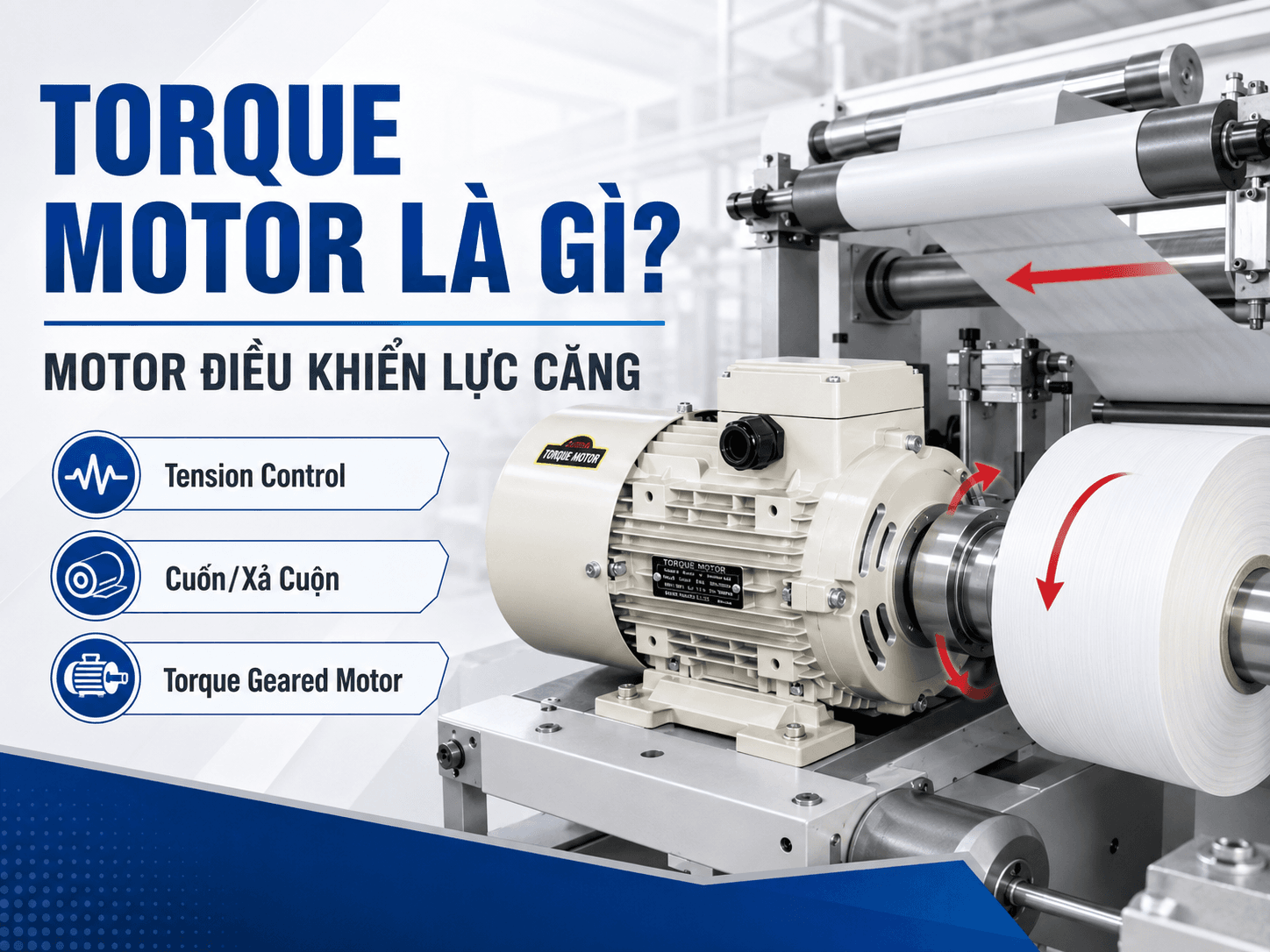
A torque motor is designed to control torque, pulling force, or tension rather than focusing solely on rotational speed. These motors are commonly used in winding/unwinding machines, printing presses, packaging machinery, textile equipment, rolling mills, film drawing machines, wire winding systems, and other applications requiring constant tension. A torque geared motor is a version that integrates a gearbox to increase output torque while reducing speed.
What is a Torque Motor? Applications in Tension Control, Winding/Unwinding, and Torque Geared Motors
A torque motor is a type of motor designed to control torque, pulling force, or tension rather than focusing solely on rotational speed. These motors are commonly used in winding/unwinding machines, printing presses, packaging machinery, textile machines, rolling mills, film stretching machines, wire winding machines, and systems requiring constant tension. A torque geared motor is a version of a torque motor integrated with a gearbox to increase output torque and reduce speed.
What is a torque motor?
A torque motor is a motor designed to generate and control stable torque during operation. Unlike standard motors, which are typically selected based on power and speed, torque motors are primarily valued for their ability to generate rotational force, maintain pulling force, control tension, and operate in slip conditions or at low speeds.
Simply put, a torque motor is not just used to "spin fast," but to "pull evenly," "hold force," "wind uniformly," or "brake with control."
In industrial applications, torque motors are commonly found in systems such as:
Winding machines
Unwinding machines
Packaging printing presses
Film rolling machines
Wire winding machines
Textile machines
Dyeing machines
Paper machines
Plastic machinery
Packaging machines
Material tension control systems
In these applications, if the tension is unstable, the material may wrinkle, break, sag, experience edge misalignment, or wind unevenly. This is why torque motors are utilized in many production lines handling coiled materials such as plastic film, paper, fabric, wire, cable, foil, adhesive tape, or thin metal coils.
What does torque mean in a motor?
Torque refers to the rotational force. It is the force that causes an object to rotate around an axis. In a motor, torque represents the motor's ability to generate rotational force to pull a load.
Simply understood:
Speed indicates how fast or slow the motor rotates
Power indicates how much work the motor performs over a period of time
Torque indicates how strong the motor pulls at the drive shaft
Practical example:
A motor with high speed but low torque may rotate quickly but cannot pull a heavy load. Conversely, a motor with low speed but high torque can pull loads effectively, making it suitable for winding/unwinding, light lifting, material pulling, or maintaining tension.
The basic formula for torque is:
Torque = Force × Radius
Where:
Torque is the rotational force
Force is the applied force
Radius is the distance from the shaft center to the point of force application
For industrial motors, torque is typically measured in N·m, kgf·cm, or kg·cm depending on the catalog. When selecting a motor, it is necessary to convert units correctly to avoid selecting the wrong power or torque ratings.
How does a torque motor differ from a standard motor?
Standard motors are usually selected to rotate a load at a specific speed. When the load exceeds the limit, the motor may overheat, draw excessive current, or decelerate. For many common applications such as pumps, fans, conveyors, and agitators, standard AC motors or gear motors are sufficient.
Torque motors are designed for applications requiring torque, traction, or tension control. These motors can operate at low speeds, in a stalled state, or vary their speed according to the material roll diameter.
Criteria | Standard motor | Torque motor |
|---|---|---|
Primary objective | Driving loads by speed/power | Torque and tension control |
Main applications | Pumps, fans, conveyors, agitators | Winding/unwinding, tension control, printing machines, packaging machines |
Stall operation | Not a primary design goal | Suitable depending on design |
Tension control | Not optimized | Better suited |
Low-speed operation | Requires cooling and torque verification | Generally better suited for torque applications |
Control | Contactor, VFD, or starter | Torque controller, power controller, or dedicated controller |
It is important to note that a torque motor should not be simply understood as a "stronger motor." This is a type of motor designed for torque control tasks, particularly in winding/unwinding systems for roll-based materials.
Why are torque motors important in winding and unwinding machines?
In winding and unwinding machines, the material roll diameter changes continuously.
When the roll is small, the motor needs to rotate faster to maintain linear speed. When the roll is large, the motor rotates slower but requires different torque control to prevent excessive tension.
If tension is not well controlled, the system may encounter the following issues:
Wrinkled film
Torn paper
Slack fabric
Broken wire
Uneven winding
Misaligned roll edges
Stretched product
Unstable line speed
Frequent machine stops for adjustments
A torque motor helps maintain a more stable pulling force or tension during winding/unwinding processes. This is a critical factor in the packaging, printing, plastics, paper, textile, wire and cable, and coil material industries.
How does a torque motor work?
A torque motor operates by generating controlled torque according to the load requirements. Instead of simply supplying power for the motor to rotate at a fixed speed, torque motor systems are typically equipped with a controller to adjust the voltage, current, or power level supplied to the motor.
In winding/unwinding applications, the controller helps vary the pulling force according to the material requirements. When higher tension is needed, the torque is increased. When lower tension is needed, the torque is decreased.
For certain industrial torque motor series, the motor can operate in a controlled slip state. This is suitable for systems that need to maintain tension rather than just running at a specific speed.
What is continuous slip?
Continuous slip can be understood as the motor's ability to operate in a continuous or semi-slip state under conditions for which it is designed.
In tension control applications, the motor does not necessarily always rotate freely at synchronous speed. There are times when the motor needs to generate holding force, pulling force, or braking force while the speed varies according to the material. This is why some torque motors are designed to accommodate a slip state.
However, continuous slip does not mean that any motor is allowed to slip arbitrarily. If a standard motor is used to operate in a slip state for an extended period, it can overheat quickly, burn out the windings, or have a reduced service life. It is necessary to use the correct torque motor, the correct controller, and the correct load conditions.
Where are torque motors used?
Torque motors are widely used in systems that require control of tension, pulling force, or material winding/unwinding.
Common applications include:
Plastic film winding machines
Film unwinding machines
Packaging printing machines
Laminating machines
Bag blowing machines
Textile machines
Dyeing machines
Paper machines
Paper winding machines
Wire winding machines
Cable winding machines
Adhesive tape winding machines
Foil winding machines
Label winding machines
Roll-fed packaging machines
Web material handling machines
Tension control systems
In these applications, the goal is not just to rotate the shaft, but to keep the material pulled evenly, preventing breakage, slack, or deformation.

Torque motors in packaging machines
In the packaging industry, materials are typically plastic films, composite films, paper, labels, stickers, or thin material rolls. When running at high speeds, tension must be stable so that the material passes through cutting blades, pressure rollers, printing rollers, or sealing rollers in the correct position.
Torque motors can be used for:
Unwinding shaft
Rewinding shaft
Scrap collection shaft
Material pulling shaft
Auxiliary tensioning mechanism
Label or tape rewinding unit
If the tension is too low, the film becomes slack and misaligned. If the tension is too high, the film may stretch, tear, or deform. Torque motors provide better control in these zones compared to standard motors in many applications.
Torque motors in printing machines
In web-fed printing machines, material must pass through multiple rollers with stable tension. If tension fluctuates, the print image may shift, colors may not register correctly, the material may wrinkle, or the finished roll may be uneven.
Torque motors are commonly used in:
Unwinding units
Rewinding units
Tension control units
Post-printing material rewinding units
Scrap collection units
In packaging printing machines, tension control is a critical factor directly affecting print quality and line stability.
Torque motors in wire and cable winding machines
For wires, cables, threads, yarns, or filamentary materials, excessive tension can cause breakage or stretching. Insufficient tension leads to loose, uneven rolls or tangled wires.
Torque motors help the winding shaft generate more stable pulling force, especially as the roll diameter changes from small to large during operation.
Applications include:
Wire winding machines
Cable winding machines
Thread winding machines
Yarn winding machines
Copper wire winding machines
Fine steel wire winding machines
Filamentary material winding machines
Torque motors in the paper, plastic, and textile industries
The paper, plastic, and textile industries involve numerous processes for handling web materials. Torque motors help maintain stable tension as the material passes through pulling rollers, nip rollers, drying rollers, printing rollers, or winding rollers.
Typical applications include:
Paper unwinding
Paper rewinding after processing
Plastic film rewinding
Plastic film unwinding
Fabric tensioning in textile machines
Fabric roll collection
Material rewinding after lamination/coating
Material rewinding after drying
For thin, soft, or easily deformable materials, precise torque control helps reduce waste and increase production stability.
What is a torque geared motor?

A torque geared motor is a torque motor integrated with a gearbox. The purpose is to reduce output speed and increase torque at the load shaft.
While standard torque motors are suitable for direct torque control, torque geared motors are more appropriate when the load requires:
Lower speeds
Higher output torque
More stable pulling force
More robust mechanical connection
Easier installation with shafts, pulleys, sprockets, or couplings
Tension control in heavier load systems
Simply put:
Torque motor = torque-controlled motor
Torque geared motor = torque motor + gearbox for increased output traction
In practice, torque geared motors are typically used for winding/unwinding shafts that require higher traction or lower output speeds compared to direct-drive motors.
How does a torque geared motor differ from a standard geared motor?
A standard geared motor is a motor combined with a gearbox to reduce speed and increase torque. It is suitable for conveyors, mixers, packaging machines, feeders, or general mechanical drives.
A torque geared motor also features a gearbox, but its primary objective is to control torque, tension, or slip conditions in specialized applications.
Criteria | Standard geared motor | Torque geared motor |
|---|---|---|
Primary objective | Speed reduction, torque increase, load driving | Torque and tension control |
Applications | Conveyors, mixers, packaging machines | Winding/unwinding, tension control |
Slip operation | Not a primary objective | May be suitable depending on design |
Control | Contactor, VFD, starter | Torque controller or power controller |
Selection based on | Power, ratio, rpm, torque | Torque, tension, roll diameter, material |
Typical load | General rotating load | Winding load, film/paper/fabric/wire materials |
Standard geared motors should not be used as a substitute for torque geared motors if the application requires continuous slip or precise tension control. Conversely, for standard conveyor applications, a torque geared motor may be unnecessary.
What are the notable features of Myung Youn torque motors?
Myung Youn Electronics is a South Korean brand offering product lines related to Digital Phase Converters, Torque Motors, Torque Geared Motors, Inverter Motors, Motor Controllers, and Motor Remote Controllers.
Regarding the torque motor group, a notable feature is that the company provides series for torque control and tension control, including both torque geared motor types and motor-integrated controller types.
According to the manufacturer's product information, the TQ torque geared motor series is designed for torque and tension control applications, capable of continuous slip operation. The TQC series is an integrated type featuring a torque motor and a control panel, equipped with a wired remote controller for tension adjustment, making it suitable for machines requiring compact installation and convenient operation.
This product direction is highly suitable for winding/unwinding machines, printing machines, packaging machines, textile machines, paper machines, and equipment requiring material tension control.
How to understand TQ and TQC?
In Myung Youn's product nomenclature, it can be simply understood as follows:
TQ – Torque Motor / Torque Geared Motor
TQ is the group of torque motors or torque geared motors used for torque and tension control. This series usually comes with a separate motor controller, suitable when the electrical cabinet or controller has already been arranged separately.
Suitable for:
Winding/unwinding machines
Machines with separate control cabinets
Production lines requiring control customization
Systems requiring the integration of multiple control devices
TQC – Torque Motor Controller Integrated Type
TQC is a type of torque motor integrated with a controller or control panel. Its advantages include more compact installation, more convenient operation, and suitability for machines requiring a synchronized motor + controller solution.
Suitable for:
Machines requiring quick installation
Small and medium-sized machines
Independent winding/unwinding units
Machines requiring a remote controller for tension adjustment
Retrofitting production lines or replacing old motors
When making an actual selection, it is necessary to check the catalog, mounting type (horizontal/vertical), output torque, shaft dimensions, voltage, controller, and load conditions.
When should a torque motor be used?
A torque motor should be used when the application requires torque or tension control rather than just rotating a load at a fixed speed.
Cases where it should be used:
Coiled materials
Need for tension control
Need for uniform winding
Need for stable unwinding
Need for a motor capable of operating in a suitable slip state
Continuously changing coil diameter
Materials prone to wrinkling, tearing, stretching, or misalignment
Need to maintain more stable pulling force than a standard motor
Printing machines, packaging machines, textile machines, paper machines, plastic machines
If the application is just for driving conveyors, pumps, fans, or standard agitators, AC motors, geared motors, or VFDs may be more suitable.
When should a torque geared motor be used?
Torque geared motors should be used when you need to control tension while requiring low speed and higher output torque.
Torque geared motors are suitable for:
Heavy material winding shafts
Large diameter rolls
Unwinding shafts requiring stable braking force
Wire/cable winding machines
Paper, film, and fabric winding machines
Scrap collection mechanisms
Winding assemblies requiring sprockets, pulleys, or couplings
Applications requiring higher torque than direct-drive motors
If a direct-drive torque motor does not provide enough force or the output speed is too high, adding a gearbox will increase torque and make the system easier to control.
How to select a suitable torque motor
To select the right torque motor, do not rely solely on motor power. It is necessary to fully define the parameters of the material, the winding shaft, and the operating conditions.
Required checklist:
Application: winding or unwinding
Material: paper, film, fabric, wire, cable, or other materials
Material width
Material thickness
Core diameter
Minimum roll diameter
Maximum roll diameter
Line speed
Required tension
Roll weight
Horizontal or vertical winding shaft orientation
Direct drive or gearbox-driven motor
Whether continuous slip is required
Daily operating hours
Whether a remote controller is needed
Whether automatic control via PLC is required
Power supply
Installation space
Environmental conditions: dust, humidity, or high temperature
Whether there is a requirement to replace an old motor based on dimensions
Without this information, selecting a torque motor is prone to errors. Choosing one that is too small may result in the motor failing to maintain tension or overheating. Choosing one that is too large makes smooth adjustment difficult, increases costs, and may cause excessive tension on the material.
How to select a torque geared motor
When selecting a torque geared motor, in addition to the torque motor information, it is necessary to check the gearbox specifications.
Information to be determined:
Gear ratio
Desired output speed
Required output torque
Mounting type: foot mount, flange mount, vertical shaft, horizontal shaft
Output shaft dimensions
Connection type: coupling, chain sprocket, pulley, direct shaft
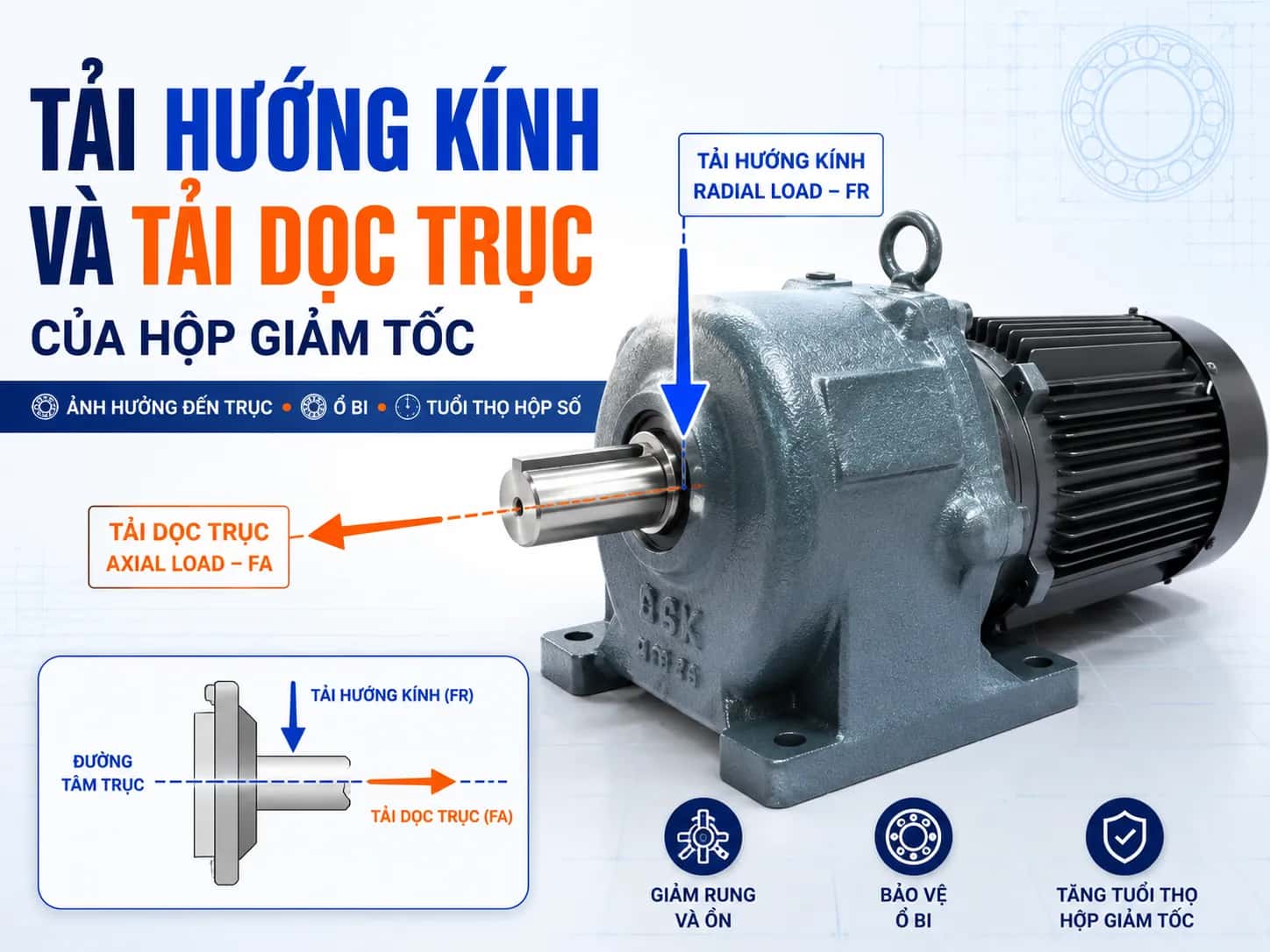
Radial and axial loads
Rotation direction
Installation space
Whether a brake is required
Whether an integrated or external controller is required
For winding/unwinding machines, speed and torque change according to the roll diameter. Therefore, it is necessary to check both the small and large roll states, rather than calculating at a single operating point.
Common mistakes when selecting a torque motor
1. Selecting only by HP or kW
Torque motors should not be selected based on power alone. It is necessary to calculate torque, tension, roll diameter, and line speed.
2. Ignoring the maximum roll diameter
As the roll diameter increases, the torque requirement changes. If calculations are based only on the smallest roll diameter, the motor may lack sufficient force at the maximum diameter.
3. Failing to determine material tension
Each material has different tension limits. Thin films, paper, fabric, wires, and cables all require different tension levels.
4. Using a standard motor instead of a torque motor
Standard motors may overheat or fail to maintain proper tension control if operated in a continuous slip or stall condition.
5. Selecting the wrong controller
Torque motors require a compatible controller. If the controller is unsuitable, the motor may be difficult to adjust, prone to overheating, or operate unstably.
6. Not checking temperature during actual operation
Torque and slip applications can generate significant heat. After installation, it is essential to measure temperature, current, and test the motor under actual load conditions.
Signs of incorrect torque motor selection
A system with an incorrectly selected torque motor often exhibits the following signs:
Material slackness
Excessive material tension
Uneven winding
Edge misalignment
Film wrinkling
Paper tearing
Wire breakage
Rapid motor overheating
Difficult controller adjustment
Unstable speed
Frequent machine stops for adjustments
Excessive tension variation relative to roll diameter
When these issues occur, it is necessary to re-evaluate the required torque, roll diameter, linear speed, controller, and mechanical transmission.
Basic torque calculation formula for winding shafts

For winding/unwinding shafts, the required torque can be estimated based on tension and roll radius:
Torque = Tension × Radius
Where:
Torque is the required torque
Tension is the material tension force
Radius is the roll radius at the time of calculation
As the roll grows, the radius increases, and the required torque increases if constant tension is to be maintained.
Example:
At the same tension, a roll with a 200mm radius will require more torque than a roll with a 100mm radius. This is why winding/unwinding machines must be calculated based on both the minimum and maximum roll diameters, rather than relying solely on motor power.
Should a torque motor be used for conveyors?
Typically, conveyors should use gear motors, AC motors with VFDs, or BLDC Power Rollers depending on the application. Torque motors are not a common choice for standard conveyors.
Torque motors should only be considered if the conveyor has special requirements for pulling force, controlled slip, or tension. For standard material handling conveyors, gear motors are easier to select and more economical.
Should a torque motor be used instead of a VFD?
A torque motor should not be considered a replacement for a VFD. Torque motors and VFDs address two different types of problems.
VFDs are used to adjust the speed of AC motors
Torque motors are used to control torque or tension
Torque controllers are used to regulate the force/torque of torque motors
Servos are used when precise control of position, speed, and torque is required
In some modern systems, VFDs or servos can still be used for torque control. However, for basic winding/unwinding machines, a dedicated torque motor can be a simpler and more economical solution.
MDriveTech consulting for torque motors and torque geared motors
MDriveTech provides consulting services for the selection of torque motors, torque geared motors, gear motors, VFDs, and drive solutions for industrial machinery.
When selecting a torque motor, customers should provide:
Application (winding or unwinding)
Material type
Material width
Minimum and maximum roll diameter
Line speed
Required tension
Roll weight
Power supply
Motor mounting type
Whether a gearbox is required
Whether an integrated controller is required
Photos of the old motor or nameplate if it is a replacement
Based on this information, MDriveTech can help select a more suitable solution, avoiding incorrect motor or controller selection, or insufficient torque during operation.
Hotline: 0868 789 647
Email: [email protected]
FAQ – Frequently Asked Questions about torque motors
What is a torque motor?
A torque motor is a motor designed to generate and control torque, pulling force, or tension. These motors are commonly used in winding/unwinding machines, printing machines, packaging machines, textile machines, paper machines, and tension control systems.
What is a torque geared motor?
A torque geared motor is a torque motor combined with a gearbox. The gearbox helps reduce output speed and increase torque, making it suitable for winding/unwinding shafts that require higher pulling force.
What is a torque motor used for?
Torque motors are used to control tension, winding, unwinding, maintaining pulling force, or generating stable torque in machines processing roll-based materials.
Is a torque motor different from a standard motor?
Yes. Standard motors are primarily used to rotate loads based on speed and power. Torque motors focus on controlling torque and tension, especially during low-speed operation or controlled slip.
Can a torque motor be used for film winding machines?
Yes. Film winding machines are one of the suitable applications for torque motors because they require tension control to prevent the film from wrinkling, stretching, or tearing.
Can a torque geared motor be used for wire winding machines?
Yes. Torque geared motors are suitable for wire, cable, thread, or fiber winding machines because they require stable pulling force and higher output torque.
Can a torque motor replace a servo?
In some basic tension control applications, a torque motor can be a more economical solution than a servo. However, if precise position control, axis synchronization, or complex motion control is required, a servo is more suitable.
Can a torque motor replace a VFD?
Not entirely. A VFD is primarily used to adjust the speed of an AC motor. A torque motor is used to control torque or tension. These two solutions serve different objectives.
What is continuous slip in a torque motor?
Continuous slip is the ability of a motor to operate in a continuous or semi-slip state under permitted design conditions. This feature is suitable for certain tension control applications, but it requires the correct motor and controller.
What parameters are needed to select a torque motor?
It is necessary to know the material type, width, minimum/maximum roll diameter, linear speed, required tension, roll weight, mounting type, power supply, controller, and operating conditions.
Conclusion
A torque motor is a specialized drive solution for applications requiring control of torque, pulling force, and tension. This type of motor is highly suitable for winding/unwinding machines, printing machines, packaging machines, textile machines, paper machines, plastic machines, wire winding machines, and material processing lines for web materials.
A torque geared motor is a more suitable choice when the system requires low speed and higher output torque. By incorporating a gearbox, a torque geared motor can generate better pulling force for winding shafts, unwinding shafts, or mechanisms requiring tension control.
When selecting a torque motor, one should not look only at the HP/kW rating. It is necessary to calculate based on tension, roll diameter, linear speed, material type, required torque, controller, and actual operating conditions. Choosing the right motor helps ensure more uniform winding, reduces material breakage, minimizes waste, and increases line stability.