Why Do Gear Motor Bearings Fail? Causes and Inspection Methods
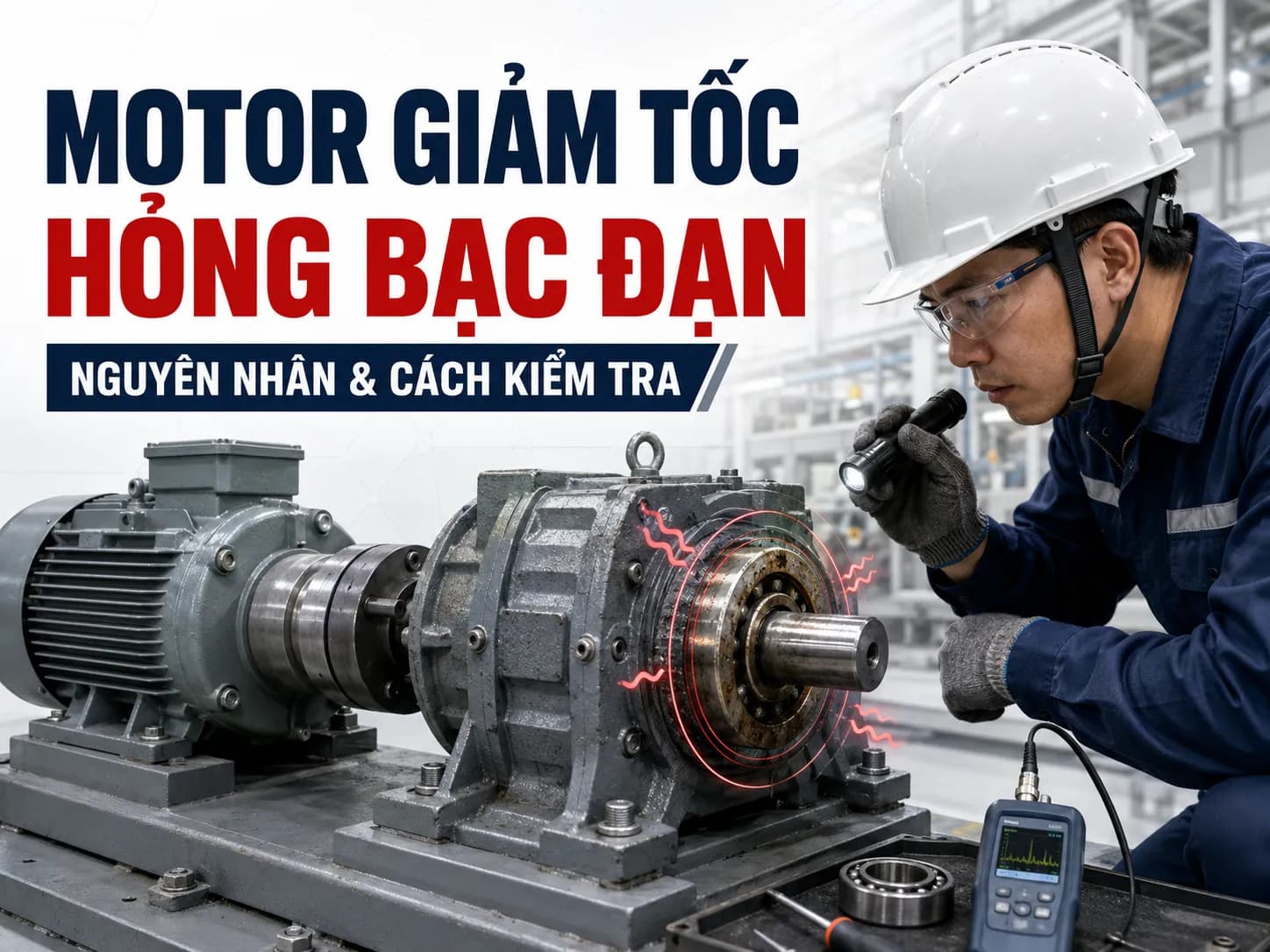
Gear motor bearing failure can be caused by overloading, misalignment, lack of lubrication, vibration, improper installation, or harsh operating environments. Learn the causes and how to inspect them.
Why Do Gear Motors Frequently Experience Bearing Failures? Causes and Inspection Methods
Bearings are among the most critical components in a gear motor. When bearings operate unstably, the gear motor may exhibit signs such as loud noise, excessive vibration, abnormal heating, shaft play, or the gearbox no longer running as smoothly as before.
In industrial practice, there are many cases where bearings fail repeatedly after a short period, even after being replaced. The root cause often lies not only in the quality of the bearing itself but also relates to load, installation, lubrication, concentricity, the operating environment, and the system's operational practices.
Therefore, when a gear motor frequently experiences bearing failures, it is essential to inspect the entire drive assembly rather than simply replacing the bearing and resuming operation.
What is the role of bearings in a gear motor?
Bearings are responsible for supporting the rotating shaft, ensuring that both the motor shaft and the gearbox shaft operate stably. In a gear motor, bearings may be located in the electric motor section, the gearbox section, or both.
If the bearings are functioning properly, the shaft rotates stably, noise levels are low, and the operating temperature remains within normal limits. Conversely, when bearings are worn, loose, lack lubrication, or are damaged, the gear motor will quickly exhibit noise, vibration, and overheating.
Some common signs of bearing issues include:
The gear motor produces a rattling or grinding noise.
The gearbox vibrates more than usual.
The motor heats up rapidly in the bearing housing area.
The output shaft exhibits play.
The shaft does not rotate smoothly when turned by hand.
Noise increases proportionally with speed.
Oil seals fail prematurely or leak oil.
Why do gear motors frequently experience bearing failures?
1. Gear motor overload
Overload is a very common cause of premature bearing failure. When the actual load exceeds the gear motor's load capacity, the force exerted on the shaft, gears, and bearings increases.
This condition is often encountered in:
Conveyors carrying loads heavier than designed.
Agitators encountering materials thicker than initially specified.
Screw conveyors jammed with material.
Mixers, crushers, or presses operating under overload conditions.
Systems where productivity is increased without upgrading the gear motor.
Selecting a motor based on power without verifying the output torque.
If bearings fail frequently after a short period, it is necessary to re-evaluate the actual load and the torque of the gear motor. Do not simply replace the bearing while ignoring the underlying cause of overload.
2. Misalignment
Misalignment between the gear motor shaft and the load shaft can create additional forces on the bearings. This force causes the bearings to bear uneven loads, leading to overheating, vibration, rapid wear, or loud noise.
Misalignment typically occurs when:
Couplings are installed off-center.
The machine base is not level.
The load shaft is bent or misaligned.
Tightening bolts causes the motor to be pulled out of alignment.
The machine frame deforms after a period of operation.
Pulleys or sprockets are not installed in alignment.
This is a common cause of recurring bearing failure. If the alignment is not corrected, replacing the bearing may still lead to premature failure.
3. Excessive chain or belt tension
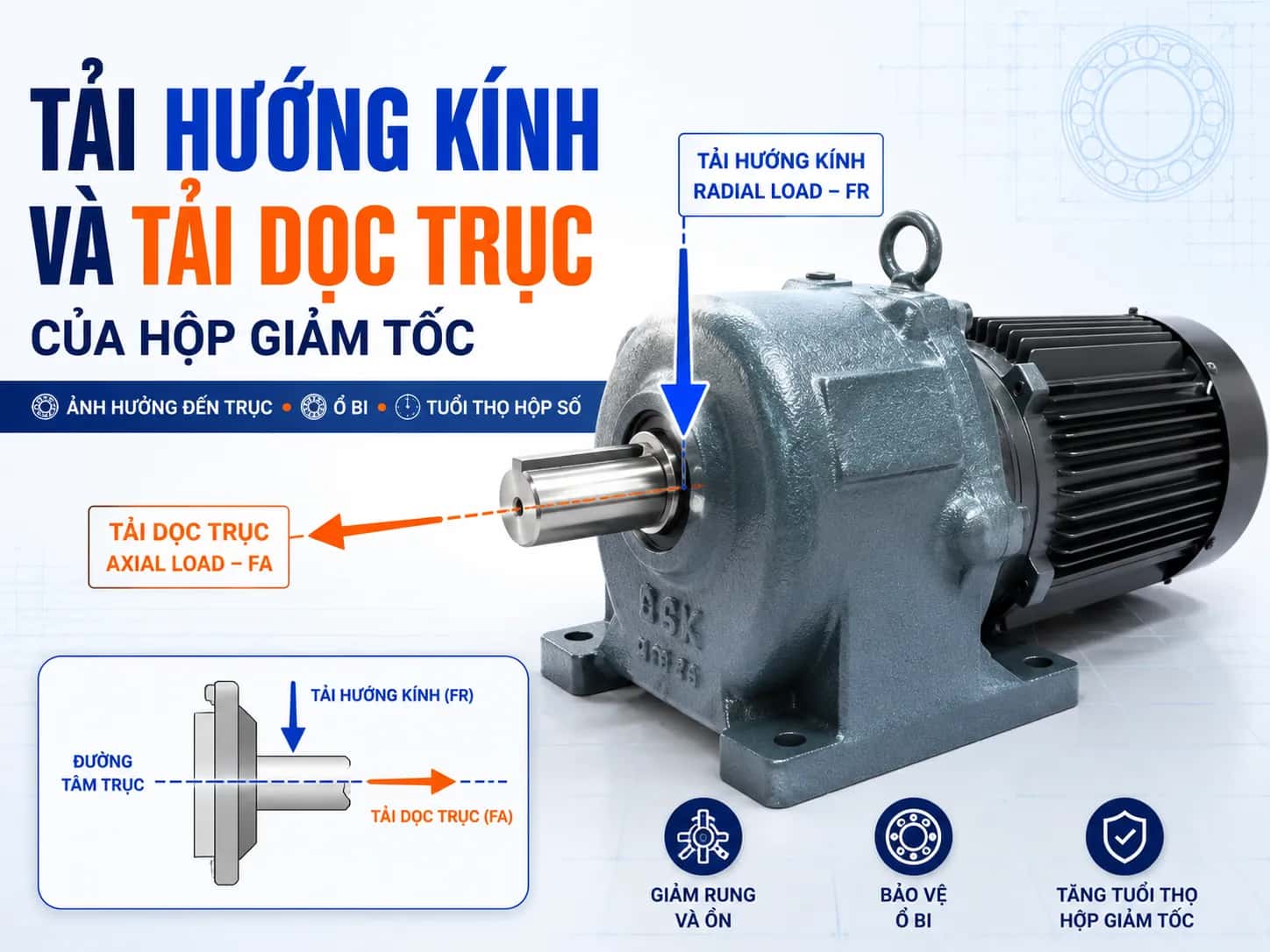
In drive systems using sprockets or pulleys, excessive tension can exert radial loads on the shaft and bearings. When bearings are subjected to constant pulling force, their service life will decrease rapidly.
Common signs:
Premature failure of the output shaft bearing.
Overheating or vibration of the output shaft.
Gearbox noise under load.
High-pitched tension noise from the chain or belt.
Signs of misalignment on pulleys or sprockets.
When using chain or belt drives, ensure proper tension adjustment. Avoid overtightening to prevent increased loads on the gearbox bearings and shaft.
4. Insufficient oil or degraded gearbox oil
For the gearbox section, lubricating oil directly affects the internal bearings and gears. If the oil level is low, contaminated, too old, or of the wrong grade, the bearings will operate under higher friction conditions.
Signs of degraded gearbox oil often include:
Oil turning dark or black.
Burnt smell from the oil.
Presence of metal particles in the oil.
Rapid overheating of the gearbox.
Louder than normal gearbox noise.
Oil leakage at seals or mating surfaces.
If a bearing inside the gearbox fails, check the oil before replacement. If only the bearing is replaced while the oil remains dirty or insufficient, the failure may recur.
5. Prolonged vibration of the gear motor
Vibration is a major factor in rapid bearing degradation. When a gear motor vibrates continuously, the balls, inner race, outer race, and housing are subjected to repeated impacts. Over time, this leads to wear, looseness, cracking, or noise.
Causes of vibration may include:
Coupling misalignment.
Loose mounting bolts.
Weak machine base.
Bent or runout shaft.
Unstable load.
Worn gears or bearings.
Resonance at specific speed ranges.
If bearing failure is accompanied by vibration, address the vibration first. Otherwise, the new bearing will also degrade quickly.
6. Dusty, humid, or high-temperature operating environments
The operating environment significantly affects bearing life. In factories with high levels of dust, humidity, water, chemicals, or high temperatures, bearings are prone to contamination, grease drying, or reduced lubrication effectiveness.
Environments prone to causing rapid bearing failure:
Cement, stone, sand, and bulk materials.
Animal feed, flour, and fertilizers.
Aquaculture, food processing, and wash-down areas.
Chemicals and corrosive vapors.
High-temperature facilities.
Areas with heavy fine dust accumulation on the motor.
In these environments, it is necessary to check the motor protection rating, seal condition, mechanical shielding, and implement a more frequent maintenance cycle.
7. Operating the VFD at an unsuitable speed range
Geared motors operated with a VFD allow for flexible speed control; however, operating outside the proper speed range can still affect the bearings and the motor.
Key considerations include:
Long-term low-speed operation reduces the motor's self-cooling capacity.
High-frequency operation increases mechanical speed.
Setting acceleration/deceleration times too aggressively causes load shock.
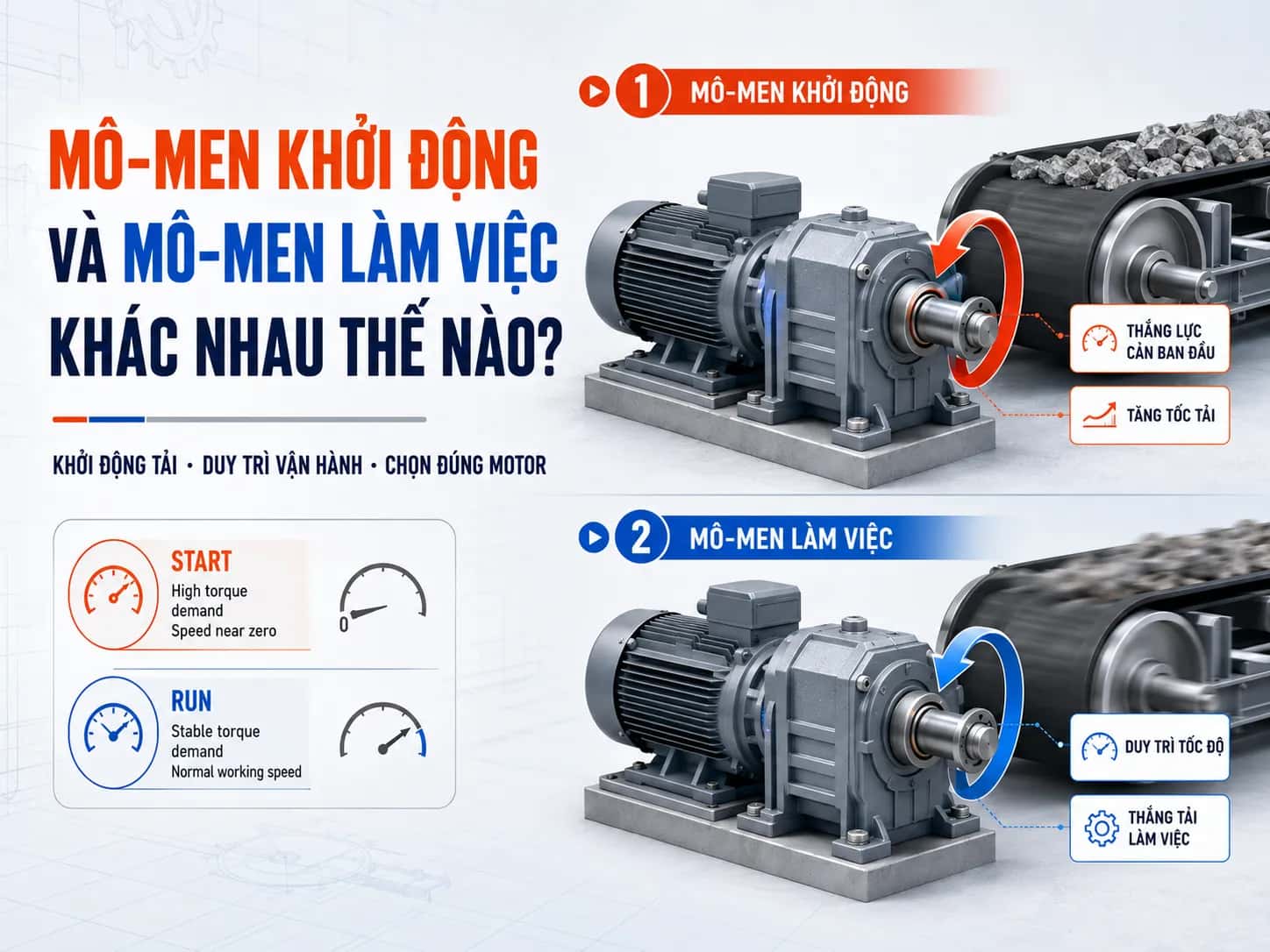
Heavy loads may lack sufficient torque at low speeds.
System resonance occurs at specific frequency ranges.
If bearings fail after changing the operating frequency, it is necessary to re-check the VFD parameters, actual speed, motor temperature, and mechanical load.
8. Selecting the wrong type of geared motor for the application
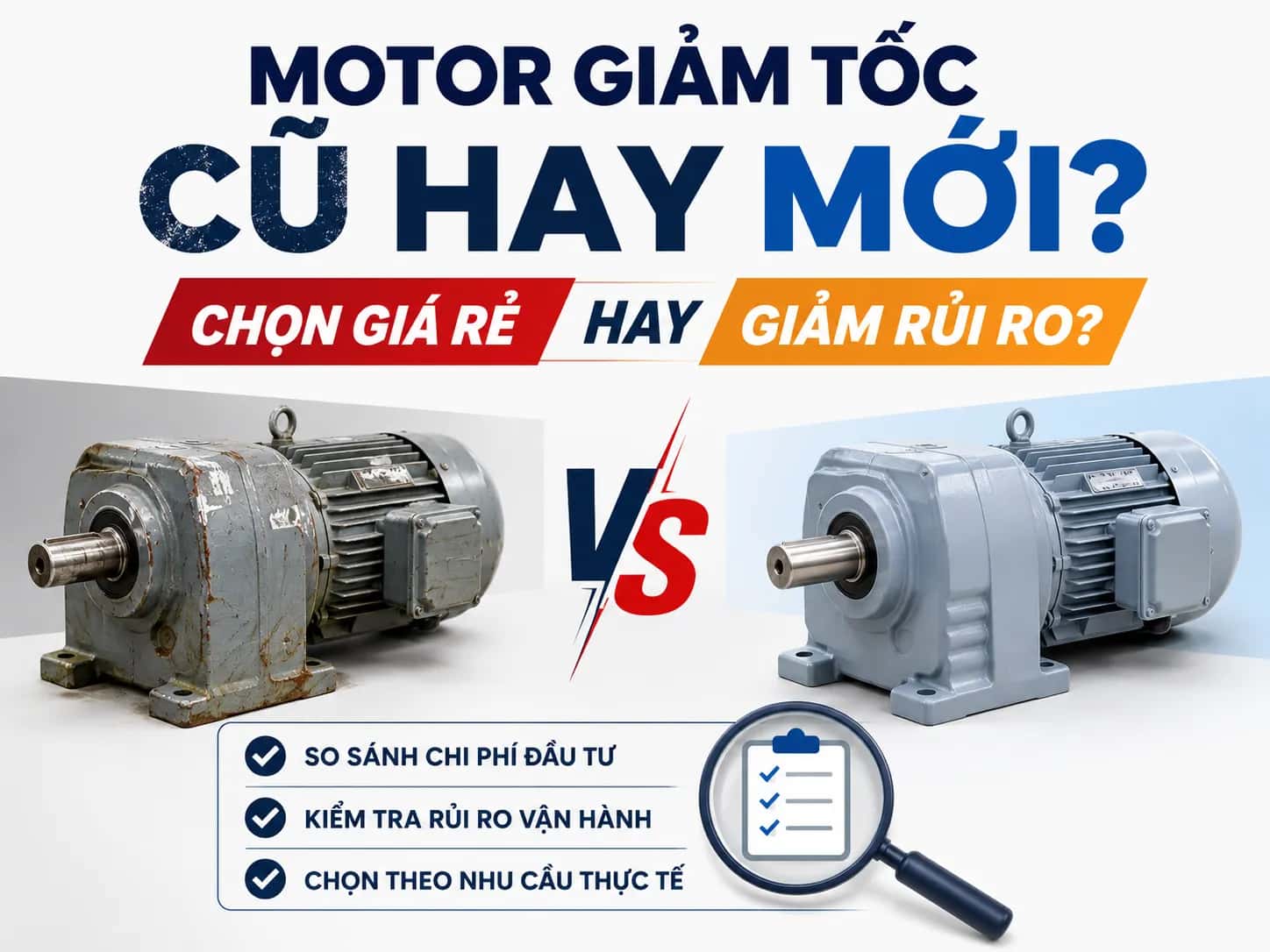
Not every geared motor is suitable for every application. If the power, gear ratio, shaft type, or gearbox type is selected incorrectly, the bearings may be forced to operate outside their design limits.
Examples:
Using an undersized motor for a heavy-duty conveyor.
Selecting an unsuitable gear ratio, resulting in insufficient traction.
Using a solid shaft with an oversized pulley or excessively tight belts.
Using a gearbox unsuitable for shock loads.
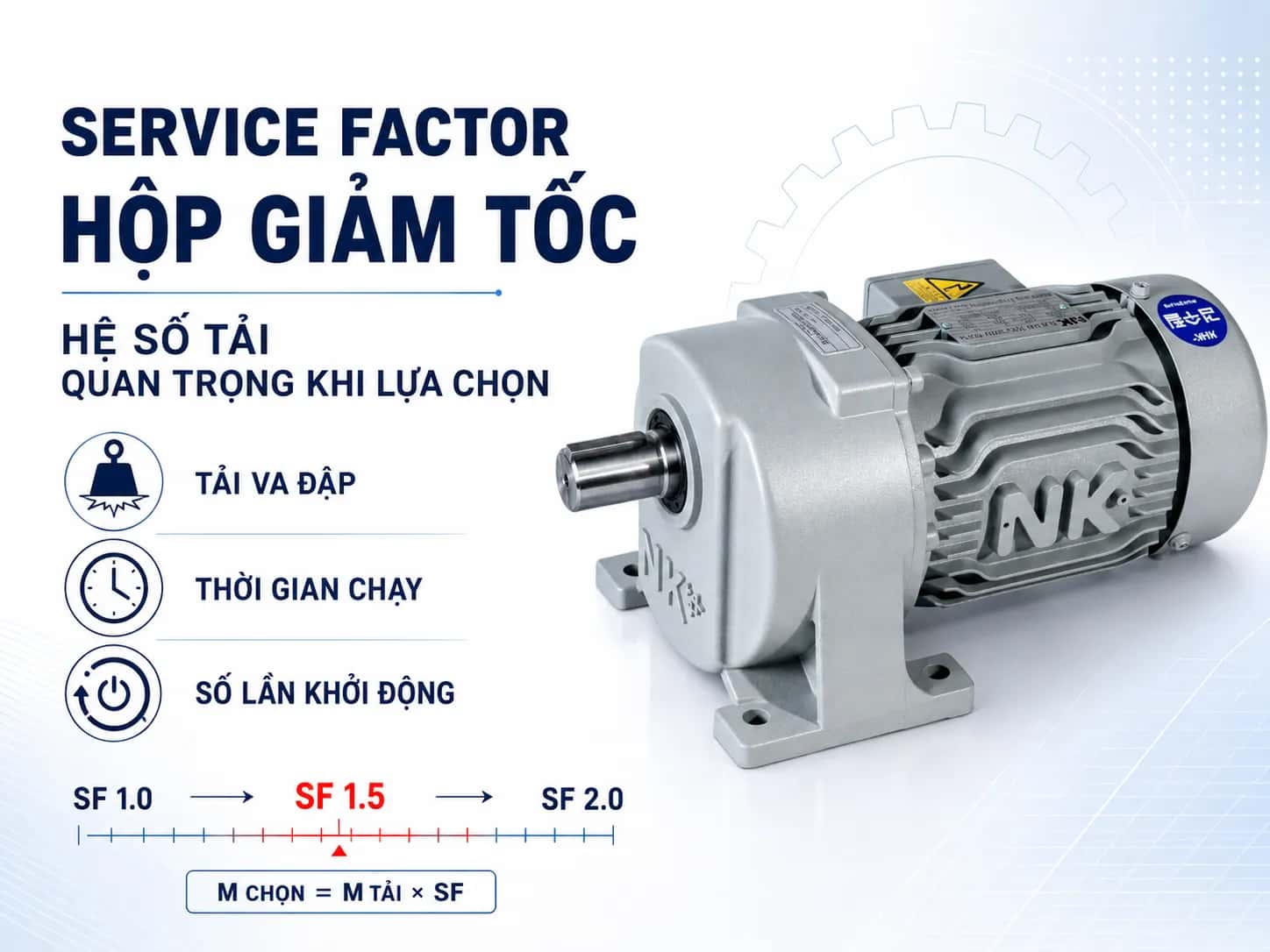
Failing to account for the safety factor for continuous-duty loads.
Using a motor unsuitable for dusty, humid, or high-temperature environments.
For systems that run continuously, handle heavy loads, or require frequent start-stop cycles, geared motors should be selected based on the actual load rather than just power rating.
How to inspect when a geared motor has frequent bearing failures
Step 1: Check for noise
Bearing noise typically manifests as a rumbling, grinding, or high-pitched whining sound that increases with speed. If the noise is prominent near the motor drive end or the gearbox output shaft, the bearings in those areas should be inspected.
It is important to distinguish bearing noise from noise originating from chains, sprockets, pulleys, couplings, or external loads.
https://mdrivetech.vn/blog/hop-giam-toc-bi-keu-to-nguyen-nhan-cach-kiem-tra-va-huong-xu-ly
Step 2: Check the temperature
Damaged bearings or poor lubrication often cause temperature increases in the bearing housing area. This can be checked by physical inspection or using temperature measurement equipment.
If the motor or gearbox is hot specifically in the bearing area, this is a sign that further investigation is required.
https://mdrivetech.vn/blog/motor-giam-toc-bi-nong-nguyen-nhan-cach-kiem-tra-va-xu-ly
Step 3: Check for vibration
If the geared motor vibrates excessively, the bearings may be compromised or already damaged. Vibration should be checked on the motor, gearbox, mounting base, and mechanical load.
Higher vibration levels increase the risk of bearing failure, especially in continuous-duty systems.
https://mdrivetech.vn/blog/motor-giam-toc-bi-rung-nguyen-nhan-cach-kiem-tra-va-huong-xu-ly-thuc-te
Step 4: Check for shaft play
Once the machine has been safely stopped, check the output or motor shaft for play. If there is abnormal play, the bearings may be worn or damaged.
Do not continue operation for an extended period if significant shaft play is present, as this can cause further damage to seals, shafts, or gears.
Step 5: Check gearbox oil
If the bearing failure is in the gearbox section, inspect the oil. Metal shavings, a burnt odor, or discoloration in the oil are signs that the gearbox is operating under poor conditions.
Contaminated or insufficient oil must be addressed before installing new bearings.
Step 6: Check alignment and couplings
If the gear motor is connected to the load via a coupling, check the alignment. Misalignment can cause premature bearing failure even if the motor and gearbox are new.
Check for angular misalignment, parallel misalignment, and coupling clearance.
Step 7: Check actual load
If bearings fail repeatedly, verify whether the load exceeds the design specifications. Do not rely solely on the initial load, as many systems may have increased productivity, product weight, or changed materials after a period of operation.
When should the machine be stopped for immediate inspection?
The machine should be stopped and inspected if the following signs are observed:
The gear motor produces a loud grinding noise.
Vibration increases significantly compared to normal levels.
Abnormal temperature rise in the motor or gearbox.
Output shaft play or wobbling.
Presence of metal shavings in the oil.
Significant oil seal leakage.
Motor underperforms under load or experiences high current draw.
Noise increases noticeably under load.
Continuing operation with severely damaged bearings can lead to damage spreading to shafts, gears, oil seals, and related components.
How to prevent premature gear motor bearing failure
To extend bearing service life, pay attention to the following:
Select the correct power, gear ratio, and torque.
Do not operate the gear motor under overload conditions.
Ensure proper alignment during installation.
Do not overtighten chains or belts.
Perform periodic gearbox oil checks.
Use the recommended type of oil.
Tighten base and flange bolts securely.
Monitor for abnormal vibration and noise.
Provide adequate protection in dusty, humid, or chemical environments.
Configure the VFD appropriately for the load.
Perform periodic maintenance based on actual operating conditions.
Should you only replace the bearings?
You should not replace only the bearings without identifying the root cause of the failure. If the failure was caused by overloading, misalignment, lack of oil, overtightened chains, or severe vibration, the new bearings may fail quickly again.
Before replacing the bearings, check the following:
Actual load.
Alignment.
Condition of the gearbox oil.
Tension of chains or belts.
Condition of the coupling.
Rigidity of the machine base.
Motor current under load.
Operating frequency if using a VFD.
Identifying the correct root cause helps avoid repeated component replacements and reduces machine downtime.
MDriveTech provides consulting for industrial gear motors and gearboxes
MDriveTech provides consulting for selecting gear motors, gearboxes, VFDs, and industrial drive solutions for conveyors, agitators, screw conveyors, packaging machines, palletizers, and production lines.
In cases where gear motors frequently experience bearing failure, vibration, overheating, excessive noise, or poor load performance, it is necessary to simultaneously inspect the motor, gearbox, mechanical load, mounting type, and operating conditions. Determining the correct root cause will help limit recurring faults and select more suitable equipment for the system.
MDriveTech can provide consulting for selecting DSK gear motors, industrial gearboxes, and drive solutions based on power, gear ratio, output speed, mounting type, and actual load.
FAQ
Why do gear motor bearings frequently fail?
Gear motor bearing failure is often caused by overloading, misalignment, vibration, lack of lubrication, oil degradation, excessive chain or belt tension, dusty or humid environments, or selecting the wrong gear motor for the application.
What are the signs of a failing gear motor bearing?
Common signs include grinding noises, strong vibration, heat at the bearing housing, shaft play, rough manual rotation, or the gearbox producing louder noise than usual.
Why do new bearings fail quickly after replacement?
This may be because the root cause has not been addressed, such as misalignment, overloading, lack of lubrication, machine base vibration, excessive chain tension, or mechanical load jamming.
Does gear motor vibration damage bearings?
Yes. Prolonged vibration subjects bearings to repeated impacts, leading to wear, play, noise, and reduced service life.
Does a lack of oil in the gearbox damage bearings?
Yes. Lack of oil or contaminated oil increases internal friction within the gearbox, causing rapid deterioration of bearings and gears.