What is BLDC? Why Brushless DC Motors Are Used in Power Rollers and Automated Conveyors
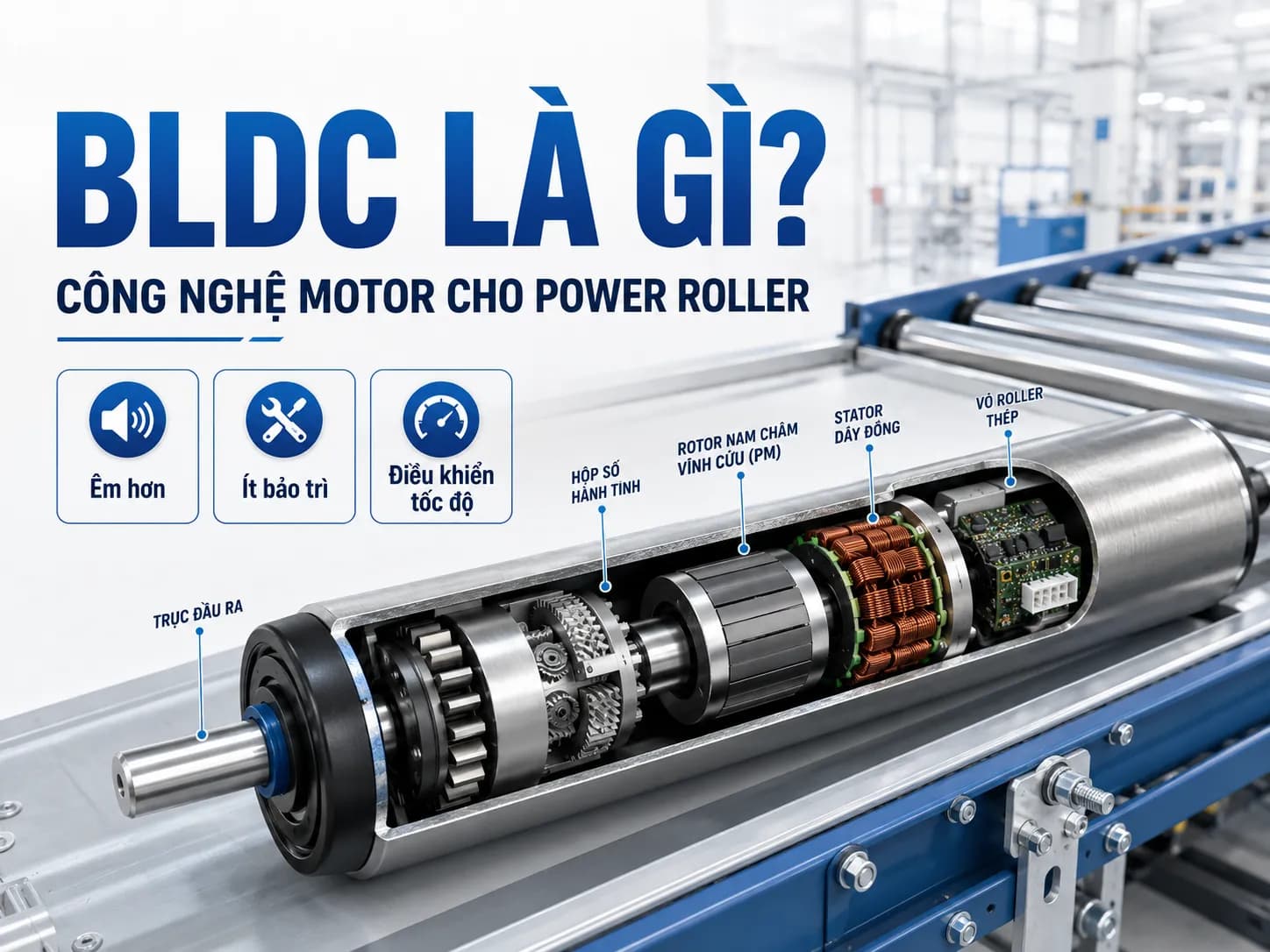
BLDC stands for Brushless DC motor, which utilizes permanent magnets and an electronic controller to generate rotational motion. Due to its quiet operation, high efficiency, low maintenance, and precise speed control, BLDC technology is widely adopted in Power Rollers, motorized drive rollers, ZPA conveyors, and automated logistics systems.
What is BLDC? Why are Brushless DC Motors Used in Power Rollers and Automated Conveyors?

What is BLDC?
BLDC stands for Brushless DC Motor. This type of motor utilizes permanent magnets on the rotor and windings on the stator. Instead of using mechanical brushes and commutators like traditional DC motors, BLDC motors employ electronic control circuits to energize the windings in the correct sequence.
Simply put, BLDC is a more modern version of the brushed DC motor. Since this motor has no brushes causing direct friction, it experiences less wear, operates more quietly, requires less maintenance, and is well-suited for automated systems that require flexible speed control.
In the automated conveyor industry, BLDC motors are widely used in Power Rollers, Motorized Drive Rollers, drive rollers, roller conveyors, ZPA Conveyors, and compact drive assemblies that require start-stop operations based on sensor inputs.
Why is BLDC important in automated conveyors?
In traditional conveyor systems, gear motors are typically mounted outside the conveyor frame to drive chains, pulleys, or drive shafts. While this method remains common, when a production line requires multiple control zones, frequent start-stop points, or a compact design, external motors can make the system bulky.
BLDC motors solve this problem by allowing for a more compact design, making them easy to integrate into drive rollers or automated machinery assemblies. When a BLDC motor is integrated into a Power Roller, the motor, gearbox, and sensors can all be housed within the roller body. As a result, the conveyor becomes more compact, has fewer exposed drive components, and is easier to divide into control zones.
This is why systems such as carton conveyors, logistics conveyors, automated warehouses, sorting systems, and ZPA Conveyors often prioritize BLDC drive roller solutions.
See more: DSK Power Roller DP50A/60A – BLDC Drive Roller for Automated Conveyors
https://mdrivetech.vn/blog/dsk-power-roller-dp50a-60a-con-lan-truyen-dong-bldc-cho-bang-tai-tu-dong
How does a BLDC motor work?
A BLDC motor operates based on the interaction between the magnetic field of the stator and the permanent magnets on the rotor. When the controller supplies current to the stator windings in sequence, a rotating magnetic field is generated. The rotor, equipped with permanent magnets, follows this magnetic field to produce mechanical motion.
The most significant difference in a BLDC motor is the commutation process, which does not use brushes. Instead, a driver or controller performs electronic commutation to ensure the motor rotates at the correct speed and in the desired direction.
Basic operating structure:
DC Power Supply → BLDC Driver → Stator Windings → Permanent Magnet Rotor → Rotational Motion
In a Power Roller, this rotational motion is transmitted through an internal gearbox within the roller body to generate the appropriate speed and torque for the conveyor.
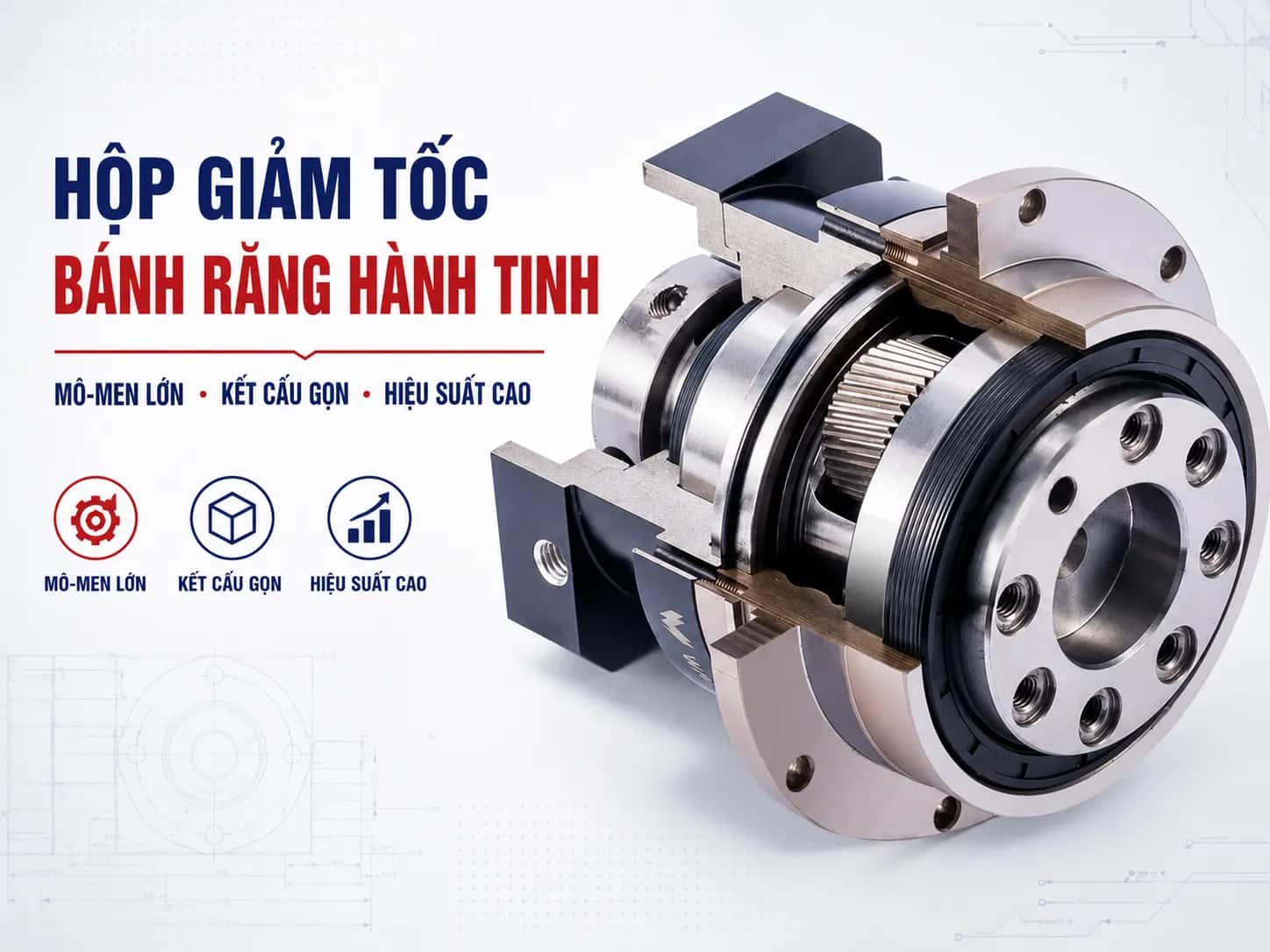
Basic construction of a BLDC motor
A BLDC motor typically consists of the following main components:
Component | Function |
|---|---|
Stator | Stationary part, consisting of a steel core and windings |
Rotor | Rotating part, typically equipped with permanent magnets |
Permanent Magnet | Generates a magnetic field on the rotor |
Motor Shaft | Transmits rotational motion externally |
Bearing | Ensures stable rotor rotation |
Hall Sensor | Determines rotor position in certain BLDC types |
BLDC Driver | Controls power supply sequence, speed, and direction of rotation |
Gearbox | Reduces speed and increases torque if required |
With BLDC motorized rollers, these components are typically integrated compactly to fit inside the roller body. This is a major difference compared to externally mounted geared motors.
Advantages of BLDC in Power Rollers
1. Compact design
BLDC motors offer high power density, allowing for a compact motor size while still providing sufficient tractive force. When integrated into a Power Roller, the entire drive assembly can be housed within the roller tube, making the conveyor more compact and aesthetically pleasing.
This is crucial for automated roller conveyors, where each zone may require its own motorized roller.
2. Quieter operation
Because there are no brushes rubbing against a commutator, BLDC motors generally operate more quietly than brushed DC motors. When used in carton conveyors, automated warehouses, or packaging lines, low noise levels contribute to a more professional and comfortable working environment.
3. Reduced maintenance
Brushed motors require inspection and replacement of carbon brushes after a period of operation. BLDC motors are brushless, which reduces mechanical wear at the commutation point, thereby lowering maintenance requirements.
For systems with multiple drive rollers, the low-maintenance factor is critical because if every drive unit requires frequent maintenance, operating costs will increase rapidly.
4. Flexible speed control
BLDC motors require a driver to operate. This is also an advantage because the driver can control speed, direction, start/stop, and status feedback. In automated conveyors, this control capability makes the system easy to integrate with sensors, PLCs, and zone controllers.
With Power Rollers, flexible speed control helps synchronize speeds between conveyor sections, reduces cargo collisions, and supports applications such as ZPA Conveyors.
5. Suitable for zoned conveyor systems
In ZPA Conveyors, the conveyor is divided into multiple zones. Each zone can run or stop independently to maintain spacing between packages. BLDC Power Rollers are well-suited for this type of control because each drive roller can be controlled based on sensor signals.
As a result, cargo is not heavily compressed against each other, reducing the risk of carton damage, misalignment, or collisions during transport.
6. Fast response
BLDC motors have fast response capabilities when receiving commands from the driver. This is useful in systems that require frequent start/stop, sorting, carton position control, or synchronization of multiple zones on a conveyor.
How does a BLDC differ from a brushed DC motor?
Criteria | Brushed DC Motor | BLDC Motor |
|---|---|---|
Brushes | Yes | No |
Mechanical commutator | Yes | No |
Commutation | By brushes | Electronic |
Maintenance | Higher | Lower |
Noise level | Higher | Quieter |
Service life | Affected by brushes | Better |
Speed control | Simple | More flexible with driver |
Applications | Simple devices, low cost | Power Roller, robotics, fans, pumps, automation equipment |
If the application only requires a simple, low-cost motor and does not demand a long service life, a brushed DC motor can still be used. However, for automated conveyor systems where stable operation and low maintenance are required, BLDC is generally more suitable.
How does BLDC differ from a 3-phase AC motor?
A 3-phase AC motor is a popular choice for large industrial conveyors, agitators, pumps, fans, and heavy-duty loads. However, for automated roller conveyors, especially zone-controlled conveyors, BLDC offers advantages in compact design and individual zone control.
Criteria | BLDC | 3-phase AC motor |
|---|---|---|
Common power supply | DC24V, DC48V or other DC levels | 3-phase AC |
Control | Via BLDC driver | Direct-on-line or via VFD |
Drive unit size | Very compact for small applications | Generally larger |
Suitable for zone control | Highly suitable | Requires more complex control design |
Typical applications | Power Roller, AGV, small conveyors, robots | Large conveyors, pumps, fans, agitators |
Mechanical maintenance | Low | Low, but external transmissions may require maintenance |
In simple terms:
3-phase AC motors are suitable for large industrial loads. BLDC is suitable for compact drives, flexible control, and automated zone control.
How does BLDC differ from a servo motor?
Both BLDC and servo motors can be used in automation, but their intended use cases differ.
Criteria | BLDC | Servo motor |
|---|---|---|
Primary goal | Speed control, smooth operation, high efficiency | Precise position, speed, and torque control |
Feedback | Hall sensor or sensorless | High-precision encoder/resolver |
Positioning accuracy | Moderate, depends on the driver | High |
Cost | Generally lower than servo | Higher |
Applications | Power Roller, fans, pumps, small conveyors | Precision robotics, CNC, positioning packaging machines |
For roller conveyors and ZPA conveyors, BLDC is usually sufficient because the system primarily requires run/stop, speed, and zone control. Servo is only necessary when the application requires precise positioning or more complex motion control.
How does a BLDC Power Roller differ from an external gear motor?
Criteria | BLDC Power Roller | External Gear Motor |
|---|---|---|
Motor position | Integrated within the roller | Mounted outside the conveyor frame |
Mechanical design | Compact, fewer exposed transmissions | May require chains, pulleys, intermediate shafts |
Zone division | Very convenient | Requires additional drive mechanisms or separate control |
Maintenance | Fewer external components | May require maintenance of chains, sprockets, pulleys |
Safety | Better due to reduced exposed transmissions | Requires mechanical guarding |
Application | Roller conveyor, ZPA, logistics | Heavy-duty conveyors, high loads, main drives |
For heavy-duty or long conveyors, external gear motors remain a robust and popular solution. However, for carton conveyors, logistics, automated warehouses, and zone-based systems, BLDC Power Rollers are generally more optimal in terms of compactness, control, and maintenance.
Why does DSK Power Roller use a BLDC motor?
DSK Power Roller uses a BLDC motor because this type of motor meets the requirements of modern automated conveyors: compact, quiet operation, flexible speed control, easy zone-based run/stop, and low maintenance.
In a Power Roller system, the BLDC does not stand alone but is typically accompanied by:
BLDC motor
Integrated gearbox
Sensors within the roller body
Control drive card
DC24V or DC48V power supply
Signals from sensors, PLC, or control system
This combination makes the Power Roller suitable for automated roller conveyors, carton conveyors, logistics conveyors, ZPA Conveyors, and sorting systems.
Learn more about the product: DSK Power Roller DP50A/60A – BLDC Drive Roller for Automated Conveyors
https://mdrivetech.vn/products/con-lan-dien-dsk-power-roller-dp50a-60a
Which industrial applications are suitable for BLDC?
BLDC motors are widely used in applications requiring compact size, quiet operation, precise control, and low maintenance.
Common applications:
Power Roller
Motorized Drive Roller
Roller conveyor
ZPA Conveyor
Carton conveyor
AGV, AMR, mobile robots
DC fans
Small pumps
Small packaging machines
Feeding machines
Medical equipment
Compact automation equipment
Power tools
Small electric vehicles
In the conveyor sector, BLDC is particularly suitable for systems requiring zone control, sensor-based start/stop operation, quiet performance, and optimized installation space.
When should you use a BLDC Power Roller?
You should use a BLDC Power Roller when your system has the following requirements:
Conveyor requires a compact design
Need to reduce external motor usage
Need to minimize exposed chains, sprockets, or pulleys
Need quiet conveyor operation
Need zone control
Need sensor-based start/stop operation
Need integration with PLC or Drive Cards
Goods are cartons, trays, light packages, or packaged items
System belongs to logistics, automated warehousing, packaging, or sorting
Need to reduce mechanical maintenance time
If the system involves heavy loads, high-friction goods, or requires high pulling force, it is essential to carefully check the power, torque, drive type, number of driven slave rollers, and actual operating conditions.
When should you not use a BLDC Power Roller?
Do not assume that a BLDC Power Roller is suitable for every type of conveyor. In some cases, other solutions should be considered:
Very heavy-duty conveyors
Long conveyors requiring high pulling force
Environments with heavy impacts
Goods with high friction or unstable surfaces
Systems requiring the driving of multiple high-load auxiliary shafts
Need for high-power main drive
Requirements for operation in excessively hot, humid, dusty, or wet environments without appropriate protection options
In these cases, external gear motors, industrial gearboxes, or AC motor VFDs may be more suitable.
How to select a BLDC motor for Power Rollers and conveyors
When selecting a BLDC motor for conveyors or Power Rollers, do not look at power alone. It is necessary to check multiple parameters simultaneously.
Required checklist:
Conveyor type: roller conveyor, belt conveyor, box conveyor, or ZPA Conveyor
Load capacity
Product dimensions
Desired linear speed
Operating voltage: DC24V, DC48V, or other levels
Motor power
Operating mode: continuous or intermittent running
Required torque
Roller diameter
Roller length
Number of slave idler rollers
Drive type: Poly-V, O-belt, synchronous belt, or sprocket
Is speed control required?
Is braking required?
Is communication with PLC, IO, RS485, or Ethernet required?
Operating environment: dust, humidity, temperature, water, chemicals
Noise requirements
Maintenance requirements
The more complete the information, the more accurate the selection of BLDC motor or Power Roller, reducing the risk of insufficient traction, incorrect speed, or incompatibility with the control system.
Common mistakes when selecting BLDC for conveyors
1. Selecting based only on power (W)
Power ratings such as 40W, 50W, 80W, or 100W are important but not sufficient. It is necessary to further check load, speed, torque, and operating mode.
2. Not distinguishing between continuous and intermittent operation
A system running continuously for many hours differs from one that only runs when products pass through. If the wrong operating mode is selected, the motor may overheat or have a reduced lifespan.
3. Selecting the wrong linear speed
Speed that is too low reduces productivity. Speed that is too high can cause products to shift, misalign, collide, or fail to stop at the correct position.
4. Selecting the wrong drive type
O-belt is suitable for light loads and quiet operation. Poly-V is more suitable for many modern roller conveyors. Sprocket is more suitable when better traction is required. Selecting the wrong drive type can cause the conveyor to slip, become noisy, or wear out quickly.
5. Not checking the number of slave idler rollers
A Power Roller usually drives additional idler rollers. If there are too many idler rollers or the load is too heavy, the motor may lack sufficient traction.
6. Selecting the wrong driver
BLDC motors require a compatible driver. If the driver does not match the voltage, current, control mode, or is incompatible with PLC/sensor signals, the system may operate unstably.
FAQ – Frequently Asked Questions about BLDC in conveyors
What is BLDC?
BLDC stands for Brushless DC Motor. It uses permanent magnets and an electronic controller to generate rotational motion.
Why do Power Rollers often use BLDC?
Because BLDC motors are compact, operate quietly, require little maintenance, offer excellent speed control, and are easy to integrate with Drive Cards, sensors, and PLCs in automated conveyor systems.
Is a BLDC Power Roller the same as a Motorized Drive Roller?
Yes. A BLDC Power Roller is a type of Motorized Drive Roller, meaning it is a drive roller with an integrated motor inside.
Can BLDC be used for ZPA Conveyors?
Yes. BLDC Power Rollers are highly suitable for ZPA Conveyors because they can control individual conveyor zones, allowing products to accumulate without being forcefully pushed against each other.
Can BLDC replace AC gear motors?
It can be used as a replacement in some small conveyor applications, zone-based systems, or designs requiring compactness. However, for heavy loads, long conveyors, or high-power drive applications, AC gear motors remain the more common choice.
Does a BLDC motor require a driver?
Yes. A BLDC motor requires a driver or controller to manage the commutation sequence, speed, rotation direction, and operating status.
Should BLDC motors be selected based on power or torque?
It is necessary to evaluate power, torque, speed, voltage, load, and duty cycle. Selection should not be based solely on power in Watts.
Do BLDC motors use AC or DC power?
BLDC motors use a DC power source via a driver. In Power Roller systems, the common power supply is DC24V or DC48V, depending on the model and configuration.
Conclusion
BLDC is a brushless motor featuring high efficiency, quiet operation, low maintenance, and flexible speed control. In automated conveyors, BLDC is particularly suitable for Power Rollers, Motorized Drive Rollers, roller conveyors, ZPA conveyors, logistics conveyors, and sorting systems.
When BLDC is integrated into a Power Roller, the conveyor system can be more compact, safer, easier to divide into zones, and more convenient to control. This is why BLDC motorized rollers such as the DSK Power Roller DP50A/60A are used in many carton conveyor systems, automated warehouses, packaging, and logistics applications.
However, to correctly select a BLDC Power Roller, it is essential to fully verify the load, linear speed, roller diameter, power, voltage, duty cycle, transmission type, Drive Card, and actual control requirements.
MDriveTech provides consultation for selecting BLDC motors, DSK Power Rollers, gear motors, VFDs, and drive solutions for automated conveyor systems based on the load, speed, machine layout, and control requirements of each project.
Hotline: 0868 789 647
Email: [email protected]