How to Select VFDs, Motors, and Gearboxes for Industrial Agitators
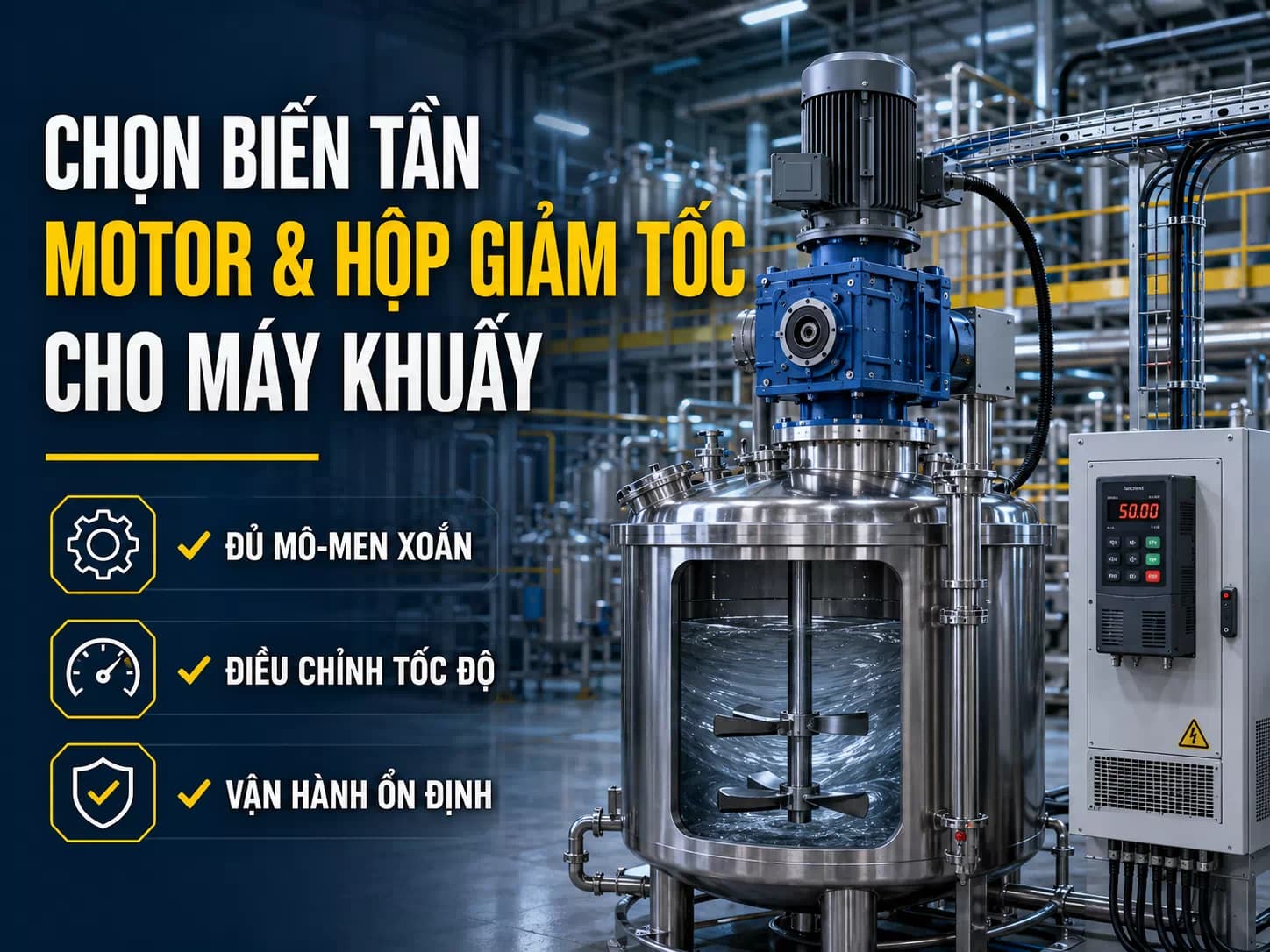
A guide to selecting VFDs, motors, and gearboxes for industrial agitators based on power, torque, agitation speed, material viscosity, and actual operating conditions.
How to Select VFDs, Motors, and Gearboxes for Industrial Agitators

The agitator drive system requires a synchronized selection of VFDs, motors, and gearboxes to ensure sufficient torque, stable speed control, and durable operation.
Overview of Selecting VFDs, Motors, and Gearboxes for Agitators
Industrial agitators are widely used in chemical, food, paint, water treatment, cosmetic, plastic, adhesive, sludge, and various other production lines. To ensure stable operation, it is essential to select the correct VFD and gearbox alongside the motor.
In practice, many agitator systems suffer from overload, motor overheating, noisy gearboxes, VFD overcurrent alarms, or failure to reach the required agitation speed. These issues often stem from incorrect motor power, wrong gear ratios, insufficient torque, or VFDs unsuitable for the load characteristics.
For industrial agitators, three main components must be considered:
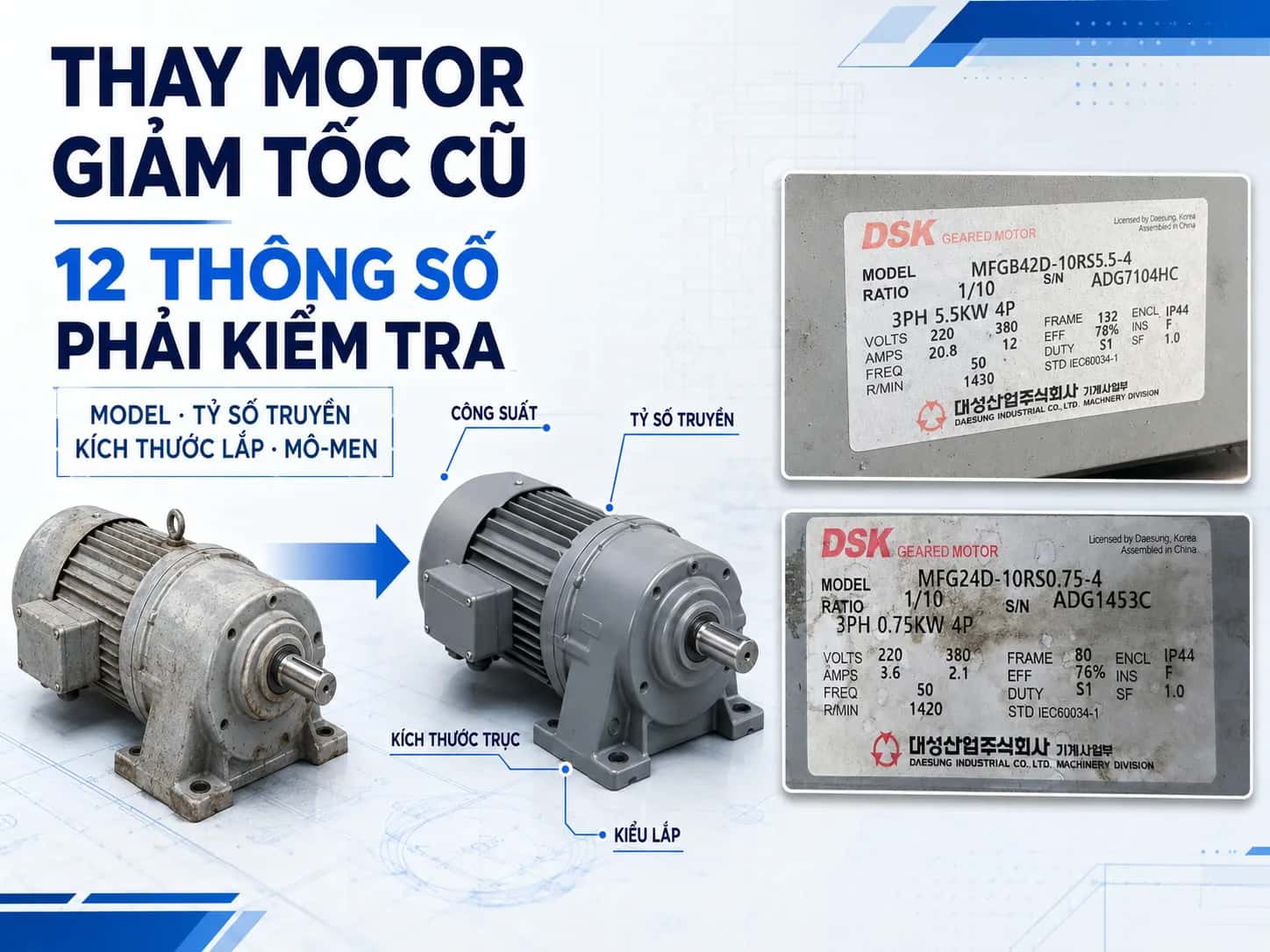
Electric Motor: Provides power and rotational motion.
Gearbox: Reduces rotational speed and increases torque.
VFD (Variable Frequency Drive): Controls speed, provides soft starting, and protects the motor.
Proper selection of the drive system ensures stable operation, reduces maintenance costs, minimizes the risk of motor burnout, and extends the lifespan of the entire system.
Why Do Agitators Need the Right Drive System?
Agitators represent a relatively complex load application. As the impeller rotates in the solution, the motor must overcome not only mechanical friction but also the resistance of the liquid or material inside the tank.
If stirring water or thin chemicals, the load is typically lighter. However, when stirring paint, adhesives, sludge, thick solutions, or high-viscosity materials, the load is significantly heavier. In such cases, the motor requires high torque, the gearbox must handle the load, and the VFD must have excellent low-speed control capabilities.
Incorrect selection can lead to issues such as:
Motor overheating during long-term operation.
VFD overcurrent or overload alarms.
Noisy, vibrating, or leaking gearboxes.
Weak or uneven impeller rotation.
Failure to achieve the desired agitation speed.
Jerky starts causing mechanical shock.
Production line downtime for repairs.
Therefore, when designing or replacing a drive system for an agitator, do not look only at the kW rating. Consider output speed, torque, material viscosity, impeller type, operating time, and environmental conditions.
Load Characteristics of Industrial Agitators
Before selecting a motor, gearbox, or VFD, it is crucial to understand the agitator's load type.
Light-Duty Agitators
Light-duty agitators are typically used for water, thin solutions, low-viscosity chemicals, or small mixing tanks. This type does not require excessive torque but still needs stable speed.
Common applications:
Water mixing.
Thin chemical mixing.
Water treatment solution mixing.
Liquid additive mixing.
Small tank mixing.
Medium-Duty Agitators
Medium-duty agitators are used for moderately viscous solutions, requiring motors and gearboxes with more stable load-bearing capacity.
Common applications:
Liquid food mixing.
Chemical solution mixing.
Thin paint mixing.
Mixing solutions with light sediment.
Medium-volume tank mixing.
Heavy-Duty Agitators
Heavy-duty agitators are used for thick materials, high viscosity, or large mixing tanks. This group requires the most careful calculation because the motor is prone to overload during startup or when the material thickens.
Common applications:
Thick paint mixing.
Adhesive mixing.
Sludge mixing.
Polymer mixing.
High-viscosity solution mixing.
Material mixing in large tanks.
For the heavy-duty group, prioritize a motor with sufficient power, a gearbox with an appropriate service factor, and a heavy-duty VFD capable of good torque control.
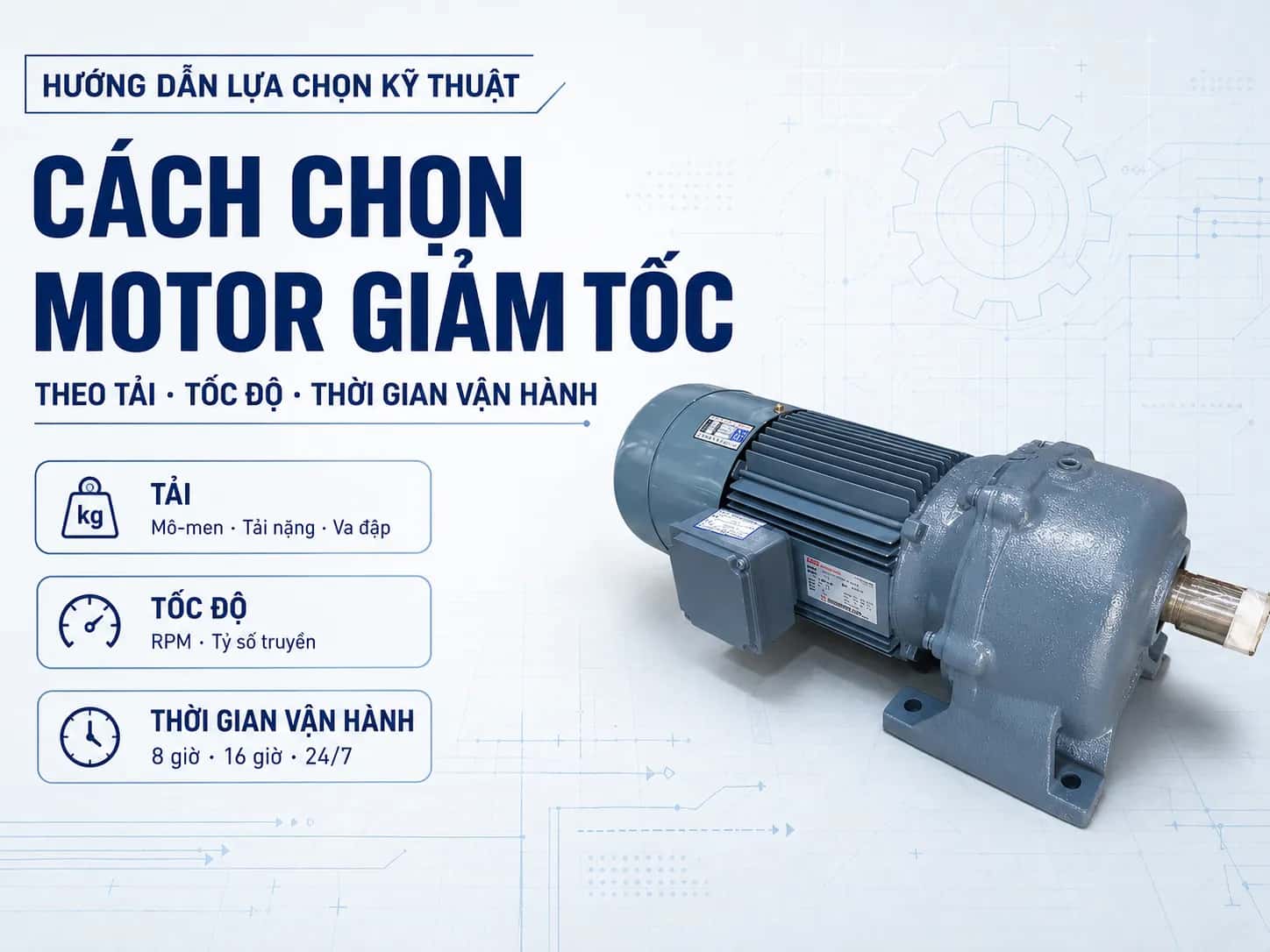
How to Select a Motor for an Agitator
The motor is the primary power source for the agitator system. Choosing a motor that is too small will result in weak performance, overheating, and potential winding burnout. Choosing one that is too large may waste investment costs and lead to inefficient system operation.
Selecting Motor Power
Motor power should be based on the actual load, impeller diameter, agitation speed, material viscosity, and operating time. For industrial agitators, do not rely solely on intuition or the power of a similar machine.
Common power ranges:
Agitator Type | Reference Motor Power |
|---|---|
Small tank, thin solution | 0.2 – 0.75 kW |
Medium agitator | 0.75 – 2.2 kW |
Large tank agitator | 2.2 – 7.5 kW |
Heavy-duty, high viscosity | 7.5 kW and above |
The table above is for reference only. When selecting, verify the torque and output speed after the gearbox.
Selecting Motor Poles
Industrial motors typically use 4-pole, 6-pole, or 8-pole configurations.
Motor Poles | Approx. Speed at 50Hz | Characteristics |
|---|---|---|
4P | Approx. 1450 rpm | Common, easy to pair with gearbox |
6P | Approx. 960 rpm | Lower speed, better torque |
8P | Approx. 720 rpm | Suitable for low input speed needs |
In many agitator applications, a 4P motor combined with a gearbox is the popular choice due to availability, ease of replacement, and reasonable cost.
Selecting Protection Class and Insulation Class
Agitators often operate in environments with moisture, chemicals, dust, or water splashes. Therefore, choose a motor with an appropriate protection class.
Working Environment | Suggested Protection Class |
|---|---|
Dry, clean workshop | IP54 or IP55 |
Humid, dusty environment | IP55 |
Outdoor, heavy water splash | IP56 or IP65 |
Corrosive chemicals | Requires suitable motor or coating |
Regarding insulation class, Class F is the industrial standard. For high-temperature environments or heavy loads, consider Class H.
How to Select a Gearbox for an Agitator
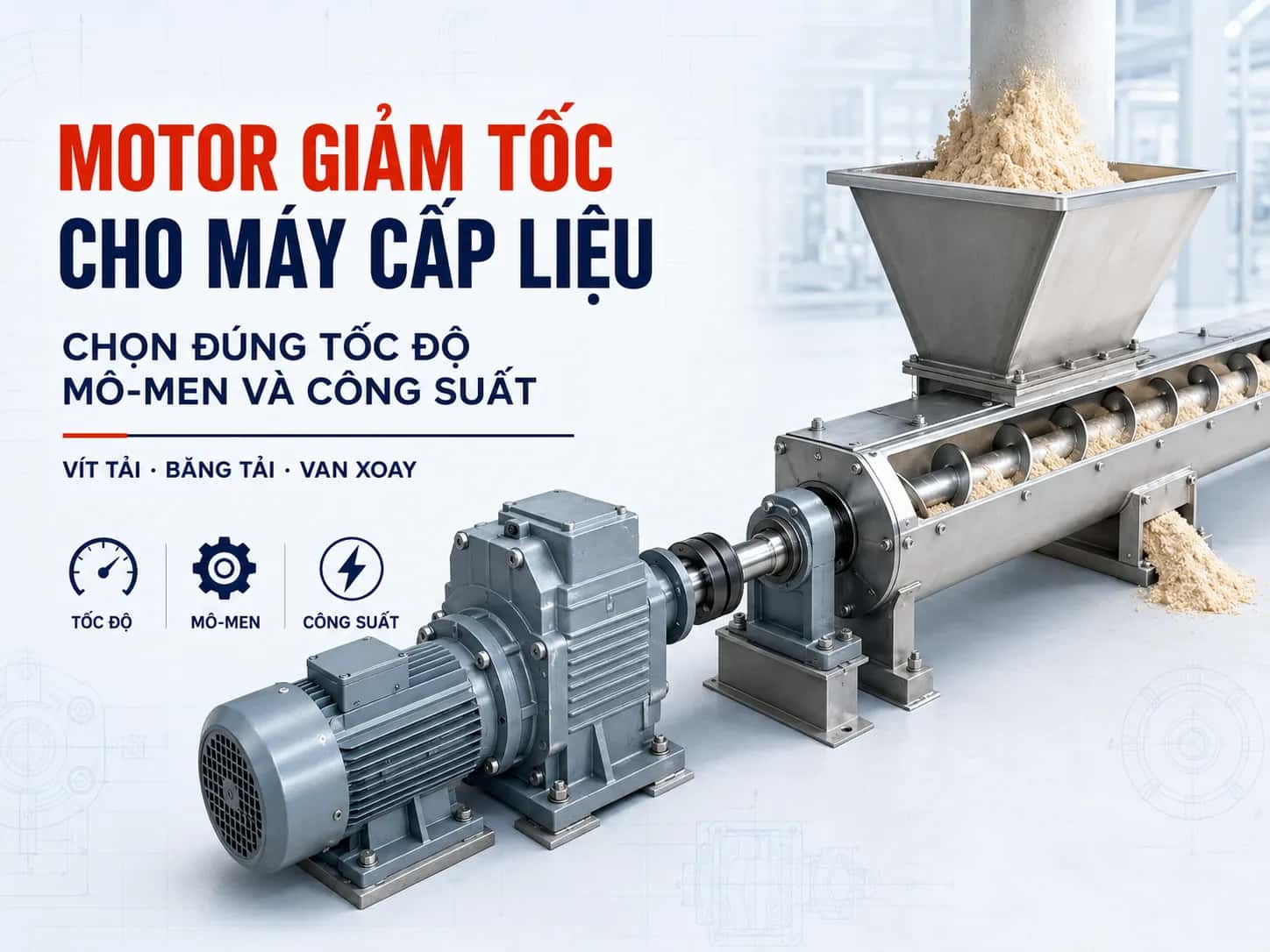
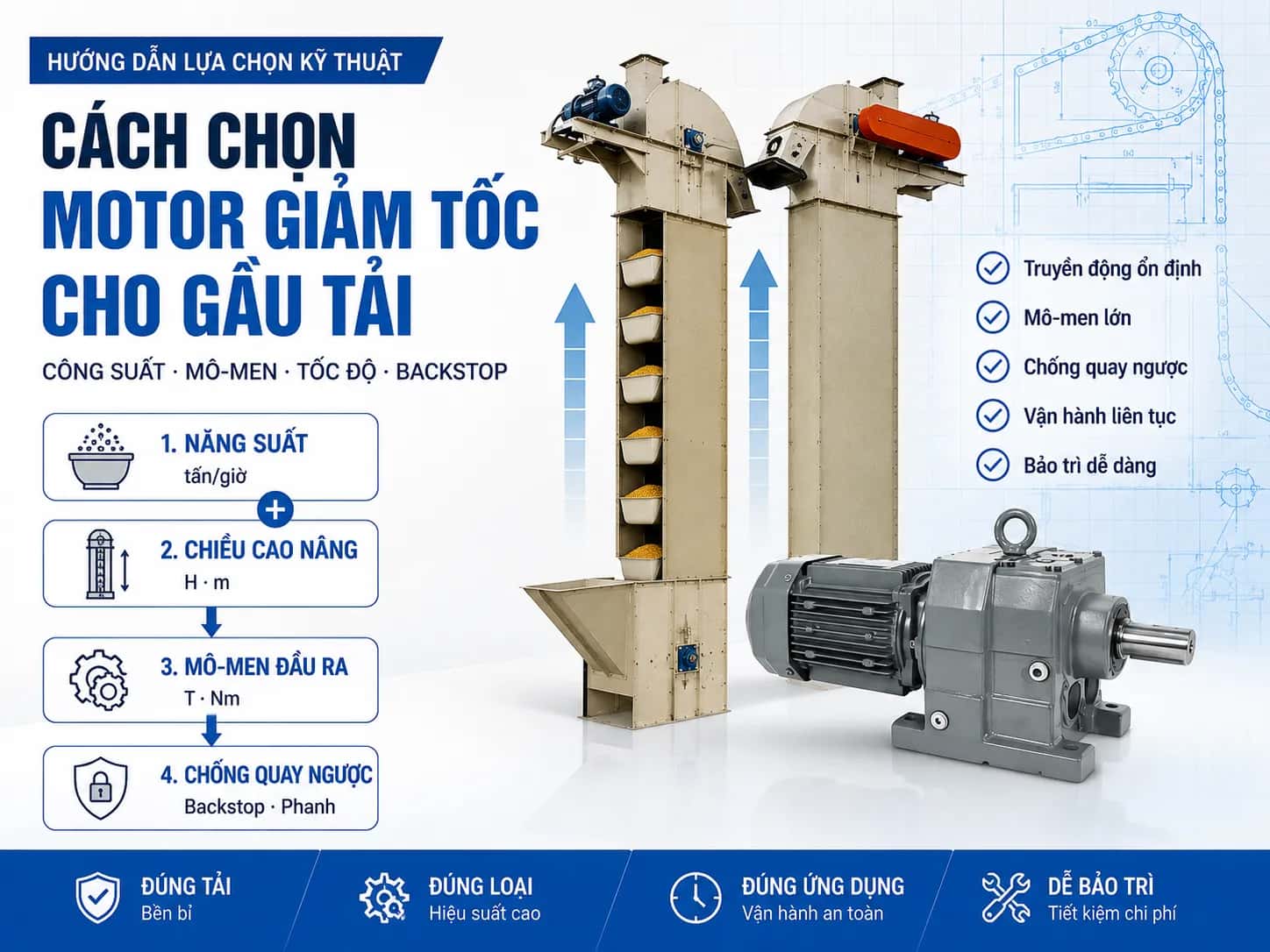
Agitators usually do not use the motor speed directly because it is too high. A gearbox is used to reduce rotational speed and increase torque at the agitator shaft.
Why Do Agitators Need a Gearbox?
If the motor rotates at 1450 rpm but the agitator only needs 30–100 rpm, a gearbox is mandatory. Besides speed reduction, the gearbox increases pulling force, allowing the impeller to rotate stably in the solution.
Example: A 1.5 kW, 1450 rpm motor would run too fast for an impeller if connected directly. Using a 1:25 ratio gearbox results in an output speed of approximately 58 rpm, which is more suitable for many mixing applications.
Selecting Gear Ratio
The gear ratio is calculated by the formula:
Gear Ratio = Motor Speed / Desired Agitation Speed
Example:
Motor 1450 rpm, desired agitation speed 60 rpm:
Gear Ratio = 1450 / 60 ≈ 24
You can choose the nearest gearbox ratio, which is 1:25.
Selecting Gearbox Type
Depending on the agitator type, different gearbox series can be chosen.
Gearbox Type | Characteristics | Suitable for |
|---|---|---|
Worm Gearbox | Compact, right-angle drive, high ratio | Light agitators, small tanks |
Helical Gearbox | High efficiency, good load capacity | Medium to heavy agitators |
Cycloid Gearbox | Good shock load resistance, durable | Heavy-duty, shock-load agitators |
Planetary Gearbox | Precise, compact, high torque | Automation, precision control |
For light-duty agitators, a worm gearbox may be a reasonable choice. For heavy-duty or continuous-run agitators, prioritize helical, cycloid, or heavy-duty series with an appropriate service factor.
How to Select a VFD for an Agitator
A VFD helps adjust agitator speed, provides soft starting, reduces starting current, and protects the motor. However, an agitator is a high-torque load, especially when mixing thick materials or starting with a full tank. Therefore, selecting the right type of VFD is essential.

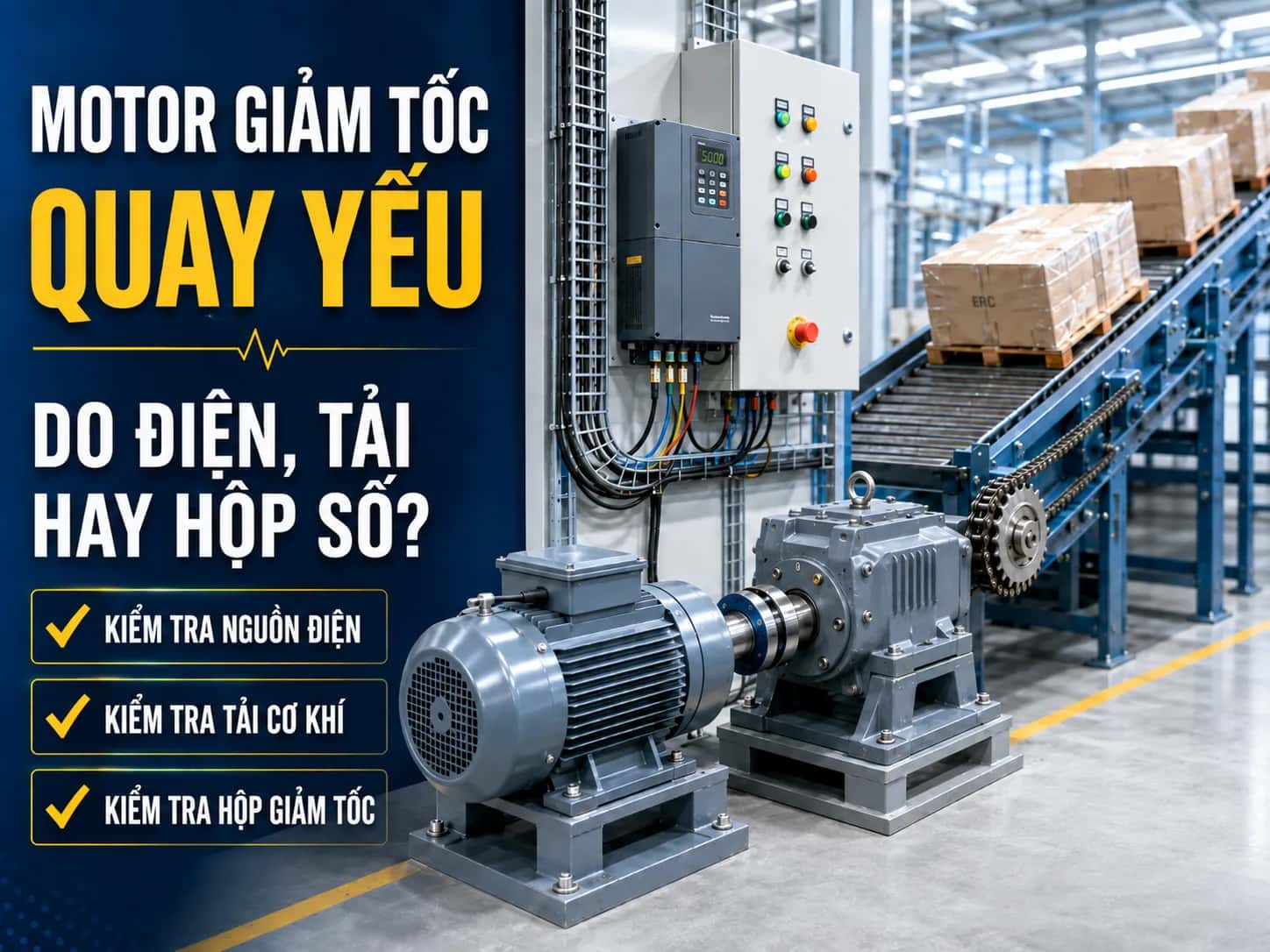
The agitator drive configuration includes a VFD, electric motor, gearbox, coupling, agitator shaft, and impeller.
Selecting VFD by Motor Current
Do not select a VFD based solely on kW. Check the motor's rated current on the nameplate and select a VFD with an output current equal to or greater than this value.
For example, if a 3-phase 380V 2.2 kW motor has a rated current of about 5A, you need to select a VFD with an output current equal to or greater than 5A.
Selecting Heavy Duty Type
For agitators, prioritize a heavy-duty VFD or a series with good overload capacity. Especially for heavy loads, thick materials, or agitators starting with a full tank, the VFD must be able to provide high current for a short duration.
Prioritize Vector Control or SVC
If the agitator needs to run at low speeds while maintaining good pulling force, choose a VFD with Sensorless Vector Control (SVC) or vector control. This mode helps the motor maintain better torque compared to standard V/F control.
Setting Acceleration and Deceleration Times
Agitators should not accelerate too quickly as this can easily cause overcurrent, mechanical shock, and excessive splashing. Set an acceleration time appropriate for the load.
Parameter | Setting Suggestion |
|---|---|
Ramp up | Accelerate gradually to avoid overcurrent |
Ramp down | Decelerate smoothly, avoid mechanical shock |
Current limit | Limit current to protect the motor |
Overload protection | Set correctly according to motor current |
Minimum frequency | Avoid running too low for long periods if the motor lacks cooling |
Maximum frequency | Limit according to allowed agitation speed |
Is a Braking Resistor Needed?
If the agitator has high inertia or requires quick stopping, the VFD may trigger a DC bus overvoltage error during deceleration. In this case, a braking resistor and braking unit are required if not already integrated into the VFD.
For standard agitators, if quick stopping is not required, you can extend the deceleration time to limit overvoltage errors.
Torque Calculation Formula for Agitators
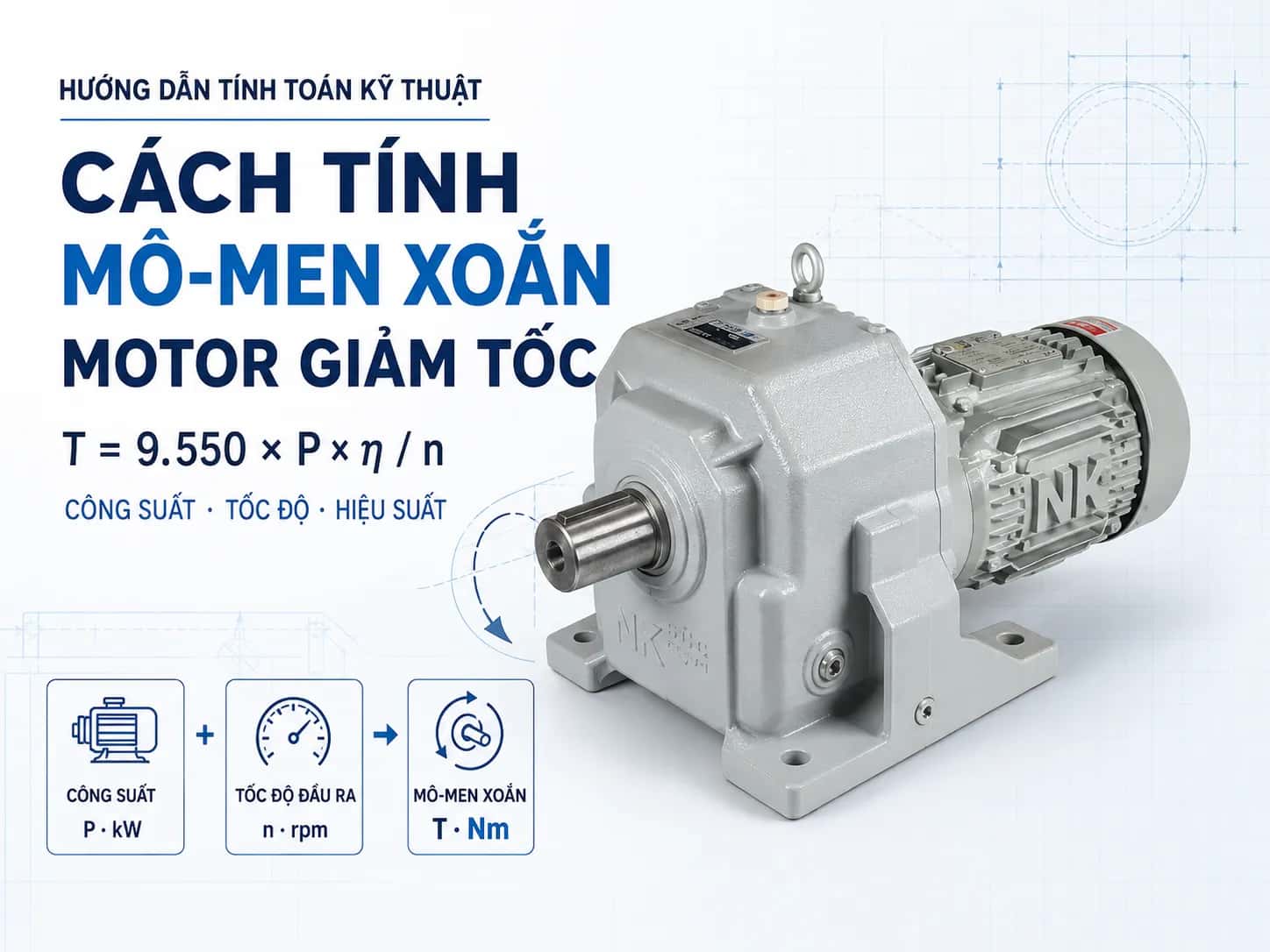
Torque is a critical parameter when selecting a gearbox and motor for an agitator.
Reference formula:
T = 9550 × P / n
Where:
Symbol | Meaning | Unit |
|---|---|---|
T | Output torque | N.m |
P | Motor power | kW |
n | Output speed after gearbox | rpm |
Example: 1.5 kW motor, output speed after gearbox is 60 rpm.
T = 9550 × 1.5 / 60 = 238.75 N.m
Thus, the gearbox must be capable of handling torque greater than this value, while also having an appropriate safety factor for the load type.
Example of Selecting VFD, Motor, and Gearbox for an Agitator
Suppose you need to select a drive system for a medium-duty solution agitator.
Requirements:
Parameter | Value |
|---|---|
Desired agitation speed | 60 rpm |
Power supply | 3-phase 380V |
Proposed motor | 1.5 kW, 4P |
Motor speed | Approx. 1450 rpm |
Load characteristics | Medium |
Speed control required | Yes |
Step 1: Select Gear Ratio
Required gear ratio:
1450 / 60 ≈ 24
You can choose the nearest gearbox ratio, which is 1:25.
Step 2: Calculate Output Torque
T = 9550 × 1.5 / 60 = 238.75 N.m
Select a gearbox with an allowable torque higher than this value and an appropriate service factor.
Step 3: Select VFD
For medium loads, a 1.5 kW VFD can be chosen if the rated current is suitable. If the material is thick, the load is heavy, or startup with a full tank is required, consider a 2.2 kW VFD or a heavy-duty series to increase load capacity.
Step 4: Check Installation Conditions
Check the gearbox mounting type, output shaft diameter, coupling type, motor position, working environment, and maintenance accessibility.
Selection Suggestion Table by Agitator Type
Agitator Type | Load Characteristics | Suggested Motor | Suggested Gearbox | Suggested VFD |
|---|---|---|---|---|
Water, thin chemical mixing | Light load | Standard 4P motor | Worm or helical | V/F or SVC |
Liquid food mixing | Medium load | IP55 motor | Helical or suitable worm | SVC |
Paint, sludge, thick solution | Heavy load | Oversized motor | Helical, Cycloid, heavy-duty | Heavy-duty SVC |
Large tank mixing | High inertia | High-power motor | Heavy-duty gearbox | Oversized current VFD |
Low-speed mixing | High torque needed | 4P or 6P motor | High gear ratio | Vector control |
Chemical mixing | Corrosive environment | IP55/IP65 motor | Suitable material/coating | Well-protected control cabinet |
Common Errors When Selecting the Wrong Agitator Drive System
VFD Overcurrent Alarm
Causes are usually too short acceleration time, too heavy load, insufficient motor power, jammed gearbox, or undersized VFD current.
The solution is to increase the ramp-up time, check mechanical load, verify motor current, and select a heavy-duty VFD if necessary.
Motor Overheating
Motor overheating can be caused by overloading, running at too low speed for a long time, insufficient cooling fan, unstable voltage, or undersized motor power.
If the motor frequently runs at low frequencies, consider a forced cooling fan or select a motor suitable for VFD operation.
Noisy or Overheating Gearbox
Causes may include lack of oil, wrong oil viscosity, overloading, shaft misalignment, damaged bearings, or incorrect service factor selection.
Check oil, load, coupling alignment, and gearbox housing temperature.
Weak Agitator Rotation
Weak rotation is usually due to unsuitable gear ratio, insufficient torque, VFD current limiting, or material thicker than the original design.
Recalculate torque, check VFD settings, and re-verify material viscosity.
Notes on Installing VFDs for Agitators
The VFD should be installed in a well-ventilated electrical cabinet, away from chemical fumes, fine dust, water splashes, or excessive heat.
Some important notes:
Motor cables should be routed separately from control signal cables.
Ensure proper grounding according to technical standards.
Set correct motor parameters on the VFD.
Do not run the motor at very low speeds for long periods without a forced cooling fan.
For long motor cables, consider output reactors or suitable filters.
Set up overload, overcurrent, phase loss protection, and frequency limits.
If the agitator requires quick stopping, calculate for a braking resistor.
When Should You Use a Geared Motor for an Agitator?
A geared motor is a suitable choice when a compact, easy-to-install drive unit is needed, with synchronization between the motor and gearbox. For small to medium agitators, geared motors can save space and simplify design.
Use a geared motor when:
The machine requires a fixed low speed.
Installation space is limited.
A compact drive unit is needed.
Load is light to medium.
Easy replacement with standard models is desired.
For heavy-duty agitators, large tanks, or high-viscosity materials, calculate the motor, gearbox, and service factor separately to ensure durability.
Where to Buy VFDs, Motors, and Gearboxes for Agitators?
When selecting drive equipment for agitators, businesses should work with a partner capable of technical consulting, torque calculation, correct gear ratio selection, and practical VFD setup support.
MDRIVE TECH provides industrial drive and automation solutions for agitators, including VFDs, electric motors, geared motors, gearboxes, and control cabinets.
📞 Hotline: 0868 789 647
📧 Email: [email protected]
MDRIVE TECH supports:
Consulting on motor selection for agitators based on actual load.
Calculating output speed and torque.
Selecting gearboxes suitable for speed and service factor.
Selecting heavy-duty VFDs for agitator loads.
Supporting basic VFD parameter setup.
Consulting solutions for chemical, food, paint, sludge, and water treatment agitators.
Contact MDRIVE TECH for advice on the right drive system for your industrial agitator.
FAQ – Frequently Asked Questions
How many poles should an agitator motor have?
Agitators typically use 4P motors combined with a gearbox because they are easy to select, replace, and cost-effective. For some applications requiring lower speeds, 6P or 8P motors can be used.
Do agitators need a VFD?
Yes, if you need speed adjustment, soft starting, reduced starting current, or better motor protection. For agitators that need to change speed based on material type, a VFD is a very suitable solution.
Should VFDs for agitators be selected by kW or current?
Select based on the motor's rated current, not just kW. For heavy agitator loads, choose a heavy-duty VFD or oversize the capacity if load conditions are complex.
Which gearbox is suitable for an agitator?
Light-duty agitators can use worm gearboxes. Medium to heavy-duty agitators should use helical, cycloid, or heavy-duty gearboxes with an appropriate service factor.
Why does the agitator VFD often report overcurrent?
Causes are usually heavy load, too short acceleration time, insufficient motor power, undersized VFD current, or jammed gearbox/agitator mechanism.
Should an agitator run at a very low frequency?
No, do not run the motor at too low a frequency for long periods if the motor uses a shaft-mounted cooling fan. When running slowly, the cooling fan is weak, and the motor easily overheats. If long-term slow operation is required, use a forced cooling fan or select a motor suitable for VFD operation.