What Is an Electric Motor? Construction, Classification, and Practical Applications
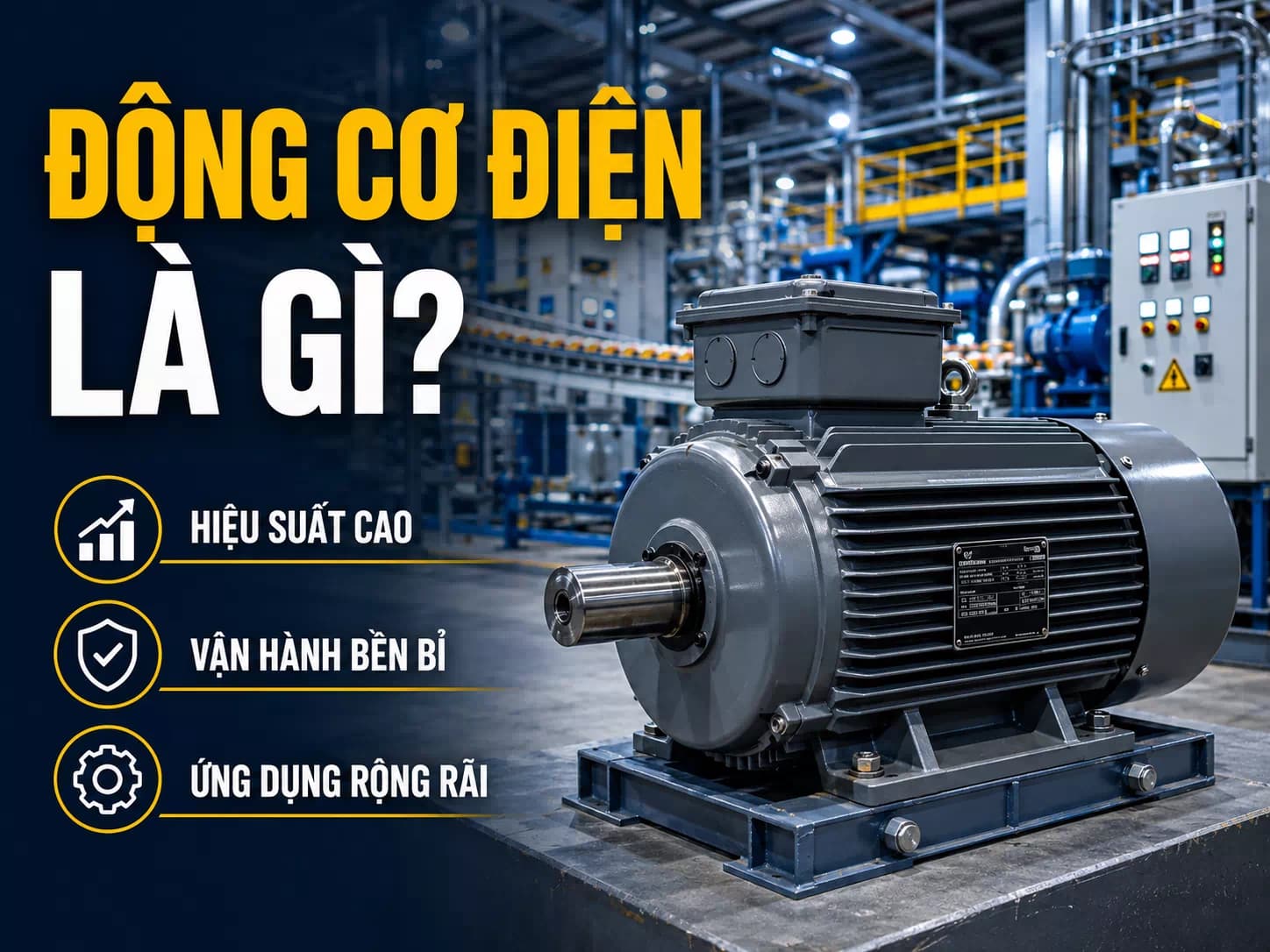
An electric motor is an electromechanical device that converts electrical energy into mechanical motion. Common types include 1-phase motors, 3-phase motors, AC, DC, servo, and geared motors. Thanks to their high efficiency, durability, and compatibility with VFDs, electric motors are widely used in conveyors, pumps, fans, agitators, air compressors, and industrial automation systems.
What Is an Electric Motor? Construction, Classification, and Industrial Applications

What Is an Electric Motor?
An electric motor is an electromechanical device used to convert electrical energy into mechanical energy, typically generating rotational motion to operate conveyors, pumps, fans, agitators, compressors, crushers, and many other industrial machine systems. In practice, an electric motor is also referred to as a motor or electric motor.
In modern factories, electric motors are considered the "heart" of drive systems. From production lines, water treatment systems, and packaging machines to dust extraction fans and industrial robots, most require electric motors to create stable and continuous motion.
A proper understanding of the construction, operating principles, classification, and selection criteria for electric motors helps businesses reduce operating costs, save energy, limit damage, and avoid unplanned downtime.
The Role of Electric Motors in Industry
In industrial production, an electric motor is not simply a device that creates motion. It directly affects the productivity, stability, and operating costs of the entire production line.
An electric motor selected with the correct power, speed, and operating environment will help the system operate durably, reduce power consumption, and extend equipment lifespan. Conversely, if the wrong motor is chosen, the factory may face issues such as overloading, motor overheating, winding burnout, strong vibrations, high power consumption, or mechanical failure.
Electric motors are commonly used in:
Conveyors and production lines.
Water pumps, chemical pumps, and wastewater treatment pumps.
Industrial fans, dust extraction fans, and HVAC systems.
Agitators, crushers, and mixers.
Packaging machines and food processing machinery.
Automation systems, robots, and CNC machines.
Geared motors, gearboxes, and heavy-duty drive systems.
Construction of an Electric Motor
A standard industrial electric motor typically consists of two main parts: the stator and the rotor, combined with auxiliary components such as the motor housing, shaft, bearings, terminal box, cooling fan, and mounting base.

The basic construction of an electric motor includes the stator, rotor, shaft, bearings, terminal box, and cooling system.
Stator – The Stationary Part of the Motor
The stator is the stationary component responsible for creating a rotating magnetic field when powered. The stator typically consists of electrical steel laminations and copper windings placed in the slots of the steel core.
The stator core is usually made of thin silicon steel laminations to reduce eddy current losses. Stator windings are typically made of copper or aluminum wire, coated with insulation to withstand heat and prevent short circuits during operation.
Rotor – The Rotating Part of the Motor
The rotor is the rotating component inside the motor, receiving electromagnetic force from the stator to generate torque and transmit motion to the motor shaft.
In industrial electric motor lines, the squirrel-cage rotor is the most common type due to its simple, durable construction, low maintenance requirements, and suitability for many continuous-load applications.
Motor Housing
The motor housing is typically made of cast iron, steel, or aluminum alloy. This component protects the internal parts, withstands mechanical stress, and assists in dissipating heat to the surrounding environment.
For heavy-duty applications or harsh environments, cast iron housings are preferred due to their high rigidity, impact resistance, and stable operation.
Motor Shaft
The motor shaft is the component that transmits rotational motion from the rotor to the outside. The shaft is typically connected to couplings, pulleys, gearboxes, pumps, fans, or other drive mechanisms.
Shaft concentricity is critical. If installed off-center, the motor may vibrate strongly, causing bearing wear and reducing equipment lifespan.
Bearings
Bearings allow the shaft to rotate smoothly and reduce friction during operation. Bearings are one of the components that directly affect the noise, vibration, and lifespan of the motor.
When bearings are dry, worn, or cracked, the motor often emits abnormal noises and experiences strong vibrations.
Terminal Box
The terminal box is where the power source is connected to the motor. Depending on the motor type, the terminal box can support connection methods such as star, delta, or VFD connections.
During installation, it is necessary to tighten the cable lugs, check the terminals, and ensure the terminal box is sealed to prevent dust, water, or moisture ingress.
Cooling Fan
The cooling fan is usually located at the rear of the motor, responsible for blowing air along the motor body to reduce heat during operation.
If the fan blade is broken, heavily covered in dust, or the fan cover is blocked, the motor is prone to overheating, which reduces the lifespan of the windings.
Operating Principle of an Electric Motor
The operating principle of an electric motor is based on the phenomenon of electromagnetic induction. When current flows through the stator windings, it creates a rotating magnetic field. This magnetic field acts on the rotor and generates torque, causing the rotor to rotate.
With a 3-phase asynchronous motor, the rotation speed of the rotor is always lower than the speed of the rotating magnetic field. This difference is called the slip coefficient. This is why this type of motor is called an asynchronous motor.
The rotation speed of the motor depends on the power supply frequency and the number of poles of the motor. In industry, common speeds include:
Number of Motor Poles | Approximate Speed at 50Hz | Common Applications |
|---|---|---|
2P | Approx. 2900 rpm | Fans, high-speed pumps, compressors |
4P | Approx. 1450 rpm | Conveyors, pumps, agitators, gearboxes |
6P | Approx. 960 rpm | Heavy-duty loads, crushers, mixers |
8P | Approx. 720 rpm | Applications requiring low speed and high torque |
Advantages of Electric Motors
Electric motors are widely used due to many outstanding advantages in efficiency, durability, and controllability.
High Operating Efficiency
Modern electric motor lines have high energy conversion efficiency, especially those meeting IE3 or IE4 standards. High efficiency helps reduce power losses and saves operating costs in the long run.
Wide Power Range
Electric motors have a very diverse power range, from small motors used in household appliances to large-capacity motors used in crushers, compressors, industrial pumps, and heavy production lines.
Easy Integration with VFDs
When combined with an industrial VFD, an electric motor can flexibly change speed, perform soft starts, reduce starting current, reverse rotation, and optimize energy for loads such as pumps, fans, and conveyors.
High Durability and Low Maintenance Costs
Squirrel-cage asynchronous motors have a simple structure, few wear parts, and no carbon brushes, making them suitable for continuous operation in industrial environments.
Environmentally Friendly
Compared to internal combustion engines, electric motors do not emit toxic gases at the point of use, are quieter, and are suitable for factories aiming for green production.
Disadvantages to Note When Using Electric Motors
Despite many advantages, electric motors still need to be selected and operated with proper technical care.
Dependence on Power Supply
If the power supply experiences phase loss, phase imbalance, voltage sag, or overvoltage, the motor may overheat, lose torque, vibrate, or burn out its windings.
High Starting Current
With direct-on-line starting, the motor's starting current can be many times higher than the rated current. This can easily cause voltage drops in the factory and affect other equipment.
To overcome this, VFDs, soft starters, or star-delta starting methods can be used depending on the power and load characteristics.
Sensitivity to Harsh Environments
Fine dust, water, moisture, chemicals, high temperatures, or corrosive environments can reduce motor lifespan if the correct IP protection class and insulation class are not selected.
Common Electric Motor Classifications
Electric motors can be classified in many different ways. In industrial practice, they are usually classified by power source, current type, construction, and application.
Classification by Power Source
Motor Type | Power Source Used | Main Characteristics | Common Applications |
|---|---|---|---|
1-phase electric motor | 220V | Low power, usually requires a starting or running capacitor | Small pumps, fans, household appliances, small workshops |
3-phase electric motor | 380V or 660V | High efficiency, smooth operation, good load capacity | Factories, conveyors, pumps, fans, production machinery |
Classification by Current Type
Motor Type | Characteristics | Applications |
|---|---|---|
AC Motor | Uses alternating current, durable construction, easy to maintain | Most common in industry |
DC Motor | Easy to adjust speed, high starting torque | Electric vehicles, battery-powered devices, specialized machines |
Servo Motor | Precise control of position, speed, and torque | Robots, CNC, packaging machines, automation |
Stepper Motor | Rotates in steps, easy to control position | Printers, small CNC machines, positioning mechanisms |
Classification by Mechanical Application
Motor Series | Characteristics | Applications |
|---|---|---|
Standard Motor | High speed, used independently or combined with drive systems | Pumps, fans, compressors |
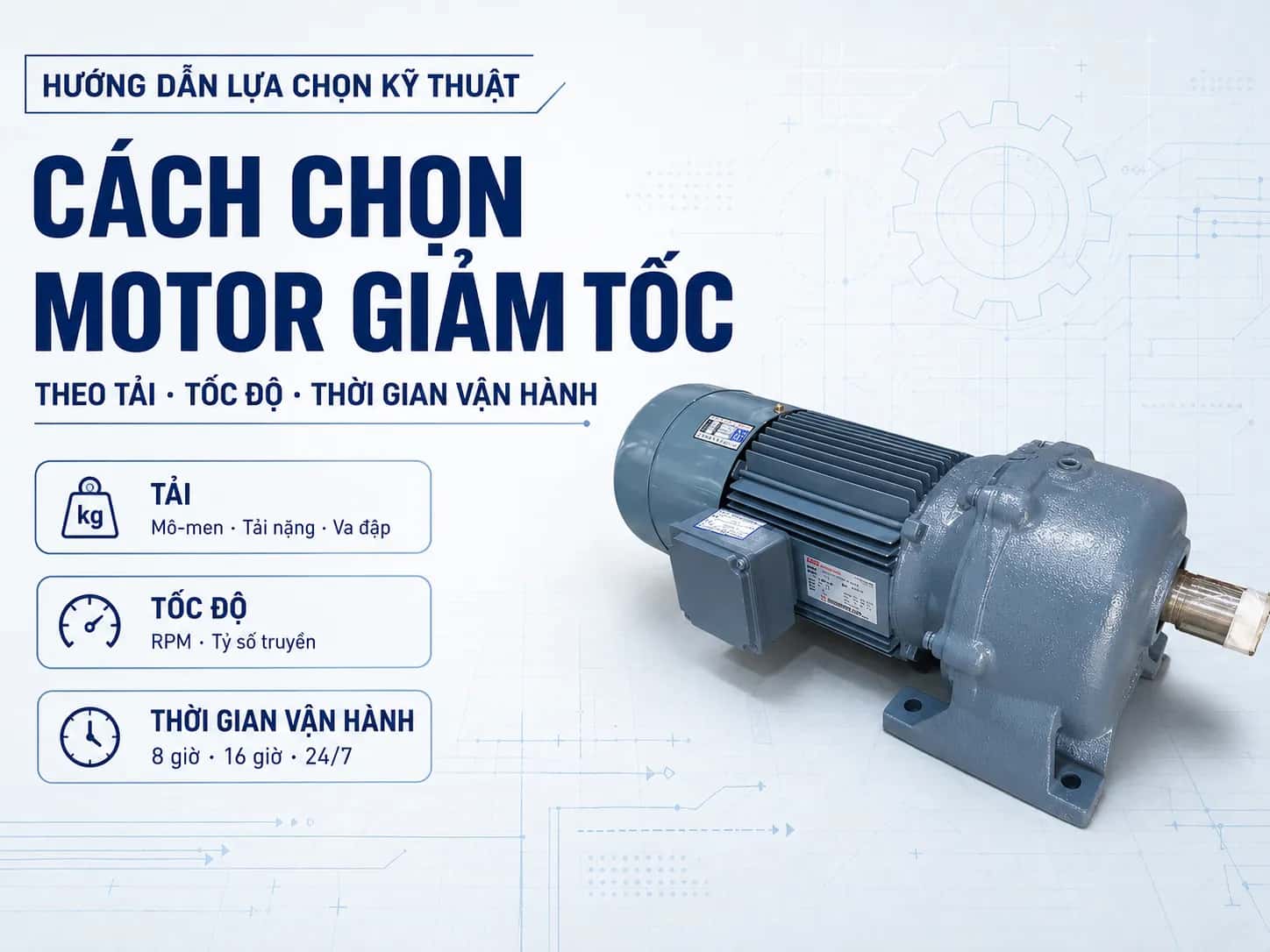
Geared Motor | Combines electric motor and gearbox | Conveyors, agitators, heavy-load mechanisms |
Brake Motor | Has a brake to hold the load when stopped | Cranes, hoists, packaging machines |
Explosion-proof Motor | Designed for hazardous areas | Oil & gas, chemicals, flammable environments |
Applications of Electric Motors in Industry

Electric motors are widely used in conveyors, pumps, fans, agitators, and factory automation systems.
Applications in Conveyor Systems
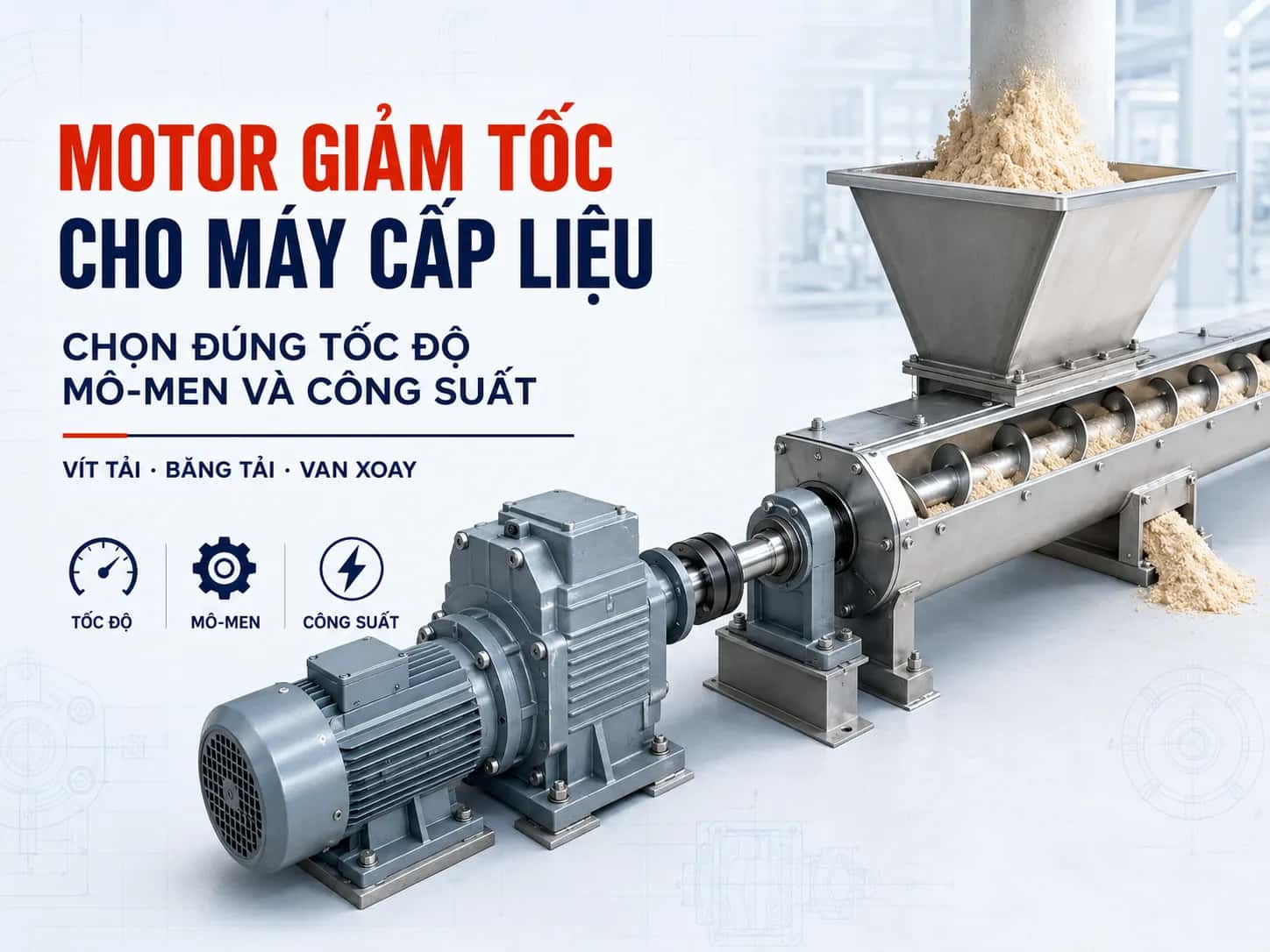
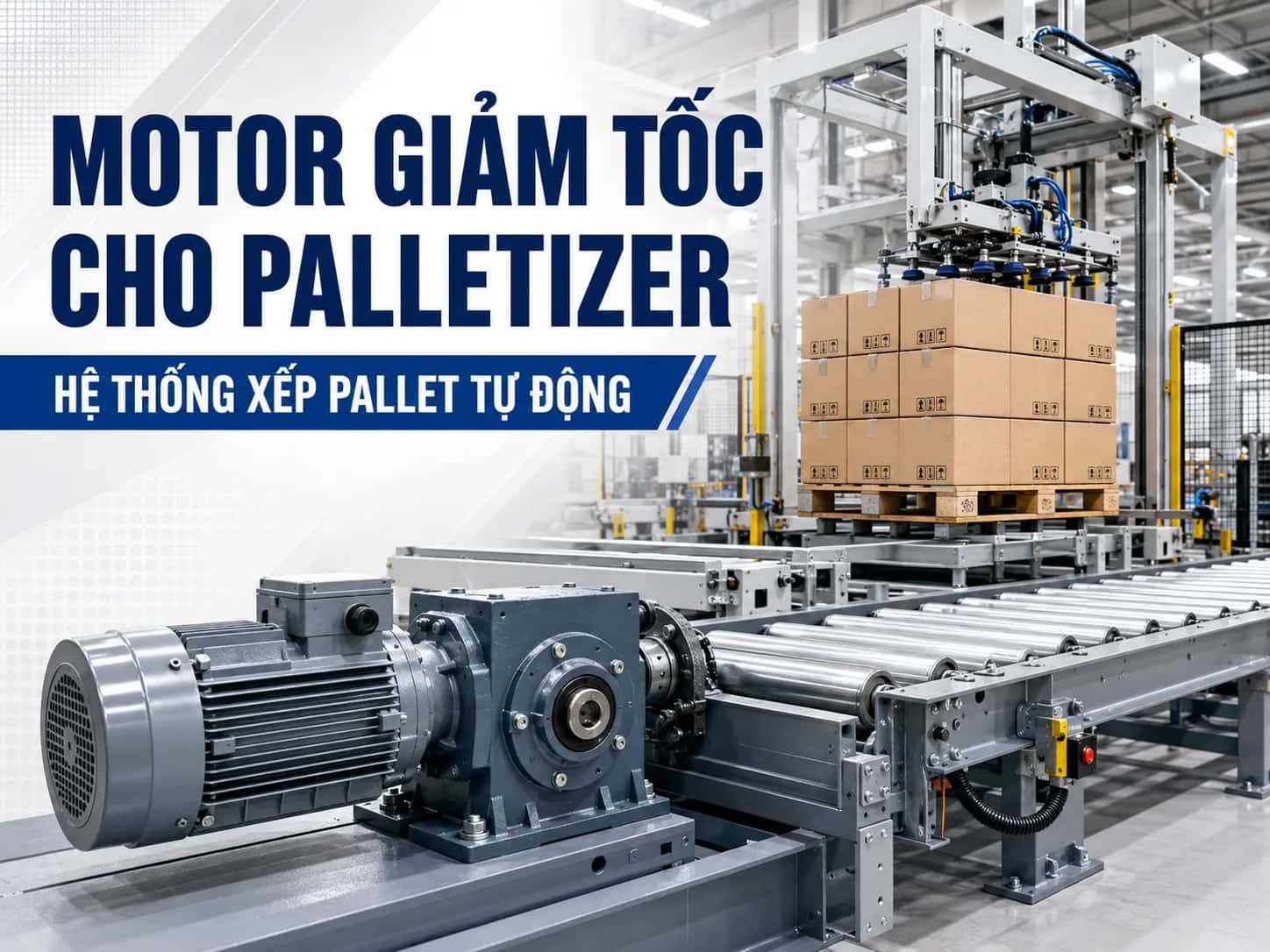
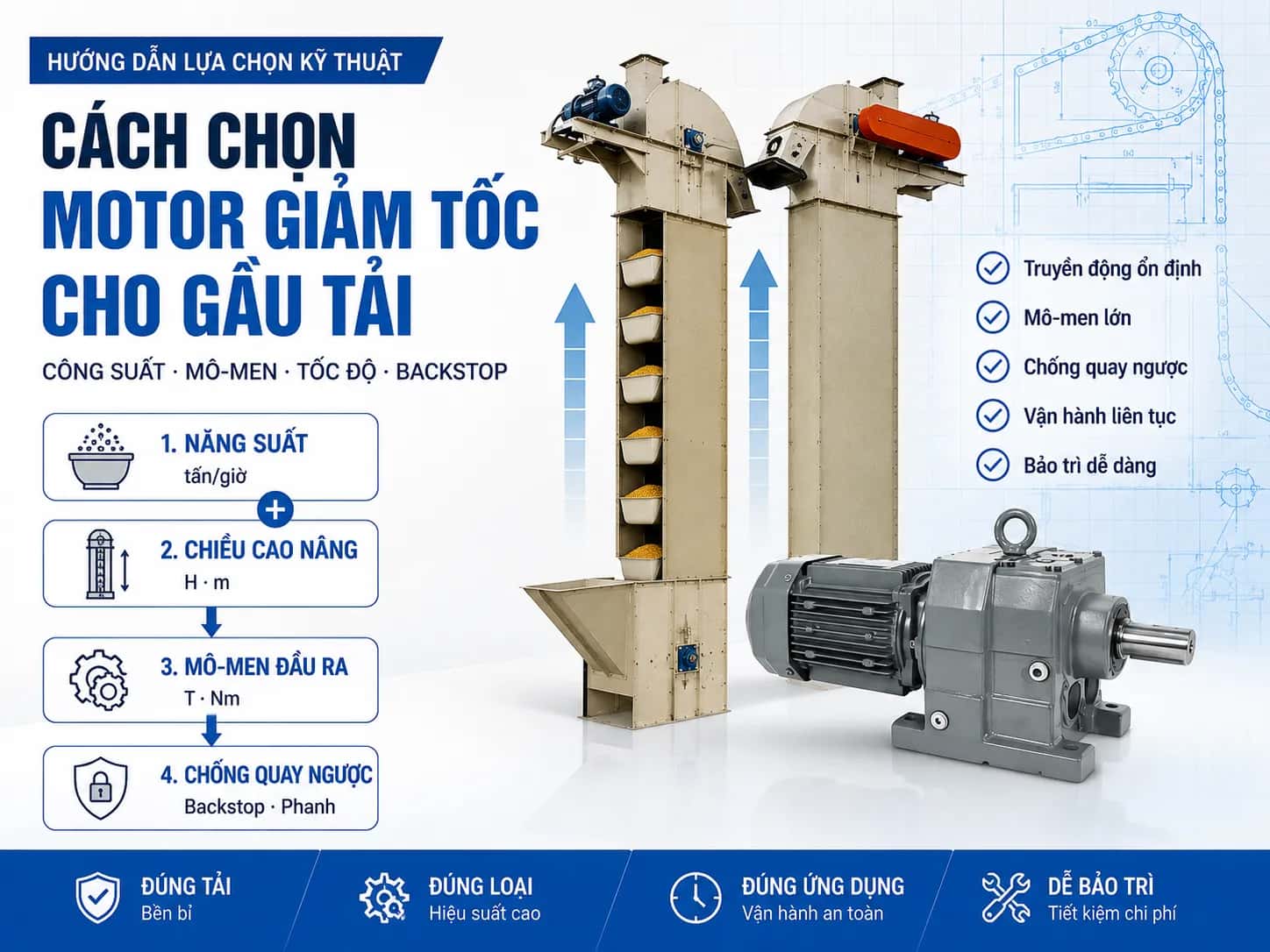
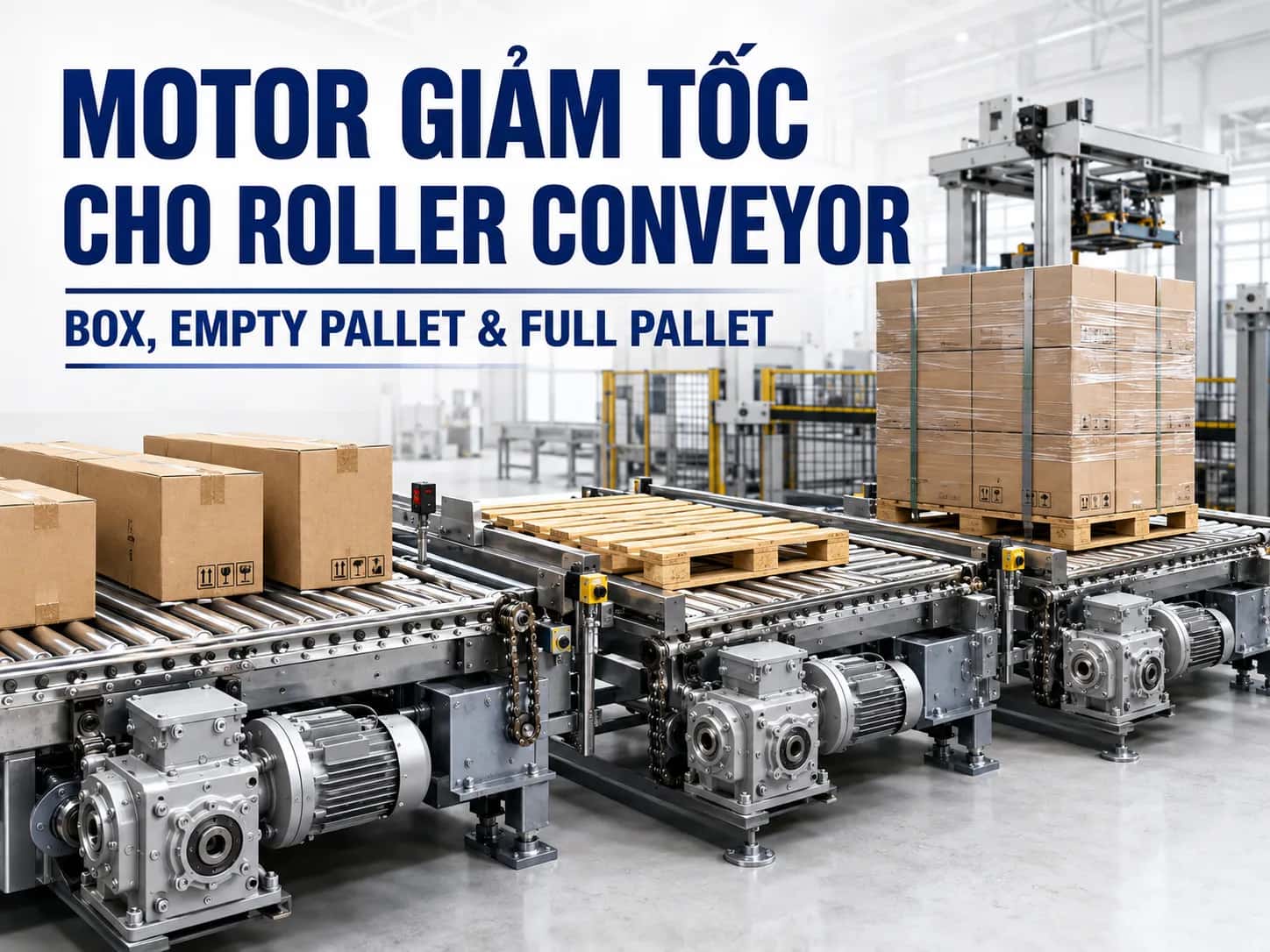
Electric motors are often combined with gearboxes to operate conveyors and assembly lines in manufacturing plants, warehouses, ports, cement plants, food processing plants, and packaging lines.
For conveyors requiring speed variation, the motor is usually controlled by a VFD to increase or decrease speed smoothly, avoid load jerking, and save energy.
Applications in Industrial Pumps
Electric motors are used to operate water pumps, chemical pumps, wastewater treatment pumps, fire protection pumps, and industrial water supply pumps.
When used for pump systems, it is necessary to select the correct power, speed, IP protection class, and control method to avoid overloading or unnecessary power consumption.
Applications in Industrial Fans and HVAC
Electric motors are used for dust extraction fans, ventilation fans, centrifugal fans, cooling towers, and HVAC systems. This is an application group with significant potential for energy savings when combined with VFDs.
Applications in Agitators, Mixers, and Crushers
Equipment such as chemical agitators, material mixers, crushers, and extruders often require motors with high torque and good load-bearing capacity.
In these applications, it is necessary to carefully calculate torque, load factor, operating time, and starting conditions.
Applications in Automation and Machine Building
In automation systems, electric motors are combined with PLCs, HMIs, VFDs, servo drives, and sensors to control speed, position, and torque according to production requirements.
How to Choose the Right Electric Motor
To choose the right electric motor, do not rely solely on the price or the power rating written on old machines. It is necessary to fully consider the actual operating conditions.
Determine Motor Power
Motor power needs to be suitable for the actual load. If the motor is too small, the equipment is prone to overloading and overheating. If the motor is too large, the investment cost is high, and it may operate inefficiently at low loads.
Typically, motor power should have a reasonable safety factor compared to the required load, depending on the operating characteristics.
Determine Rotation Speed
Motor speed directly affects torque and the drive mechanism. Common speeds include 2P, 4P, 6P, and 8P.
If the load requires low speed and high pulling force, a geared motor or a motor combined with a gearbox can be used.
Calculate Torque
Torque is a critical factor for heavy loads such as conveyors, crushers, agitators, screw conveyors, and lifting mechanisms.
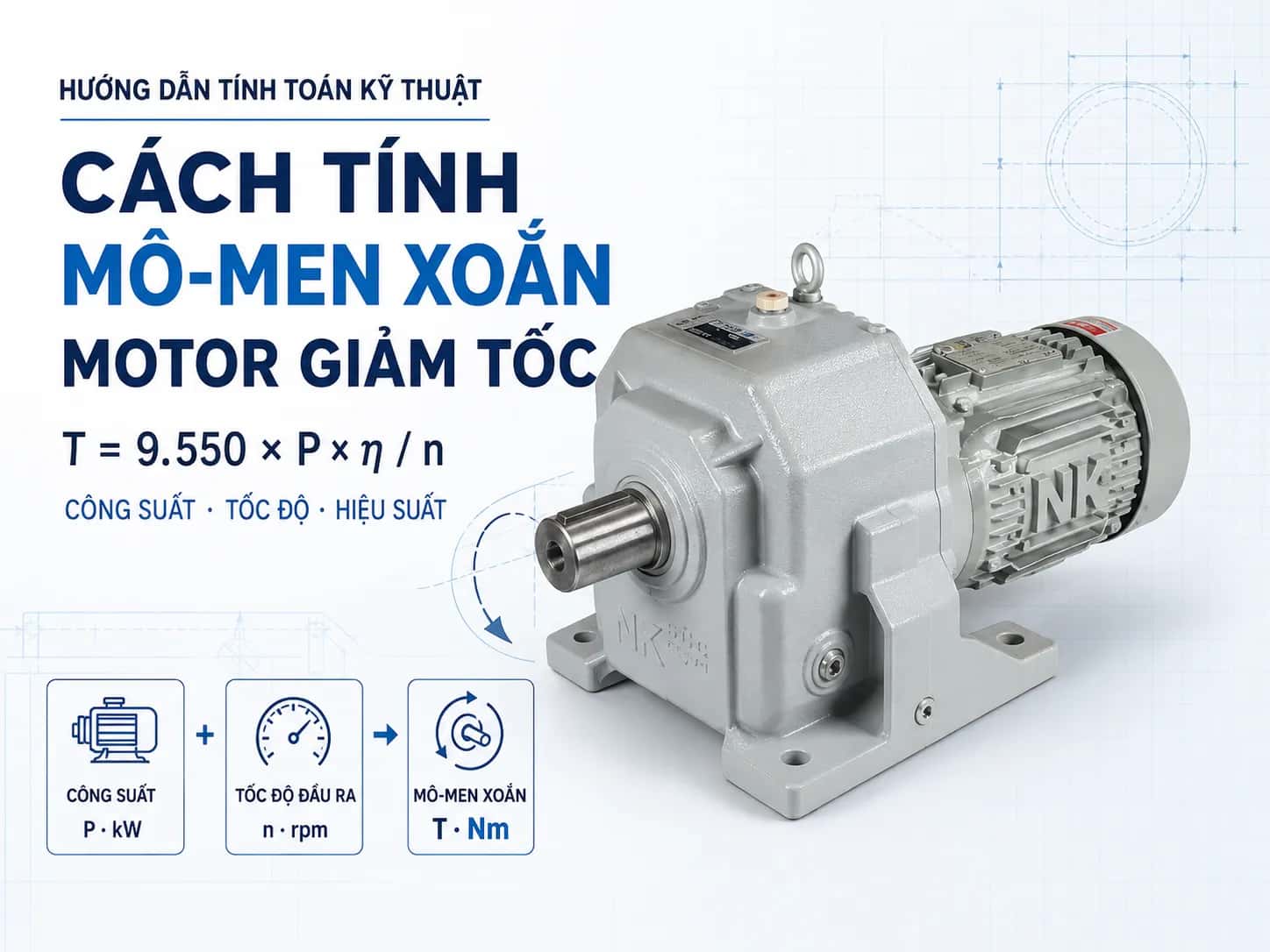
Reference formula:
T = 9550 × P / n
Where:
Symbol | Meaning | Unit |
|---|---|---|
T | Torque | N.m |
P | Motor Power | kW |
n | Rotation Speed | rpm |
Choose IP Protection Class
The IP protection class indicates the motor's ability to resist dust and water.
Working Environment | Suggested IP Class |
|---|---|
Dry workshop, little dust | IP44 or IP54 |
Dusty, normally humid factory | IP55 |
Outdoor, humid or dusty environment | IP56 or IP65 |
Washdown, chemical, or corrosive environment | Need to choose specialized motor according to actual conditions |
Choose Insulation Class
The insulation class represents the heat resistance of the windings. In industry, Class F is a common choice. For high-temperature environments or heavy loads, Class H may be required.
Choose IE Efficiency Standard
For motors running continuously for many hours each day, priority should be given to high-efficiency motors such as IE3 or IE4. Although the initial investment cost is higher, it can help save significant electricity costs throughout the service life.
When Should You Use a VFD for an Electric Motor?
A VFD is used to control speed and optimize operation for electric motors. In many factories, a VFD is an important solution to help reduce starting current, save energy, and protect mechanical components.
You should use a VFD when:
You need to change conveyor speed.
You need to adjust pump or fan flow.
You want to start and stop the motor more smoothly.
You want to reduce starting current.
You need to reverse rotation.
You need better motor protection.
You want to save energy for pump, fan, or HVAC loads.
When choosing a VFD, it is necessary to check motor power, rated current, load type, supply voltage, installation environment, and control requirements.
Common Electric Motor Faults and Solutions
Motor Overheating
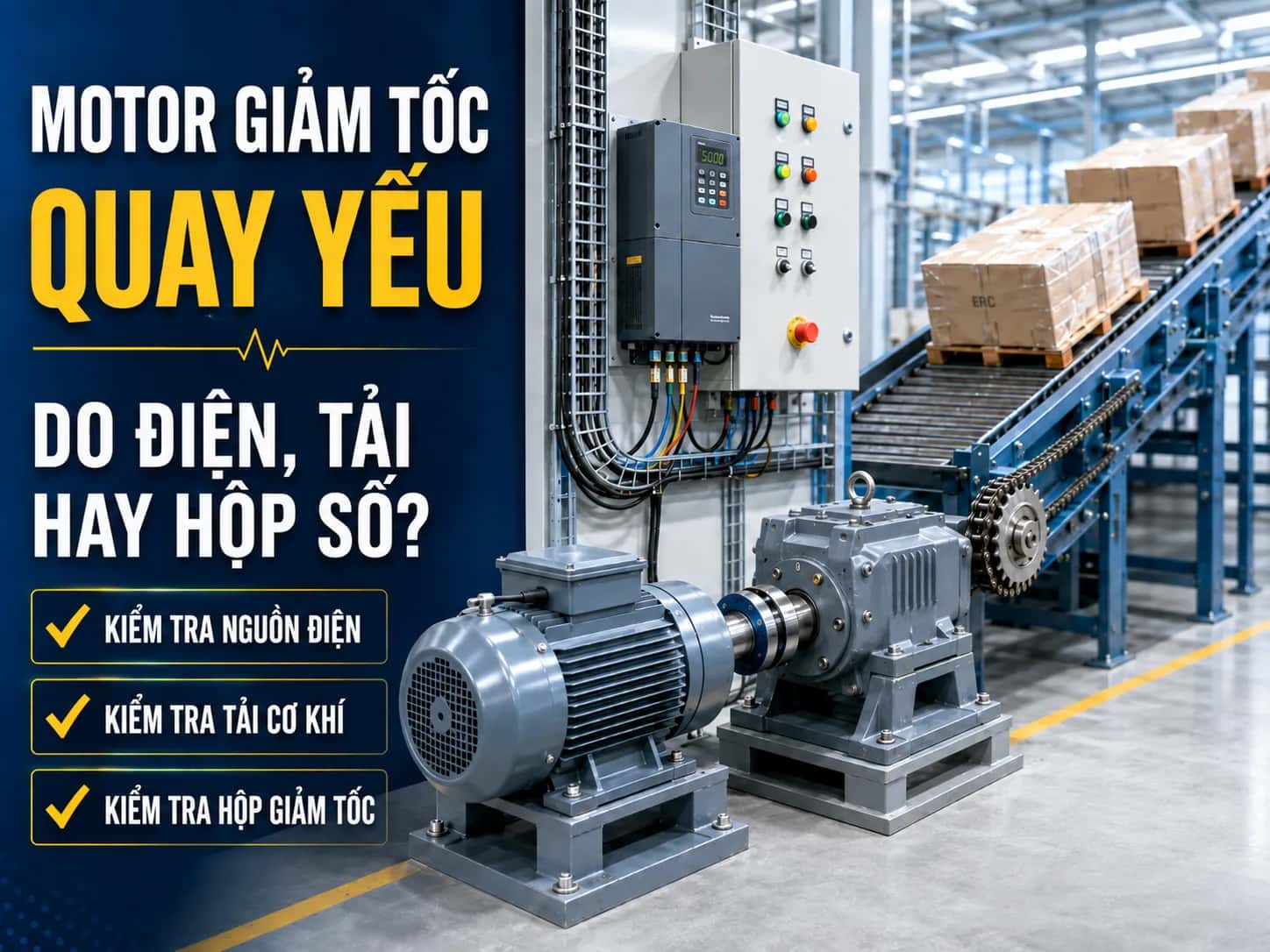
Causes can include overloading, low voltage, phase imbalance, dust on fan blades, damaged bearings, or an excessively hot environment.
The solution is to check the operating current, reduce mechanical load, clean the motor body, check the cooling fan, and re-measure the supply voltage.
Motor Vibrating Strongly or Making Loud Noise
Common causes are worn bearings, misaligned couplings, loose mounting bases, rotor imbalance, or jammed mechanical loads.
It is necessary to check bearings, align the shaft, tighten base bolts, and check the load condition.
Motor Not Starting
A motor not starting can be due to phase loss, faulty contactor, faulty capacitor (for 1-phase motors), mechanical jamming, or shorted windings.
Before powering back up, disconnect the power and check the entire electrical and mechanical section to avoid burning the motor.
Tripping Circuit Breaker or Thermal Overload Relay
Causes can include overloading, short circuits, ground faults, current leakage, damp motor, or incorrectly set thermal overload relays.
It is necessary to measure insulation with a Megohmmeter, check the current of each phase, and check the condition of the windings before restarting.
Factors Affecting Electric Motor Price
The price of an electric motor depends on many technical and commercial factors.
Factor | Impact on Price |
|---|---|
Motor Power | Higher power, higher price |
Housing Material | Cast iron housings are usually more expensive than aluminum |
Efficiency Standard | IE3, IE4 are usually higher than IE1, IE2 |
Brand | European, Japanese, Korean, Taiwanese brands have different price levels |
Mounting Type | Base, flange, special shafts can affect price |
Accessories | Brakes, encoders, thermal sensors, forced cooling fans increase costs |
Operating Environment | Outdoor, explosion-proof, anti-corrosion motors have higher prices |
When requesting a quote, provide full power, speed, voltage, mounting type, working environment, and actual application to select the right product.
Where to Buy Reliable Electric Motors?
When buying industrial electric motors, businesses should choose a supplier with technical capability, genuine products, and the ability to provide correct application advice. Choosing the right motor from the start helps reduce the risk of failure, save energy, and optimize operating costs.
MDRIVE TECH provides industrial drive and automation solutions, including electric motors, geared motors, gearboxes, VFDs, soft starters, and related industrial electrical equipment.
MDRIVE TECH supports:
Consulting on choosing electric motors based on power, speed, and actual load.
Supplying industrial electric motors for conveyors, pumps, fans, agitators, and production lines.
Consulting on combining motors with VFDs, gearboxes, or control systems.
Providing catalogs, technical specifications, CO, CQ upon request.
Proposing drive solutions suitable for budget and operating conditions.
Contact MDRIVE TECH for advice on electric motors suitable for your factory's actual needs.
FAQ – Frequently Asked Questions About Electric Motors
What is an electric motor?
An electric motor is a device that converts electrical energy into mechanical energy, typically creating rotational motion to operate pumps, fans, conveyors, agitators, compressors, and many types of industrial machinery.
How are 1-phase and 3-phase electric motors different?
1-phase electric motors use 220V power, usually have low power, and are suitable for household appliances or small workshops. 3-phase electric motors use 380V or 660V power, have higher efficiency, run more stably, and are suitable for industrial factories.
When should a VFD be used for an electric motor?
A VFD should be used when you need to adjust motor speed, reduce starting current, save energy, reverse rotation, or control conveyors, pumps, and fans according to production needs.
Are IE3 motors more energy-efficient than IE1?
Yes. IE3 motors have higher efficiency than IE1, helping to reduce energy losses and save electricity costs, especially for motors running many hours each day.
Why do electric motors overheat?
Electric motors can overheat due to overloading, unstable voltage, phase loss, dust on fan blades, damaged bearings, an excessively hot environment, or selecting the wrong motor power.
What information is needed to buy the right electric motor?
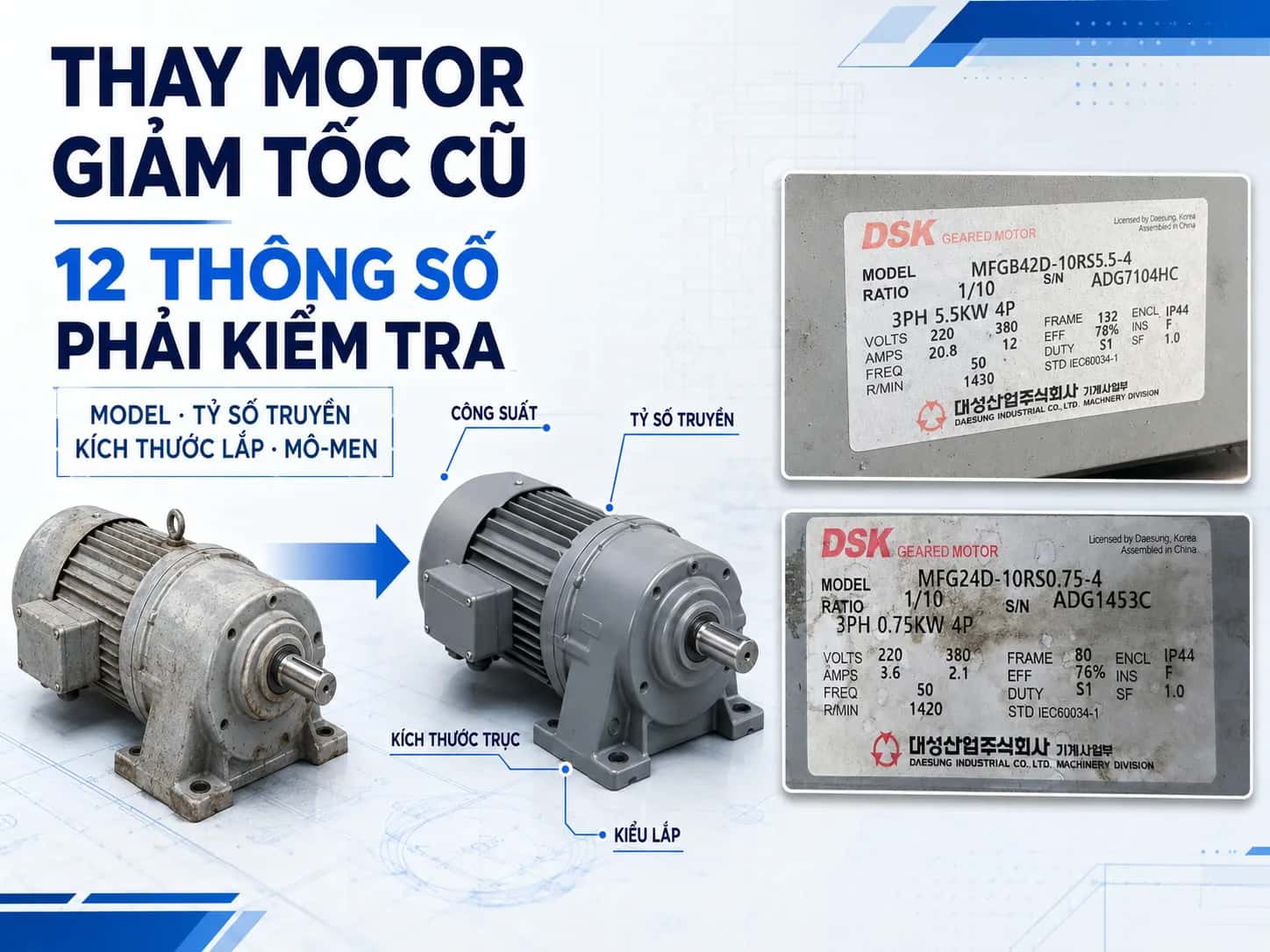
You need to provide power, rotation speed, voltage, frequency, mounting type, shaft diameter, IP protection class, working environment, load type, and whether a VFD is required.
Contact MDRIVETECH immediately for technical advice, product catalogs, and quotes.
Hotline: 0868 789 647
Email: [email protected]