What is an Explosion-Proof Motor? Construction, Principle, Classification, and Selection
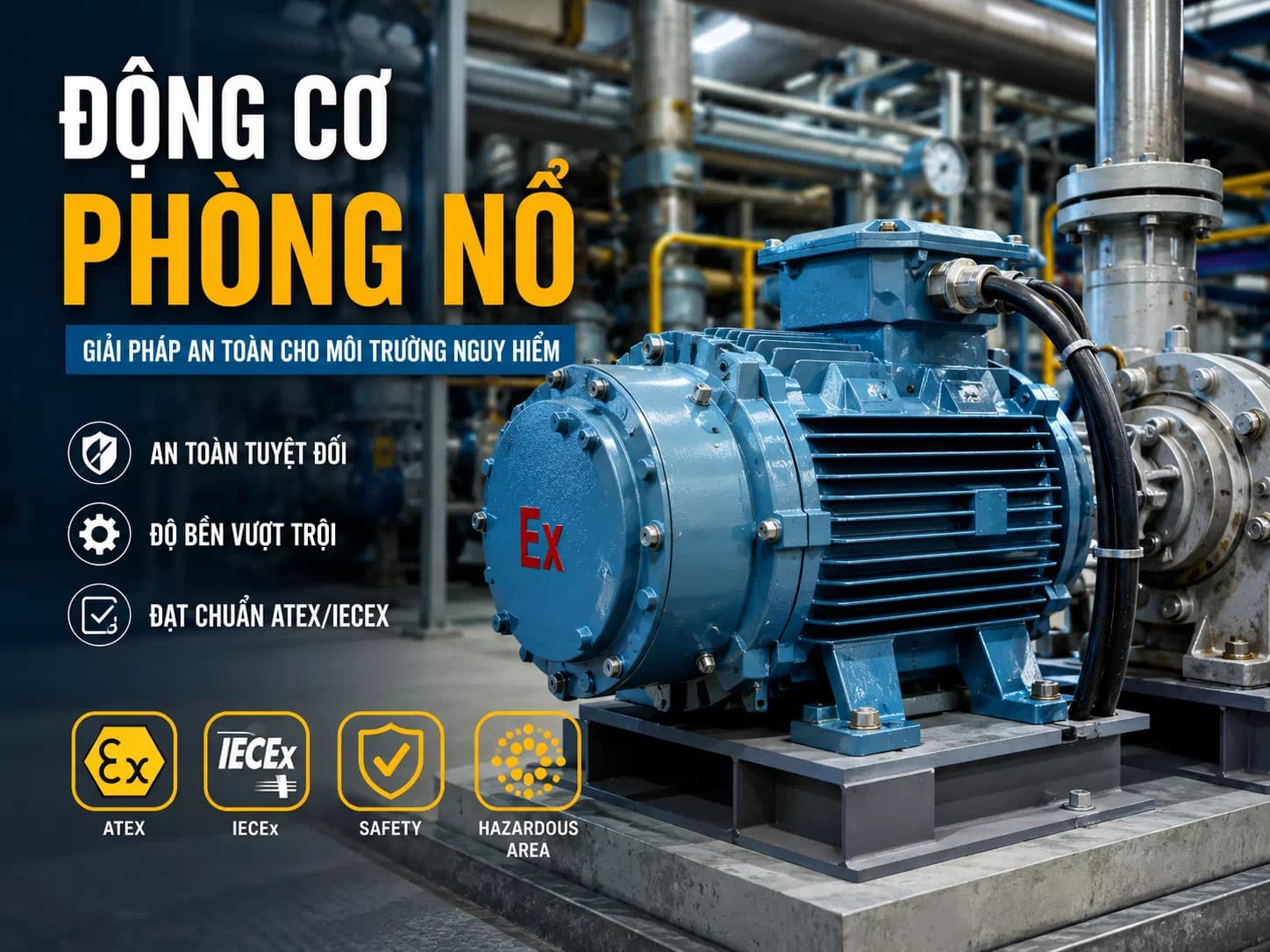
An explosion-proof motor is an electric motor designed for use in environments with flammable gases, vapors, or dust. Learn about its construction, Ex d principle, Zone classification, ATEX/IECEx standards, and how to select the right explosion-proof motor.
What is an Explosion-Proof Motor? Construction, Principle, and Selection
An explosion-proof motor is an electric motor specifically designed to operate safely in hazardous environments where there is a risk of fire or explosion, such as chemical plants, oil refineries, mining, solvent warehouses, dust silos, or areas with flammable gases. Unlike standard electric motors, explosion-proof motors feature a pressure-resistant enclosure, flame paths, and specialized connection systems to prevent internal sparks or flames from spreading to the external environment.
In hazardous industrial areas, even a small electrical spark from the winding, terminal box, or mechanical friction can cause a serious explosion. Therefore, using the correct explosion-proof motor is not only a technical requirement but also a critical condition to ensure the safety of personnel, equipment, and the entire production line.

What is an Explosion-Proof Motor?
An explosion-proof motor, also known as an explosion-proof motor or explosion-proof motor, is a type of industrial electric motor manufactured to operate in areas containing flammable gases, solvent vapors, or combustible dust.
It is important to understand that an explosion-proof motor does not mean it completely prevents flammable gas from entering the motor. In fact, the core principle of this type of motor is:
If an explosion occurs inside the motor, the outer casing must be strong enough to withstand the explosion pressure, and the flame paths will cool the flame before hot gases escape to the external environment.
Thus, an incident inside the motor will not become an ignition source for the surrounding area.
Explosion-proof motors must typically meet strict safety standards such as ATEX, IECEx, NEC/CEC, or equivalent standards depending on the country and region of use.
Why Use an Explosion-Proof Motor?
In many factories, the working environment may contain flammable elements such as:
Industrial gases.
Gasoline vapors, solvents, alcohol, paint.
Coal dust, wood dust, grain dust, bran dust.
Volatile chemicals.
Flammable gas mixtures in confined spaces.
If standard electric motors are used in these areas, the risk of explosion can come from electrical sparks, excessive motor surface temperature, winding shorts, bearing failure, or terminal box faults.
Therefore, explosion-proof motors are used to:
Reduce the risk of fire and explosion in hazardous areas.
Protect the safety of workers and factory assets.
Meet safety inspection, fire prevention, and insurance requirements.
Ensure the drive system operates stably in harsh environments.
Comply with production lines requiring high safety standards.
Construction of an Explosion-Proof Motor
Compared to standard electric motors, explosion-proof motors have a more robust design, thicker materials, and require more precise mechanical machining.

Motor Housing
The motor housing is usually made of cast iron, carbon steel, or stainless steel depending on the operating environment. This housing is designed to withstand pressure if an internal explosion occurs.
This is one of the biggest differences between an explosion-proof motor and a standard motor. The motor housing not only protects the internal electrical components but also acts as a safety shield.
Terminal Box
The terminal box is an area prone to sparks if contacts are loose, incorrectly connected, or cables are not tightened. Therefore, the terminal box of an explosion-proof motor usually has a sealed, robust construction and uses specialized cable glands.
During installation, technicians must ensure that cables, connectors, gaskets, and the terminal box cover are tightened correctly to maintain the explosion-proof capability of the device.
Flanges and Motor Covers
Flanges, front covers, and rear covers of explosion-proof motors are machined with high precision. Mating surfaces must ensure gaps meet standards to form safe flame paths.
If these positions are ground, machined, or incorrectly installed after repair, the motor may lose its explosion-proof capability even if the exterior remains intact.
Motor Shaft and Flame Paths
Flame paths, also known as flame paths, are critical details in the construction of an explosion-proof motor. These are narrow and long gaps between components such as the shaft, cover, flange, and motor body.
When flames or hot gases escape from the inside, the flame path reduces the temperature of the flame before it contacts the external environment.
Operating Principle of an Explosion-Proof Motor
The operating principle of an explosion-proof motor is based on the mechanism of containing internal explosions and quenching flames before they escape.
This process can be understood as follows:
Flammable gases or vapors may enter the motor.
If an electrical spark, short circuit, or friction causes ignition, a small explosion may occur inside the motor.
The motor housing withstands the pressure and prevents the motor body from being destroyed.
Hot gases and flames pass through the pre-designed flame paths.
While passing through the narrow and long gaps, the flame is cooled.
When escaping to the outside, the gas has cooled down and is no longer capable of igniting the surrounding environment.
This is the principle commonly found in Ex d Flameproof standard motors.
Advantages of Explosion-Proof Motors
Explosion-proof motors are widely used in industries with high safety requirements due to the following advantages.
Safety in Hazardous Environments
The biggest advantage of an explosion-proof motor is reducing the risk of fire and explosion from the electric drive system. This is a mandatory requirement in areas with flammable gases, vapors, or dust.
High Mechanical Durability
Because they are built with thick and sturdy materials, explosion-proof motors have better resistance to impact, vibration, and harsh working environments than many standard motors.
Meeting Inspection Standards
Chemical plants, oil and gas, mining, paint, solvent, or combustible dust processing facilities often require equipment to have appropriate certifications. Using the correct explosion-proof motor helps businesses easily meet inspection, insurance, and occupational safety requirements.
Flexible Integration with Drive Systems
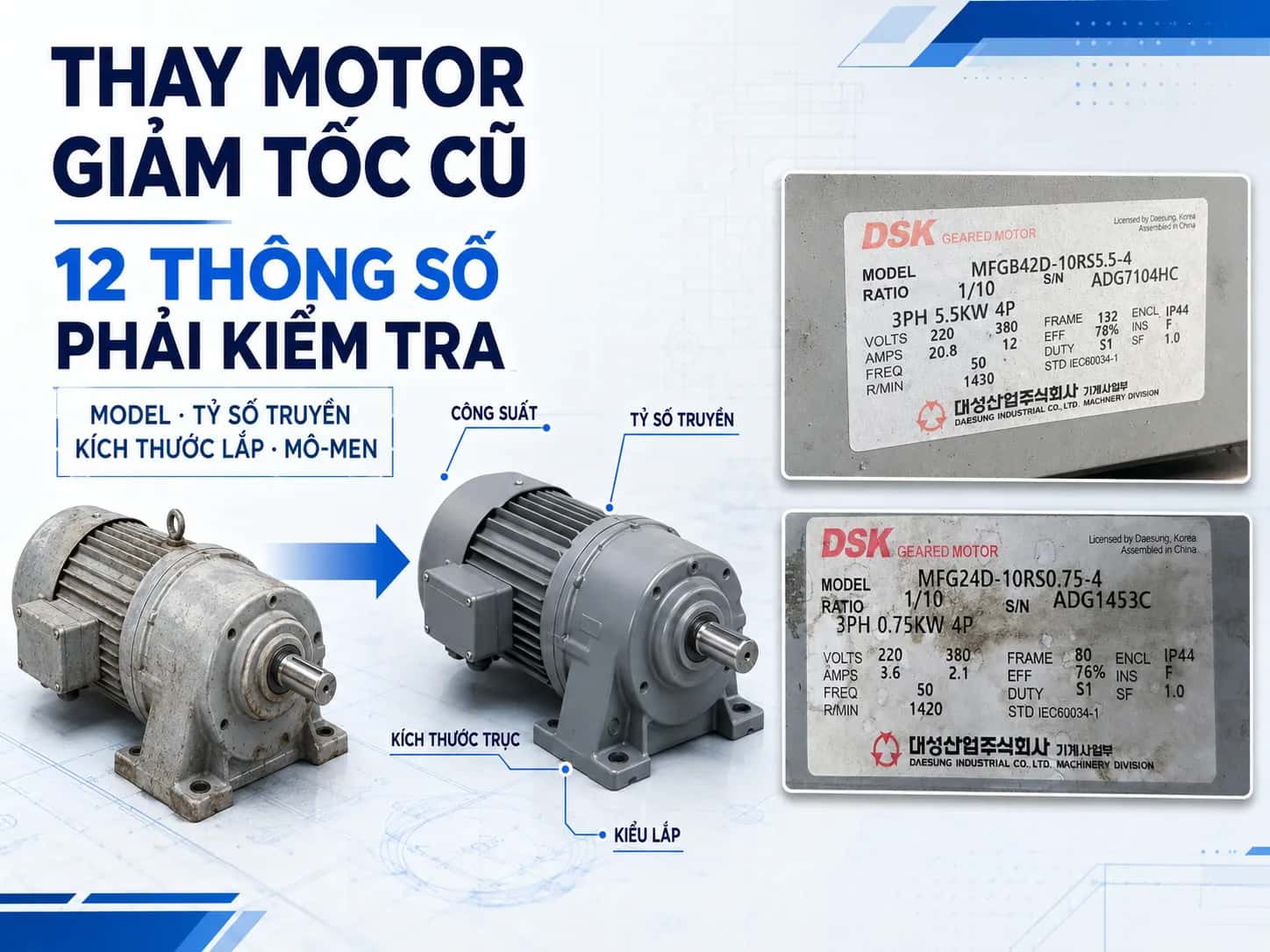
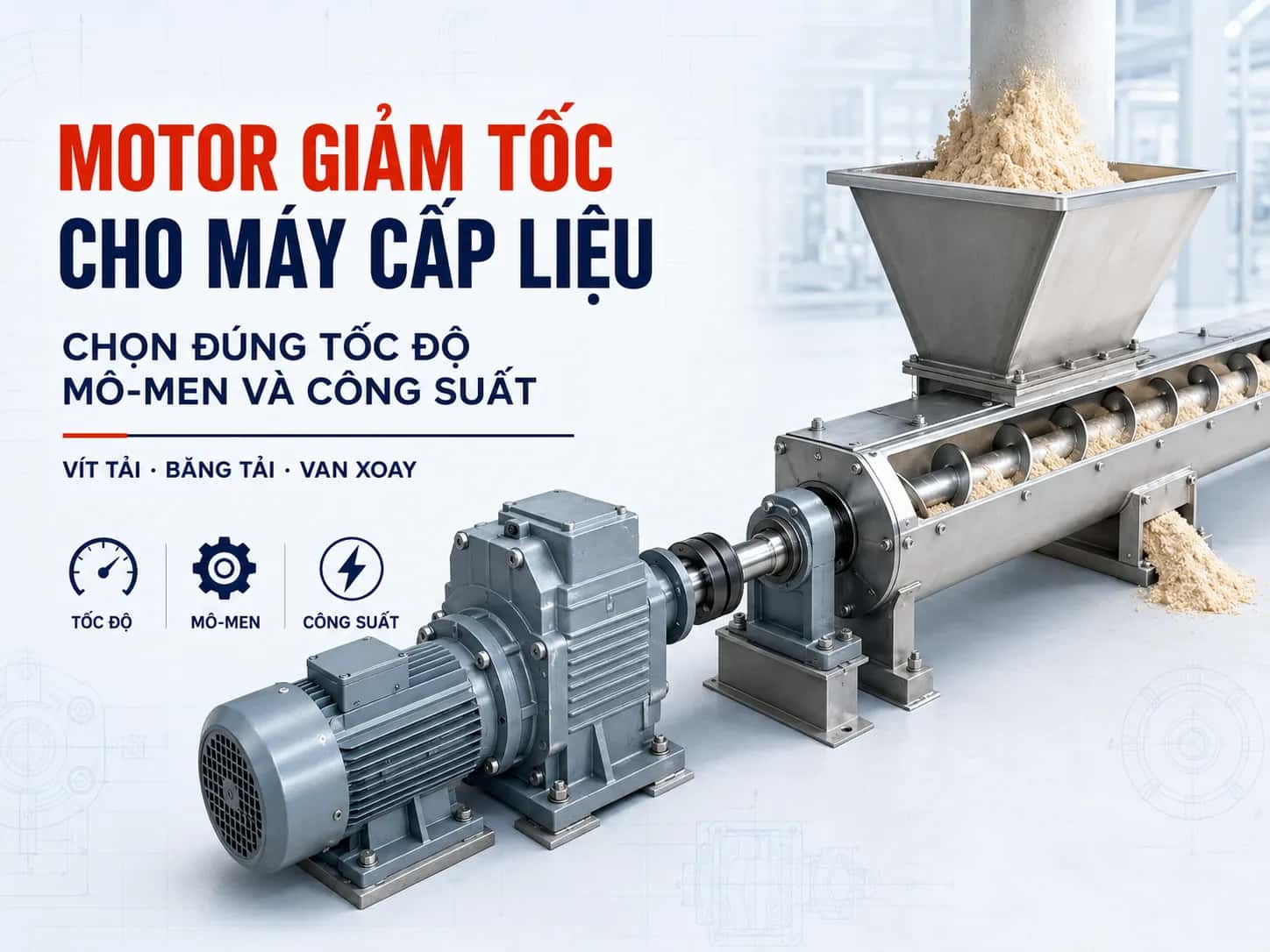
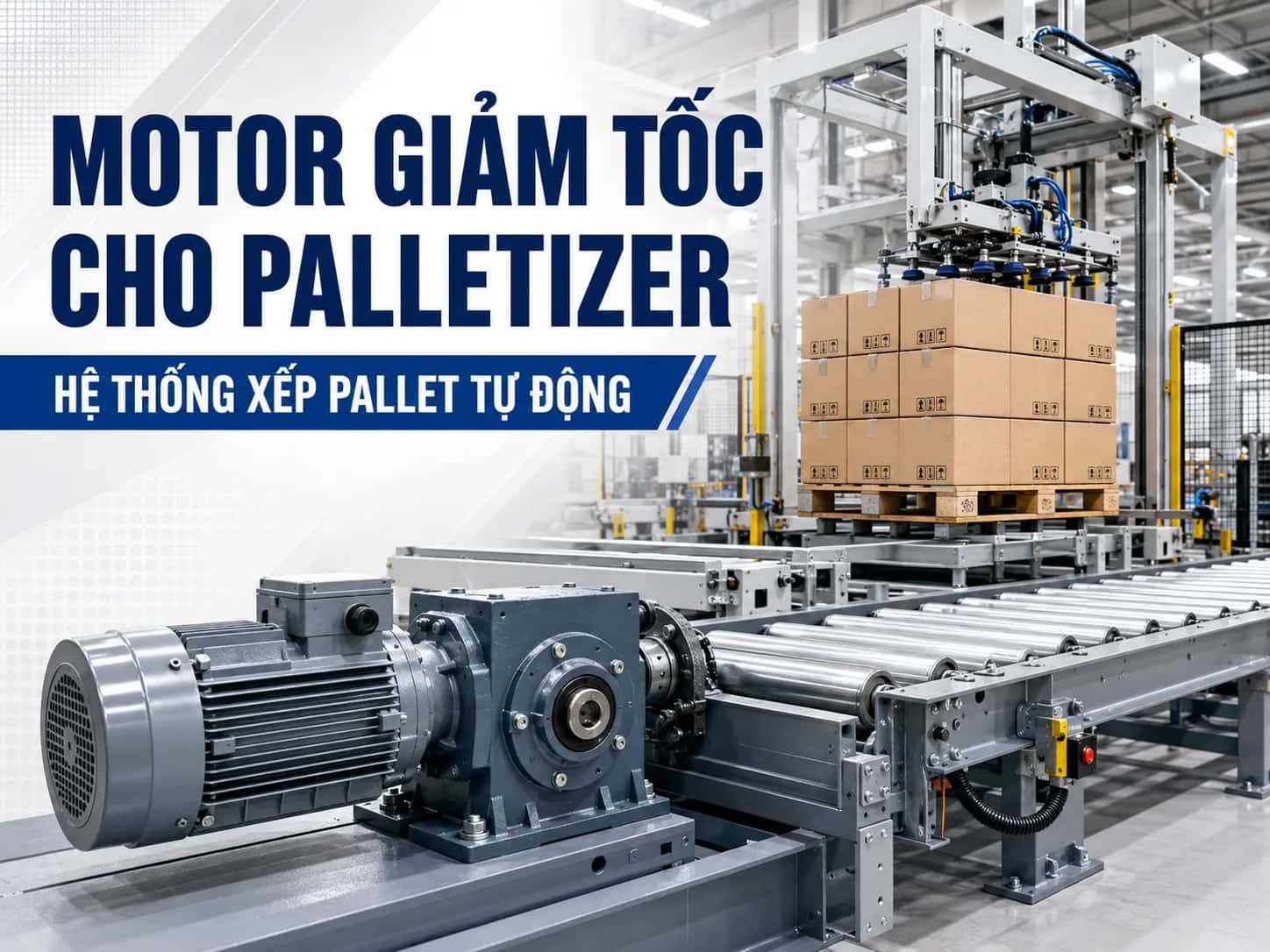
Explosion-proof motors can be combined with industrial gearboxes, geared motors, couplings, pumps, fans, conveyors, agitators, or other drive equipment to create a safe operating system.
Disadvantages to Consider
Besides the advantages, explosion-proof motors also have some limitations to calculate before investing.
Higher Cost than Standard Motors
Due to material requirements, precise machining, and safety certifications, the price of explosion-proof motors is usually higher than standard electric motors of the same power.
Heavy Weight
The thick motor housing increases the overall weight. When installing, it is necessary to check the machine base, frame, and surrounding mechanical structure.
High Technical Maintenance Requirements
Do not arbitrarily disassemble, grind, machine, or change the structure of the housing, flanges, or flame paths. Maintenance must be performed by a unit with expertise in explosion-proof equipment.
Classification of Explosion-Proof Motors by Protection Level
The following table is a common classification to help engineers and procurement departments easily choose the right type of motor.
Symbol | Name | Characteristics | Application Area |
|---|---|---|---|
Ex d | Flameproof | Withstands internal explosions and quenches flames before escape | Zone 1, Zone 2 |
Ex e | Increased Safety | Reduces risk of sparks and abnormal temperatures during operation | Zone 1, Zone 2 |
Ex nA / Ex ec | Non-sparking | Does not create sparks under normal operating conditions | Zone 2 |
Ex tb / Ex tc | Dust ignition protection | Protects motor in combustible dust environments | Zone 21, Zone 22 |
Classification by Hazardous Area
Identifying the correct hazardous area is an important step before choosing an explosion-proof motor.
Areas with Flammable Gases or Vapors
Zone | Hazard Level | Equipment Suggestion |
|---|---|---|
Zone 0 | Flammable gas present continuously or for long periods | Standard electric motors are usually not used |
Zone 1 | Flammable gas may be present under normal operating conditions | Ex d, Ex e |
Zone 2 | Flammable gas rarely present and only for short periods | Ex nA, Ex ec, Ex d, Ex e |
Areas with Combustible Dust
Zone | Hazard Level | Environment Example |
|---|---|---|
Zone 20 | Combustible dust present continuously | Inside silos, dust chambers |
Zone 21 | Combustible dust may be present during operation | Bagging areas, dust conveyors |
Zone 22 | Combustible dust rarely present | Areas near dust extraction systems |
Applications of Explosion-Proof Motors in Industry

Explosion-proof motors are used in many industries with hazardous environments.
Oil & Gas and Petroleum Refining
Explosion-proof motors are commonly used for oil pumps, gas exhaust fans, compressors, mixing systems, drilling rigs, and fuel storage areas.
Chemical and Paint Factories
In environments with solvents, chemical vapors, or volatile substances, explosion-proof motors are used for agitators, conveyors, chemical pumps, and mixing systems.
Mining and Coal
Mining areas with methane gas or coal dust need to use equipment with appropriate protection levels, especially motors certified for mining environments.
Wood, Agricultural, and Food Processing
Wood dust, bran dust, powder, and grain dust can form explosive mixtures when suspended in the air. Dust-proof motors are commonly used for conveyors, silos, dust extraction systems, grinders, and bagging machines.
How to Select the Right Explosion-Proof Motor
To choose the correct explosion-proof motor, it is necessary to clearly define the environmental conditions and operating parameters.
Determine Installation Zone
First, it is necessary to know if the motor location is Zone 1, Zone 2, Zone 21, or Zone 22. This factor directly affects the required protection level.
Determine Explosive Gas Group
Gas Group | Hazard Level | Example |
|---|---|---|
IIA | Lower | Propane |
IIB | Medium | Ethylene |
IIC | Highest | Hydrogen, Acetylene |
Motors certified for IIC can usually be used for IIB and IIA environments, but the cost will be higher.
Determine Temperature Class
The surface temperature of the motor must not exceed the auto-ignition temperature of the surrounding environment.
Temperature Class | Max Surface Temperature |
|---|---|
T1 | 450°C |
T2 | 300°C |
T3 | 200°C |
T4 | 135°C |
T5 | 100°C |
T6 | 85°C |
In many industrial applications, T4 class is quite popular because it is suitable for many types of flammable gases and vapors.
Determine Drive Parameters
In addition to explosion-proof standards, engineers need to determine basic parameters such as:
Motor power: kW or HP.
Rotation speed: 2P, 4P, 6P, 8P.
Voltage: 1-phase or 3-phase.
Frequency: 50Hz or 60Hz.
Mounting type: B3 foot, B5 flange, B14.
IP protection level.
Insulation class.
Actual load conditions.
Whether a VFD is used.
Notes When Using Explosion-Proof Motors with VFDs
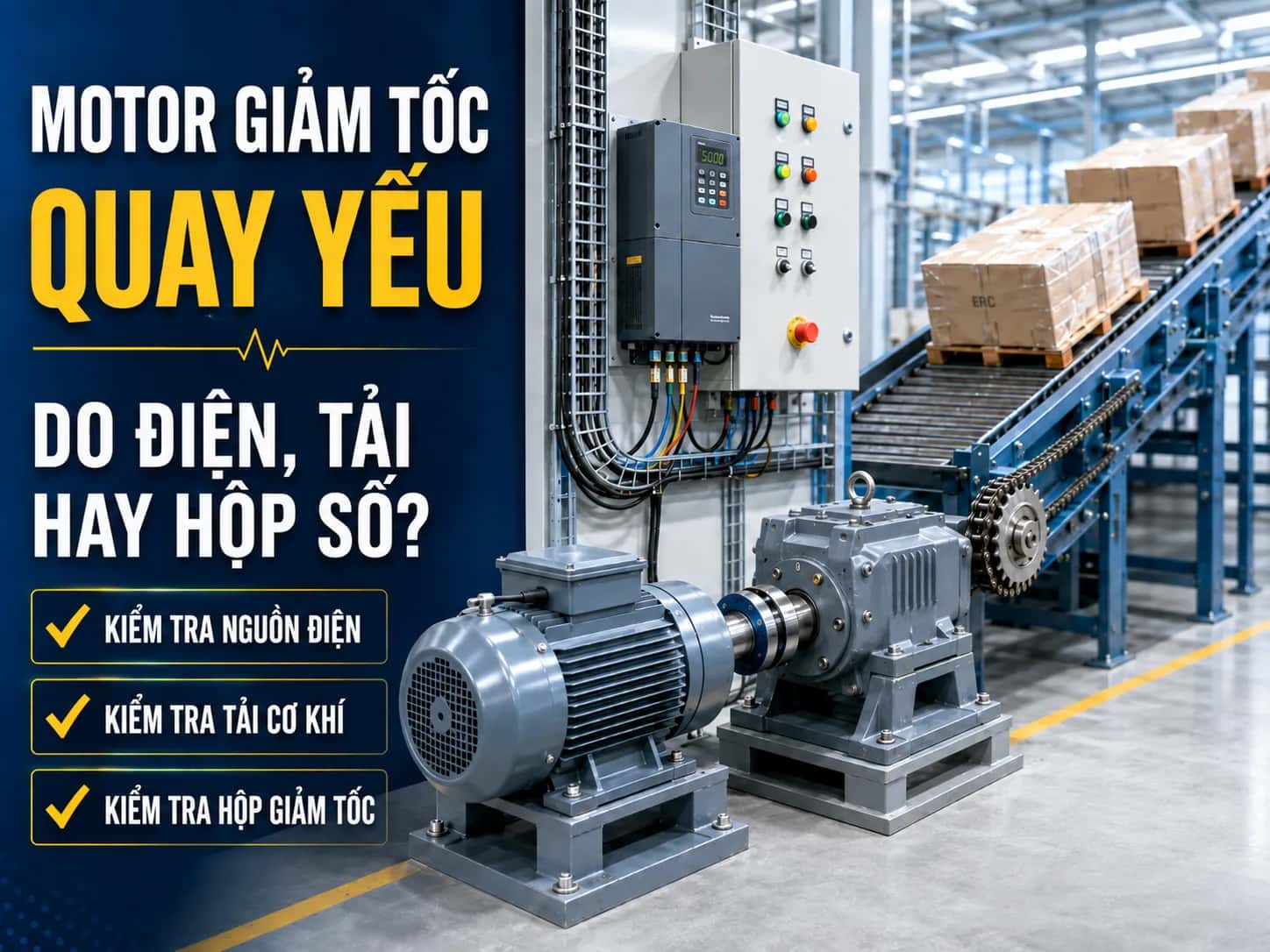
If the system uses an industrial VFD to control the speed of an explosion-proof motor, special attention must be paid to the motor temperature.
When the motor runs at low frequency, the shaft-mounted cooling fan may not be sufficient to dissipate heat. This causes the surface temperature to rise and may exceed the allowed temperature class.
In this case, it is recommended to choose:
Explosion-proof motors specifically for VFD use.
Independent forced cooling fans.
PTC or PT100 thermal sensors.
Overheat protection settings on the VFD.
Check load parameters and operating speed range.
Use explosion-proof certified cables, glands, and accessories.
Common Faults and Troubleshooting
Motor Overheating
Common causes are overload, dust on the fan blades, unstable voltage, or the motor running at low speed via VFD for a long time.
The solution is to check the mechanical load, clean the cooling system, measure the operating current, and re-check the settings on the VFD.
Abnormal Vibration or Noise
Causes may include worn bearings, shaft misalignment, load imbalance, or incorrect coupling installation.
It is necessary to check vibration, shaft concentricity, bearing condition, and tighten mounting points.
Terminal Box Damp or Damaged
Water, moisture, or dust can enter the terminal box if the cable gland is loose, the gasket is damaged, or the terminal box cover is not tightened with the correct torque.
During maintenance, it is necessary to check gaskets, glands, lugs, terminals, and the tightness of the terminal box.
Factors Affecting Explosion-Proof Motor Price
The price of an explosion-proof motor depends on many technical factors, not just power.
Key factors include:
Protection level: Ex d is usually more expensive than Ex e or Ex ec.
Gas group: IIC is usually more expensive than IIB and IIA.
Motor power: higher power means higher price.
Motor speed: 6-pole or 8-pole motors are usually more expensive than 2-pole or 4-pole types.
Certification standards: ATEX, IECEx, CQ, CO, test report.
Brand and origin.
Mounting type and included accessories.
Requirements for VFD use, thermal sensors, or forced cooling fans.
To get an accurate quote, it is necessary to provide full information about power, voltage, speed, Zone, gas group, temperature class, mounting type, and actual operating environment.
Where to Buy Reliable Explosion-Proof Motors?
When choosing an explosion-proof motor supplier, businesses should not just compare prices. This is equipment directly related to factory safety, so it is necessary to prioritize units with technical capability and full documentation.
MDRIVE TECH provides drive and industrial automation solutions for many factory applications in Vietnam. We support consulting on selecting explosion-proof motors for each working environment, including Zone, gas group, temperature class, power, speed, and mounting type.
MDRIVE TECH supports:
Consulting on selecting explosion-proof motors according to technical requirements.
Supplying electric motors, geared motors, gearboxes, and industrial VFDs.
Providing CO, CQ, catalogs, and technical documents upon request.
Consulting on suitable drive solutions for pumps, fans, agitators, conveyors, and production lines.
Contact MDRIVE TECH for advice on explosion-proof motors suitable for your factory's actual operating environment.
Hotline: 0868 789 647
Email: [email protected]
FAQ – Frequently Asked Questions About Explosion-Proof Motors
Are explosion-proof motors the same as IP65 water-resistant motors?
They are not the same. IP65 only indicates the ability to resist dust and water from entering the motor from the outside. Meanwhile, explosion-proof standards like Ex d, Ex e, or Ex ec relate to the ability to work safely in environments with flammable gases, vapors, or dust.
Can standard motors be used in Zone 2?
Standard electric motors should not be used in hazardous areas. Even Zone 2 requires selecting a motor with an appropriate protection level such as Ex nA, Ex ec, or equivalent standards according to project requirements.
Can explosion-proof motors be used with VFDs?
Yes, but it is necessary to choose a motor type suitable for VFDs. In many cases, additional forced cooling fans, thermal sensors, and overheat protection settings are required to ensure the surface temperature does not exceed the allowed T-Class.
When is a dust-proof motor needed?
Dust-proof motors are usually used in areas with combustible dust such as wood dust, coal dust, bran dust, powder, grain dust, or industrial silo, grinder, conveyor, and dust extraction systems.
What information is needed to choose the right explosion-proof motor?
It is necessary to provide power, speed, voltage, mounting type, Zone area, gas or dust group, temperature class, environmental conditions, operating load, and whether VFD use is required.