What is a Soft Starter? Construction, Working Principle, and Applications
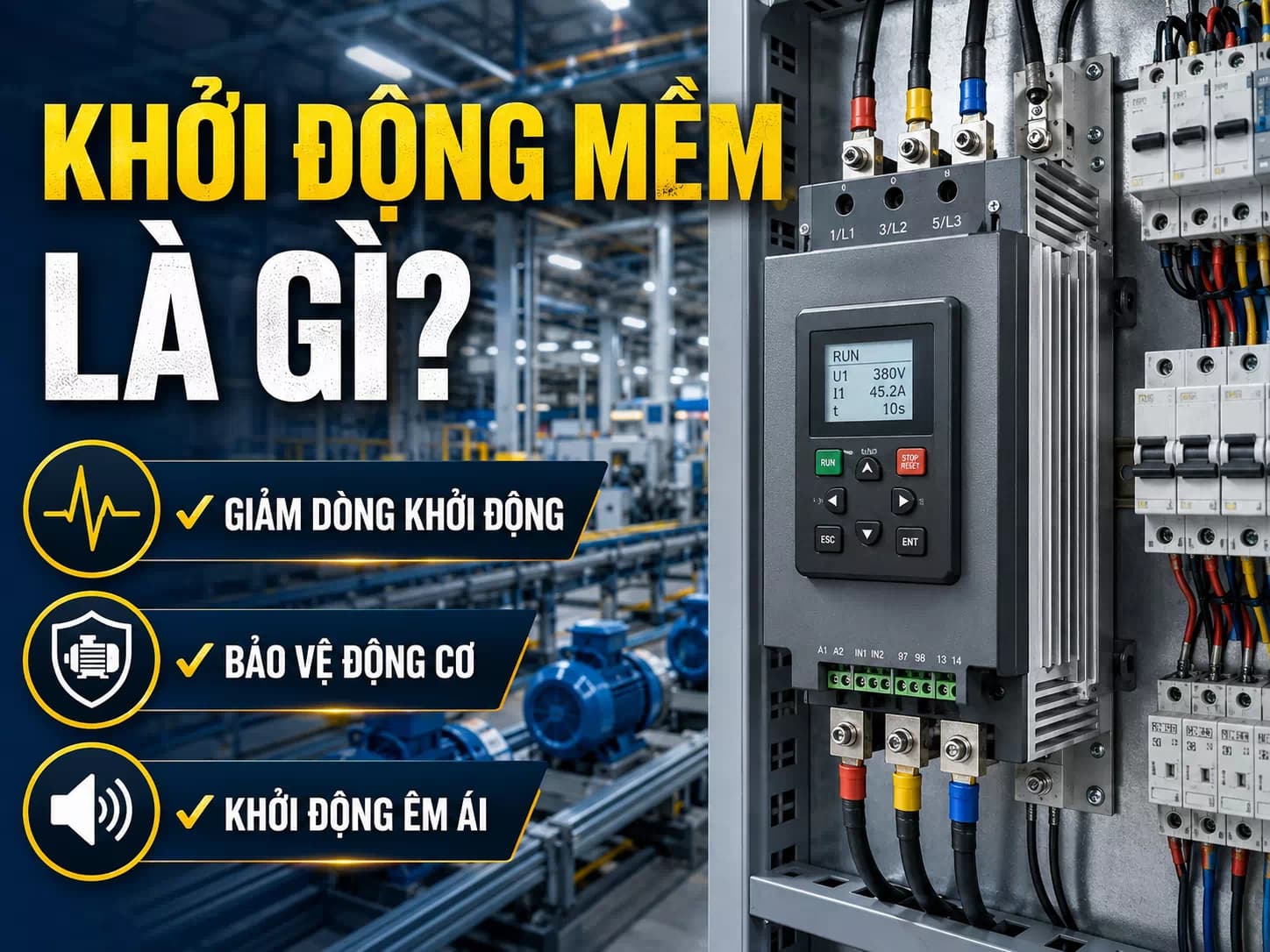
A soft starter is an industrial electrical device that helps reduce starting current, minimize mechanical shock, and protect electric motors during startup or shutdown. It operates by controlling the SCR firing angle to gradually increase voltage, making it suitable for pumps, fans, conveyors, air compressors, and many fixed-speed industrial drive systems.
What is a Soft Starter? Construction, Working Principle, and Industrial Applications

Soft starters reduce starting current, protect electric motors, and mitigate mechanical shock in industrial drive systems.
What is a Soft Starter?
A soft starter is a power electronics device used to control the starting and stopping process of AC electric motors. This device helps reduce starting current, gradually increases the voltage supplied to the motor, and limits sudden torque spikes when the motor begins to run.
In industrial systems, when a 3-phase electric motor is started directly using the DOL method, the starting current can be significantly higher than the rated current. This often causes voltage drops in the power grid, overheats windings, and causes mechanical shock to couplings, belts, gearboxes, pumps, fans, or conveyors.
Soft starters are used to solve this problem. Instead of supplying full voltage immediately to the motor, the soft starter adjusts the voltage to increase gradually over a set time. As a result, the motor starts more smoothly, reducing stress on the electrical system and extending the lifespan of mechanical equipment.
Why Use a Soft Starter?
In factories, many high-power motors should not be started directly because high starting current can affect the entire electrical system. Additionally, sudden torque increases can cause the drive mechanism to jerk, especially with pumps, fans, conveyors, air compressors, and agitators.
Soft starters help businesses solve the following issues:
Reduce motor starting current.
Limit voltage drops in the factory power system.
Reduce mechanical impact during startup.
Protect couplings, bearings, belts, gearboxes, and piping.
Help the motor accelerate more smoothly and stably.
Support soft stop functionality, which is especially important for pump systems.
Reduce maintenance costs by limiting electrical and mechanical shock.
For applications that only require a smooth start and then run at a fixed speed, a soft starter is a more economical choice compared to a VFD.
Construction of a Soft Starter
Industrial soft starters typically consist of three main groups of components: the power circuit, the control circuit, and the bypass contactor. Additionally, the device includes protection systems, heat sinks, a setting display, and control signal ports.

Soft starter construction includes SCR/Thyristor, control board, heat sink system, and bypass contactor.
SCR / Thyristor Power Circuit
The SCR, also known as a Thyristor, is the most important power semiconductor component in a soft starter. The SCR is responsible for controlling the amount of voltage supplied to the motor during startup and shutdown.
Typically, a 3-phase soft starter uses pairs of SCRs connected in anti-parallel on each phase. When the control board changes the firing angle of the SCR, the average voltage supplied to the motor changes accordingly. This is the basis for allowing the motor to accelerate gradually instead of receiving full voltage immediately.
Control Board
The control board is the “brain” of the Soft Starter. This component receives signals from the operator, measures current, monitors voltage status, and controls the timing of SCR firing.
Depending on the product line, the control board may integrate functions such as:
Acceleration time setting.
Soft stop time setting.
Starting current limit.
Overload protection.
Phase loss and phase imbalance protection.
Locked rotor protection.
Modbus, Profibus, or Profinet communication with PLC.
Bypass Contactor
The bypass contactor is responsible for bypassing the SCR circuit after the motor has finished starting and reached a stable operating speed. When the bypass is closed, the current flows directly from the power source to the motor, no longer passing through the SCRs.
This helps reduce heat loss on semiconductor components, increases device lifespan, and helps the system operate more efficiently. Some soft starter lines have built-in bypasses, while high-power lines may require an external bypass contactor.
Heat Sink System
During the starting phase, the SCR can generate significant heat due to controlling high current. Therefore, soft starters are usually equipped with aluminum heat sinks, ventilation slots, or cooling fans.
When installing in an electrical cabinet, it is necessary to ensure proper ventilation space to avoid overheating errors.
Signal Ports and Protection
An industrial soft starter usually has control inputs and outputs such as Start, Stop, Reset, Run, Fault, Bypass, or status signals sent back to the PLC.
High-end lines also integrate LCD screens, setting keypads, industrial communication, and motor protection functions similar to electronic thermal relays.
Working Principle of a Soft Starter
The working principle of a soft starter is based on controlling the firing angle of the SCR to change the voltage supplied to the motor during startup and shutdown.

The soft starter controls the SCR firing angle to increase the voltage supplied to the motor in a Ramp Up pattern.
Starting Phase
When receiving the Start command, the soft starter does not supply full voltage to the motor immediately. Instead, the SCR only opens partially in each AC cycle, making the average voltage supplied to the motor lower than the grid voltage.
Thanks to the low initial voltage, the starting current and starting torque are reduced, helping the motor start to rotate more smoothly.
Ramp Up Phase
During acceleration, the control board gradually increases the SCR firing angle. As the firing angle increases, the voltage supplied to the motor also increases gradually. The motor therefore accelerates slowly according to the preset curve.
The Ramp Up time can be adjusted depending on the application. For pumps or fans, the acceleration time can be shorter. For high-inertia loads like large centrifugal fans or mixers, the acceleration time usually needs to be longer.
Stable Running Phase
When the motor reaches its rated speed, the soft starter ends the voltage control process. If the device has a bypass, the bypass contactor will close so that the current flows directly through the bypass circuit.
At this point, the motor runs almost as if it were powered directly from the grid, while the Soft Starter mainly monitors and protects the system.
Soft Stop Phase
When receiving a stop command, the soft starter can reduce the voltage gradually instead of cutting off power abruptly. This function is called Soft Stop.
Soft stop is especially useful for pump systems because it helps reduce water hammer, limits pipe vibration, protects check valves, and reduces hydraulic shock.
Advantages of a Soft Starter
Soft starters are widely used in industry due to their ability to protect motors, reduce starting current, and improve system stability.
Reduce Starting Current
One of the biggest benefits of a Soft Starter is reducing starting current. When starting directly, the current can increase very high in a short time. With a soft starter, the current is limited to a lower level, helping to reduce stress on the electrical system.
Protect Mechanical Systems
Soft starters help the motor accelerate gradually, reducing jerking force at the moment of startup. This helps protect couplings, belts, bearings, gears, gearboxes, conveyors, and related drive mechanisms.
Limit Grid Voltage Drop
Large starting currents can cause voltage drops in the factory, affecting PLCs, HMIs, sensors, VFDs, and sensitive electronic devices. A Soft Starter helps the starting process take place more stably, limiting sudden voltage drops.
Support Soft Stop for Pump Systems
With water pump systems, if the motor stops abruptly, the water flow in the pipe can create a large feedback pressure, causing water hammer. Soft stop helps slow down the motor gradually, thereby reducing hydraulic pressure in the pipe.
Integrate Multiple Protection Functions
Many modern soft starter lines integrate protection functions such as overload, phase loss, phase imbalance, overheating, locked rotor, and SCR failure. This increases safety for the motor and reduces the risk of damage.
Save Electrical Cabinet Space
Compared to star-delta cabinets using many contactors and complex wiring, soft starters have a more compact design, are easier to install, and are more convenient to operate.
Disadvantages of a Soft Starter
Although there are many advantages, soft starters are not suitable for all applications. System designers need to understand the limitations of the device to make the right choice.
Cannot Adjust Speed While the Motor is Running
Soft starters only control the starting and stopping process. When the motor is running stably, the motor still runs at the rated speed of the power source.
If the system needs continuous speed adjustment, changing pump flow, adjusting conveyor speed, or saving energy for fans and pumps, a VFD should be used.
Not as Energy Efficient as a VFD
Soft starters do not have the function of changing frequency, so they cannot optimize motor speed during operation. Therefore, the energy-saving capability of a Soft Starter is negligible compared to a VFD.
Can Generate Heat When Starting Multiple Times
If the system starts and stops continuously many times in an hour, the SCR can get hot. In this case, it is necessary to choose a device with appropriate capacity, increase heat dissipation, or consider using another solution.
Reduced Starting Torque
Because the soft starter reduces the initial voltage, the motor's starting torque also decreases. Therefore, a Soft Starter is not suitable for loads that require very high torque from a standstill such as large stone crushers, heavy-duty cranes, or some lifting systems.
Comparison of Soft Starter and VFD
One of the most common questions is whether to use a soft starter or a VFD. Both devices support motor control, but their purposes are different.
Criteria | Soft Starter | VFD |
|---|---|---|
Main function | Smooth start and stop | Speed, torque control, and motor protection |
Speed adjustment during operation | No | Yes |
Reduce starting current | Yes | Yes |
Energy saving | Negligible | Good, especially for pumps and fans |
Investment cost | Lower | Higher |
Installation complexity | Simpler | More complex |
Suitable applications | Pumps, fans, compressors, fixed-speed conveyors | Variable speed conveyors, energy-saving pumps/fans, precision control machines |
Soft stop for water hammer prevention | Yes | Can perform better if set correctly |
Suitable for continuous start/stop loads | Limited | Better |
In summary, if the system only needs a smooth start and runs at a fixed speed, a soft starter is a reasonable choice. If you need to adjust speed or save energy during operation, a VFD is a more suitable solution.
Common Types of Soft Starters
Soft starters can be classified by the number of controlled phases, bypass type, voltage, and load application.
Classification by Number of Controlled Phases
Soft starter type | Characteristics | Suitable applications |
1-phase control | Controls only one phase, limited current reduction capability | Very small loads, rarely used in industry |
2-phase control | Controls two phases, lower cost | Light and medium loads |
3-phase control | Controls all three phases, more balanced current and voltage | Heavy loads, critical systems, large power motors |
Classification by Bypass
Bypass type | Characteristics | Advantages |
Internal Bypass | Bypass contactor integrated inside the device | Compact, easy to install, saves space |
External Bypass | Bypass installed separately outside | Suitable for large power, easy to replace contactor |
No bypass | Current flows through SCR during operation | Less used due to heat generation and high loss |
Classification by Voltage
Low-voltage soft starters are typically used for 3-phase 220V, 380V, or 400V systems. In large factories, large pumping stations, or heavy industry, medium-voltage soft starters can be used for 3.3kV, 6.6kV, or 11kV motors.
Applications of Soft Starters in Industry
Soft starters are suitable for drive systems that need a smooth start and reduced starting current but do not require continuous speed changes.

Soft starters are used in pumps, fans, conveyors, air compressors, and industrial drive systems.
Soft Starter for Pump Systems
Water pumps are a very common application for soft starters. When used for pumps, the device helps reduce starting current, reduces pressure on the power grid, and especially supports soft stop to limit water hammer.
Common applications include:
Water supply pumps.
Wastewater pumps.
Firefighting pumps.
Circulation pumps.
Industrial pumps in factories.
Soft Starter for Industrial Fans
Industrial fans, especially large-capacity centrifugal fans, often have high inertia when starting. If started directly, the motor can draw very high current and cause mechanical jerking.
A Soft Starter helps the fan accelerate gradually, reducing belt tension, vibration, and noise during startup.
Soft Starter for Conveyors
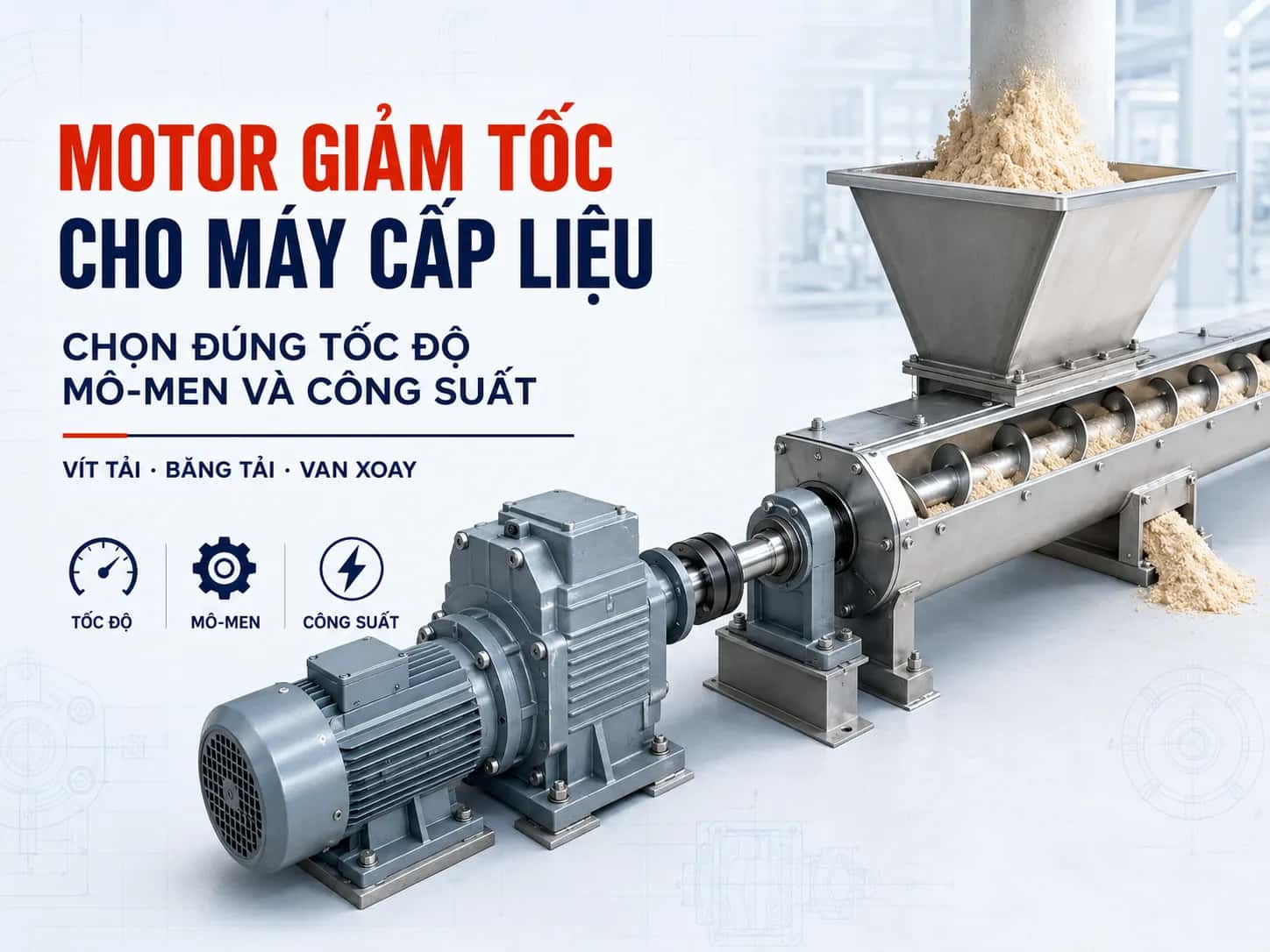
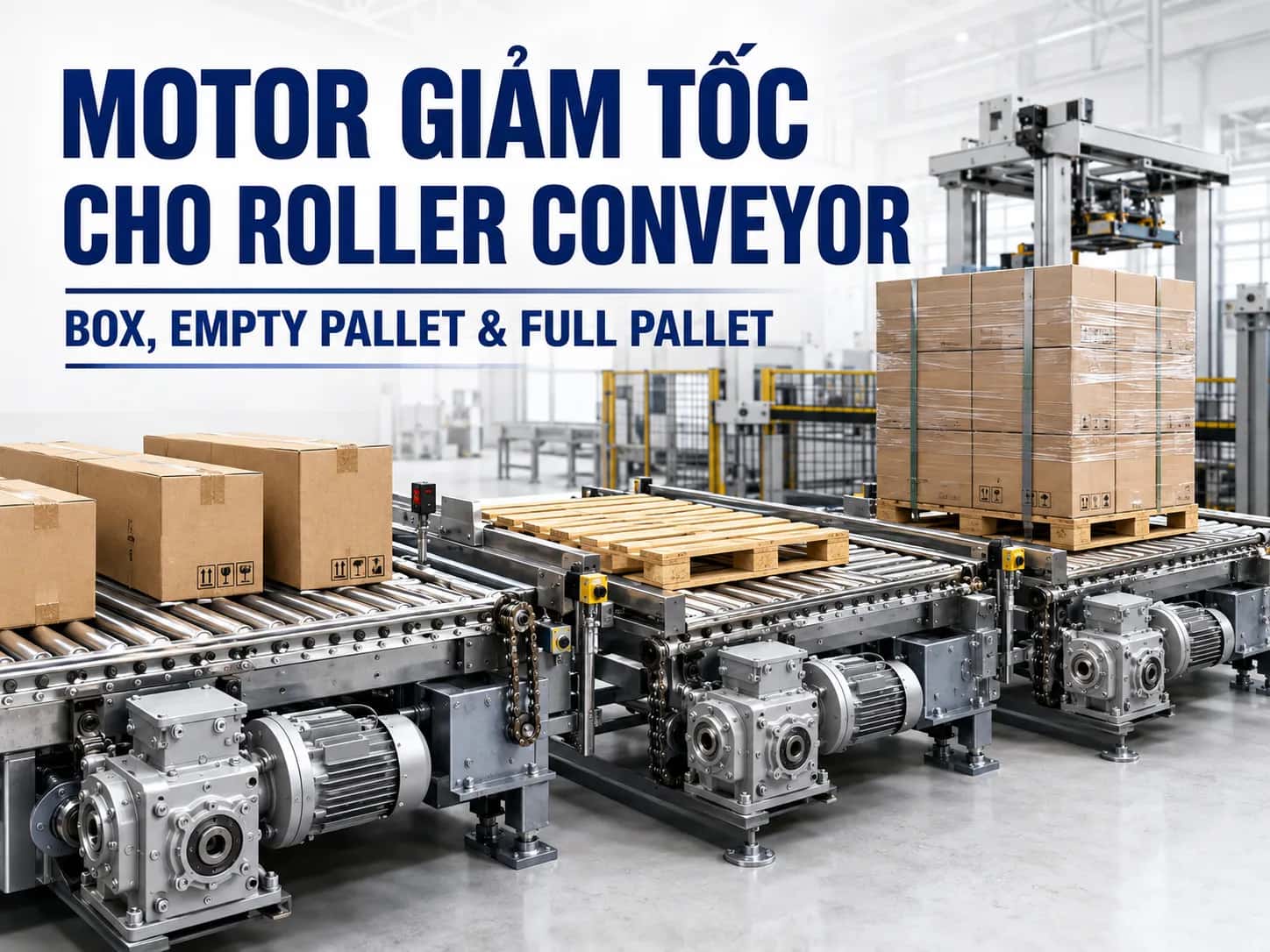
With material-carrying conveyors, sudden starting can cause materials to shift, slide, spill, or cause load jerking. A soft starter helps the conveyor accelerate more smoothly, protecting gearboxes, rollers, belts, and couplings.
Soft Starter for Air Compressors and Chillers
Large-capacity air compressors and cooling systems often cause high starting current when powered on. Using a Soft Starter helps reduce inrush current, protects contactors, circuit breakers, and stabilizes power for the entire system.
Soft Starter for Agitators and Mixers
Agitators and mixers often have high-inertia loads. A soft starter helps the equipment accelerate gradually, reducing sudden torque on the shaft, couplings, and gearboxes.
How to Choose the Right Soft Starter
To choose the right Soft Starter, do not rely solely on the motor's kW power. It is necessary to check the rated current, load type, starting time, voltage, and the number of starts per hour.
Choose by Motor Rated Current
The most important parameter when choosing a soft starter is the motor's rated current. The Soft Starter's rated current must be greater than or equal to the rated current listed on the motor nameplate.
If the device is too small, the soft starter will easily report overload, overheating, or SCR damage errors.
Choose by Load Characteristics
Load type | Application example | Device selection suggestion |
Light load | Centrifugal pumps, small fans | Choose according to motor rated current |
Medium load | Conveyors, air compressors, large fans | Choose higher capacity or according to appropriate load class |
Heavy load | Crushers, large mixers, high inertia loads | Choose 1–2 levels higher or consider using a VFD |
Choose by Power Supply Voltage
It is necessary to check whether the factory power supply is 3-phase 220V, 380V, 400V, or medium voltage. In Vietnam, the 3-phase 380V/400V low-voltage system is the most common.
Choose by Number of Starts per Hour
If the motor only starts a few times a day, a standard Soft Starter can meet the needs well. If the system starts continuously many times in an hour, it is necessary to check the device's heat resistance and duty cycle parameters.
Choose by Protection Features
Prioritize soft starter lines with overload, phase loss, phase imbalance, overheating, locked rotor, and SCR failure protection. For critical systems, choose a type with industrial communication to monitor status on PLC or SCADA.
Important Parameters When Setting Up a Soft Starter
After choosing the right device, parameter setting is also very important. Incorrect settings can cause the motor to start weakly, overcurrent, vibrate, or stop unstably.
Parameter | Meaning | Setting notes |
Initial Voltage | Initial voltage supplied to the motor | Too low, motor is hard to rotate; too high, easy to jerk load |
Ramp Up Time | Acceleration time | Heavier loads may require longer time |
Current Limit | Starting current limit | Must match motor current and load characteristics |
Ramp Down Time | Soft stop time | Important for pumps to reduce water hammer |
Motor FLA | Motor rated current | Must be set according to nameplate |
Overload Class | Overload protection class | Choose according to light, medium, or heavy load |
Common Soft Starter Errors and Troubleshooting
During operation, a Soft Starter may develop some common errors. Correct diagnosis of the cause helps reduce downtime and avoid equipment damage.
Input Phase Loss Error
Phase loss errors often occur when a fuse blows, the power supply contactor is damaged, power wires are loose, or the power grid loses one phase.
The solution is to measure the voltage at the L1, L2, L3 inputs with a multimeter, check the MCCB, fuses, contactors, and wiring in front of the device.
Overheating Error
Overheating errors can be caused by starting too many times in a short time, poor cabinet ventilation, damaged cooling fans, or choosing the wrong soft starter capacity.
It is necessary to check the cabinet temperature, clean the fans, increase the rest time between starts, and recheck the load class.
Overload or Locked Rotor Error
Overload errors are often caused by mechanical loads heavier than designed, jammed pumps, damaged motor bearings, jammed crushers, or incorrect motor current settings.
It is necessary to cut off power, check the mechanics, try rotating the motor shaft by hand if safe, check the rated current, and reset protection parameters.
SCR Short Circuit Error
SCR error is a more serious error, which can be caused by overcurrent, short circuit, aging components, or mechanical incidents causing sudden current increases.
With this error, do not try to restart continuously. A qualified technician is needed to check the power module, SCR, control circuit, and protection system in front.
What Factors Affect Soft Starter Price?
Soft starter prices depend on many technical factors. Two devices with the same motor power but different brands, features, and load classes can have very different prices.
Factor | Price impact |
Power and rated current | Higher current, higher price |
Operating voltage | Medium voltage is much more expensive than low voltage |
Brand | European, American, Japanese brands are usually higher than common ones |
Integrated bypass | Types with internal bypass are usually more convenient |
Protection features | More protection, higher price |
Industrial communication | Modbus, Profibus, Profinet increase costs |
Setting display | LCD/keypad is usually higher than basic adjustment types |
Load class | Heavy loads require choosing larger devices |
When requesting a quote, you should provide full motor power, rated current, voltage, load type, number of starts per hour, and whether bypass or communication is required.
Where to Buy Reliable Soft Starters?
A soft starter is a device that directly affects the stability of the electrical system and the lifespan of the motor. Therefore, businesses should choose a supplier with technical competence, genuine products, and the ability to support practical installation.
MDRIVE TECH provides industrial drive and automation solutions, including soft starters, VFDs, electric motors, geared motors, gearboxes, PLCs, HMIs, and related industrial electrical equipment.
MDRIVE TECH supports:
Consulting on choosing soft starters according to power, motor current, and load type.
Providing genuine equipment, supporting CO, CQ upon request.
Consulting on solutions to replace star-delta cabinets with Soft Starters.
Supporting basic parameter settings for pumps, fans, conveyors, and compressors.
Proposing suitable solutions between soft starters and VFDs depending on the application.
Contact MDRIVE TECH for advice on soft starters suitable for electric motor systems in your factory.
Hotline: 0868 789 647
Email: [email protected]
FAQ – Frequently Asked Questions About Soft Starters
What is a soft starter?
A soft starter is a power electronics device used to reduce starting current and control the acceleration process of AC electric motors smoothly.
Can a soft starter adjust speed?
No. A soft starter only controls the starting and stopping process. When the motor is running stably, the speed depends on the power supply frequency and the number of motor poles. If continuous speed adjustment is needed, a VFD should be used.
Does a soft starter save energy?
A soft starter does not save significant energy during stable operation. The device mainly helps reduce starting current, protect the power grid, and reduce mechanical shock. If the goal is to save energy for pumps or fans, a VFD is usually more suitable.
When should a soft starter be used instead of star-delta?
A soft starter should be used when a smoother start, better current reduction, soft stop, integrated electronic protection, and simplification of the electrical cabinet compared to the traditional star-delta method are required.
What applications is a soft starter suitable for?
Soft starters are suitable for pumps, fans, conveyors, air compressors, chillers, agitators, mixers, and drive systems that run at a fixed speed but need a smooth start.
How is a soft starter different from a VFD?
A soft starter is used to start and stop motors smoothly, without adjusting speed during stable operation. A VFD can adjust speed, torque, frequency, and supports better energy saving in many applications.
What information is needed to choose a soft starter?
You need to provide motor power, rated current, power supply voltage, load type, desired starting time, number of starts per hour, and whether bypass, communication, or special protection functions are required.